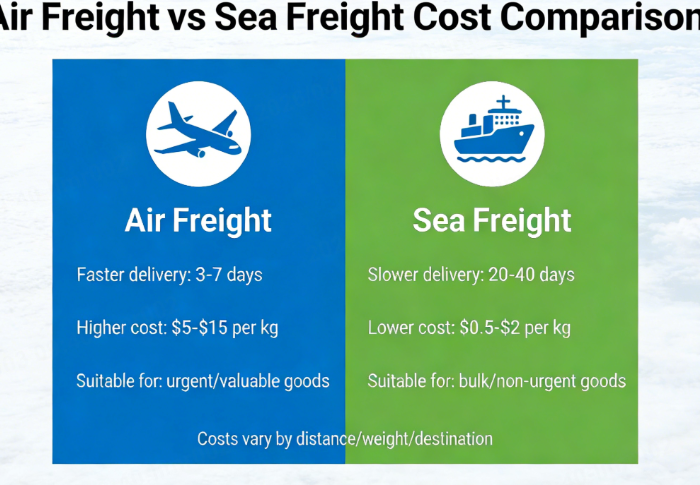
Worldwide dropshipping success depends on more than finding profitable products. This guide explains how to build a dependable fulfillment strategy using China sourcing, shipping tiers, quality control, customs planning, overseas warehouses, and clear customer communication to improve delivery performance and scale globally.
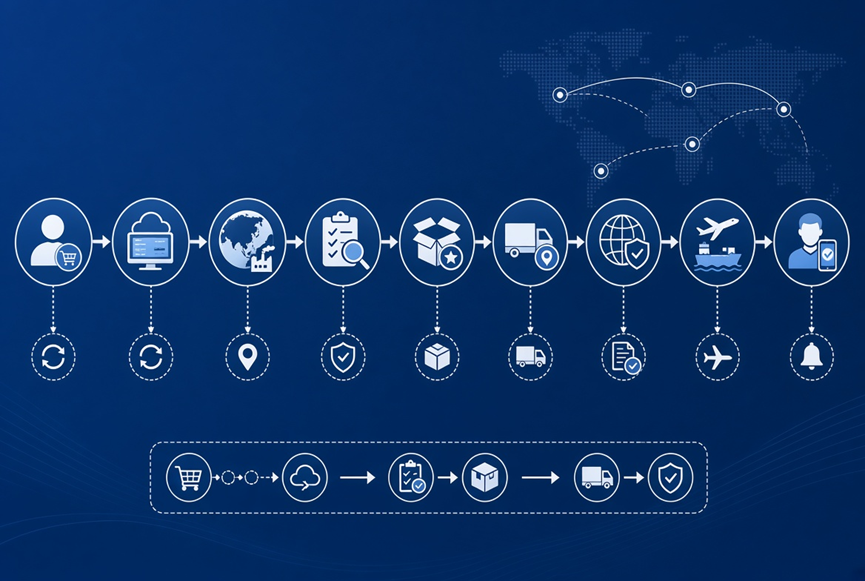
For a worldwide dropshipping business, fulfillment is not simply the process of moving products from a supplier to a customer. It is the operational system that determines delivery speed, product quality, landed cost, customer trust, and long-term profitability.
Having worked with cross-border sellers and China-based supply chains, I have seen a consistent pattern: businesses rarely fail because they cannot find products. They struggle because their fulfillment strategy cannot scale across countries, shipping expectations, customs rules, and customer-service demands. The best approach combines reliable sourcing, clear inventory visibility, flexible shipping routes, and transparent communication from checkout through delivery.
> Key takeaway: The most effective global dropshipping fulfillment strategy is usually a hybrid model—start with direct fulfillment from China, then position proven products closer to major customer markets as sales volume becomes predictable.
Table of Contents
Why Worldwide Dropshipping Fulfillment Is Different
Domestic fulfillment is relatively straightforward: inventory is stored locally, shipping carriers are familiar, and taxes are easier to calculate. Worldwide dropshipping adds more variables. A seller may source a product in China, sell it through a Shopify or independent store, and ship it to customers across dozens of countries.
That model creates opportunities, but also operational risks:
– Long or unpredictable delivery times
– Supplier stockouts after an order is placed
– Inconsistent product quality between production batches
– Incorrect customs declarations or missing HS codes
– Unexpected import duties for customers
– Poor tracking visibility after the parcel leaves the origin country
– High return costs for low-value international products
Customers increasingly judge a brand by the full delivery experience, not only by the product. Baymard Institute reports that extra costs such as shipping, taxes, and fees are a leading cause of checkout abandonment, while slow delivery and unclear total costs also discourage purchases. shows why fulfillment information must be treated as part of the sales experience, not a back-office detail.
The Six Best Fulfillment Strategies
1. Start With Direct Fulfillment From China
For new stores, direct fulfillment from China is often the most capital-efficient starting point. Products are purchased or prepared after a customer order is received, then shipped directly through a fulfillment partner.
This strategy helps sellers avoid buying large quantities before product-market fit is proven. It is especially suitable for:
– New dropshipping stores testing product categories
– Seasonal or trend-driven items
– Broad catalogs with many SKUs
– Sellers targeting multiple countries from one sourcing base
– Businesses with limited working capital
The important distinction is between informal supplier shipping and managed fulfillment. A supplier may offer low product prices, but may not provide stock monitoring, packaging checks, shipping route selection, or fast issue resolution. A fulfillment partner should coordinate the operational chain—from sourcing and inspection to packing, shipment, and tracking.
For example, a beauty-accessories seller can test 20 products through direct fulfillment, identify the three that generate repeatable sales, and avoid tying up cash in the remaining 17 items.
2. Use a Hybrid Warehouse Model for Winning Products
Direct-from-China shipping works well during testing. However, once a product generates stable sales in a particular region, overseas inventory can improve delivery time and customer experience.
A hybrid model means keeping slow-moving or unproven products in China while sending bestsellers in bulk to warehouses near key markets. This gives the business both flexibility and speed.
| Fulfillment model | Best use case | Main advantage | Main limitation |
| Direct fulfillment from China | Product testing, large catalogs | Low upfront inventory risk | Longer delivery window |
| Overseas warehouse fulfillment | Established bestseller | Faster local delivery | Requires inventory planning |
| Hybrid fulfillment | Scaling global stores | Balances cash flow and speed | Needs accurate demand forecasting |
| Print-on-demand fulfillment | Custom merchandise | No stock holding for customized items | Lower margin and limited control |
A practical trigger for moving stock overseas is not simply “high sales.” Look for consistent demand, low return rates, stable product quality, and sufficient margin after storage and domestic fulfillment fees. Shipping inventory too early can create dead stock; waiting too long can reduce repeat purchases because delivery is too slow.
3. Build Shipping Tiers Instead of Offering One Global Method
One-size-fits-all shipping creates unnecessary cost and frustration. The best worldwide dropshipping businesses provide shipping options based on urgency, destination, product value, and parcel characteristics.
A useful shipping structure includes:
1. Economy tracked shipping for low-cost products and price-sensitive buyers
2. Standard priority shipping for most orders, with dependable tracking and a reasonable delivery window
3. Express shipping for urgent, higher-value, or gift purchases
4. Local delivery for inventory already positioned in overseas warehouses
Do not promise delivery times that depend on best-case carrier performance. Instead, publish a realistic delivery range by destination. A customer who expects 8–12 business days and receives an order in nine days is more satisfied than a customer promised five days who waits nine.
Shipping cost should also be connected to product economics. A lightweight accessory may support free shipping, while a bulky product may need a shipping surcharge or a higher product price. The objective is not always to offer the lowest visible shipping rate; it is to offer a clear, credible, and profitable delivery choice.
4. Treat Customs and Duties as a Checkout Experience
Customs is one of the most overlooked parts of international fulfillment. Missing product information, inaccurate declared values, or unclear duty responsibility can cause delays, customer complaints, and returned parcels.
Every product should have a reliable information record that includes:
– Product name and clear commercial description
– Country of origin
– Harmonized System (HS) code where applicable
– Accurate declared value
– Product materials and intended use
– Required certifications or compliance documentation
– Battery, liquid, magnetic, or restricted-item status
For global dropshipping businesses, the decision between DAP and DDP matters. Under Delivered At Place (DAP), customers may pay duties and taxes when the shipment arrives. Under Delivered Duty Paid (DDP), the seller handles applicable import costs before delivery. The U.S. International Trade Administration notes that DDP places tariff and tax responsibility on the seller, while most other listed Incoterms require the buyer to pay on arrival.
For customer-facing stores, price clarity is often more valuable than a slightly lower initial checkout price. Where possible, show estimated duties, taxes, and delivery costs before payment. Shopify also recommends adding country of origin and HS codes to help calculate import duties and reduce border delays.
5. Create a Product Quality-Control Workflow
A dropshipping seller may never physically touch the product, which makes quality control essential. Product photos alone are not enough. A reliable fulfillment workflow should verify the exact item, variant, quantity, packaging condition, and shipping suitability before dispatch.
A practical quality-control checklist includes:
– Confirm the SKU, color, size, and customer-selected variant
– Check for scratches, stains, cracks, loose parts, or visible defects
– Test basic functionality where relevant
– Verify included accessories, manuals, and inserts
– Confirm branded packaging requirements
– Measure and weigh the final parcel for shipping accuracy
– Photograph exceptions before shipment
For higher-risk categories—such as electronics, cosmetics, glassware, children’s products, or products with batteries—develop an expanded checklist. Sellers should also define what happens when a quality issue is found: replace the item, request supplier correction, issue a refund, or hold the order for approval.
This process protects more than individual orders. It creates feedback data. If one supplier’s product repeatedly fails inspection, the business has evidence to change suppliers before customer complaints increase.
A Practical Fulfillment Workflow
The strongest fulfillment systems are designed around repeatable decisions, not manual firefighting. Below is a practical workflow for sellers sourcing from China.
1. Select products strategically. Prioritize items with healthy gross margins, manageable shipping weight, low breakage risk, and clear compliance requirements.
2. Validate suppliers. Review product consistency, communication speed, minimum order requirements, production capacity, and ability to provide documentation.
3. Define fulfillment rules. Set preferred shipping routes by destination, product type, order value, and delivery promise.
4. Connect order data. Use a reliable process to transmit paid orders, shipping addresses, variants, customer notes, and order status.
5. Inspect and pack. Complete product checks before dispatch and apply branded inserts or packaging where appropriate.
6. Ship with tracking. Upload tracking quickly and send customers a clear delivery expectation.
7. Manage exceptions early. Monitor delayed scans, failed delivery attempts, customs holds, and address issues before customers need to ask.
8. Review performance monthly. Compare delivery time, shipping cost, refund rate, defect rate, and customer-service contacts by product and country.
Metrics That Reveal Whether Fulfillment Is Working
Do not assess fulfillment only by shipping price. Low-cost shipping can be expensive if it produces late deliveries, refunds, chargebacks, and low repeat-purchase rates.
Track these metrics by market, carrier, supplier, and product category:
| Metric | What it reveals | Improvement target |
| Order processing time | Speed from paid order to dispatch | Reduce avoidable handling delays |
| Delivery time | Carrier and route performance | Set realistic country-level promises |
| Tracking activation rate | Whether customers can follow orders | Upload valid tracking promptly |
| Delivery success rate | Failed delivery and address problems | Improve address validation and carrier choice |
| Defect rate | Supplier and inspection quality | Identify recurring product issues |
| Refund and reship rate | Total cost of fulfillment failure | Separate product, carrier, and customs causes |
| Landed cost per order | True profitability after logistics | Protect margin by product and market |
The best operating review is not “Which carrier is cheapest?” It is “Which combination of product, route, carrier, and promise produces the best profitable customer experience?”
Customer Communication Is a Fulfillment Advantage
Customers do not expect every international order to arrive overnight. They do expect honest information and reliable updates.
At minimum, your product pages and checkout should communicate:
– Dispatch time before the item ships
– Estimated delivery range by destination
– Tracking availability
– Potential customs or import-tax responsibility
– Return and replacement policy
– Support contact method for delivery questions
A proactive delayed-order email can prevent a support ticket. A clear customs policy can prevent an angry review. A tracking page with understandable delivery milestones can reduce uncertainty even when a parcel is still in transit.
This is particularly important because shoppers often look for shipping costs before adding products to cart. Baymard’s research found that 64% of users looked for shipping costs on the product page before deciding whether to add an item.
How Looperbuy Can Support Global Sellers
For worldwide dropshipping businesses sourcing from China, Looperbuy can function as an operational partner rather than only a purchasing channel. The goal is to help sellers reduce the burden of holding inventory, managing supplier communication, coordinating payments, and organizing international shipping.
A well-designed fulfillment partnership should give merchants more control over the parts customers feel most: product consistency, packaging, delivery visibility, and problem resolution. Start by testing a small group of products, documenting the fulfillment requirements for each one, and reviewing delivery performance before scaling ad spend or inventory commitments.
> Ready to make fulfillment more reliable? Use Looperbuy to source products, organize order fulfillment, and build a shipping strategy that matches your target markets—before fulfillment issues limit your growth.
Frequently Asked Questions
1. What is the best fulfillment method for a new dropshipping business?
Direct fulfillment from China is usually the best starting point because it lowers upfront inventory risk. Once products show stable sales in specific regions, a hybrid model with overseas inventory for bestsellers can improve delivery speed.
2. How long should worldwide dropshipping delivery take?
The right delivery window depends on the origin, destination, shipping service, customs clearance, and product type. Instead of publishing one global estimate, provide country-specific delivery ranges and include processing time separately.
3. Should dropshipping sellers offer free shipping internationally?
Free shipping can improve conversion for lightweight, high-margin products. However, sellers should build the shipping expense into product pricing or establish a minimum cart value so that “free” shipping does not eliminate profit.
4. Is DDP better than DAP for international dropshipping?
DDP can create a smoother customer experience because duties and taxes are handled before delivery. DAP may reduce merchant complexity in some markets, but it can lead to unexpected charges for customers. The right choice depends on destination, product category, and margin.
5. When should I move dropshipping inventory to an overseas warehouse?
Move inventory when demand is consistent, delivery speed is limiting conversion or repeat sales, product quality is stable, and sales forecasts justify the storage investment. Begin with a small replenishment quantity rather than transferring all inventory at once.
6. How can I reduce dropshipping refunds caused by shipping delays?
Set realistic delivery expectations, use tracked shipping, monitor delayed parcels, provide proactive updates, and offer clear resolution options. Also compare carrier performance by country instead of assuming one route is best everywhere.
References
1. Baymard Institute. “[Cart Abandonment Rate Statistics].” Accessed August 2026.
2. Baymard Institute. “[Product Pages Need to Show Estimated Shipping Costs].”
3. Shopify. “[International Import Shipping: Tariff Guide].” Updated 2026.
4. International Trade Administration, U.S. Department of Commerce. “[Know Your Incoterms: An Overview].”
5. U.S. Customs and Border Protection. “[E-Commerce].”
6. National Retail Federation. “[Fulfillment and Delivery].”
7. Ti Insight. “[Global E-Commerce Logistics & E-Fulfilment 2025 Report].”