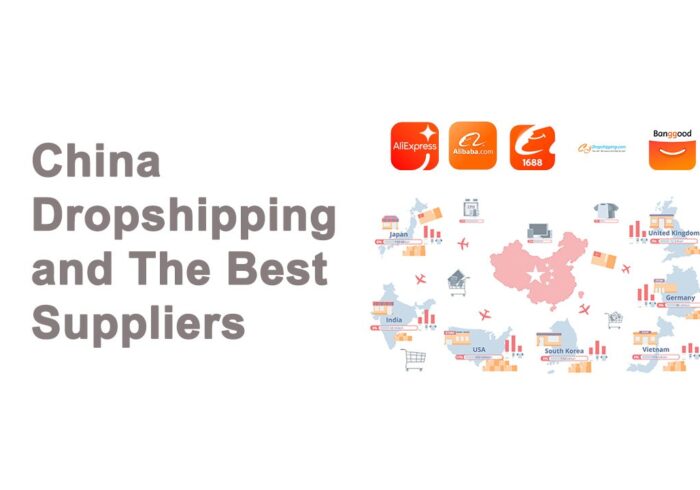
Compare Spocket and the discontinued Oberlo model through a modern dropshipping lens. Learn how to research products, test suppliers, calculate real margins, verify shipping quality, and build a scalable China sourcing and fulfillment workflow with less inventory risk.
Choosing the right dropshipping product research tool can determine whether a new store builds repeat customers or spends months managing delayed orders, inconsistent inventory, and thin margins. While Spocket vs. Oberlo was once a common comparison, today’s sellers need a more practical framework: evaluate supplier quality, fulfillment control, product economics, and the ability to scale without holding inventory.
Oberlo was historically popular because it made AliExpress product importing simple for Shopify sellers. However, it was removed from the Shopify App Store and shut down in 2022, so it is no longer an option for new stores. Shopify directed former users toward DSers during the migration period. This means modern startups should treat the original Spocket-versus-Oberlo question as a lesson in platform selection—not as a choice between two currently available apps.
For sellers sourcing from China, a platform such as Looperbuy can add another operational path: product sourcing, purchasing support, quality checks, warehousing, and direct fulfillment. This can be especially useful when you want access to China’s broad product supply without personally handling supplier payments, storage, or shipping coordination.
Table of Contents
The Original Spocket vs. Oberlo Debate—and Why It Changed
The original comparison centered on two different approaches to dropshipping.
Spocket positioned itself around curated suppliers, especially products intended for US and European markets, faster regional fulfillment options, and brand-facing features such as invoicing. It supports connections with platforms including Shopify, WooCommerce, Wix, and BigCommerce.
Oberlo, by contrast, helped Shopify merchants import products from AliExpress and automate parts of the order process. Its biggest advantages were product breadth, low barriers to entry, and fast product testing. The underlying idea still matters: a startup can test demand without buying stock upfront.
But the market has changed. Sellers should not choose a tool merely because it can import thousands of products. A large catalog does not solve the harder problems:
– Can the supplier maintain consistent quality?
– Is inventory data accurate?
– Can you verify the real shipping timeline?
– Will packaging support your brand?
– Does the product leave enough margin after shipping, refunds, advertising, and payment fees?
– What happens when a best-selling SKU suddenly goes out of stock?
The strongest dropshipping businesses treat product research as a supply-chain decision, not simply a search for viral products.
Spocket vs. Oberlo: What the Comparison Still Teaches
Although Oberlo is discontinued, the comparison remains useful because it illustrates two common sourcing priorities: speed and curated supply versus catalog depth and low-cost testing.
| Decision factor | Spocket-style approach | Historical Oberlo-style approach | What a modern seller should do |
| Supplier focus | Curated marketplace, often emphasizing regional suppliers | Broad AliExpress-based product access | Build a short list of suppliers, then validate each one |
| Product selection | Smaller, more curated selection | Massive catalog and rapid importing | Start with a narrow niche and test a limited SKU set |
| Fulfillment expectation | Potentially faster for target regions | Depended heavily on individual suppliers and shipping methods | Confirm delivery times with sample orders |
| Branding | May support branded invoicing, depending on supplier | Primarily product-import and fulfillment focused | Check packaging, inserts, invoices, and customer experience |
| Store integrations | Multiple ecommerce platforms | Shopify-centered | Select tools that match your store and order workflow |
| Main risk | Subscription costs and catalog limitations | Inconsistent quality, stock, and shipping performance | Measure total landed cost and supplier reliability |
Spocket’s branded invoicing feature can help create a more professional customer experience, but merchants should confirm whether it is available from the specific supplier they choose. Spocket states that branded invoicing is not available for every supplier.
The critical lesson is simple: a supplier directory is not a quality guarantee. A product can look excellent in listing photos, show promising margins on a spreadsheet, and still create costly refunds if it arrives late or does not match the description.
The Four Filters Before You Import Any Product
In my experience reviewing product strategies for new ecommerce stores, the most common mistake is importing products before establishing a decision standard. Use these four filters before adding a product to your store.
1. Demand Must Be Specific, Not Just Trend-Based
Avoid selecting an item only because it appears frequently on social media. Ask whether it solves a recognizable problem for a defined audience.
For example, “kitchen gadget” is too broad. “Compact meal-prep tool for apartment renters with limited counter space” is a clearer customer problem. This sharper positioning improves product descriptions, ad angles, bundles, and customer support.
Look for products with:
– A visible or easy-to-explain benefit
– A clear user scenario
– Enough room for a compelling product page
– Reasonable potential for repeat purchases, bundles, or accessories
– Low risk of size, compatibility, safety, or regulatory disputes
2. Margin Must Survive the Real Cost of Selling
Do not calculate margin using only product cost and retail price. Use landed cost, which includes the product, domestic handling, international shipping, transaction costs, packaging, returns allowance, and promotional spending.
A simple planning formula is:
Contribution Margin=Selling Price−Product Cost−Shipping−Fees−Refund Allowance−Customer Acquisition Cost
A product that appears profitable at $29.99 may become unviable once delivery, payment processing, customer acquisition, and replacement orders are included. Your first goal is not the highest advertised markup; it is a repeatable contribution margin.
3. Supplier Reliability Must Be Tested
A sample order is one of the most valuable steps in dropshipping research. Shopify recommends requesting samples after identifying a product and supplier, allowing merchants to inspect the item before committing to a larger purchase or production relationship.
Order samples to at least two locations when possible. Evaluate:
– Actual dispatch time versus the supplier’s stated timeline
– Tracking accuracy and update frequency
– Packaging condition on arrival
– Product materials, dimensions, color, and functionality
– Instructions, labeling, and safety information
– Supplier responsiveness when you ask a detailed question
– How easily the product could be replaced, refunded, or reshipped
Take your own photos and short videos during this process. These materials are more credible than generic supplier assets and can reveal issues before customers do.
4. Operations Must Fit Your Growth Plan
A product research tool should reduce manual work—not create a new operational bottleneck. Review how it handles inventory synchronization, price changes, order routing, shipping updates, refunds, and multiple sales channels.
For many early-stage sellers, direct supplier marketplaces are enough for testing. But once orders grow, fragmented workflows can become expensive. A sourcing and fulfillment partner such as Looperbuy can be relevant when merchants want support with China product sourcing, supplier communication, consolidated purchasing, warehousing, and direct shipping without maintaining their own inventory.
A Better Product Research Workflow for Startups
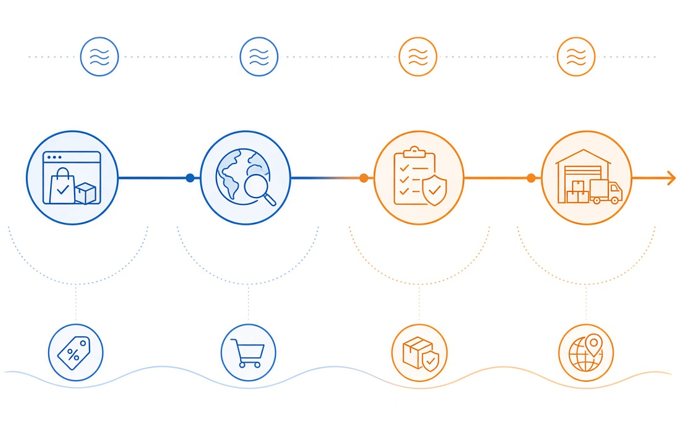
Instead of uploading hundreds of products and waiting for a winner, use a controlled validation process.
1. Choose one customer segment. Define the buyer, use case, price sensitivity, and primary geography before selecting products.
2. Build a shortlist of 10 to 20 products. Select items with a clear benefit, manageable shipping profile, and enough margin for testing.
3. Check supplier evidence. Review processing times, fulfillment locations, product variations, order history where available, customer feedback, and response quality.
4. Request samples. Test the product as a real buyer would. Document delivery time, packaging, quality, and usability.
5. Create differentiated product pages. Replace copied supplier text with your own benefit-led copy, original photos, comparison charts, usage guidance, and realistic delivery information.
6. Launch small tests. Use a limited budget and a small number of products. Measure conversion rate, cost per purchase, refund requests, support tickets, and delivery complaints—not just clicks.
7. Scale only validated winners. Expand inventory access, creative testing, or sourcing support only after a product proves that demand and fulfillment quality can work together.
This approach protects cash flow. It also makes customer expectations easier to manage because you are selling products you have personally evaluated.
When a China Sourcing Partner Adds Value
Some sellers assume that China sourcing means long delivery times and limited control. That can happen when a store relies on an unknown supplier without a clear process. It does not have to be the operating model.
A structured China sourcing and fulfillment workflow can help sellers access wider product selection while reducing the administrative burden of managing many factories or marketplace sellers. The value is often strongest when you need to:
– Source a product that is not available in a standard catalog
– Compare multiple suppliers for price, quality, or production capability
– Combine products from different suppliers into one shipment
– Inspect products before international dispatch
– Use branded inserts, custom packaging, or bundles
– Store proven inventory closer to fulfillment channels
– Avoid managing individual supplier payments and logistics coordination
For example, imagine a store selling desk-organization products. Instead of listing unrelated items from several catalogs, the merchant can develop a focused bundle: cable clips, a monitor stand accessory, a drawer organizer, and branded instructions. A sourcing partner can help coordinate purchasing and consolidate the order flow, while the merchant concentrates on merchandising, customer acquisition, and customer experience.
That distinction matters. The product is only one part of the offer; reliable delivery and presentation are part of the product experience too.
Final Recommendation: Choose the System, Not the Catalog
Spocket remains worth considering for sellers who value marketplace convenience, supported store integrations, and potentially more localized fulfillment options. Its features may suit merchants seeking a curated starting point, particularly when they want a straightforward connection to an existing ecommerce storefront.
Oberlo, however, should be viewed as a historical reference rather than a current solution because it is no longer available. For today’s startup, the better question is: Which sourcing system gives me confidence in product quality, shipping performance, profit margin, and customer experience?
Start narrow. Order samples. Track operational data. Then scale products that earn customer trust—not merely products that look easy to import.
Ready to build a more controlled China sourcing workflow? Explore how Looperbuy can help you source products, reduce inventory pressure, coordinate fulfillment, and ship directly to customers worldwide.
FAQ
1. Is Oberlo still available for Shopify stores?
No. Oberlo was removed from the Shopify App Store and shut down in 2022. Shopify directed merchants toward DSers as a migration option at the time.
2. Is Spocket better than AliExpress dropshipping?
Neither is universally better. Spocket may be useful when curated suppliers, supported integrations, and certain regional fulfillment options matter most. AliExpress-based sourcing can offer broader product selection, but each supplier must be independently evaluated for quality, stock accuracy, and delivery performance.
3. How many products should a beginner test?
A practical starting point is 10 to 20 products within one focused niche. This gives you enough variety to compare results without spreading your budget, store design, and customer support across too many unrelated items.
4. Should I order dropshipping samples before selling?
Yes. Samples allow you to inspect quality, packaging, product functionality, and shipping reliability before customers experience those variables. Shopify specifically recommends requesting samples after identifying potential suppliers.
5. What should I ask a dropshipping supplier before listing a product?
Ask about processing time, stock update frequency, shipping methods, tracking availability, product variations, packaging, return handling, defect replacement, branding options, and what happens if an item becomes unavailable after a customer order.
6. Can I dropship from China without holding inventory?
Yes. A sourcing and fulfillment partner can help coordinate supplier purchasing, inspection, storage, consolidation, and direct shipping, allowing sellers to avoid operating their own warehouse while retaining more control than a purely hands-off marketplace listing model.
References
1. [Doba, “Evaluating Spocket vs. Oberlo for Startups”] — Original comparison of product listing, supplier networks, automation, cost, and scalability.
2. [Shopify Community, “Is Oberlo shutting down? Is DSers the best alternative?”] — Shopify community guidance on Oberlo’s shutdown and DSers migration path.
3. [Shopify Community, “Why can’t I install the Oberlo app?”] — Confirmation that Oberlo was removed from the Shopify App Store and information on migration.
4. [Spocket Help Center, “What Is a Branded Invoice?”] — Details on branded invoices and supplier-specific availability.
5. [Spocket, “Dropship US/EU Products”] — Overview of supported ecommerce integrations and branded invoice positioning.
6. [Shopify, “Try Before You Buy: Requesting Product Samples”] — Guidance on requesting, tracking, reviewing, and negotiating supplier samples.
7. [Shopify, “Product Sourcing Guide”] — Overview of dropshipping fulfillment and the importance of testing supplier samples.