This article explains how global B2B sellers can build a smarter pricing strategy that protects margin, supports conversion, and scales across markets. It covers pricing models, tiered structures, sourcing realities, buyer trust, and practical workflows for cross-border commerce.
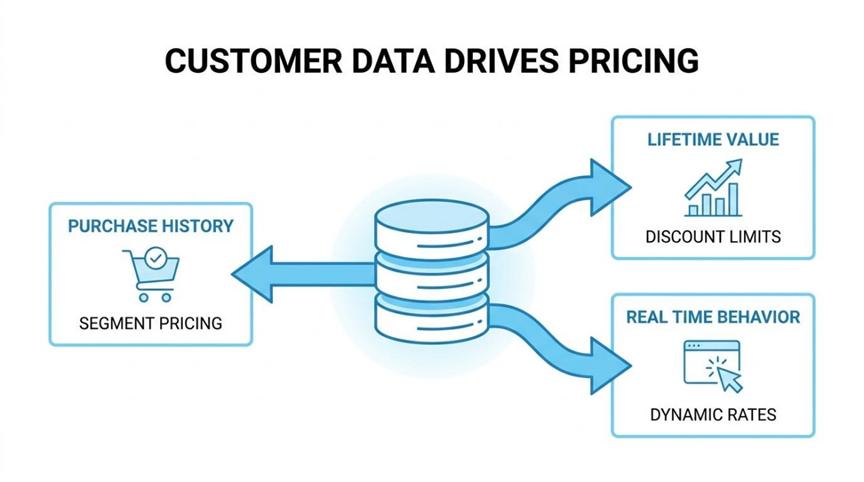
In B2B ecommerce, pricing is not just a number on a product page. It is a commercial system that shapes trust, margins, buyer behavior, and the efficiency of your entire sales process.
For global sellers sourcing from China, the challenge is even bigger. You are not only setting prices for products; you are managing landed costs, freight volatility, payment risk, inventory pressure, and fulfillment complexity across markets, channels, and customer segments.
A strong B2B ecommerce pricing strategy can do more than protect margin. It can improve conversion, shorten negotiation cycles, and help buyers make decisions faster. That matters because B2B buyers expect clarity, consistency, and commercial logic before they commit to an order.
Table of Contents
Why B2B Pricing Is Different in Ecommerce
B2B pricing works differently from consumer pricing because buyers rarely share the same terms. A distributor, a wholesaler, a reseller, and a long-term account may all buy the same item, yet each one expects a different price, payment term, and service level.
That difference creates both opportunity and complexity. On one hand, you can design pricing that reflects customer value and order size. On the other hand, you must manage those rules without creating confusion across sales, operations, and digital channels.
In ecommerce, pricing also becomes a user experience issue. If the website, quotation process, and backend terms do not align, buyers may delay the order or leave altogether. In B2B commerce, confidence often depends on whether the buyer feels the pricing structure is fair, understandable, and repeatable.
Core Pricing Models for B2B Sellers
The most effective B2B pricing strategies usually combine several models instead of relying on one. The right mix depends on your product category, customer type, market position, and how much complexity your team can manage.
Cost-plus pricing
Cost-plus pricing starts with product cost and adds a margin. It is simple, easy to explain, and useful as a baseline when you need a stable pricing floor.
This model works best for standardized products where cost visibility is strong. However, it can become weak if it ignores market demand, service value, or cross-border delivery costs.
Value-based pricing
Value-based pricing sets prices according to the business value the product delivers to the buyer. If your item helps customers reduce labor, increase output, lower risk, or improve speed to market, that added value can justify a higher price.
This model is powerful, but it requires a deep understanding of your buyers. You need to know what outcome they care about most and what alternatives they are comparing against.
Tiered pricing
Tiered pricing is one of the most practical models in B2B ecommerce. It rewards volume by offering lower unit prices as order quantity increases.
This model is especially useful for wholesalers, repeat buyers, and procurement teams that want visible incentives for larger orders. It also helps sellers raise average order value without making every deal feel like a negotiation.
Contract pricing
Contract pricing is built for long-term accounts. Instead of displaying a single public price, you create an agreed commercial structure for a specific customer or group of customers.
This model improves predictability, strengthens relationships, and supports complex accounts. It is especially useful when the buyer makes regular purchases or when the order structure is too customized for public pricing.
Dynamic pricing
Dynamic pricing changes based on demand, competition, stock availability, or cost changes. In B2B ecommerce, it can be effective for fast-moving inventory or volatile sourcing conditions.
The challenge is consistency. If the logic behind dynamic pricing is not transparent, buyers may feel that the process is unstable or unfair.
What Global B2B Sellers Should Price For
Many sellers make the mistake of pricing only against product cost. That is usually where margin erosion begins. In international B2B trade, the true commercial cost includes far more than the factory quote.
You should account for:
– Product cost.
– Packaging and labeling.
– Domestic transportation.
– International freight.
– Customs duties and taxes.
– Currency conversion.
– Payment processing fees.
– Warehousing or temporary storage.
– Order picking and handling.
– Damage, return, or replacement risk.
– Customer support and account management.
– Platform or transaction fees.
When pricing excludes these layers, the result is usually the same: the item looks profitable at first, but the real margin becomes thin once the order is fulfilled.
For businesses that source from China and sell internationally, this issue matters even more. A product with a low unit cost may still become expensive to serve if it has special handling requirements, long transit times, or high after-sales support needs.
The Hidden Cost of Manual Pricing
Manual pricing still exists in many B2B operations because spreadsheets feel flexible and familiar. But flexibility becomes a problem when the business scales.
The more SKUs, markets, customer groups, and service rules you manage, the more likely pricing errors become. A small mismatch in a price list may not seem serious on its own, but over time it can create margin leakage, inconsistent customer treatment, and confusion across departments.
Common manual pricing failures include:
– Outdated price lists.
– Inconsistent discounts across channels.
– Unclear rules for bulk orders.
– Sales reps giving unauthorized concessions.
– Margin leakage from freight assumptions.
– Slow response time for quotes.
– Poor visibility into customer-specific terms.
Manual processes also slow the buyer experience. In B2B, speed matters. If a prospect asks for a quote and waits too long, they may move to a competitor that can respond faster or provide clearer pricing.
Building a Smarter B2B Pricing Structure
A strong pricing structure starts with segmentation. Not every buyer should receive the same price, and not every order should be treated with the same commercial logic.
A practical structure usually begins with customer groups such as:
– New buyers.
– Repeat buyers.
– High-volume accounts.
– Regional accounts.
– Strategic partners.
– Marketplace customers.
– Private-label or custom-order clients.
Once the customer groups are clear, define the pricing logic around each one. The most effective structure often follows this sequence:
1. Set a base price.
2. Define volume tiers.
3. Add account-specific adjustments.
4. Adjust for region or currency where needed.
5. Add shipping, service, or handling surcharges.
6. Check the final margin outcome.
This structure gives your team a framework that is easier to communicate and easier to manage. It also helps buyers understand why they are paying a certain price, which reduces friction and negotiation time.
How Tiered Pricing Improves Conversion
Tiered pricing is especially effective because it gives buyers a reason to increase order volume without forcing a separate negotiation every time. Instead of presenting one flat rate, you create a visible path to a better deal.
For example:
– 1 to 99 units: standard price.
– 100 to 499 units: 8% discount.
– 500+ units: 15% discount.
That kind of structure helps buyers make decisions quickly. It also encourages them to think in terms of total value rather than unit price alone.
Tiered pricing works particularly well for B2B ecommerce because it fits common procurement behavior. Buyers often want to compare volume levels, evaluate cost efficiency, and justify their purchase internally. When the pricing ladder is clear, the buyer can do that more easily.
Why Buyer Trust Depends on Pricing Clarity
Buyers lose trust when pricing feels inconsistent or incomplete. That usually happens when they see different prices on different pages, hidden fees at checkout, or unclear rules for discount eligibility.
In B2B, unclear pricing is not just a pricing issue. It is a trust issue.
Buyers want to know:
– What is the base price?
– What changes the price?
– What happens at higher volumes?
– Are shipping and taxes included?
– Is the price fixed or negotiable?
– Do returning customers get special terms?
If the answer to these questions is hidden or difficult to find, the buyer may hesitate. A clear pricing system reduces uncertainty, and reduced uncertainty improves conversion.
A Better Approach for China Sourcing
For businesses sourcing from China, pricing should always reflect fulfillment reality. A low unit price is not enough if the order is difficult to move, slow to ship, or expensive to support after sale.
That is where a sourcing and fulfillment platform can add real value. Instead of simply passing through a factory quote, the platform can help align pricing with the full commercial picture: sourcing, inspection, consolidation, shipping, payment, and customer service.
This matters most for:
– Cross-border wholesale.
– Dropship-ready catalogs.
– Small and mid-sized B2B resellers.
– Market testing and fast product launches.
– Buyers who want to avoid holding inventory.
– Sellers who need a simple path into international trade.
For these businesses, the strongest pricing strategy is not the cheapest one. It is the one that preserves margin while lowering operational friction.
Practical Pricing Workflow
A reliable pricing workflow reduces guesswork and makes your business more scalable. It also creates consistency across teams, which is important when sales, operations, and finance all touch the pricing process.
1. Audit current prices
Review all active price lists, discount rules, and customer-specific terms. Look for mismatches across channels, outdated assumptions, and hidden margin leakage.
2. Map total cost
Build a complete cost picture that includes product cost, packaging, fulfillment, payment, and support. Avoid relying on ex-factory cost alone.
3. Segment customers
Separate buyers by order size, frequency, geography, and commercial value. This lets you design pricing that matches buyer behavior.
4. Define pricing rules
Write clear rules for volume thresholds, regional differences, and account-level exceptions. The more explicit the logic, the easier it is to manage.
5. Test before scaling
Run pricing tests on selected products or customer groups before rolling out changes broadly. This reduces risk and gives you data to support future decisions.
6. Review regularly
Check whether your pricing still matches margin goals, cost conditions, and market reality. Pricing should evolve as the business changes.
Data Signals That Should Trigger a Price Review
Pricing should not remain fixed when the market changes. If your business sees any of the signals below, it may be time to revisit your pricing structure:
– Freight costs increase.
– Exchange rates move sharply.
– Demand spikes or weakens.
– Inventory becomes limited.
– Return rates rise.
– Payment risk increases.
– Competitors change their offer.
– Fulfillment speed changes.
The goal is not to change prices constantly. The goal is to ensure your price still reflects reality. In international B2B trade, even a small shift in logistics or currency can have a noticeable impact on profitability.
The Role of Pricing in Customer Retention
Pricing is often discussed as a conversion tool, but it also plays a major role in retention. A customer may be willing to pay a slightly higher price if the commercial structure is reliable, transparent, and easy to work with.
That is especially true in B2B, where the cost of switching suppliers can be high. Buyers are not only comparing price. They are also comparing delivery reliability, communication quality, product consistency, and the effort required to place repeat orders.
A good pricing strategy supports retention by:
– Making repeat orders easier.
– Rewarding loyalty with better terms.
– Reducing quote delays.
– Creating a predictable buying experience.
– Avoiding surprise fees.
When buyers can trust the pricing process, they are more likely to reorder.
How to Position Price Against Value
Some companies compete by trying to be the cheapest. That approach often works only until another supplier cuts price further.
A stronger strategy is to position price against value. If your offer saves time, reduces inventory pressure, simplifies shipping, or lowers operational complexity, that value should be visible in the pricing story.
This is where many B2B platforms can differentiate themselves. Instead of competing only on unit cost, they can frame their value around total business efficiency.
For example:
– Lower inventory risk.
– Faster launch speed.
– Less warehousing pressure.
– Simpler cross-border operations.
– Better order visibility.
– More manageable fulfillment.
When the value proposition is strong, buyers are less likely to judge the offer only by the lowest line item.
How to Make Pricing Easier to Sell Internally
In B2B, the buyer is not always the only decision-maker. Often, the quote must be approved by finance, procurement, operations, or a senior manager. That means your pricing needs to be easy to defend internally.
To support internal approval, your pricing should show:
– Why the price is structured this way.
– What the buyer receives in return.
– How volume improves unit economics.
– What costs are included.
– How the price compares to alternatives.
– What makes the offer lower risk.
If the buyer can explain the value clearly to colleagues, the order is more likely to move forward.
Start sourcing from China with less inventory pressure and more pricing control. Request a quote or launch your first order with Looperbuy today.
FAQ
1. What is the best B2B ecommerce pricing model?
There is no single best model. Most businesses perform better with a hybrid approach that combines cost-plus, tiered, contract, and value-based pricing.
2. Why is tiered pricing so common in B2B?
Tiered pricing encourages larger orders, gives buyers a clear incentive to scale up, and reduces the need to negotiate every deal from scratch.
3. How should a global seller calculate final price?
The final price should include product cost, freight, customs, payment fees, support costs, and target margin, not just factory cost.
4. What is the biggest pricing mistake in B2B?
The biggest mistake is using manual, inconsistent pricing across channels. That often creates margin leakage and buyer distrust.
5. How can a sourcing platform improve pricing experience?
A sourcing platform can centralize price rules, support customer-specific terms, automate volume discounts, and make the buyer journey faster and clearer.
6. Should pricing change often in B2B ecommerce?
Not constantly, but it should be reviewed regularly. Pricing should move when freight, exchange rates, inventory, or demand conditions change.
References
1. Virto Commerce, “B2B Pricing: Strategies, Models & Best Practices for Ecommerce”[virtocommerce]
2. Xictron, “B2B Pricing Strategies in E-Commerce 2026″[xictron]
3. Varstreet, “Everything About B2B eCommerce Pricing Strategies 2026″[varstreetinc]
4. Shopline, “B2B Pricing Strategy Guide: Tools & Implementation (2026)”[shopline]
5. Shopify Enterprise, “Ecommerce Pricing Strategy: 10 Models to Choose (2026)”[shopify]
6. Uncap, “5 Effective B2B Ecommerce Pricing Strategies”[uncap]