
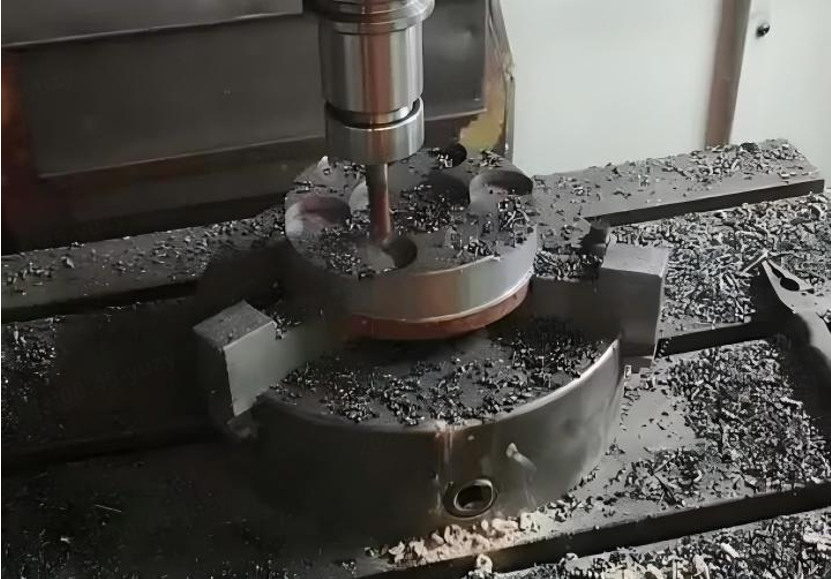
Vietnam has become a serious CNC sourcing destination for global buyers seeking precision, export-ready factories, and flexible production. This expanded guide rewrites the topic in a practical format, adds supplier evaluation steps, sourcing workflow tips, and clear next actions for B2B procurement.
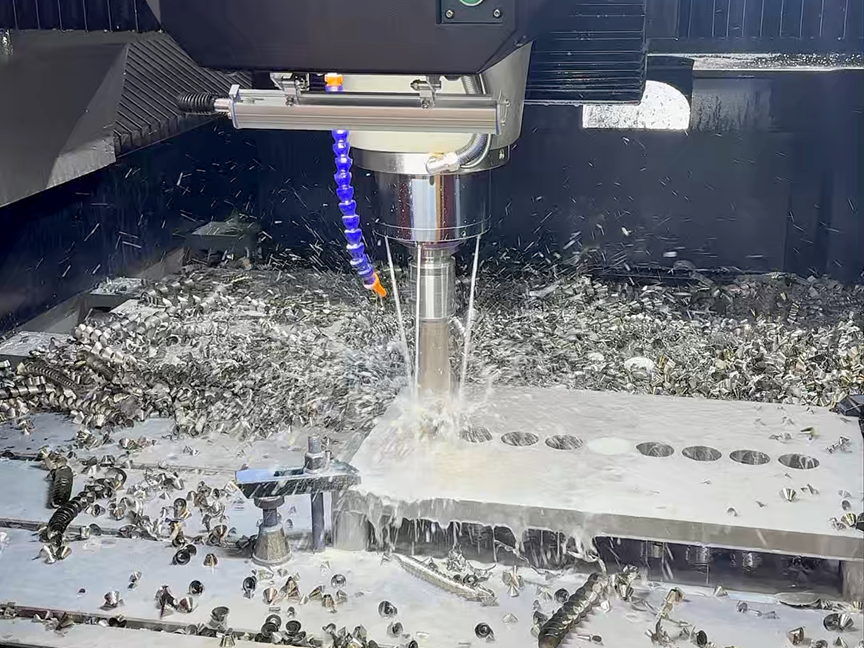
Vietnam has become one of the most discussed manufacturing destinations for precision machining, and buyers now look there not only for cost advantages, but also for export-ready quality, flexible production, and faster lead times. If you are comparing CNC manufacturers in Vietnam, the real question is not just who can machine parts, but who can deliver consistent quality, documentation, and dependable communication at scale.
For global B2B buyers, Vietnam is no longer just an “alternative” market. It is increasingly a strategic sourcing location for companies that want to diversify suppliers, reduce concentration risk, and build more resilient procurement networks. That shift matters because the best CNC partner is not the cheapest one, but the one that can reliably produce parts to specification, on time, and with minimal operational friction.
Table of Contents
Why Vietnam Is on More Buyers’ Shortlist
Vietnam’s CNC sector has expanded alongside the country’s broader manufacturing base, and recent industry coverage shows that modern factories are investing in more advanced equipment, metrology, and export-oriented systems. For B2B buyers, that matters because CNC sourcing is no longer just about low unit cost; it is about repeatability, traceability, and the ability to support complex supply chains.
One reason Vietnam attracts attention is its manufacturing momentum. New plants, machine tool investments, and growing export activity continue to improve the country’s industrial profile. That makes it especially appealing to importers, OEMs, distributors, and private-label brands that need a dependable production base in Asia.
In practice, Vietnam is attractive for buyers who need:
– Precision metal parts and components.
– Export-friendly manufacturing partners.
– Suppliers with ISO-style quality systems.
– A sourcing option that fits China-plus-one strategies.
– Better flexibility for prototype work, pilot orders, and smaller production runs.
Another advantage is the willingness of many Vietnamese factories to serve international customers. This often translates into more responsive quotation processes, export packaging support, and stronger attention to documentation. For foreign buyers, those “small details” often determine whether a supplier relationship becomes smooth or painful.
What CNC Manufacturers In Vietnam Can Produce
CNC machining in Vietnam covers a wide range of processes and materials. Buyers can source milled parts, turned components, drilled items, bored parts, wire-cut pieces, and more specialized outputs depending on the factory’s equipment and technical scope. Many companies also support complementary services such as surface finishing, assembly, die casting, laser cutting, or injection molding.
Typical CNC outputs include:
– Machined housings and enclosures.
– Shafts, connectors, brackets, and fixtures.
– Precision metal parts for automotive and industrial use.
– Prototype and low-to-medium volume production runs.
– Tooling components and custom mechanical parts.
– Parts that require secondary finishing or assembly.
Vietnamese CNC suppliers may work with aluminum, stainless steel, carbon steel, brass, copper, plastics, and engineering-grade materials. That matters because material compatibility affects cost, lead time, machining difficulty, and end-use performance. Before you issue a quotation request, it helps to know exactly whether your part is for structural use, cosmetic use, heat exposure, wear resistance, or tight-tolerance assembly.
Ten Manufacturers To Know
Some companies are strong in precision parts, while others combine CNC with injection molding, casting, or broader fabrication services.
| Manufacturer | Main Strengths | Notes |
| VPIC1 | CNC turning, drilling, milling, metal products | Strong certification profile and global customer base. |
| NHTCPI | CNC + injection molding, complex parts | Supports planning, tooling, and logistics. |
| Sinchi | CNC and die casting | Serves electronics, kitchenware, and sewing machine parts. |
| VMF | Full manufacturing services, large CNC capacity | Notable for its machine park and global brand work. |
| Vietnam Yoshita | Full-process CNC support | Focuses on precision machining and assembly. |
| AGEV | CNC bending, punching, milling, drilling | Useful for sheet-metal-related production. |
| AGS | CNC + injection molding | Works with a wide material range. |
| ANCL | CNC milling, turning, wire cutting | Exports to multiple global markets. |
| Vietlaser | CNC laser and plasma machines | Strong in machine-tool applications. |
| Minh An Precision Mechanical | Precision machining | Presented as a trusted name in Vietnam’s CNC sector. |
This list is useful as a starting point, but a name on a list is never enough. A supplier can look impressive on paper and still fail in real production if it lacks process control, communication discipline, or proper inspection systems. In CNC sourcing, execution matters more than presentation.
How To Evaluate A CNC Supplier
A company profile is only the starting point. The best buyers go deeper and validate whether the supplier can actually hold tolerances, manage inspection, and communicate clearly during production. Recent buyer guidance from Vietnam-focused manufacturing content emphasizes equipment audits, metrology verification, and first article inspection as more reliable than brochure claims alone.
Use this checklist:
1. Confirm the exact machining processes offered.
2. Ask for machine lists, age, and controller types.
3. Review inspection tools such as CMMs and surface testers.
4. Request material traceability and sample reports.
5. Verify export experience in your target market.
6. Order a pilot run before scaling volume.
7. Ask how the factory handles rework, rejects, and deviation reports.
8. Check whether engineering support is available during drawing review.
A strong supplier should be able to explain how it controls variation. That includes tool wear management, process checks, in-process inspection, and final quality verification. If a manufacturer cannot answer these questions clearly, the risk is usually higher than the quotation suggests.
You should also evaluate how the factory behaves during the quotation stage. Good CNC suppliers ask technical questions. Weak ones simply quote a price. The first group is trying to protect quality; the second group is often trying to win the order first and solve problems later.
Certifications And Quality Signals
Certifications do not guarantee perfect parts, but they are still useful signals.
A practical reading of certifications is:
– ISO 9001 suggests a documented quality system.
– IATF 16949 matters for automotive supply chains.
– ISO 13485 matters for medical-related parts.
– AS 9100 signals aerospace-grade discipline.
– ISO 14001 may matter if sustainability or compliance is part of your sourcing policy.
That said, a certificate is not the same as production capability. A factory can hold a certificate and still struggle with consistency if the internal process is weak. For that reason, buyers should treat certifications as a filter, not a final decision.
It also helps to ask for recent audit records, customer references, and sample inspection reports. These materials reveal far more than a marketing brochure. If a factory is comfortable sharing real process evidence, that usually indicates maturity and confidence.
Sourcing For Different Product Types
Not every CNC project is the same, and the best supplier depends heavily on the product category. A company that is excellent at simple aluminum housings may not be the right choice for automotive parts with strict tolerances or for medical components that require documentation discipline.
Here is a useful way to think about sourcing by product type:
Prototypes And Early-Stage Parts
For prototypes, speed and responsiveness matter more than cost optimization. You want a supplier that can review drawings quickly, suggest manufacturability improvements, and produce first samples without long delays. This stage is where engineering communication matters most.
Small-Batch Production
For small batches, flexibility and repeatability matter. A supplier should be willing to run lower volumes without inflating the price so much that the project becomes unviable. This is especially useful for product testing, market entry, and custom industrial orders.
Large-Scale Export Orders
For higher-volume orders, the key concern shifts to consistency, capacity, and documentation. Buyers should validate whether the supplier can handle repeated runs, keep dimensional drift under control, and maintain packaging and shipping standards across multiple batches.
Multi-Component Assemblies
If your order includes assemblies rather than individual parts, you need stronger coordination. In that case, it is important to understand whether the supplier can manage subcomponents, tolerances across parts, and final fit. Assembly errors are often more expensive than machining errors.
A Smarter Sourcing Workflow
Many buyers waste time by contacting suppliers before clarifying their own requirements. A better approach is to build a short sourcing brief that covers geometry, tolerance, quantity, material, finishing, packaging, and destination market. This reduces back-and-forth and helps suppliers quote accurately from the start.
A simple workflow looks like this:
1. Define the part and target application.
2. Share drawings, tolerance zones, and finish requirements.
3. Request capability proof, not only price.
4. Compare quotes on quality, lead time, and risk.
5. Run sample approval before mass production.
6. Lock down packaging and labeling requirements early.
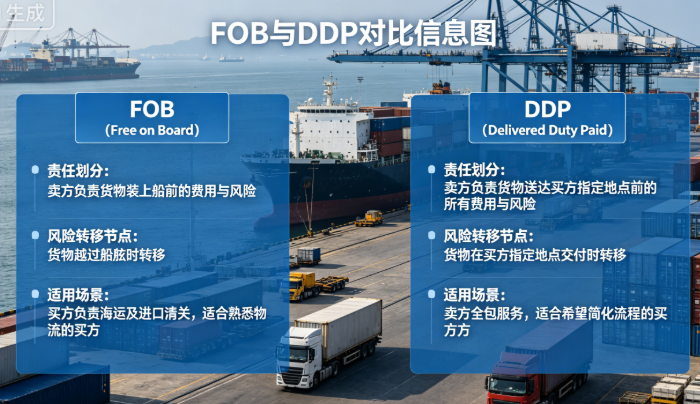
7. Confirm shipping terms and responsibility boundaries.
8. Keep a record of all changes during development.
This workflow reduces surprises. It also gives you a stronger basis for comparing suppliers fairly. When one supplier looks cheaper but excludes critical services like inspection, packaging, or documentation, the “cheap” quote can quickly become the most expensive option.
For international buyers, communication structure is just as important as machining skill. Clear purchase orders, organized technical drawings, and a defined approval process can save days or weeks in production cycles.
Vietnam Vs Other Sourcing Options
Vietnam is often considered alongside China and other Asian manufacturing hubs, but the best choice depends on the product, order size, and risk tolerance. For buyers sourcing across multiple categories, a platform like Looperbuy can reduce friction by helping you avoid the cost of holding inventory, managing warehousing, handling payments alone, or coordinating logistics without support.
Vietnam is especially attractive when buyers want diversification. If your supply chain is heavily concentrated in one country, adding a Vietnamese CNC partner can reduce exposure to local disruptions, capacity bottlenecks, or cost shocks. That does not mean Vietnam is always the best option; it means it is increasingly a serious option.
Here is the practical takeaway:
– Choose Vietnam when you want export-oriented machining and supplier diversification.
– Choose China when your priority is very broad supplier depth and scale.
– Choose a managed sourcing model when you want less operational burden.
– Choose a pilot-first approach when the part is technically demanding or business-critical.
The smartest buyers compare sourcing decisions based on total landed cost, quality risk, communication speed, and operational simplicity. Unit price alone is never enough.
Common Mistakes Buyers Make
A surprisingly large number of sourcing problems come from avoidable mistakes. Some buyers rush into production without checking tolerances. Others focus only on the lowest quote and ignore hidden costs. In CNC sourcing, those mistakes can lead to delays, scrap, mismatch issues, and expensive revisions.
Common mistakes include:
– Sending incomplete drawings.
– Not defining critical dimensions.
– Ignoring surface finish requirements.
– Failing to ask about inspection equipment.
– Overlooking packaging and export labeling.
– Skipping sample approval.
– Choosing a supplier without checking real production experience.
The safest approach is to treat CNC sourcing like a technical collaboration, not a simple purchase. The more precise your brief, the better the supplier can quote and produce. In many cases, the quality of the buyer’s preparation directly affects the quality of the final part.
Where This Market Is Going
Vietnam’s CNC sector is likely to keep developing as factory capabilities improve and international buyers continue to diversify their supply chains. More equipment investment, better inspection discipline, and stronger export orientation should help the country remain relevant for precision manufacturing. For buyers, that creates opportunity, but only if sourcing is done with discipline.
The biggest winners will be the buyers who combine market awareness with process control. They will compare suppliers carefully, insist on sample validation, and work with partners who understand not just machining, but the realities of cross-border trade. In that context, CNC sourcing is no longer just about finding a factory; it is about building a dependable production system.
If your business needs China-sourced products, reliable fulfillment, and fewer operational headaches, Looperbuy can help simplify procurement and dropshipping for global B2B sellers. Use a managed sourcing partner when you want better control over supplier selection, order handling, and logistics coordination without adding internal overhead.
For buyers who work across multiple categories, a partner-led model can save time at every step of the process. It can also reduce the hidden cost of fragmented communication, missed quality issues, and last-minute shipping problems. That is especially valuable when your goal is to scale without building a large in-house procurement team.
FAQs
1. Are CNC manufacturers in Vietnam suitable for export orders?
Yes. The source material shows that several Vietnamese CNC suppliers already serve international customers and hold export-oriented certifications and capabilities.
2. What industries use Vietnam CNC machining the most?
Automotive, electronics, industrial equipment, medical, and kitchenware are among the most common use cases mentioned in the source material.
3. Which certifications should I ask for first?
Start with ISO 9001, then check whether the supplier also holds IATF 16949, ISO 13485, or AS 9100 depending on your industry.
4. How can I reduce sourcing risk?
Ask for machine lists, inspection reports, sample runs, and proof of export experience before placing a large order.
5. Is Vietnam better than China for CNC sourcing?
It depends on your product, volume, and risk profile. Vietnam is often attractive for diversification, while China still offers very deep supply chains and scale.
6. What is the best first step before contacting suppliers?
Prepare a sourcing brief with drawings, tolerance requirements, quantities, materials, finishes, and delivery expectations.
References
1. Global Sources, “CNC Manufacturers Vietnam: Leading the Industry” – [https://www.globalsources.com/knowledge/10-cnc-manufacturers-in-vietnam/]
2. FNM Vietnam, “Liste des fabricants de CNC au Vietnam [TOP 9]” – [https://fnm-vietnam.fr/made-in-vietnam/fabricants-cnc-vietnam/]
3. DEWIN Vietnam, “State of Manufacturing Report 2026” – [https://dewinvietnam.com/state-of-manufacturing-2026]
4. DEWIN Vietnam, “Inside Vietnam’s Top CNC Machining Factories” – [https://dewinvietnam.com/blog/vietnam-cnc-machining-factories-capabilities/]
5. Semix Vietnam, “Guide CNC Machining in Vietnam” – [https://semix.vn/guide-cnc-machining-in-vietnam.html]
6. Timedoes, “Top B2B China Websites for Product Sourcing” – [https://www.timedoes.com/b2b-china-websites-for-china-product-sourcing/]
7. Alibaba Seller Blog, “Vietnam CNC Packaging Machine Procurement Guide 2026” – [https://seller.alibaba.com/blogs/2026/southeast-asia/packaging-machinery/vietnam-cnc-packaging-machine-procurement-guide-alibaba]

-2-700x490.jpeg)