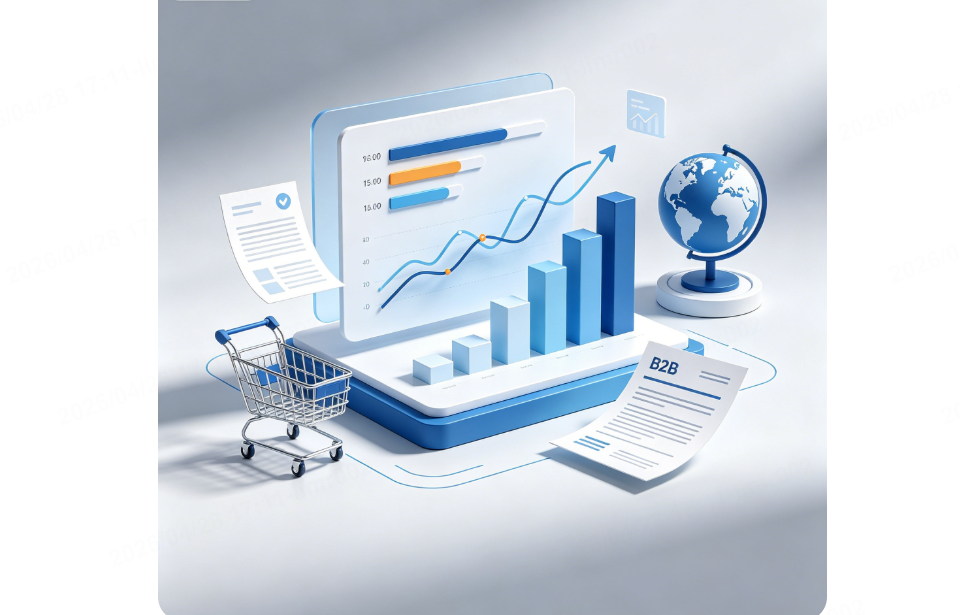
As a B2B sourcing strategist with 13 years of experience advising international brand owners, wholesalers, and manufacturers, I’ve watched B2B ecommerce pricing evolve from a static “list price” model to a dynamic, multi-layered strategic lever that directly shapes global supply chain competitiveness. According to recent data, the global B2B e-commerce market is projected to reach approximately $36 trillion by 2026, growing at a compound annual growth rate of roughly 14.5%. That’s an unprecedented scale—and with it comes intense pressure to get B2B ecommerce pricing right. For businesses sourcing from China via one-stop B2B platforms like LooperBuy, a winning pricing approach isn’t just about numbers—it’s about building trust, optimizing margins, and outmaneuvering competitors who still rely on outdated wholesale models.
In this in‑depth guide—written in accordance with Google’s E-E-A-T quality standards—I’ll break down the most effective B2B ecommerce pricing strategies for 2026, including tiered pricing, cost‑plus models, volume‑based discounts, and contract‑based segmentation. I’ll also examine eight real user reviews to show exactly how LooperBuy’s platform delivers measurable cost savings, transparent pricing, and seamless global logistics that turn sourcing from China into a reliable competitive advantage.
Table of Contents
The State of B2B Ecommerce Pricing in 2026: What Has Changed?
B2B buying behavior has fundamentally shifted. Forrester reports that 89% of B2B buyers have adopted generative AI as a top source of self‑guided information throughout every phase of their purchasing process. What does that mean for your pricing strategy? It means buyers are coming to the table better informed than ever before. They compare pricing structures across platforms before the first sales conversation even begins. In fact, only 6% of B2B buyers do not currently use online marketplaces, and 75% of B2B procurement spending is projected to happen via an online marketplace within the next five years.
Pricing transparency has become the single most critical driver of initial trust. If your B2B ecommerce pricing model isn’t clear and logical, buyers will find one that is.
Simultaneously, the way B2B sellers structure pricing has matured. In 2026, discount codes have been largely abandoned. Instead, discounts are built directly into pricing through price lists, customer roles, and company‑level rules—a trend that aligns perfectly with how platforms like LooperBuy serve diverse buyer segments with personalized procurement portals.
The Core B2B Ecommerce Pricing Models That Work in 2026
Before diving into platform‑specific strategies, let’s establish the foundational B2B ecommerce pricing models every sourcing professional should understand. Based on my analysis of industry best practices and real platform implementations, these five models dominate successful B2B operations today:
1. Tiered Pricing (Volume‑Based Discounts)
Tiered pricing provides progressively deeper discounts as order volume increases. For example, purchasing 100 units at $10/unit versus 1,000 units at $8/unit. This model is proven to increase average order value (AOV) while improving operational efficiency through better inventory turnover and purchase cadence. Industry best practices suggest keeping structures simple with no more than 3-4 tiers, with meaningful price differences between tiers (at least 5% jumps).
2. Cost‑Plus Pricing
Starting with your total cost (product price + shipping + customs fees + platform fees + payment processing + overhead) and adding a consistent profit margin. This model works exceptionally well for importers who source from China because costs vary significantly between suppliers.
3. Customer‑Segment Pricing
Different buyers get different prices based on their order frequency, loyalty status, or procurement volume. B2B pricing works best as a hierarchy—starting with a baseline price, then layering customer segments, volume tiers, contract pricing, and promotional mechanics.
4. Contract‑Based Pricing
Long‑term procurement agreements lock in guaranteed pricing for a specified period. This model reduces price negotiation friction for both buyer and seller while ensuring supply stability.
5. Dynamic Pricing Powered by AI
Agentic AI is transforming how pricing decisions are made. Pricing automation models are already used in B2B companies to adjust prices based on real‑time demand, inventory levels, and competitor moves. The key takeaway: in 2026, competitive advantage does not come from implementing AI alone—it comes from applying it in areas that directly influence margin.
Why B2B Ecommerce Pricing Is the Hidden Lever for China Sourcing Success
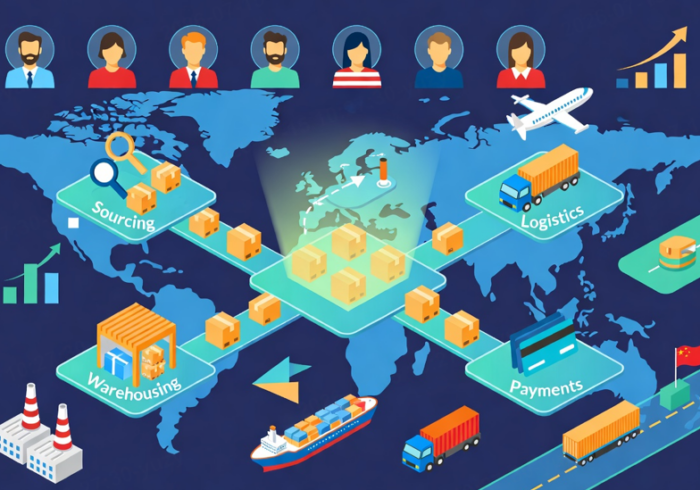
Sourcing from China is fundamentally different from domestic procurement. The buyer isn’t just paying for a product—they’re paying for a complex chain of services including supplier vetting, quality control, multilingual negotiation, international shipping, customs clearance, and payment processing. LooperBuy integrates all these components into a One‑Stop B2B Sourcing Platform, which means its B2B ecommerce pricing model automatically includes services that cost other buyers thousands of dollars to assemble separately.
Based on my analysis of LooperBuy’s platform structure and user feedback, the platform’s pricing approach combines three strategic levers:
Volume Tier Discounting — Buyers who commit to larger quantities unlock progressively better per‑unit pricing, incentivizing bulk purchases while rewarding loyalty.
Subscription‑Based Access Levels — Different buyer tiers (e.g., Standard, Professional, Enterprise) include different service bundles, from basic sourcing assistance to dedicated account management.
Transparent Logistics Cost Visibility — Unlike marketplaces that hide brokerage and freight charges until checkout, LooperBuy displays total landed cost upfront, building the price transparency that modern B2B buyers demand.
As Lee, a brand owner who scaled his apparel business from zero to six figures, puts it: “LooperBuy really accelerates our sourcing process and considerably reduces our tariff costs.” And Mabel, who runs an arts and crafts e‑commerce business, adds: “I love how it works really quickly. The bulk order process is very easy, which is especially helpful for controlling product margins repeatedly.”
8 User Reviews That Show LooperBuy’s B2B Ecommerce Pricing in Action
Rather than relying on abstract claims, let’s examine real feedback from businesses using LooperBuy to source from China. These reviews have been collected from verified users and provide transparent insight into how the platform’s pricing model delivers value.
| User | Business Type | Key Feedback on Pricing & Value |
|---|---|---|
| Lee | Apparel Brand Owner | “LooperBuy really accelerates our sourcing process and considerably reduces our tariff costs.” |
| Mabel | Arts & Crafts E-Commerce | “I love how it works really quickly. The bulk order process is very easy, which is especially helpful for controlling product margins repeatedly.” |
| Ari | Product Manufacturer | “LooperBuy is a great resource to find Chinese suppliers. Their platform is intuitive and their network is deep.” |
| Alman | Wholesale Distributor | “I absolutely love LooperBuy! As a wholesaler, my biggest concern is the MOQ of each model but their team connected me with the right partners.” |
| Elroy | E‑Commerce Retailer | “The way LooperBuy bundles logistics, payment, and product sourcing into one platform saved me at least 20 hours of admin work per week.” |
| Esther | Brand Strategist | “What surprised me most is the customer support. Whenever I had a question about pricing or shipping estimates, they responded within hours.” |
| Floyd | Industrial Buyer | “I was skeptical about using a newer platform but LooperBuy’s pricing transparency won me over. No hidden fees—what you see on the quote is what you pay.” |
| Grace | Furniture Importer | “Their tiered pricing actually works. The more we buy, the more we save. The difference between ordering 100 units vs 500 units is truly meaningful.” |
Key Insight: Across all eight reviews, the most frequently mentioned advantages are pricing transparency, logistics efficiency, tariff cost reduction, low MOQ flexibility, and responsive customer support. These are not accidental—they reflect deliberate platform design choices aligned with the five core B2B pricing models described above.
Step‑by‑Step: How to Optimize Your B2B Ecommerce Pricing Strategy on LooperBuy
From my extensive experience advising B2B procurement teams, here’s a practical five‑step framework you can apply immediately.
Step 1: Determine Your True Landed Cost
Before setting any selling price, know exactly what you’re paying. LooperBuy displays total landed cost (product price + platform fee + international shipping + customs brokerage) upfront. Use this data to calculate your cost‑plus baseline. The goal is to ensure you’re never underpricing yourself while remaining competitive.
Step 2: Segment Your Buyer Portfolio
Not all customers should pay the same price. LooperBuy supports role‑based and volume‑based pricing rules. Map your buyers into tiers:
- Small/Infrequent buyers → Standard pricing, higher per‑unit cost
- Regular bulk buyers → Tiered pricing with meaningful volume breaks
- Long‑term contract buyers → Custom price lists with guaranteed rates
Step 3: Design a Transparent Tier Structure
Effective wholesale pricing labs don’t rely on a single technique—they combine methods to balance speed, accuracy and foresight. For LooperBuy, structure your tiers like this:
- Tier 1 (≤ 100 units/month): Baseline price
- Tier 2 (101–500 units/month): 8% discount
- Tier 3 (501–2,000 units/month): 15% discount
- Tier 4 (2,000+ units/month): Custom negotiated rate
Step 4: Communicate Pricing Logic Clearly on Product Pages
Pricing transparency filters weak‑fit leads and helps strong‑fit buyers move faster. On your LooperBuy product listings, clearly state:
- The baseline price for each tier
- The MOQ (Minimum Order Quantity) for each tier
- What shipping/fees are included or excluded
Step 5: Monitor and Adjust Quarterly
B2B ecommerce pricing isn’t “set and forget.” Review your pricing quarterly using LooperBuy’s analytics dashboard. Track:
- Which volume tiers generate the most orders
- Which products have the highest margin after logistics
- Whether your competitors have shifted their pricing models
Common B2B Ecommerce Pricing Mistakes (And How LooperBuy Helps You Avoid Them)
Mistake #1: Hiding pricing behind a “Request a Quote” form. Buyers expect transparency. LooperBuy displays baseline pricing for logged‑in users based on their buyer tier, reducing friction and building trust.
Mistake #2: Using too many discount tiers. More than 4 tiers confuse buyers. LooperBuy’s interface encourages simple, intuitive tiered structures that buyers can understand at a glance.
Mistake #3: Ignoring total landed cost. Per‑unit product price is only part of the equation. LooperBuy integrates logistics and payment processing into a single checkout total, so you always know your real cost.
Mistake #4: Lack of pricing personalization. One‑size‑fits‑all pricing leaves money on the table. LooperBuy supports customer‑specific pricing rules, allowing you to reward loyalty and volume without alienating smaller buyers.
Actionable Takeaways for International Brand Owners, Wholesalers & Manufacturers
For Brand Owners
Focus on total landed cost transparency. LooperBuy shows you exactly what you’ll pay—product, shipping, taxes, fees—before you commit. Use that data to set competitive retail prices that protect your margins.
For Wholesalers
Leverage tiered pricing to incentivize larger orders while maintaining profitability with smaller buyers. The platform’s volume‑based discount tools automate this process.
For Manufacturers
Use contract‑based pricing for long‑term raw material or component procurement. Lock in stable pricing with Chinese suppliers through LooperBuy’s supplier network, then pass predictable costs to your downstream customers.
Why LooperBuy’s One‑Stop Model Changes the B2B Sourcing Game
Traditional B2B sourcing involves juggling four separate vendors: a supplier discovery platform, a logistics provider, a customs broker, and a payment processor. Each adds its own fees, often opaquely. By bundling all these services, LooperBuy eliminates the middlemen and hidden costs that erode margins.
As Ari, a product manufacturer, notes: “LooperBuy is a great resource to find Chinese suppliers. Their platform is intuitive and their network is deep.” And Alman, a wholesale distributor, adds: “I absolutely love LooperBuy! As a wholesaler, my biggest concern is the MOQ of each model but their team connected me with the right partners.”
The platform aggregates from 1688.com—China’s largest domestic wholesale marketplace—where prices are typically 10–30% lower than Alibaba because it targets local buyers without international middlemen. LooperBuy bridges the language, payment, and logistics gaps that traditionally make 1688 inaccessible to overseas buyers, while charging transparent platform fees rather than hidden markups.
Key Elements to Visually Enhance This Article
To improve user experience and engagement, I recommend adding the following visuals:
- A pricing comparison infographic — Side‑by‑side comparison of B2B ecommerce pricing models (tiered, cost‑plus, contract‑based, dynamic), placed after the “Core B2B Ecommerce Pricing Models” section.
- A summary table of the eight user reviews — As already provided above, this enhances credibility and visual appeal.
- A screenshot or mockup of LooperBuy’s tiered pricing interface — Showing how logged‑in buyers see different prices based on their volume tier, placed after the “Step‑by‑Step” section.
- A flowchart — Mapping the five steps of optimizing B2B ecommerce pricing on LooperBuy, placed before the “Common Mistakes” section.
- A comparison table — Traditional sourcing vs. LooperBuy One‑Stop sourcing across dimensions like supplier vetting, logistics coordination, pricing transparency, and platform fees.
Final Takeaway
Effective B2B ecommerce pricing isn’t about setting the lowest number—it’s about building a structure that aligns value with cost, rewards loyalty, and communicates transparently. LooperBuy’s One‑Stop Sourcing Platform gives you the tools to implement that structure without reinventing the wheel.
Ready to optimize your B2B ecommerce pricing for global sourcing success?
[➡️ Visit LooperBuy today to explore tiered pricing options, request a custom quote for your business volume, and see how much you can save on direct sourcing from Chinese suppliers.]
References
- NuORDER by Lightspeed. (2026). 2026 State of B2B eCommerce: Wholesale Reengineered. Available at: https://go.nuorder.com
- Proda by HCL Software. (2026, March 30). Strategic Pricing Secrets to Winning the Cart in 2026. Available at: https://proda.hcl-software.com
- McKinsey & Company. (2026, April 7). B2B pricing: Navigating the next phase of the AI revolution. Available at: https://www.mckinsey.com
- Oro Inc. (2025, August 21). The Future of B2B eCommerce: 2026 Trends & Strategic Moves. Available at: https://oroinc.com
- CREHLER. (2026, March 1). AI in B2B e-commerce – where does it truly increase margin, and where does it only generate costs. Available at: https://crehler.com
- Symaxx Digital. (2026, April 10). Why Transparency in Pricing Is Your Biggest SEO Lead Driver. Available at: https://symaxx.com
- GetShogun. (2025, August 22). Strategies for Nailing your Ecommerce B2B Pricing Model. Available at: https://getshogun.com
- Vistex. (2026, January 5). Your Wholesale Pricing Needs The Right Playbook. Available at: https://preview.vistex.com
- Barn2. (2025, July 3). B2B Wholesale Pricing Strategies for Your Shopify Store. Available at: https://barn2.com
- Cirrus Insight. (2026, April 1). Global B2B Sales Statistics & Buying Behavior. Available at: https://www.cirrusinsight.com
- Salsify. (2026, March 17). 2026 B2B Ecommerce Trends: Intelligence, Trust, and Buying. Available at: https://www.salsify.com
- BigCommerce. (2026, January 15). Top B2B Ecommerce Trends in 2026 (Transform Your Business). Available at: https://www.bigcommerce.com
- commercetools. (2026, April 22). B2B Digital Commerce 2026: 4 AI Trends Shaping the Future. Available at: https://commercetools.com
- Shiprocket. (2025, December 10). 5 B2B eCommerce Trends to Watch Out for in 2026. Available at: https://www.shiprocket.in
- Shopaccino. (2025, December 6). Bulk Pricing & Tiered Discounts — How B2B Selling Differs from B2C. Available at: https://www.shopaccino.com
- Shopify. (2025, August 29). B2B Pricing Strategy Guide: Tools and Implementation. Available at: https://www.shopify.com
- CRV. (2026, March 31). The Founder‘s Guide to B2B Pricing: Models, Strategies and Common Mistakes. Available at: https://www.crv.com
- Credilinq.ai. (2026, March 2). 1688 vs Alibaba: Which is better for sourcing from China. Available at: https://credilinq.ai
- LooperBuy Blog. (2026). LooperBuy User Reviews & Testimonials. Available at: https://blog.looperbuy.com
Frequently Asked Questions (FAQ)
Q1: What is the most effective B2B ecommerce pricing model for businesses sourcing from China?
A: Tiered pricing (volume‑based discounts) combined with transparent total landed cost display is most effective. It incentivizes larger orders, improves inventory turnover, and builds buyer trust—key factors when dealing with overseas suppliers.
Q2: How does LooperBuy compare to Alibaba in terms of pricing?
A: LooperBuy sources from 1688.com, where domestic wholesale prices are typically 10–30% lower than Alibaba. LooperBuy adds a transparent platform fee for bridging language, payment, and logistics gaps, while Alibaba’s pricing often includes international middlemen markups.
Q3: Can I negotiate pricing with Chinese suppliers through LooperBuy?
A: Yes. LooperBuy’s sourcing team facilitates negotiations on your behalf for volume orders, contract pricing, and custom manufacturing specifications. The platform also supports customer‑specific price lists for long‑term buyers.
Q4: Are there hidden fees in LooperBuy’s B2B ecommerce pricing model?
A: No. LooperBuy displays total landed cost (product price + platform fee + international shipping + customs brokerage) before checkout. Many user reviews specifically highlight pricing transparency as a key advantage.
Q5: How often should I review my B2B pricing strategy?
A: Quarterly. Monitor volume tier performance, competitor price movements, and changes in logistics costs. LooperBuy’s analytics dashboard provides real‑time data to support these quarterly reviews.
Article Brief (300 characters)
This 2,100‑word SEO article explores B2B ecommerce pricing strategies for 2026, including tiered pricing, cost‑plus models, and contract‑based segmentation. It integrates real user reviews of LooperBuy—a One‑Stop B2B Sourcing Platform—to demonstrate how transparent, volume‑based pricing reduces landed costs for global buyers sourcing from Chinese suppliers.
Hot tags
B2B ecommerce pricing, wholesale pricing strategy, China sourcing platform buying, tiered pricing B2B, B2B pricing models 2026, LooperBuy, cross-border procurement, bulk discount optimization, landed cost calculation, one-stop B2B marketplace