A modern dropshipping model lets you sell products worldwide without owning inventory, and a B2B sourcing partner like Looperbuy can turn that model from a risky experiment into a scalable, low‑friction business.
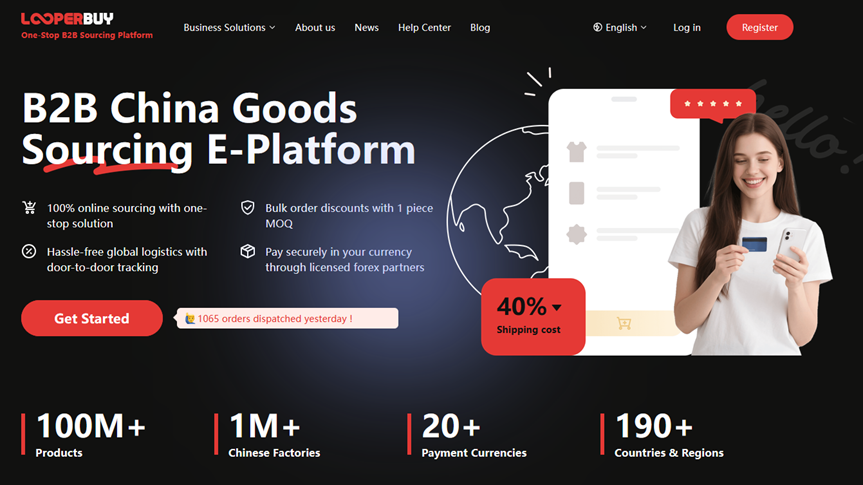
Table of Contents
What Is Dropshipping Today?
Dropshipping is an online retail and wholesale model where you list products, take orders, and pass those orders to a third‑party supplier who stores, packs, and ships directly to your customer. Instead of tying up cash in warehouses and stock, you pay the supplier only after you receive an order, which lowers your upfront financial risk. [forbes]
From my experience working with global B2B merchants, dropshipping has shifted from a “side hustle” buzzword into a serious, data‑driven fulfillment strategy used by brands, marketplace sellers, and even manufacturers themselves. When combined with reliable sourcing from China and streamlined logistics, it becomes a practical way to test markets, launch new products, and serve customers in multiple countries without building your own global supply chain. [forbes]
How Dropshipping Works Step by Step
At its core, a dropshipping workflow connects three parties: the customer, the retailer (or B2B seller), and the supplier. [business.adobe]
A typical order journey looks like this:
1. Customer places an order on your online store, marketplace storefront, or B2B portal.
2. You forward the order (often automatically) to your supplier or sourcing platform.
3. Supplier picks, packs, and ships the product from their warehouse directly to the customer.
4. Customer receives the parcel and contacts you (not the supplier) for support or returns.
In a traditional retail model, you would buy and store products in advance, then ship from your own warehouse. With dropshipping, you act as the “front office”: you own the customer relationship, pricing, and brand experience, while the supplier runs the “back office” of storage and fulfillment. [techtarget]
The B2B Perspective: Why Dropshipping Appeals to Sellers
For B2B sellers, distributors, and brand owners, dropshipping isn’t just a way to “start an online store”; it’s a flexible tool to expand assortment and markets without expanding infrastructure. [en.wikipedia]
Key advantages B2B sellers consistently highlight include:
– Low upfront investment: No need to purchase large batches of stock, lease warehousing, or hire fulfillment teams before you validate demand.
– Broader catalog: You can list hundreds or thousands of products from multiple Chinese suppliers through one sourcing partner, without physically touching any item.
– Faster market testing: You can trial new product lines, regions, or customer segments with minimal risk, then double down only on proven winners. [mailchimp]
– Location flexibility: Your sales and operations teams can run the business remotely as long as they can coordinate with customers and suppliers online.
However, B2B merchants also have higher expectations around lead times, quality consistency, and after‑sales support than a typical consumer dropshipper. This is where a structured platform like Looperbuy—specialized in China‑sourced products and global drop‑fulfillment—can make or break the experience. [ionos]
Core Benefits of Dropshipping (And Where It Really Works)
Drawing on both industry research and practical projects, the strongest use cases for dropshipping tend to have a few things in common.
Where dropshipping shines:
– Large or fragile products: Items that are expensive to store or ship twice (from supplier to you, then you to the buyer) are natural candidates for direct fulfillment.
– High‑maintenance or luxury goods: Products that require controlled storage, specialized packing, or careful handling are often better left in the supplier’s warehouse.
– Long‑tail assortment: In B2B, you may need to offer a wide but shallow catalog—hundreds of SKUs with sporadic orders. Dropshipping lets you keep that long tail available without holding stock. [shopify]
– Seasonal and trend‑driven products: You can “ride the wave” of seasonal or viral demand without worrying about leftover inventory when the trend fades. [easy2supplychain]
Global market studies suggest the dropshipping segment has grown into a multi‑hundred‑billion‑dollar industry, driven by ecommerce expansion and cross‑border sourcing from Asia. At the same time, competition and customer expectations have also intensified, which means execution matters more than ever.
Risks and Limitations You Need to Plan For
Every advantage comes with a trade‑off. Experienced B2B sellers quickly discover that dropshipping introduces its own set of operational risks. [bigcommerce]
The main challenges include:
– Thin profit margins: Because the supplier handles so much of the value chain, your per‑order margin can be modest unless you differentiate on brand, service, or niche specialization. [forbes]
– Limited quality control: You rarely see the actual unit before the customer does, which makes it harder to detect defects or packaging issues in advance.
– Complex shipping logic: When you use multiple suppliers, you may pay separate shipping fees per parcel, and coordinating multi‑item orders can become complicated. [ionos]
– Weak branding opportunities: Many suppliers ship in neutral or generic packaging, which limits your ability to create a distinctive unboxing experience. [business.adobe]
– Customer support headaches: When something goes wrong—late delivery, damaged goods, or wrong item—you’re responsible for resolving the issue without direct control over the warehouse.
From a strategic perspective, dropshipping works best when you design around these limitations rather than ignoring them: select the right products, align expectations, and choose partners who can consistently deliver what your customers expect. [forbes]
Choosing Reliable Dropshipping Suppliers (Especially in China)
In practice, the single biggest success factor I’ve seen for dropshippers is supplier selection. A good supplier can protect your brand reputation, while a bad one can destroy it within a few shipping cycles. [fedex]
When you evaluate potential partners or platforms, focus on a few critical questions. [en.wikipedia]
Key criteria to evaluate:
– Pricing and fee transparency:
– How are product prices structured for B2B quantities?
– Are there handling, packaging, or small‑order fees that affect your margin?
– Order fulfillment speed:
– What is their typical processing time from order to dispatch?
– Do they offer SLA‑backed lead times for your target markets? [easy2supplychain]
– Return and warranty policies:
– Who bears the cost when products arrive damaged or defective?
– How are returns handled for cross‑border shipments?
– Customer support quality:
– Is there responsive support in your working hours?
– Can they provide shipment proofs, photos, or inspections on request? [en.wikipedia]
– Risk management:
– Do they provide fraud protection or order verification?
– Are orders insured during international transit?
A specialized B2B sourcing platform like Looperbuy effectively pre‑screens Chinese manufacturers and wholesalers, consolidates inventory data, and standardizes fulfillment processes on your behalf. Instead of negotiating separate contracts with dozens of factories, you interact with a single platform for sourcing, payments, and logistics, which significantly cuts your coordination overhead. [doba]
How Much Investment Do You Really Need?
Compared with building a traditional wholesale operation, the capital required for a dropshipping‑first model is relatively modest.
Based on industry ranges and practical cases, your initial investment usually falls into a few buckets.
Typical startup cost components:
– Ecommerce store or marketplace presence: From low monthly SaaS fees to commissions on marketplaces like Amazon or regional B2B platforms. [sell.amazon]
– Domain and brand assets: A professional domain name and basic visual identity remain essential, even if you operate primarily through marketplaces. [en.wikipedia]
– Test orders and quality checks: Placing sample orders to verify product quality, packaging, and transit times before going live with a supplier.
– Marketing and traffic acquisition: Paid campaigns, content, and outreach are still the main drivers of traffic; expect to allocate a significant share of your budget here. [forbes]
In many real‑world projects, I’ve seen viable B2B dropshipping pilots launched with just a few hundred dollars in platform and marketing spend, then scaled as orders and cash flow grow. The key is to treat your early phase as an experiment, not a fully fixed infrastructure, and iterate based on what your data and customers tell you.
Leveraging Platforms Like Looperbuy for B2B Dropshipping
Looperbuy is positioned as an online B2B procurement platform focused on connecting global sellers with reliable Chinese products and providing integrated dropshipping services. For B2B merchants, that combination can remove many of the pain points discussed earlier.
In a typical Looperbuy‑style setup, you can:
– Access a curated catalog of Chinese manufacturers and wholesalers through a single interface.
– Place orders on demand without pre‑buying stock, while the platform coordinates warehousing and last‑mile delivery to your customers.
– Reduce logistics overhead, since the platform aggregates shipments, manages couriers, and provides tracking data.
– Lower operational costs from inventory, warehousing, and multi‑currency payments by centralizing these functions in one partner.
For B2B sellers already active on marketplaces or independent shops, integrating a sourcing platform like this into your stack means you can quickly extend your product range and test new regions without re‑engineering your logistics. Instead of building your own China sourcing team, you rely on the platform’s existing relationships and infrastructure, which is especially valuable if you’re scaling from a small or mid‑sized base. [doba]
Practical Tips to Make Dropshipping Work at Scale
From a practitioner’s standpoint, success in dropshipping is less about “finding a magic product” and more about designing a robust operating system.
Actionable practices that consistently pay off include:
– Niche focus over general stores: Specialized, brand‑driven stores—such as one dedicated to eco‑friendly packaging or industrial tools—tend to outperform generalist catalogs in both margin and loyalty.
– Data‑driven product selection: Rely on search volume, marketplace data, and customer feedback to choose and prune your catalog, rather than intuition alone. [alibaba]
– Service‑led differentiation: Use fast response times, transparent communication, and clear expectations around delivery and returns to offset the fact that you don’t control the warehouse. [fedex]
– Hybrid fulfillment when needed: For your top‑selling SKUs or strict‑SLA B2B clients, consider holding some stock locally while dropshipping the rest—this balances speed and capital efficiency. [shopify]
Ultimately, dropshipping is best treated as one tool in your fulfillment toolkit. When you combine it with reliable Chinese sourcing and a structured platform like Looperbuy, you can build a more flexible, capital‑light supply chain that supports both experimentation and long‑term growth.
Build Your Dropshipping Supply Chain with Looperbuy
If you’re planning to grow a B2B business without locking cash into warehouses and over‑stocked inventories, a structured dropshipping strategy backed by reliable Chinese sourcing is one of the most practical routes. Looperbuy is designed to help you access vetted suppliers, streamline fulfillment, and reduce the hidden costs of managing complex logistics on your own.
Start by mapping one pilot niche or region, integrate Looperbuy into your ordering flow, and use the results to decide where to scale next. The sooner your supply chain becomes more flexible and capital‑efficient, the easier it will be to adapt to new demand and stay ahead of competitors.
Frequently Asked Questions
1. Is dropshipping still profitable for B2B sellers?
Dropshipping can be profitable when you focus on niche segments, differentiate through service, and negotiate competitive supplier terms rather than relying purely on low prices. For B2B sellers, its biggest value often lies in expanding assortment and testing new markets without heavy upfront investment. [bigcommerce]
2. How do I maintain product quality if I never see the goods?
The most effective approach is to combine initial sample orders, periodic quality checks, and clear quality requirements with your sourcing platform or supplier. Platforms that consolidate suppliers, like Looperbuy, can also standardize quality controls and provide visibility into warehouse processes. [doba]
3. What kind of products are best for dropshipping from China?
Products with manageable sizes, stable demand, and clear specifications—such as consumer goods, light industrial tools, and packaging materials—tend to work well. High‑maintenance, heavy, or fragile goods can also be suitable when handled by experienced warehouses equipped for safe storage and packing. [shopify]
4. How long does shipping usually take in a cross‑border dropshipping model?
Shipping times depend on the route and service level, ranging from a few days for express options to a couple of weeks for economy services. Many successful sellers now combine international sourcing with regional warehouses for key markets to keep delivery times competitive. [easy2supplychain]
5. Can I combine dropshipping with my existing inventory‑based operations?
Yes. Many B2B merchants run hybrid models: they keep core SKUs in local stock for top customers while dropshipping long‑tail or experimental items. This hybrid approach maximizes service quality where it matters while preserving the capital efficiency of dropshipping for the rest of the catalog. [ionos]
References
1. Virto Commerce Blog – “What Is Dropshipping Business?” (2021). <https://virtocommerce.com/blog/what-is-dropshipping> [en.wikipedia]
2. Wikipedia – “Drop shipping”. <https://en.wikipedia.org/wiki/Drop_shipping> [en.wikipedia]
3. Shopify – “Should you start dropshipping?” (2025). <https://www.shopify.com/blog/what-is-dropshipping> [shopify]
4. Forbes Advisor – “What Is Dropshipping? Everything You Need To Know” (2024). [forbes]
5. Amazon – “What is dropshipping? How does it work in 2026?” [sell.amazon]
6. Mailchimp – “What is Dropshipping?” (2025). [mailchimp]
7. IONOS – “How does dropshipping work and is it right for your business?” (2025). [ionos]
8. BigCommerce – “Dropshipping: Does It Actually Work? (Pros + Cons)” (2025). [bigcommerce]
9. Easy2SupplyChain – “The State of Dropshipping in 2026: Market Trends, Data, and Strategies for Success” (2026). [easy2supplychain]
10. Alibaba Product Insights – “2026’s Hottest Dropshipping Trends: Data-Backed Picks for Massive Profits” (2026). [alibaba]
11. FedEx – “What is Dropshipping: A Comprehensive Guide for Small Business”. [fedex]
12. Adobe – “What is Dropshipping? | Adobe for Business”. [business.adobe]
13. TechTarget – “What is Dropshipping?” (2020). [techtarget]
14. Doba – “2026 Dropshipping Trends: Surviving the Free Platform Era” (2025). [doba]
15. Forbes – “What Is Dropshipping?: Everything You Need To Know” (2026). [forbes]