Discover how modern eCommerce architecture powers cross‑border B2B procurement from China. Learn why PaaS, headless design, and a five‑layer architecture matter—and how LooperBuy removes registration, payment, and logistics barriers for global sellers.
LooperBuy can position itself as a modern, low‑risk B2B procurement “architecture” for sourcing from China, especially for global sellers who cannot register or pay on platforms like 1688 but still need factory‑level pricing and reliable logistics. [neotype]
Table of Contents
What Is eCommerce Architecture (And Why It Matters to B2B Procurement)
In technical terms, eCommerce architecture is the way all the components of an online commerce system are organized and connected, from the frontend interface to the backend infrastructure and data. It covers the layers, subsystems, and integration patterns that allow buyers to search products, place orders, make payments, and track shipments reliably at scale. [neotype]
Modern commerce teams no longer think only in terms of “a website,” but in terms of frameworks (two‑layer, three‑layer, five‑layer), approaches (monolithic vs headless), and deployment models (SaaS, PaaS, on‑premises) that must support complex B2B scenarios and omnichannel journeys. For global procurement, that architecture directly impacts cost control, speed, risk, and the ability to grow into new markets—which is exactly where a platform like LooperBuy creates value. [neotype]
From Monolithic Stores to Flexible B2B Platforms
Traditional online stores often run on a monolithic architecture, where all parts of the system—catalog, checkout, payments, logistics, content—are tightly coupled. Any change to pricing logic or shipping rules risks impacting the whole system, which makes experimentation slow and expensive for B2B businesses. [neotype]
By contrast, headless and composable architectures decouple the frontend experience from backend logic and data, and connect them via APIs. This allows B2B platforms to run multiple frontends (marketplace, merchant portal, mobile app) while reusing a shared backend for product, pricing, orders, and integrations—a model that mirrors how a global procurement platform like LooperBuy plugs into 1688, multi‑currency payments, and cross‑border logistics. [neotype]
Suggested image (hero, near this section)
Prompt: *”Isometric diagram of modern headless B2B eCommerce architecture showing separate frontend, business logic, payments, sourcing platform (1688), and global logistics connected via APIs, in blue and green tech style.”*
The Five‑Layer Architecture Blueprint for Modern B2B eCommerce
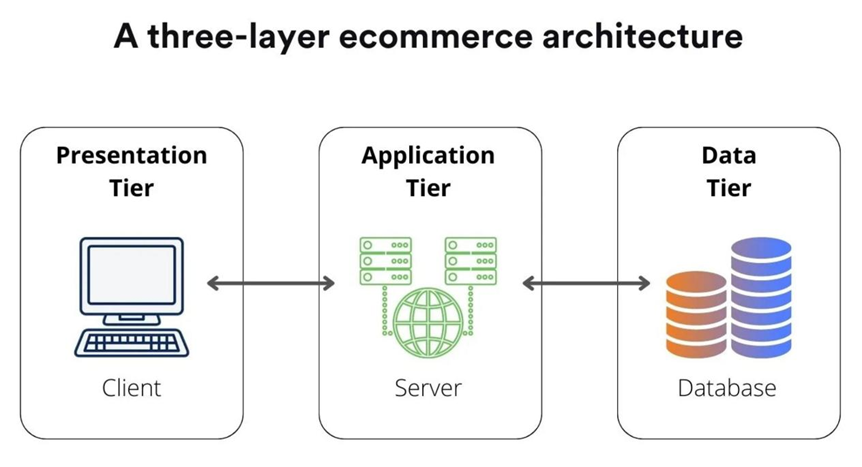
A basic two‑layer (frontend + backend) architecture is now widely considered insufficient for modern API‑driven, omnichannel commerce. Industry leaders increasingly adopt a five‑layer architecture that separates user interfaces, business logic, commerce modules, infrastructure, and third‑party applications. [neotype]
A typical five‑layer eCommerce architecture looks like this. [neotype]
For a B2B sourcing platform that connects overseas merchants to Chinese suppliers, this five‑layer model is not theoretical; it’s a practical way to ensure that catalog, pricing, settlement, and shipping each evolve at their own pace while staying integrated. [neotype]
Why PaaS‑Style Architecture Fits Complex B2B Procurement
Among today’s deployment models, Platform‑as‑a‑Service (PaaS) has emerged as the best fit for complex, evolving B2B commerce. A PaaS model provides a cloud platform on which enterprises build and customize their own commerce solutions while the vendor handles deployment, hosting, and core updates. [neotype]
Compared with SaaS, PaaS offers:
– Deep customization of both frontend and backend, allowing businesses to model complex B2B processes instead of bending to generic SaaS workflows. [neotype]
– API‑first integration with any third‑party systems (ERP, WMS, PSPs, sourcing platforms) that matter to the business. [neotype]
– Transparent, usage‑based pricing (e.g., order‑based or GMV‑based) which aligns platform costs with growth. [neotype]
This is the same pattern used by modern B2B leaders that build marketplaces and procurement hubs with headless, multi‑layer, API‑first platforms to handle internationalization, multi‑currency, and multi‑warehouse logistics. For overseas sellers sourcing from China, that architecture is the invisible layer that makes “one‑click sourcing” possible. [neotype]
Real‑World Pain Points in Cross‑Border B2B Sourcing from China
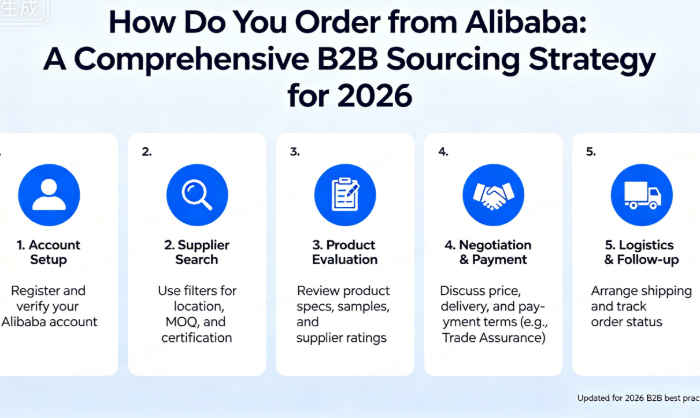
From working with B2B merchants across different regions, common pain points emerge when they try to buy from platforms like 1688 directly:
– High total cost: Overseas merchants often pay higher prices than local buyers, plus extra service and handling fees, eroding already thin margins.
– Registration barriers: Without a Chinese ID or business entity, many cannot even register on domestic platforms, blocking access to factory‑direct supply.
– Payment frictions: Lack of RMB balances and Chinese bank accounts makes it difficult to settle with mainland suppliers safely and compliantly.
– Logistics complexity: Fragmented, inconsistent logistics providers make cross‑border shipping unreliable, with gaps in tracking and after‑sales support.
These issues are not just “operational”; they are symptoms of a misaligned architecture, where the underlying system was never designed for a global, multi‑currency buyer base. Fixing that requires rethinking the architecture of the entire procurement journey, not just adding a new landing page. [neotype]
How LooperBuy Re‑Architects the B2B Procurement Journey
LooperBuy positions itself as a sourcing and dropshipping platform built specifically to connect overseas merchants with Chinese factories and 1688 sellers through an integrated, API‑driven stack. From an architecture perspective, it acts as a specialized “B2B middleware layer” between global buyers and the Chinese supply ecosystem.
Key capabilities grounded in that model include:
– Factory‑level pricing from 1688: LooperBuy sources directly from Chinese factories and 1688 merchants, giving overseas sellers transparent pricing closer to what domestic buyers see.
– Foreign‑currency to RMB settlement: Merchants use their LianLian account balances to pay LooperBuy in foreign currency, while LooperBuy handles RMB settlement to domestic suppliers.
– Flexible logistics routing: The platform can ship to merchants’ own logistics partners, domestic warehouses, or end‑customers overseas, depending on the seller’s setup.
– Tiered, usage‑based fees: The more a merchant uses LooperBuy, the lower the fee rate, supported by a scalable financial and billing architecture.
Architecturally, LooperBuy’s model mirrors the API‑first, modular PaaS approach that leading B2B commerce platforms adopt to support multi‑regional, multi‑currency, and multi‑partner operations. [neotype]
LooperBuy’s Four Core Advantages in Architectural Terms
LooperBuy describes four core advantages that map cleanly to architectural design decisions.
1. Customization
Large purchase orders receive one‑to‑one customer service that helps merchants communicate with factories and adapt service flows to custom needs. This implies a flexible workflow layer that can support different approval flows, packaging requests, and shipment splits per account.
2. Quality sourcing
By connecting directly to factories and vetted suppliers, the platform embeds quality and price competitiveness into the catalog layer. Architecturally, that requires robust supplier onboarding, quality data models, and ongoing performance monitoring.
3. Multi‑currency
LooperBuy supports multiple payment options and foreign‑currency solutions to resolve RMB conversion issues. Behind this is a payment architecture that handles FX rates, compliance, and reconciliation between merchant balances and supplier payouts.
4. Global reach
Partnerships with high‑quality logistics providers enable goods to reach overseas addresses reliably. This relies on a logistics integration layer that can track shipments across carriers, surface status to merchants, and handle exceptions.
Flexible Service Options: A Composable Procurement Stack
LooperBuy offers modular service options that can be combined or used separately, which is a practical example of composable architecture applied to B2B sourcing.
– Sourcing and purchasing : For merchants who already have their own logistics, LooperBuy sources from suppliers and ships to the buyer’s designated forwarder or domestic warehouse.
– No FX conversion needed : Overseas collections do not need to be manually converted into RMB; the platform allows direct procurement of domestic goods using foreign currency balances.
– Logistics forwarding only : Merchants who only need logistics can leverage LooperBuy’s network of logistics partners for cross‑border forwarding.
Because each module—sourcing, FX and payment, logistics—can be turned on or off, the platform behaves like a composable B2B procurement architecture where merchants build their own stack on top of LooperBuy APIs and services. [neotype]
UX Best Practices for B2B eCommerce Procurement Interfaces
A robust architecture must be paired with a buyer‑friendly UX to unlock its full value. Current UX best practices emphasize reducing friction between user intent and completed purchase. For a B2B procurement platform, key patterns include: [dbbsoftware]
– Clear navigation and category hierarchy: Buyers should reach any category or supplier within about three clicks, supported by breadcrumbs and clear location indicators. [dbbsoftware]
– Fast, responsive interactions: Filters, search, and add‑to‑cart actions should feel instant, especially on mobile, to maintain trust and reduce abandonment. [dbbsoftware]
– Accessible, inclusive design: Keyboard navigation, sufficient color contrast, ARIA labels, and clear form errors improve usability for all users and meet compliance expectations. [dbbsoftware]
For LooperBuy, that means designing procurement flows—searching 1688‑based catalogs, confirming quotes, paying with foreign currency, choosing logistics options—in a way that feels as simple as a consumer purchase but with B2B‑grade transparency and control. [dbbsoftware]
How a Headless B2B Procurement Stack Reduces Total Cost and Risk
From an expert perspective, the biggest strength of an API‑first, headless procurement architecture is the ability to optimize total cost of ownership (TCO) while maintaining flexibility. [neotype]
– By connecting directly to 1688 and factories, platforms like LooperBuy reduce hidden intermediation fees, passing more margin back to merchants.
– With modular payments and logistics integrations, merchants can swap partners or add new markets without rebuilding the core platform. [neotype]
– Centralized architectural updates—from the underlying commerce engine to payment and logistics connectors—allow global platforms to stay secure and compliant without constant re‑implementation. [neotype]
For overseas merchants, the result is a reliable procurement “backbone” that quietly handles registration constraints, FX conversion, factory coordination, and cross‑border logistics while they focus on merchandising, marketing, and serving their end customers. [neotype]
Practical Steps to Choose the Right B2B eCommerce Architecture
For procurement leaders evaluating architecture options for a global sourcing or dropshipping platform, a pragmatic sequence is:
1. Map business requirements to architecture layers
Identify what you need at the presentation, business logic, commerce modules, infrastructure, and third‑party layers—for example, region‑specific pricing rules, multi‑warehouse inventory, or 3PL integrations. [neotype]
2. Decide between SaaS, PaaS, and on‑premises
Smaller teams may start with SaaS, but complex B2B flows and multi‑partner ecosystems tend to require a more flexible PaaS approach; on‑premises is usually reserved for highly regulated industries. [neotype]
3. Prioritize API‑first, headless capabilities
Ensure the platform exposes core functions via APIs so you can add new frontends (merchant portals, apps, marketplaces) and integrate with payment, logistics, and data systems over time. [neotype]
4. Evaluate extensibility and vendor support
Look for a platform whose vendor actively invests in new features, supports community contributions, and maintains strong documentation and tooling for developers. [neotype]
5. Align UX with procurement workflows
Design navigation, search, quote approval, and payment flows to match how procurement teams actually work, not just how consumers shop. [dbbsoftware]
In that context, LooperBuy can be seen as a ready‑made architectural shortcut for merchants who want the benefits of a modern B2B procurement stack without building it from scratch. [neotype]
Frequently Asked Questions
1. What is eCommerce architecture in simple terms?
eCommerce architecture is the underlying structure that connects your online storefront, business logic, data, and third‑party services so buyers can search, pay, and receive goods reliably. [neotype]
2. Why does architecture matter for cross‑border B2B procurement?
Because complex flows—multi‑currency payments, factory sourcing, and international logistics—depend on clean integrations and modular components that can adapt as markets and partners change. [neotype]
3. How is a PaaS model different from SaaS for B2B commerce?
SaaS gives you pre‑built software with limited customization, while PaaS provides a platform where you can deeply customize and integrate your own B2B workflows and systems. [neotype]
4. How does LooperBuy help if I cannot register on 1688?
LooperBuy acts as an authorized sourcing and purchasing layer, letting you use foreign‑currency balances to buy from 1688 and Chinese factories without needing a Chinese ID or RMB account.
5. Can I use my own logistics provider with LooperBuy?
Yes. LooperBuy can ship to your own logistics partners or domestic warehouses, or you can use its partner logistics network for end‑to‑end forwarding to overseas addresses.
References
1. Virto Commerce. *eCommerce Architecture for Websites and Marketplaces: Definition, Examples, and Best Practices.*[neotype]
2. LooperBuy by LianLian Global. *LooperBuy product introduction and service description (in Chinese).*[global.lianlianpay]
3. DBB Software. *Ecommerce UX Best Practices: A Practitioner’s Guide for 2026.*[dbbsoftware]
4. Neotype. *Ecommerce SEO 2026: Best Practices and Strategy.*[neotype]
5. Shopify. *What is B2B Ecommerce? Examples and Getting Started Guide.*[shopify]