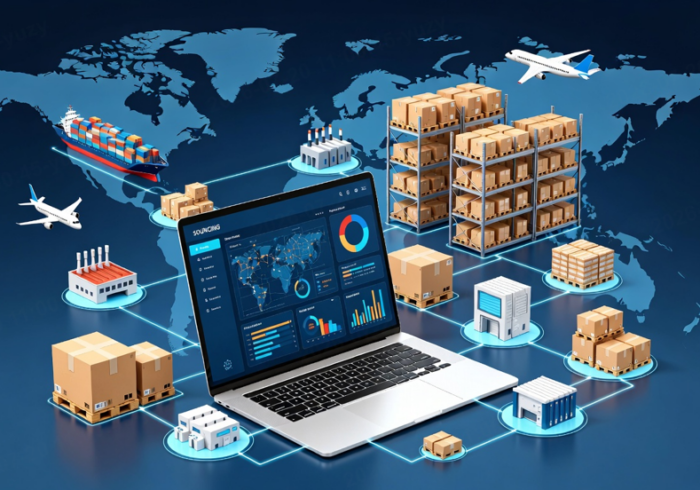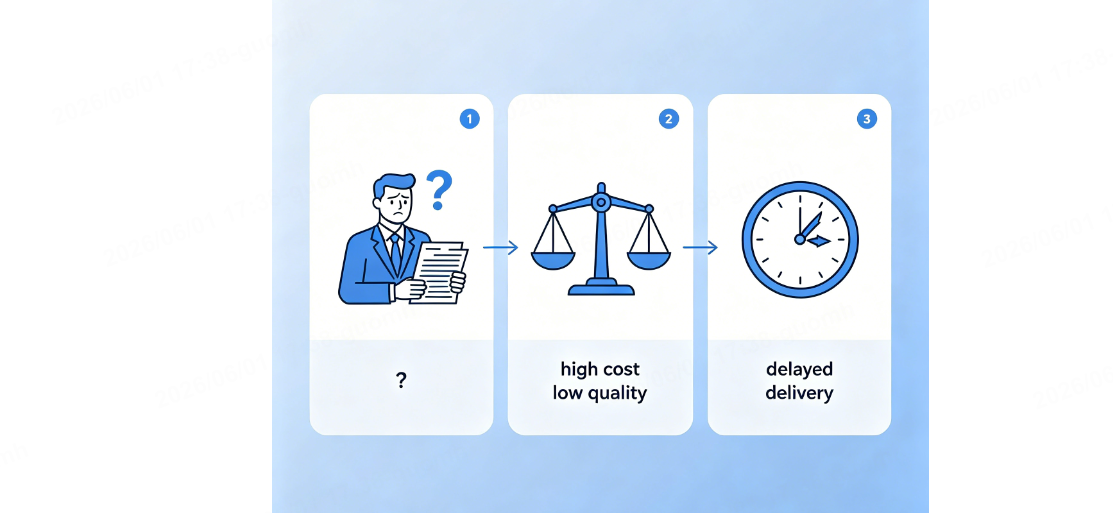
When global supply chains fracture, procurement leaders don‘t need more options – they need a clear path through chaos. Over the past year, I’ve watched dozens of wholesalers, brand owners, and production managers abandon promising sourcing relationships not because the products were wrong, but because the process broke them. The costs were unpredictable. The logistics were unreliable. The compliance requirements felt like a moving target.
After spending two decades navigating cross-border procurement, I‘ve learned one thing: the biggest procurement pain points aren’t about price. They‘re about trust. Trust in the supplier. Trust in the logistics. Trust that the landed cost you calculated today won’t be obsolete tomorrow. In this guide, I‘ll walk you through the top 10 procurement pain points in 2026 and show why a one‑stop B2B sourcing platform like LooperBuy is changing how smart buyers approach global sourcing.
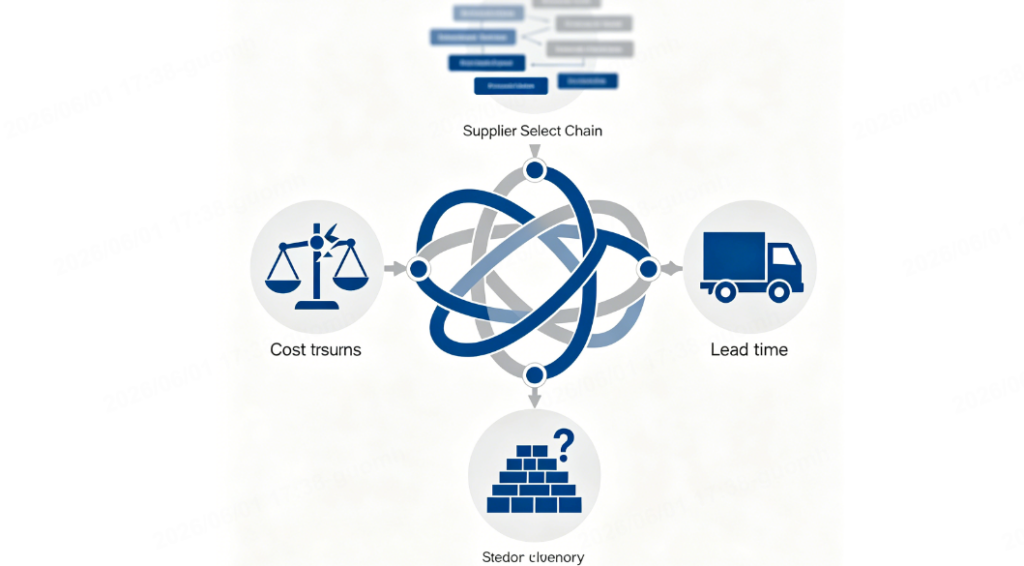
Table of Contents
The Harsh Realities of Global Procurement in 2026
Global B2B e‑commerce sales are projected to reach $36 trillion by 2026, yet behind that astonishing number lies a messy, often frustrating reality for procurement professionals. According to the 2026 QIMA Global Sourcing Survey, 79% of supply chains expect costs to remain a major disruption in 2026, with materials, shipping, and labor pressures nearly doubling since 2024. Meanwhile, over 90% of supply chain networks centered around the U.S. and China were severely impacted by tariffs in 2025. That‘s the backdrop every buyer is operating against.
Let me break down exactly where those pressure points hit hardest.
Pain Point 1: Volatile Pricing and Hidden Fees
The most common complaint I hear from European and American buyers is deceptively simple: “The price I saw isn’t the price I paid.“ A Canadian distributor sourcing electronic components told me his landed costs ballooned by 27% between quotation and delivery – thanks to a mid‑shipment tariff adjustment that no one had flagged.
The root cause: Most traditional sourcing platforms operate in silos. A supplier quotes an FOB price. A freight forwarder estimates shipping. A customs broker handles duties. By the time all the pieces come together, your cost structure has been compromised by three different margin layers – and you‘re still not sure where the leakage happened.
Pain Point 2: Supplier Verification and Counterfeit Risk
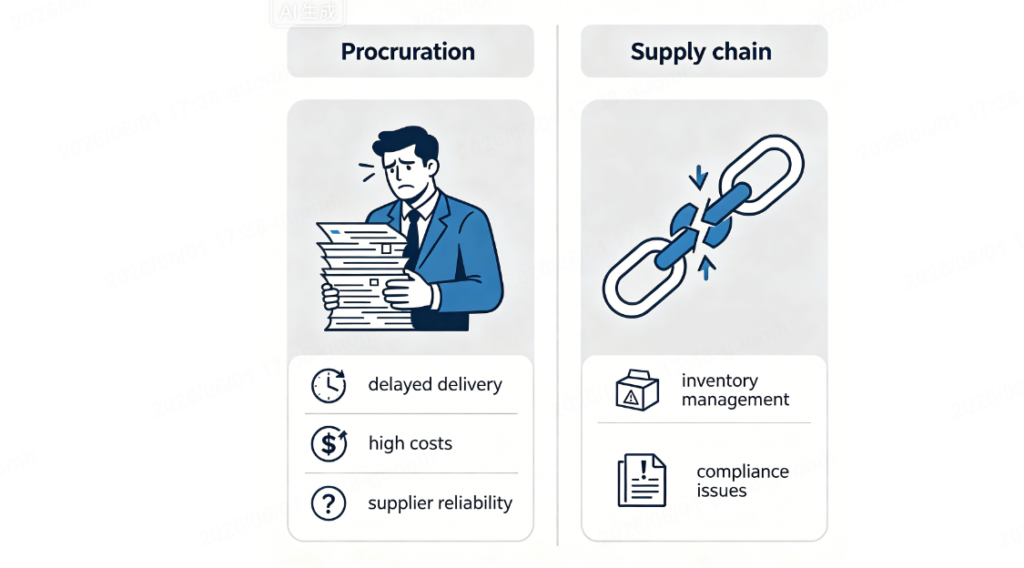
Amazon Business‘s 2026 sourcing guide points to “quality control and counterfeit risks” as a primary concern, noting that verifying product quality and ensuring authenticity across borders remains genuinely difficult. This is not theoretical. A UK retailer I worked with received a “certified” shipment of safety equipment last quarter that failed every independent lab test. The supplier had changed their manufacturing source without notifying anyone.
Why it persists: Cross‑border legal frameworks for product liability are fragmented. When something goes wrong, you are left holding the bag – and the lawyers.
Pain Point 3: Logistics Complexity and Customs Delays
International sourcing involves higher freight costs, longer lead times, customs delays, and fluctuating exchange rates – all of which can derail even the best‑laid procurement plans. The 2026 DHL NOW & NEXT Logistics Summit highlighted a critical shift: businesses are no longer simply pursuing scale; they‘re prioritizing resilient, flexible supply chains that can absorb regulatory shocks. But building that flexibility from scratch is expensive and time‑consuming.
Pain Point 4: Regulatory Compliance and Documentation Gaps
The compliance landscape in 2026 is fragmented and unforgiving. U.S. buyers face rising tariff pressure – the average effective tariff rate stood at 11.8% as of April 2026, the highest since the early 1940s. EU buyers are grappling with the Ecodesign for Sustainable Products Regulation and Digital Product Passport requirements, where documentation gaps now carry legal consequences. The QIMA survey found that nearly half of supply chain businesses still don‘t fully understand which ESG regulations apply to them.
One sourcing director told me flatly: “I spend more time chasing paperwork than I do negotiating prices.” That sentiment defines the procurement pain points of 2026.
Pain Point 5: Platform Confusion – Finding the Wrong Fit for Your Needs
Many buyers unknowingly conflate different platforms under the “Alibaba” name, leading to costly mistakes. Alibaba International is built for large‑scale B2B procurement, while AliExpress is designed for B2C retail – yet I repeatedly see brand owners trying to source custom OEM products through retail channels, or small wholesalers getting lost in complex inquiry‑based negotiation systems that weren‘t built for their order volumes.
The result? Wasted time. Misaligned expectations. And frustrated buyers who conclude that “sourcing from China is just too hard.”
Pain Point 6: Payment Barriers and Currency Conversion Costs
For overseas buyers, paying Chinese suppliers is often a maze. Without a Chinese bank account or RMB capability, you‘re forced into slow, expensive wire transfers or third‑party payment processors that eat 3‑5% of every transaction in fees. A U.S. wholesaler told me he lost nearly $12,000 in currency conversion and cross‑border transfer fees across just six months of sourcing.
Pain Point 7: Supplier Communication and Time Zone Friction
The 2026 Global Sourcing Survey emphasized that supply chains with end‑to‑end visibility performed significantly better in quality management, compliance, on‑time delivery, and cost control – but only 18% of businesses have achieved that level of visibility. For most buyers, the reality is fragmented email threads, missed messages due to time zone differences, and the constant fear that something important has fallen through the cracks.
Pain Point 8: Quality Control Without On‑the‑Ground Presence
A 2026 report from Boston Consulting Group notes that shifting geopolitical realities have exposed critical vulnerabilities in traditional procurement approaches, urging companies to fundamentally rethink their sourcing strategies. One of the most exposed vulnerabilities is quality assurance. Unless you have boots on the ground in China – which most small and mid‑sized buyers simply cannot afford – you are trusting photos, certificates, and promises.
Pain Point 9: MOQ Mismatch – Too Much or Too Little
Small and medium businesses face a cruel sourcing paradox. Traditional B2B platforms often demand order volumes that exceed their capital capacity or storage space. Yet retail‑oriented platforms offer pricing that destroys their margin. Finding the sweet spot – wholesale pricing without wholesale minimums – remains one of the most persistent procurement pain points.
Pain Point 10: Fragmented Workflow Across Multiple Tools and Vendors
Perhaps the most draining procurement pain point isn‘t any single issue – it‘s the cumulative friction of managing everything separately. One spreadsheet for supplier quotes. Another for logistics tracking. A third for customs documentation. Email chains that grow to 50+ messages for a single order. This fragmented workflow doesn‘t just waste time; it increases error rates and makes it nearly impossible to audit your procurement performance after the fact.

From Pain Points to Solutions: The One‑Stop B2B Sourcing Platform Advantage
Here‘s where the conversation shifts. The procurement pain points described above are all real, but none of them are inevitable. A thoughtfully designed one‑stop B2B sourcing platform addresses each of these challenges by consolidating the entire procurement lifecycle into a single, integrated ecosystem.
LooperBuy was purpose‑built for exactly this reality. Founded in 2024, the platform directly connects overseas buyers to China’s 1688.com supplier ecosystem – removing the intermediaries, eliminating hidden fees, and simplifying every step from search to delivery. Here‘s how it addresses each pain point in practice.
Direct Factory Pricing, No Middlemen
LooperBuy directly connects to 1688‘s verified supplier network, allowing overseas merchants to purchase at factory prices and completely eliminate middleman markups. One customer shared: “When purchasing Chinese goods overseas, prices are much higher than buying directly on 1688, making it difficult to maintain profits.“ LooperBuy‘s transparent pricing model solves that fundamentally.
No China ID? No Problem
Overseas merchants cannot register on domestic Chinese e‑commerce platforms – a major barrier that LooperBuy completely removes. The platform gives international buyers a seamless gateway to China‘s supply chain without requiring a local identity or local platform account.
Global Payment Support
“I had already selected the products, but I don‘t have a Chinese bank account or RMB – how can I purchase Chinese goods directly using foreign currency?“ LooperBuy enables merchants to transact directly using USD, EUR, GBP, and other major currencies. No currency conversion fees. No intermediary banks. Just clean, transparent payments.
Integrated Global Logistics
“I need to transship goods locally, but I have no idea how to operate – this gives me endless frustration.“ LooperBuy partners with multiple international carriers, offering air, sea, and land shipping options with real‑time order tracking. One customer’s review captures the experience perfectly: “I received my package very quickly, the packaging was secure, the box was very strong – a great shopping experience, and I look forward to continuing to cooperate with this platform”.
Why 2026 Is the Right Time to Consolidate Your Sourcing Workflow
The data makes a compelling case for consolidation. 74% of supply chain businesses plan to further invest in supply chain digitization in 2026, with Europe and South America showing the strongest momentum. Digitally connected supply chains are already experiencing smoother communication, fewer product safety issues, and reduced disruptions. The question is no longer whether you should digitize your sourcing – it’s which platform you should trust with the process.
DHL‘s Global Connectedness Report 2026 confirms that globalization has not retreated; cross‑border flows of goods, capital, information, and people have held steady. The opportunity for cross‑border trade remains enormous. But the structure of that trade is changing. Buyers are no longer asking only, “Who can provide this at the best price?” They are also asking, “Who can help us reduce risk if conditions change?“
Your Next Move: Streamlining Procurement Without Compromise
The decision to adopt a centralized sourcing platform is not a minor operational change – it‘s a strategic realignment of how your procurement function operates. Here‘s a practical framework for making that shift:
Step 1: Audit your current procurement workflow. List every tool, contact, and document involved in each order.
Step 2: Identify the friction points. Where are the delays? Where are the unexpected costs? Where is information most likely to be lost?
Step 3: Evaluate platforms not just on price but on integration depth – does the platform truly cover search, payment, logistics, and compliance in one unified experience?
Step 4: Start with a small test order. Validate the platform‘s claims with real shipment data before scaling.
Step 5: Monitor your landed cost per unit before and after the switch. The difference may surprise you.
For wholesalers, brand owners, and production managers sourcing from China, the economics of fragmentation have become unsustainable. Every procurement pain point you tolerate is margin you are leaving on the table.
Ready to eliminate your procurement pain points?
LooperBuy offers a single platform where you can search China‘s 1688 supplier network, pay in your local currency, ship with integrated logistics, and track everything in one dashboard. Whether you are a European brand owner launching a new product line or a North American wholesaler scaling your inventory, the same platform works for your needs.
Stop fighting fragmented sourcing. Start buying smarter.
- No China ID required. Access factory‑direct pricing without the registration barriers.
- Pay in USD, EUR, GBP. No Chinese bank account. No hidden conversion fees.
- Global logistics, one interface. Air, sea, or land – with real‑time tracking.
- Transparent pricing. What you see is what you pay. No surprises.
References
- QIMA. (2026). 2026 Global Sourcing Survey: From Disruption to Opportunity. https://www.qima.com
- Bluehost. (2026). eCommerce Statistics: Trends and Insights for Your Business. https://www.bluehost.com
- DHL. (2026). DHL Global Connectedness Report 2026. https://www.dhl.com
- DHL. (2026). Everything U.S. Businesses Need to Know About Trade, Tariffs, Nearshoring, and Supply Chains in 2026. https://www.dhl.com
- Supplier.io. (2026). How Tariffs and Trade Uncertainty Are Changing Supplier Sourcing in 2026. https://supplier.io
- Amazon Business. (2026). Beyond price: The strategic value of secure global sourcing. https://business.amazon.com
- CPG Sourcing. (2026). Alibaba vs DHgate vs AliExpress: Which Sourcing Platform Is Right for Your Business? https://cpgsourcing.com
- Boston Consulting Group. (2025). Acting Decisively as Global Sourcing Shifts. https://www.bcg.com
- WWD. (2026). How Buyers Are Rebuilding Sourcing Portfolios. https://wwd.com
- LooperBuy Customer Feedback. (2026). 国外企业线上采购中国货源,会遇到哪些问题?推荐Looperbuy平台. https://mp.weixin.qq.com
- Meruki Customer Review. (2026). 特别好的服务体验. https://h5.meruki.cn
Frequently Asked Questions (FAQ)
Q1: What exactly is a one-stop B2B sourcing platform?
A one-stop B2B sourcing platform consolidates supplier search, price negotiation, payment processing, logistics coordination, and compliance documentation into a single integrated system. Instead of managing five different vendors for one procurement cycle, you manage one platform.
Q2: How does LooperBuy achieve lower prices than other sourcing platforms?
LooperBuy connects directly to 1688‘s factory-level supplier ecosystem in China, eliminating the middlemen and service fees that drive up costs on traditional platforms. The platform uses transparent, fixed pricing with no hidden surcharges.
Q3: Can I source from LooperBuy without a Chinese business license or local ID?
Yes. LooperBuy was specifically designed for international buyers who lack Chinese registration credentials. You can access the entire 1688 supplier network through LooperBuy‘s interface without ever creating a domestic Chinese platform account.
Q4: How long does shipping typically take with LooperBuy‘s logistics network?
Delivery timelines vary by shipping method. Air freight generally takes 5–10 business days, sea freight ranges from 20–45 days depending on origin and destination, and land routes through Southeast Asia operate on custom schedules. Real-time tracking is available for all shipments.
Q5: Is LooperBuy suitable for small businesses with low order volumes?
Yes. Unlike traditional B2B platforms that demand high minimum order quantities, LooperBuy supports small to medium order volumes while maintaining wholesale pricing. The platform is particularly valuable for SMEs that want factory-direct pricing without committing to container-sized orders.
Article Summary
This guide analyzes the 10 biggest procurement pain points facing global buyers in 2026—volatile pricing, supplier verification, logistics complexity, compliance gaps, payment barriers, and more—and shows how a one-stop B2B sourcing platform like LooperBuy solves each one through direct factory access, transparent pricing, and integrated global logistics.
Hot tags: procurement pain points, B2B sourcing platform, China sourcing 2026, cross border procurement, LooperBuy, global supply chain solutions, wholesale sourcing China, B2B e commerce trends, international procurement, one stop B2B sourcing