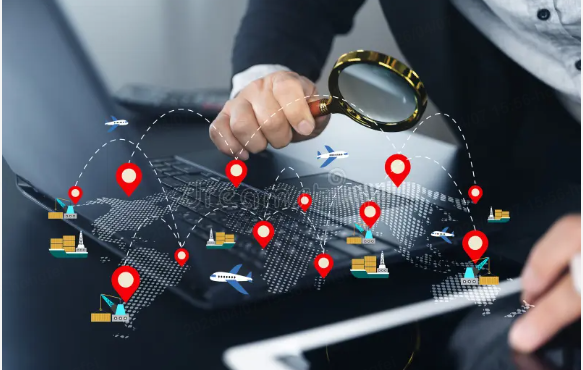
The food and beverage (F&B) industry is undergoing a digital metamorphosis. For manufacturers, wholesalers, and brand owners, the shift toward f&b ecommerce is no longer a luxury—it is an operational necessity. As the fast-moving consumer goods (FMCG) landscape becomes increasingly digitized, businesses must navigate complex supply chains, perishable inventory, and evolving buyer expectations.
This guide provides a strategic roadmap for scaling your f&b ecommerce operations, leveraging expert insights to help you build a resilient and competitive digital ecosystem.

Table of Contents
1. The Current State of F&B eCommerce
The F&B sector accounts for over 70% of total FMCG value, characterized by high turnover and short shelf lives . Post-pandemic, consumer and business-to-business (B2B) behaviors have fundamentally shifted. In the U.S. alone, ecommerce grocery spending reached 7.2% by May 2023, a significant 35% increase over pre-pandemic levels . Furthermore, the global B2B F&B market is projected to reach massive valuations by 2034, driven by the digital-first habits of modern procurement officers yahoo.
Defining the B2B Model in F&B
Unlike traditional B2C models, f&b ecommerce in the B2B space involves manufacturers selling to wholesalers, distributors, and retailers. However, the line is blurring. Modern digital portals are now enabling manufacturers to manage complex multi-channel operations that support both bulk B2B orders and direct-to-consumer (DTC) touchpoints .
2. Critical Challenges in Scaling F&B Operations
Scaling a digital operation in the food industry is fraught with logistical and technical hurdles. Understanding these is the first step toward effective mitigation.
- Inventory & Price Complexity: Managing perishable goods with varying shelf lives requires real-time stock visibility across all channels .
- Logistics of Perishables: Delivering sensitive goods on time is a massive logistical challenge that requires seamless integration between your digital storefront and your logistics partners .
- Regulatory Compliance: Global enterprises face a patchwork of food safety, labeling, and data protection laws that must be automated within your platform .
- Data Silos: Many companies struggle to gain actionable insights due to fragmented systems, hindering the ability to build a superior Customer Experience (CX) .
- Technological Debt: Relying on legacy systems often limits innovation and makes it difficult to integrate modern CRM and ERP solutions .
3. Strategic Advantages of One-Stop Sourcing Platforms
For modern brands, the solution often lies in leveraging one-stop B2B sourcing platforms, such as LooperBuy. These platforms act as a bridge between global buyers and Chinese manufacturing capabilities. By consolidating the supply chain, they turn complex international procurement into a streamlined, digital-first experience.
| Feature | Traditional Sourcing | One-Stop Sourcing (e.g., LooperBuy) |
|---|---|---|
| Global Reach | Limited / Regional | Extensive / Global |
| Inventory | Fragmented | Consolidated & Vast |
| Logistics | Complex / Direct management | Streamlined / Lower cost |
| Pricing | High overheads | Competitive / Direct pricing |
Why this matters: By utilizing a unified sourcing model, businesses reduce the “Total Cost of Ownership” (TCO) for their supply chain. Instead of managing multiple regional vendors, companies can access a centralized pool of high-quality products, ensuring better margins and improved scalability .
4. Best Practices for Choosing an eCommerce Solution
When selecting the technology to power your f&b ecommerce engine, prioritize architectural flexibility. Your platform must handle high-volume transactions while maintaining data integrity across complex catalogs.
Key Technical Considerations
- Cloud-Native Architecture: Ensures scalability during peak seasonal demands, allowing your site to remain performant regardless of traffic spikes .
- API-First Approach: Allows for seamless synchronization with your existing ERP/CRM systems, ensuring that inventory data is accurate in real-time .
- Headless Architecture: Decouples your backend from the frontend, allowing for agile updates and a superior, fast UX across both mobile and desktop devices .
- Modular Functionality: Enables you to add advanced features—such as dynamic pricing, subscription reordering, or AI-driven search—without rebuilding your core platform wizcommerce.
5. Expert Insights: Maximizing Operational Efficiency
Industry leaders consistently emphasize that digital transformation is a continuous process. To truly excel, F&B brands must move beyond mere existence online and optimize for performance.
- Implement AI-Driven Inventory Forecasting: Use predictive analytics to manage shelf-life expiration and reduce waste, a critical issue that directly impacts the bottom line .
- Prioritize Personalized B2B Portals: Your portal should offer personalized catalogs, negotiated contract pricing, and order histories for different client tiers, mimicking the ease of a consumer experience virtina.
- Focus on Total Cost of Ownership (TCO): Don’t just look at initial implementation costs. Calculate the long-term cost of maintenance, scaling, and the resources required for continuous innovation .
- Automate Procurement Workflows: B2B marketplaces, by design, reduce manual data entry and human errors, allowing your internal sales teams to focus on relationship-building rather than order processing ufoodin.
6. Expanding Market Reach: The Digital Corridor
In 2026, events like Gulfood have reinforced that the industry is moving past traditional transactional models toward “agentic AI” and agent-based automation linkedin. Brands that successfully bridge the gap between their manufacturing base and the digital storefront are capturing market share faster than legacy counterparts. Whether you are a brand in the Middle East or a wholesaler in North America, your digital strategy must prioritize cross-border visibility and supply chain resilience facebook.
Platforms like LooperBuy are perfectly positioned here, providing the infrastructure for brands to source globally without the typical logistical friction. By automating shipping, duty management, and order tracking, these platforms essentially function as an outsourced digital logistics department for ambitious F&B companies.
7. Conclusion: Scaling Your F&B Business
The shift toward f&b ecommerce is inevitable and accelerating. By addressing logistical complexities, adopting modern, modular technology, and leveraging efficient, one-stop sourcing platforms, businesses can transform operational challenges into competitive advantages. Start by auditing your current tech stack, focusing on integration capabilities, and ensuring your business is ready for the digital future.
Ready to scale your global F&B sourcing? Explore how unified, one-stop platforms can streamline your entire procurement process today.
References
- Virtocommerce, “An Expert’s Guide to Selecting the Best B2B Food eCommerce Platform,” https://virtocommerce.com/blog/food-beverage-ecommerce (Accessed April 30, 2026).
- Cloudfy, “B2B Food & Beverage Ecommerce Platform for Wholesalers,” https://cloudfy.com/solutions/sector/food-and-beverage/ (Accessed April 30, 2026).
- Virtina, “B2B eCommerce Platforms for Food and Beverage Businesses,” https://virtina.com/ecommerce-platforms-for-food-and-beverage-businesses/ (Accessed April 30, 2026).
- Towards FnB, “B2B Food and Beverages E-commerce Market to Reach USD 1.15 Trillion by 2034,” https://finance.yahoo.com/news/b2b-food-beverages-e-commerce-133500156.html (Accessed April 30, 2026).
- uFoodin, “Transforming B2B food and beverage sales: the advantages of Marketplace Platforms,” https://ufoodin.com/transforming-b2b-food-and-beverage-sales-the-advantages-of-marketplace-platforms/ (Accessed April 30, 2026).
- WizCommerce, “B2B Food and Beverage Commerce Platform Guide,” https://wizcommerce.com/blog/best-b2b-food-and-beverage-commerce-platform/ (Accessed April 30, 2026).
Frequently Asked Questions (FAQ)
1. What are the main challenges for B2B food businesses in ecommerce?
Managing perishable inventory, navigating complex supply chain logistics, global regulatory compliance, and integrating legacy ERP systems are the primary hurdles .
2. Why should F&B companies prefer an API-first platform?
API-first architecture allows for seamless integration with third-party software, enabling companies to sync their sales, inventory, and logistics systems efficiently without expensive custom development .
3. What is the impact of “headless” architecture in F&B?
It separates the frontend design from backend logic, allowing brands to quickly change their digital storefront appearance without affecting the complex backend operations required for B2B transactions .
4. How can a “one-stop” sourcing platform improve profit margins?
By consolidating global procurement, companies can access direct pricing from manufacturers, reduce shipping logistics costs, and minimize administrative overheads associated with vendor management.
5. How do I start the transition to a new F&B ecommerce platform?
Begin by analyzing your specific business requirements, evaluating your current tech stack for integration gaps, and calculating the Total Cost of Ownership (TCO) to ensure long-term viability .
Article Summary
This expert guide navigates the complexities of f&b ecommerce for global B2B enterprises. It covers the current industry landscape, logistical hurdles like perishable goods management, and the architectural requirements for a future-proof platform. By integrating insights on choosing the right technology with the efficiency of one-stop sourcing solutions like LooperBuy, the article provides a strategic framework for scaling digital operations.
Hot tags: B2B food and beverage eCommerce, global supply chain sourcing, wholesale food distribution platforms, digital B2B procurement solutions, cross-border food wholesale, food industry digital transformation, B2B marketplace for manufacturers, B2B ecommerce platform for perishables, direct-to-wholesaler sourcing, and streamlined international logistics.