In the fast-paced, interconnected world of international trade, the primary bottleneck is rarely at sea; it is at the port. As global trade volumes surge and just-in-time delivery expectations become the norm, seaport congestion has become a critical, persistent pain point for importers, wholesalers, and manufacturers. This is where the concept of a dry port—an inland intermodal terminal directly connected to a seaport—transforms from a logistical novelty into a strategic necessity. For businesses looking to scale their operations by sourcing directly from global hubs like China, understanding the dry port ecosystem is the key to unlocking faster, cheaper, and more resilient supply chains.
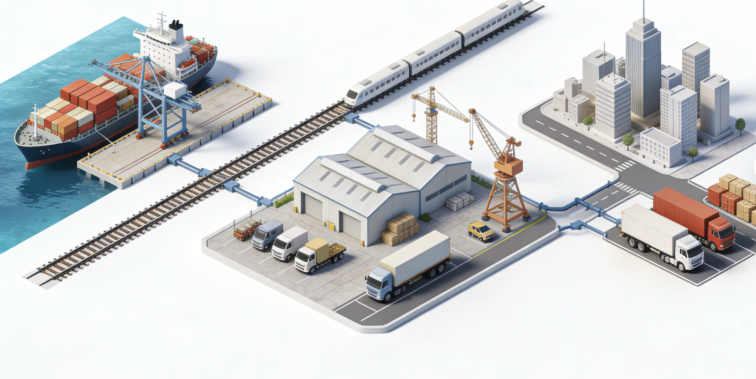
Table of Contents
What is a Dry Port? An Expert Perspective
At its core, a dry port (also known as an inland port, intermodal terminal, or inland clearance depot) is significantly more than just a warehouse. It acts as a strategic extension of a maritime seaport, situated inland, where cargo is seamlessly transshipped between long-haul transport (typically rail or barge) and shorter-haul road transport [4, 9, 16].
From an industry expert perspective, the dry port serves as a vital synchronization point. By moving customs processing, container storage, and cargo consolidation away from the congested quayside, logistics operators can achieve a more fluid movement of goods [2, 16]. As noted by global logistics leaders, modern dry ports have evolved into fully integrated logistics parks that may include bonded warehousing, cold storage, light assembly services, and even e-commerce fulfillment centers, effectively mirroring the capabilities of a major maritime hub while providing vastly superior accessibility and cost structures [16].
The Strategic Advantages of Utilizing a Dry Port
The implementation of a dry port strategy offers tangible, measurable benefits that directly impact your bottom line and operational reliability.
1. Relieving Chronic Seaport Congestion
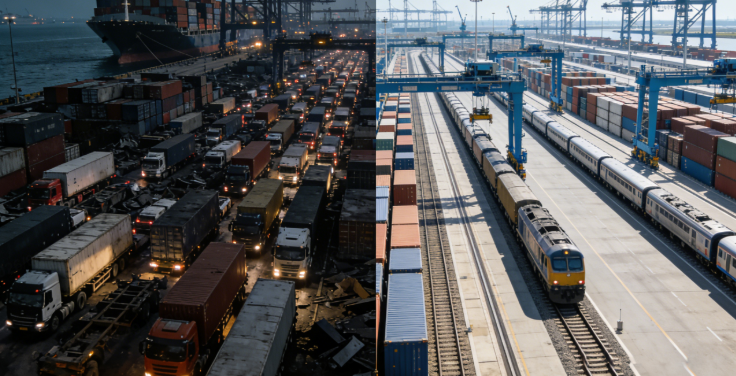
Seaports are frequently plagued by limited storage and customs processing capacity. A dry port acts as a crucial “pressure relief valve,” allowing containers to be quickly moved inland via high-capacity rail or river links. This action immediately frees up precious space at the maritime terminal, preventing the “gridlock” that often occurs during peak shipping seasons, thereby reducing demurrage and detention charges [2, 7, 10, 16].
2. Enhancing Supply Chain Resilience and Cost Efficiency
- Cost Reduction: By shifting goods from road-heavy, expensive port-side drayage to more efficient intermodal rail or barge systems, companies can significantly reduce their long-term logistics costs [1, 8, 9, 16].
- Improved Service Access: Businesses gain more efficient access to essential services like customs clearance and inspections, which can often be expedited in the less congested, more specialized inland environment [1, 2].
- Streamlined Distribution: Dry ports serve as strategic hubs for consolidating goods, allowing for smoother, faster redistribution to regional markets and drastically reducing overall lead times [4, 5, 9].
The Sustainability Factor: A Greener Path Forward
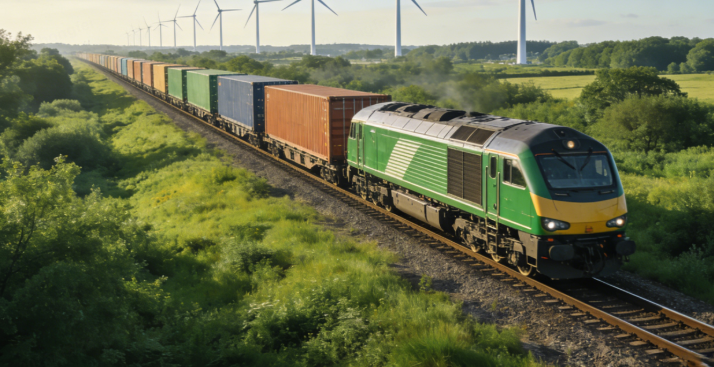
Beyond efficiency and cost, the dry port is a cornerstone of sustainable logistics. By facilitating a modal shift—moving cargo from road to more efficient modes like rail or barge—the reliance on short-haul trucking is heavily reduced [5, 8, 12]. Studies have shown that utilizing intermodal transportation connected to dry ports can significantly decrease greenhouse gas (GHG) emissions compared to long-haul road transportation, making it an essential component for companies aiming to hit ESG (Environmental, Social, and Governance) targets [8, 12, 15].
Operational Deep Dive: How to Optimize Your Sourcing Strategy
For B2B platforms like LooperBuy, guiding clients toward utilizing dry ports can be a major competitive differentiator. By controlling the flow of goods from the Chinese factory to an inland terminal, businesses regain control over their inventory schedule.
| Feature | Conventional Seaport-Only Model | Integrated Dry Port Model |
|---|---|---|
| Customs Speed | Often slow due to high volume | Generally faster and streamlined |
| Storage Costs | Premium (high demand, scarcity) | Cost-effective (abundant space) [9] |
| Transport Mode | Heavily road-dependent | Intermodal (rail/barge/road) [5, 10] |
| Scalability | Limited by terminal footprint | High (expandable inland) [9, 16] |
| Risk of Delay | High (terminal congestion) | Low (direct inland transfer) |
Practical Implementation Steps for Importers:
- Audit Your Current Flow: Identify if your goods are frequently held up by seaport customs or drayage delays.
- Leverage Intermodal Links: Explore if your sourcing path can utilize a dry port connected to your primary maritime port.
- Consolidate at Source: Utilize platforms like LooperBuy to consolidate shipments before they reach the port, further amplifying the benefits of the dry port arrival process.
- Negotiate Inland Terms: Where possible, shift your Incoterms to include delivery to a nearby inland hub, leveraging the lower storage and processing costs of the dry port.
The Role of Technology in Dry Port Integration
The modern dry port is increasingly defined by its digital infrastructure. Experts now categorize these facilities as “Smart Dry Ports,” which act as central nerve centers for international freight flows.
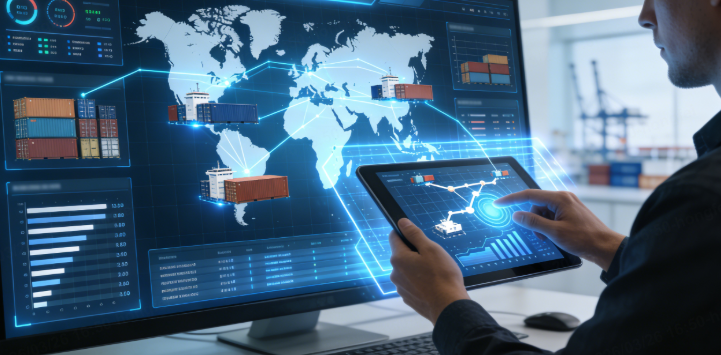
- End-to-End Visibility: By integrating IoT sensors, RFID tracking, and real-time cloud-based dashboards, these ports provide importers with live updates from the moment a container leaves a Chinese factory to when it hits the inland terminal floor. This visibility allows B2B buyers to proactively manage downstream inventory commitments [16, 17].
- Automated Customs Declaration: Many dry ports now utilize advanced digital customs declaration platforms. These systems allow for “pre-clearance” processes to be initiated before the ship even docks at the maritime port, cutting transit times by days and eliminating the typical wait times associated with port-side document processing [16].
- Blockchain for Transparency: Leading-edge dry ports are adopting blockchain to secure supply chain documentation, ensuring that the movement of goods is tamper-proof and verified, further reducing fraud and administrative errors.
The Impact of E-commerce and Direct-to-Consumer (DTC) Shifts
The rise of global B2B platforms like LooperBuy has fundamentally altered how goods are moved. Traditionally, goods were imported in massive bulk, stored in large, regional warehouses near maritime ports, and then distributed. Today, the dry port enables a more agile, decentralized approach.
By using dry ports as regional distribution centers, businesses can bypass the need for massive, centrally located, and expensive real estate near the coast. Instead, they can position inventory closer to end-customers in the interior, effectively turning the dry port into an e-commerce fulfillment engine. This reduces “last-mile” delivery costs and enables faster customer service, directly improving the bottom-line profitability for B2B wholesalers and retailers alike.
Navigating Global Trade Risks: The Resilience of Dry Ports
In an era of geopolitical uncertainty and supply chain disruptions, diversification is critical. The dry port model provides a buffer against the volatility of maritime port operations. Whether it is a labor dispute at a major seaport, a global pandemic, or extreme weather events, having a connection to an inland dry port provides logistical redundancy. If a primary maritime gate becomes inaccessible, dry ports often have alternative connections to secondary ports or inland rail networks, allowing businesses to pivot their supply routes with minimal disruption to their overall business continuity [10, 16].
Expert Insights on Future Trends
As global port operators like DP World and PSA continue to integrate inland facilities, the dry port will increasingly function as a “gateway” to the hinterland rather than just a storage site [16]. We expect to see more “smart” dry ports leveraging AI-driven inventory management and automated guided vehicles (AGVs) for container handling. This allows businesses to maintain perfect visibility of their cargo from the Chinese factory floor to the final inland destination [16, 17]. This shift is not just an infrastructure upgrade; it is a fundamental re-imagining of how global trade moves, prioritizing intelligence and adaptability over sheer capacity.
Conclusion: Why LooperBuy Customers Must Adopt This Strategy
The dry port is no longer just a secondary logistics facility; it is a critical strategic asset in the modern global supply chain. By alleviating port congestion, lowering costs, and enabling more sustainable transport, the dry port model provides the flexibility and scalability that modern B2B businesses require to thrive.
For companies sourcing directly from China via global platforms like LooperBuy, integrating these inland nodes into your sourcing strategy is no longer optional—it is essential for staying competitive in an increasingly complex and crowded logistics landscape. By embracing the efficiency and visibility that dry ports offer, you are not just optimizing your freight; you are future-proofing your business against the inevitable challenges of global trade.
References
- [1] Benefits of dry ports for logistics and trade (Facebook)
- [2] How Dry Ports Shape the Global Supply Chain (LinkedIn)
- [4] What Is a Dry Port? Definition, Functions, and Strategic Importance (Artarail)
- [5] Making International Logistics Sustainable: The Dry Port Concept (Supply Chain Brain)
- [7] Dry Ports, Why are they so important? (LogisticsMGEPSUPV)
- [8] Roles of Dry Ports in Economic Corridors (ESCAP PDF)
- [9] 14 key advantages of inland ports to boost your supply chain (Calgary.ca)
- [10] Assessing the Impact of Dry Ports to the Supply Chain (Lutpub PDF)
- [12] Assessing the Environmental Benefits of Dry Port Usage (MDPI)
- [15] Environmental and Economic Impacts of Dry Ports (Sustainability Journal)
- [16] Inland “dry” ports are essential pieces to the global logistics puzzle (AJOT)
- [17] The Future of Smart Dry Ports (Logistics Management)
Frequently Asked Questions (FAQ)
1. What is the primary function of a dry port?
A dry port acts as an inland intermodal terminal connected to a seaport, functioning as a hub for cargo storage, customs clearance, and modal shifting from sea-to-rail or road [4, 9, 16].
2. How does a dry port reduce supply chain costs?
By consolidating cargo and utilizing more efficient rail or barge transport over long distances, businesses can reduce dependency on expensive, congested road-based trucking [8, 9, 16].
3. Can a dry port help with faster customs clearance?
Yes, because dry ports are situated away from the high-traffic maritime terminal, they often offer more efficient space and resources for customs processing and inspections [1, 2].
4. Are dry ports sustainable?
Absolutely. They facilitate a shift from road to rail or water transport, which significantly lowers fuel consumption and greenhouse gas emissions per ton of cargo moved [8, 12, 15].
5. How can LooperBuy customers benefit from this?
By understanding how to route shipments through dry ports, importers can enjoy faster customs processing, reduced storage fees, and more reliable delivery times for their Chinese-sourced goods.
Brief Summary:
This expanded guide provides an in-depth analysis of the dry port ecosystem, detailing its pivotal role in mitigating seaport congestion, reducing logistics costs, and enhancing supply chain sustainability. From an expert perspective, the article explores how modern “Smart Dry Ports” integrated with IoT and automation are revolutionizing global trade for B2B platforms like LooperBuy, offering actionable strategies for importers to improve lead times, bolster resilience, and secure a competitive advantage in global sourcing.
Hot tags:
B2B sourcing platform, global supply chain management, inland port logistics, international freight forwarding, intermodal transportation, dry port efficiency, China direct sourcing, container terminal operations, sustainable logistics solutions, wholesale supply chain optimization.