For international brand owners, wholesalers, and manufacturers, the term “scaling brands” often gets lost in marketing jargon about ads, funnels, and customer acquisition. However, from a supply chain and operational perspective, scaling a brand means something far more specific and critical to survival. It is the ability to significantly increase order volumes and market reach without a proportional increase in operational risk, cost, or complexity .

As a one-stop B2B sourcing platform, LooperBuy understands that the difference between a brand that scales successfully and one that collapses under its own weight often comes down to a single factor: the sourcing strategy. When we discuss what is scaling brands, we are really asking: how do you design a procurement system that is robust enough to handle 2x or 3x growth ?
Table of Contents
The Supply Chain Bottleneck: Why Growth Kills Brands
The market landscape for B2B sourcing is shifting rapidly. A recent report from the 139th Canton Fair highlighted that digital procurement tools are improving sourcing efficiency by up to 35% . Yet, many brands are still using outdated methods.
When companies reach a high-growth stage, relying on a single supplier or a simple Request for Quote (RFQ) model becomes a liability. If a brand’s only factory faces an environmental audit, a raw material shortage, or a power crunch, the business effectively stops . This is the moment when a brand fails to scale.
Moving from RFQ to BOM Management
High-growth brands move beyond simply asking, “How much for this product?” Instead, they manage the Bill of Materials (BOM). By controlling the exact specifications of every component—the material grades, the specific coatings, the internal mechanisms—brands stop paying “convenience markups” and create a technical recipe that can be moved between factories .
The Multi-Node Sourcing Strategy
To answer what is scaling brands in the context of sourcing, one must look at resilience. Advanced scaling strategies involve fragmenting production. You source core electronic engines from Factory A and the plastic housing from Factory B. This diversified approach provides significant leverage and protects intellectual property, as no single factory holds the entire design blueprint .
The Technology Shift: AI and Modern Sourcing
The digitization of procurement is changing how brands scale. Traditional sourcing agents often rely on their personal “rolodex,” creating a black box of information and potentially higher costs . However, modern procurement is moving toward automation and data-driven decision-making . Platforms are emerging that use AI agents to handle supplier discovery and negotiation, lowering manual overhead and reducing production costs substantially .
The Role of Logistics in Scaling
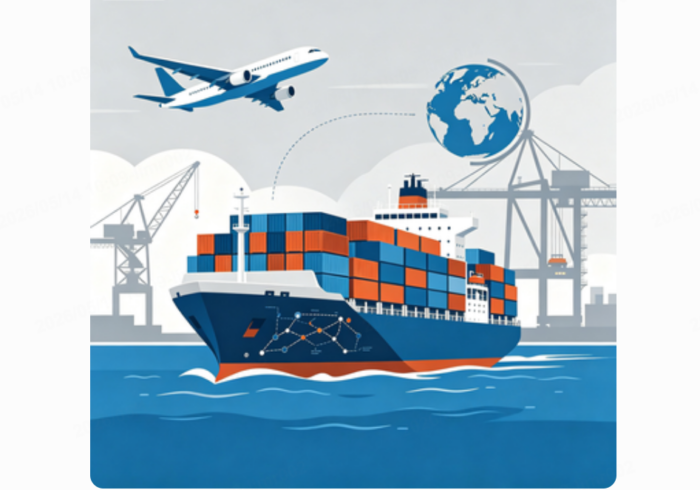
Scaling brands isn’t just about finding a factory; it’s about engineering for logistics. If you are shipping air, you are losing money. This involves redesigning packaging to increase container density. For example, modifying a product’s design to allow for flat-packing can increase container capacity from 200 units to 250 units, turning a 25% efficiency gain straight into net profit .
The LooperBuy Advantage: Simplifying Complex Scaling
At LooperBuy, we position ourselves not just as a platform, but as the infrastructure behind your growth. While the strategies above are essential, executing them usually requires a 20-person team on the ground in China. We act as your Supply Chain Architects, handling the technical audits, BOM breakdowns, and high-stakes negotiations .
Our value proposition is clear: we combine the global reach and product diversity of a massive marketplace with the intimate, on-the-ground presence of a local sourcing office. We make it possible for global brands, wholesalers, and manufacturers to access China’s manufacturing ecosystem directly, securely, and cost-effectively.
Engineering for Logistics at LooperBuy
We help our partners redesign packaging and optimize product specifications for container density. This commitment to efficiency ensures that as your brand scales, your logistics costs remain under control. We provide transparent, real-time pricing and shipping options, eliminating the hidden costs that often eat into margins during rapid growth.
Quality Control as a Growth Driver
We don’t wait for problems to happen at the port. Our approach uses “In-Line” Quality Control. We verify the “First Article” at the start of production and conduct lab testing during manufacturing, not just before shipping. This proactive quality management ensures that scaling doesn’t come at the cost of brand reputation.
References
- Advanced China Sourcing Strategies for Scaling Brands
- EaseSourcing Launches AI-Powered Platform to Simplify Global Supplier Sourcing
- Cavela Weekly Recap
- Exclusive: ReScale emerges from stealth with $2.3m to address ‘biggest pain point’ for small brands
Frequently Asked Questions (FAQ)
1. What is the difference between traditional sourcing and scaling sourcing?
Traditional sourcing often relies on finding the cheapest factory for a finished product. Scaling sourcing involves managing the Bill of Materials (BOM), diversifying production across multiple factories (Multi-Node), and optimizing logistics to create a resilient and cost-effective system designed for high volume.
2. How does BOM management protect a brand during scaling?
By owning the BOM, you own the technical specifications for every component. This prevents a single factory from holding your brand hostage with price increases because you have the ability to move production to another manufacturer who can follow your exact “recipe.”
3. Why is “In-Line” quality control better than pre-shipment inspection?
Pre-shipment inspections (PSI) happen when the goods are already finished. If a defect is found, the lead time is already ruined. In-Line inspections catch defects during the manufacturing process, allowing for real-time corrections and ensuring your delivery schedule stays on track.
4. Can a B2B platform help with logistics efficiency?
Yes. Advanced platforms help brands “engineer for logistics” by assisting with packaging design to maximize shipping container density. This reduces shipping costs per unit and improves cash flow, which is crucial for rapid scaling.
5. What is a “Multi-Node” sourcing strategy?
It involves splitting the production of a single product across different factories. One factory might make the main mechanism while another makes the casing. This protects your intellectual property, improves your negotiation power, and ensures that if one factory fails, you don’t lose your entire production line.
Article Summary
Discover the strategic sourcing and supply chain framework behind successful brand scaling. This guide moves beyond marketing definitions to explore advanced procurement tactics like Bill of Materials (BOM) management, Multi-Node sourcing, and logistics optimization. Learn how platforms like LooperBuy help global B2B buyers transition from simple RFQs to a resilient growth infrastructure, leveraging AI and in-line quality control to maintain margins and protect intellectual property.
Hot Tags
What is scaling brands, B2B sourcing platform, China sourcing agent, supply chain strategy, Bill of Materials management, Multi-Node sourcing, B2B procurement, global logistics, quality control China, product sourcing