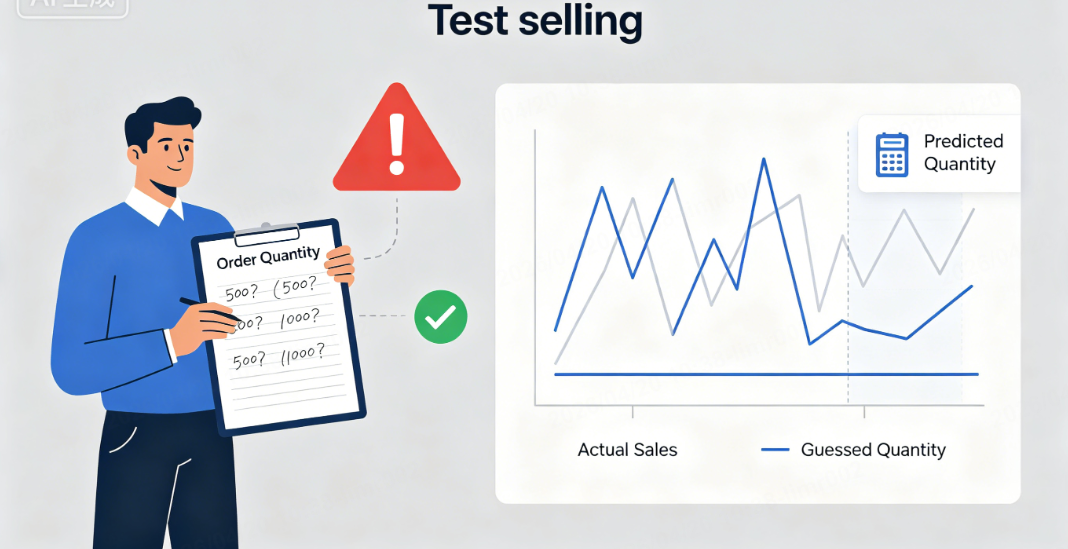
What test selling fears most is not failing to sell
It’s losing control between ordering too much and too little
Order too much = inventory pile-up
Order too little = risk of stockout
Small-batch test selling | Small steps, fast iteration, risk control
LooperBuy Test Selling Methodology
Table of Contents
Summary
When testing a new product, are you always caught between “order too much and fear overstock, order too little and fear stockout”? Worse than no sales, this “no-win” loss of control is the real pitfall. Today, let’s talk about the truth of test selling and give you a way to minimize the risk.
Test Selling Feels More and More Anxious? What You Fear Is Not “No Sales” – It’s “Betting Wrong”
The Most Torturing Part of Test Selling: The Loss of Control Over “Order Too Much or Too Little”
“Even worse than selling nothing.”
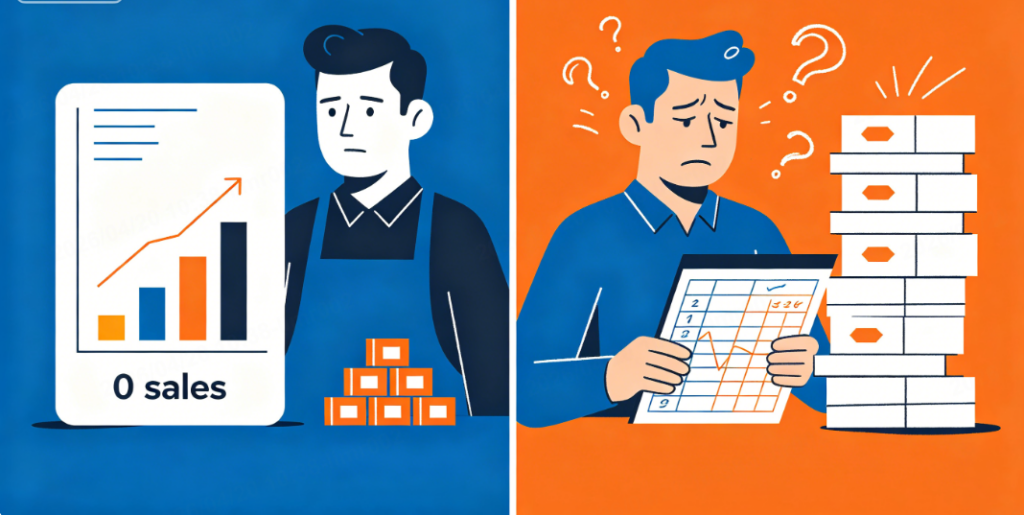
Recently I talked with Mr. Wang, who runs a home furnishing business. During his first test sale, his mindset was full of contradictions: before placing the order, he prayed “someone will buy”; after ordering, he panicked “too few people buy”. In the end, he gritted his teeth and ordered 500 units. In 30 days, only 80 sold – looking at 420 units piled up in the warehouse, even discounting and clearing felt like a bloodbath.
Another beauty brand owner: test sold 100 units, sold out in 3 days. When restocking, the supplier threw back “2,000 units minimum”. She agonized for 3 days, afraid of losing customers, and forced herself to order. Result: sales dropped off a cliff, and now over 1,800 units are sitting in the warehouse.
This is the most suffocating part of test selling: what we fear is never “no sales” – it’s “betting wrong”.
Bet too much – you can’t bear the inventory pressure. Bet too little – you can’t bear the cost of stockout. You want to control risk, but in the end everything depends on “guesswork”. This loss of control keeps you up at night far more than zero sales.
The Core of Test Selling: Not “Selling Products”, but Validating Three Answers
Don’t Get It Backwards: Test Selling Is “Testing the Market”, Not “Rushing Sales”
Many bosses treat test selling as “selling in small quantities” – that’s a big mistake. The essence of test selling is “validate the market at minimal cost”. You must first understand these three questions:
- Does the market truly need it? – Are people not asking, or asking but not buying?
- Is the price reasonable? – Do customers find it expensive or a great deal?
- Is the fulfillment experience acceptable? – Is delivery slow? Does packaging break?
Before you have clear answers to these three questions, any “premature scaling” is a gamble.
What’s worse, if your procurement method is inflexible, you will fall into the trap of “only wanting to test, but forced to take on scaling risks” – either crushed by inventory or dragged down by stockouts.

Why Does “Order Quantity” Become the Biggest Obstacle in Test Selling?
Stuck in the Vicious Cycle: “Small Orders Ignored, Large Orders Too Risky”
Some of you might say: “I also want small-batch fast runs, but suppliers won’t cooperate!”
That’s the core difficulty: balancing order quantity.
- Order too much – inventory piles up, capital tied up, no money left for new products.
- Order too little – hard to restock (long supplier lead times), higher costs (small-batch procurement and logistics expensive), data broken (just as you gain traction, you run out of stock and can’t analyze).
Too many merchants with good products fail at this “order quantity balance” – not because the product is bad, but because the rhythm is wrong.
A Mature Test Selling Strategy: Not Betting Big, but “Small Steps, Fast Iteration”
True Experts Win Slowly
We know an experienced cross-border seller with a very steady test selling logic:
- Start with a very small batch (50–100 units) to collect data and see market reaction.
- Optimize product/price based on feedback, then increase slightly (200–300 units).
- Once data stabilizes, gradually scale up.
The key prerequisite: your procurement system must be flexible enough.
You need to be able to order 100 units and have someone accept it. When a product takes off, you need to replenish 200 units and ship within 3 days. If specs change, you need to quickly source alternatives. Only then can you “run small and fast” instead of being tied down by order quantities.
LooperBuy’s Small-Batch Model: Minimizing Your Test Selling Risk
No More Struggling Over Order Quantity – Just Focus on Testing the Market
Having seen too many business owners fall into these traps, LooperBuy has designed a dedicated test selling small-batch model – the core idea is to free you from order quantity headaches so you can focus on what really matters in test selling.
- Low MOQ support – 50 or 100 units are welcome, and procurement prices are not inflated. No need to order extra just to meet MOQ; trial costs are minimized.
- Multi-channel supply mechanism – For the same product, multiple suppliers are connected. If one is out of stock, we source from another immediately – no need to beg suppliers.
- Scale up with data – Once the data looks good, you can increase quantity directly without renegotiating with new factories. Larger batches bring lower costs, seamless transition.
- Warehouse fulfillment worry-free – Our own warehousing and distribution system handles small-batch packing, sorting, and shipping – no fear that small orders will be neglected.
The core of this model is not “pursuing the lowest cost”, but “controlling the biggest risk” – so you don’t gamble on inventory or stockouts. Every step is steady, allowing you to capture growth while controlling risk.
The Secret to Stress-Free Test Selling: Decisions No Longer Rely on “Guesswork”
When Order Quantity, Supply, and Fulfillment Are All Controllable, You Can Focus on What Matters
When your procurement is flexible enough and supply stable enough, you’ll find your anxiety cut by more than half:
- No more struggling over “order too much or too little” – because small batches let you test, and large batches can be replenished.
- No more decisions based on “guesswork” – because every step is backed by real data.
Only then can you settle down and focus on: studying customer feedback, optimizing product details, adjusting marketing strategies – test selling finally returns to its original purpose: using the smallest cost to get the most real market answers.
Final Words
After years in business, we increasingly feel that during the test selling phase, the worst thing is never selling nothing. If you sell nothing, you can just try another product.
What’s terrible is that before you understand the market, a wrong order quantity puts you in a “no-win” position – continue and you can’t afford it, give up and you feel unwilling.
Test selling is not gambling. It is a methodical exploration. When your procurement is flexible enough and supply stable enough, you can both control risk and seize opportunities.
This step is the dividing line between “blindly following trends” and “operating rationally”.
Finally, to every entrepreneur in the middle of test selling: may you avoid the order quantity trap, find the right rhythm, and use small batches to unlock a big market!