Summary
As “Made in China” evolves into “Chinese supply chain,” Foshan furniture is redefining the global home furnishing supply chain landscape with its complete industrial chain, flexible production capabilities, and cross-border adaptability. This article provides an in-depth analysis of Foshan furniture’s industrial advantages, market structure changes, and product trends, combined with real seller cases and platform methodologies, offering practical guidance for cross-border e-commerce furniture sellers to leverage Foshan’s supply chain.
Table of Contents
I. Foshan Furniture: The “Invisible Core” of the Global Home Supply Chain
From “Manufacturing Base” to “Supply Chain Ecosystem”
If there is one place in China that truly defines the global furniture supply chain, it is Foshan.
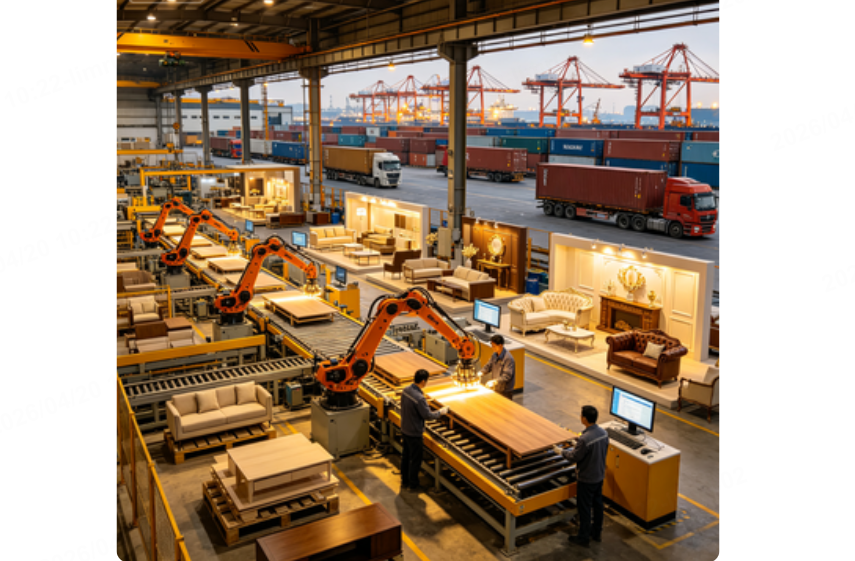
Foshan is not just a manufacturing cluster with an annual output exceeding 100 billion yuan — it is a complete supply chain system capable of supporting cross-border sellers from zero to scale:
- Lecong – the world’s largest furniture distribution hub
- Longjiang Town – accounts for over 30% of global upholstered furniture production (sofas, mattresses)
- Shunde – full-chain capabilities from design and raw materials to whole-home solutions
Foshan’s competitiveness has never been just about “cheap prices.” It’s about three things: a complete industrial chain, strong supporting capabilities, and ultra-high responsiveness. In the future, the real winners will not be those who own factories, but those who can mobilize this supply chain.
Policy Dividends: Cross-border E-commerce Policies Accelerate Foshan Furniture’s Global Breakthrough
In recent years, national and local cross-border e-commerce policies have continuously empowered Foshan furniture:
- The 2022 “Opinions on Accelerating the Development of New Foreign Trade Models” explicitly supports the integration of industrial clusters with cross-border e-commerce.
- Shunde, Foshan, was approved as a “National Cross-border E-commerce Comprehensive Pilot Zone,” introducing policies such as simplified export tax rebates, overseas warehouse subsidies, and dedicated cross-border logistics routes.
These policies directly push Foshan factories from “OEM” to “cross-border direct supply,” accelerating the disintermediation process.
“The policies in Shunde Cross-border E-commerce Pilot Zone allow our factory to bypass trading companies and directly serve sellers on Amazon and Wayfair. Even small batch orders enjoy tax rebates, increasing profit margins by 20%.” — Owner of a Foshan upholstered furniture factory
Key policy benefits:
- Simplified export tax rebates – reduced to within 3 working days
- Overseas warehouse subsidies – up to 500,000 yuan for self-built/leased warehouses
- Logistics support – dedicated Foshan–Europe & Foshan–North America furniture lines, cutting large-item logistics costs by 15%
II. Market Structure Change: Foshan Is “Demolishing the Wall of Middlemen”
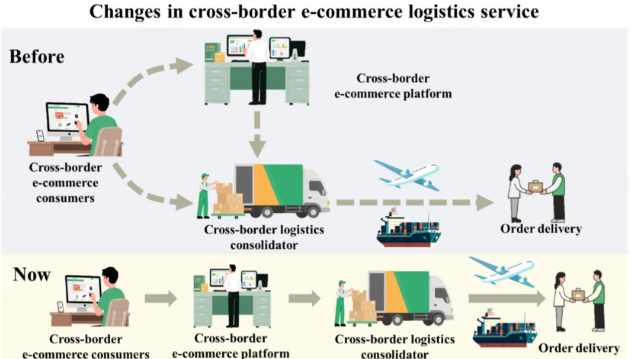
From Multi-layer Distribution to Factory-to-Consumer
The old foreign trade chain for Foshan furniture was:Factory → Trading company → Overseas wholesaler → Retailer
Middlemen took 30–50% of the profits.
Now it has evolved to:Factory/Seller → Cross-border platform → Consumer
This brings three fundamental changes:
- Order format – from full container load (FCL) to small-batch, high-frequency replenishment, even dropshipping. Supply chains must shift from scale-oriented to flexible production.
- Pricing logic – from “wholesale price” to “total cost.” With middlemen removed, factories face direct end-market competition. A seller’s edge is no longer just “low purchase price” but total cost control (procurement + logistics + fulfillment).
- Core capability – from “selling products” to “controlling fulfillment.” Given furniture’s bulky, heavy, and damage-prone nature, shipping time, air freight costs, and return rates become critical — “how to ship” matters more than “what to sell.”
III. Product Trends: Foshan Furniture’s Cross-border Adaptation Evolution
Four Major Trends Based on Cross-border Platform Data
- “Light Furniture” Boom – De-assetization
Knock-down (KD) structure, flat-pack, single-person portable products become mainstream. Representative categories: computer desks, clothes racks, small sofas. This solves the “volume pain point” in cross-border logistics. - Modular Furniture – Adapting to Overseas Lifestyles
Modular sofas (L-shape, connectable), DIY storage units, etc., reduce shipping costs while satisfying overseas consumers’ desire for personalized assembly. High user engagement. - High Cost-Performance Replacement – Breaking Brand Premiums
Foshan supply chain offers quality equivalent to European/American brands at 1/2 to 1/3 the price. Example: a sofa selling for $300 on Wayfair costs only $120–180 from Foshan. This is reshaping global furniture pricing. - Scenario-based Selling – From Single Items to Solutions
Instead of selling sofas or beds separately, sellers bundle “living room solutions,” “bedroom solutions,” or “home office sets” to increase average order value and conversion rates.
IV. Real Case: How LooperBuy Helps Sellers Activate Foshan Supply Chain
A European independent brand seller focusing on “modern minimalist living room furniture” faced three initial pain points:
- High MOQ (50–100 units) for sofas – unable to test market
- No warehousing capability
- Uncontrollable lead times
Core problem: Traditional furniture supply chain does not match the “small-batch, fast-response” rhythm of cross-border e-commerce.
How LooperBuy restructured the chain:
- Supplier re-screening – solving MOQ pain point
Selected Foshan factories supporting mixed batches + low MOQ (as low as 10 units), allowing sellers to test before stocking. - China warehouse consolidation + split fulfillment
Multiple SKUs shipped to LooperBuy’s China warehouse, then split and dispatched to Europe — shifting from “container logic” to “order logic.” - Logistics optimization
Bestsellers shipped by sea (stock-up), test items by express lines — balancing cost and lead time.
Result: Identified 2 stable SKUs within 3 weeks, monthly GMV exceeded €50,000, enabling rolling replenishment and eventual localized overseas warehousing.
V. Platform Methodology: Practical Strategies for Foshan Furniture Cross-border Sales
Four Strategies Based on LooperBuy’s Capabilities
- Light-asset start – Do not invest in overseas warehouses upfront. Prioritize China warehouse + dropshipping, test SKUs in small batches to lower trial costs.
- Split SKU structure – Avoid heavy categories (large sofas, full dining sets) initially. Focus on small furniture, knock-down products to quickly validate the market.
- Hybrid fulfillment model – Once mature, adopt “bestsellers → overseas warehouse + long-tail → China warehouse” to improve inventory turnover.
- Treat supply chain as part of the product – Cross-border user experience = product quality + shipping speed. LooperBuy’s value: connect Foshan supply chain, support small-batch procurement, central management in China warehouse, and match multiple logistics solutions — turning a heavy supply chain into a schedulable light-asset capability.
Conclusion: The Future Competitiveness of Foshan Furniture
The evolution of Foshan furniture reflects China’s industrial shift from “manufacturing export” to “supply chain export.” As global consumers increasingly embrace the “direct supply from China supply chain” model, Foshan’s complete industrial chain, flexible response, and policy dividends will become core moats for cross-border sellers.
In the future, sellers who truly leverage the Foshan supply chain will seize the initiative in the global home furnishing market — because supply chain competition is the ultimate competition in cross-border e-commerce.