
Discover how apparel sourcing companies help fashion startups cut inventory risk, from lower MOQs and faster lead times to dropshipping and data-driven forecasting. Learn practical steps to design a lean, resilient supply chain and scale your brand without overstock or stockouts.
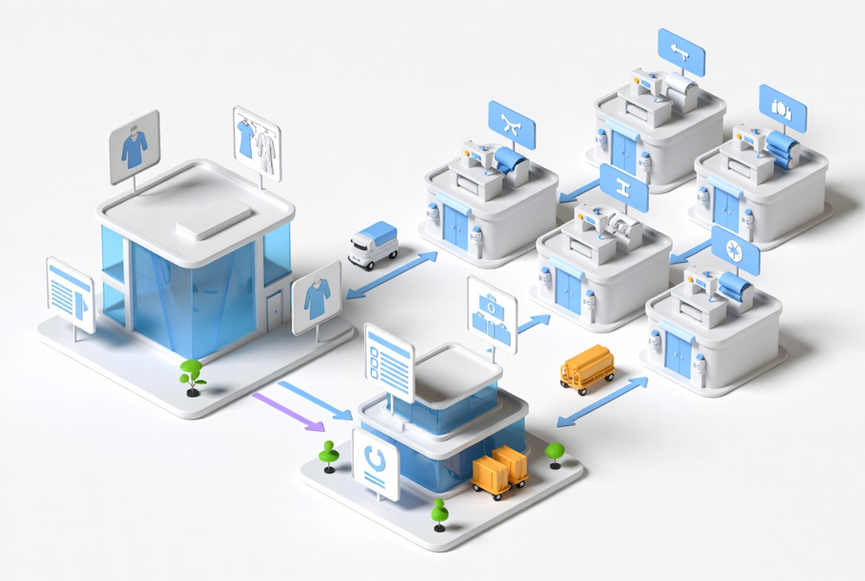
Apparel sourcing companies help fashion startups reduce inventory risk by shortening lead times, offering flexible order models, and giving founders access to data-driven sourcing decisions that they could not build alone. When you combine that with a China-based B2B sourcing and dropshipping partner like Looperbuy, you effectively shift a big part of the inventory and logistics burden off the startup’s balance sheet and onto a professional supply network.
Table of Contents
Why Inventory Risk Is So High For Fashion Startups
For fashion startups, inventory can make or break the business. Apparel is highly seasonal, trend-driven, and SKU-heavy, so even a small miscalculation can leave founders with dead stock or constant stockouts.
Common inventory risks include:
– Excess stock and markdowns: The fashion industry produces an estimated 2.5–5 billion units of excess stock worth 70–140 billion USD in a single year. For a startup, even a few hundred unsold units can kill cash flow.
– Stockouts and lost sales: Understocking bestsellers leads to lost revenue and frustrated customers, especially when launching new collections or running campaigns.
– Complex SKUs: Every style has multiple sizes, colors, and fits, which multiplies inventory decisions and makes forecasting harder.
– Capital lock-in: Traditional buying requires paying factories up front, warehousing goods, and funding logistics before a single sale happens.
– Volatile demand and supply: Fashion trends turn fast, while supply chains face delays, labor constraints, and geopolitical risks.
As someone who has supported multiple early-stage fashion brands, I’ve seen the same pattern repeatedly: good design is not enough. Without a smart sourcing partner, founders either over-order “to be safe” or under-order and miss the window.
> Key idea: The less inventory you own before demand is proven, the lower your risk. Apparel sourcing companies exist to make that possible.
What Apparel Sourcing Companies Actually Do
From a founder’s perspective, the best apparel sourcing companies are not just “middlemen.” They act as extensions of your product, supply chain, and buying teams, especially critical for lean fashion startups.
Core functions that directly affect inventory risk:
– Supplier selection and qualification
They vet factories for capacity, quality, lead time performance, and compliance, reducing the risk of late or defective deliveries that create unsellable stock.
– MOQ (minimum order quantity) negotiation
Professional sourcing teams can negotiate lower MOQs or shared production runs, allowing startups to test designs with smaller initial buys.
– Flexible production models
They design models such as make-to-order, made-to-stock for core styles, and dropship or on-demand production for trend-driven SKUs.
– End-to-end logistics and fulfillment
Many sourcing partners coordinate freight, customs, and warehousing, or integrate with 3PLs, which removes the need for startups to lease space or build their own logistics network.
– Data and visibility
Advanced sourcing partners use real-time inventory tracking and predictive analytics to support better buy decisions and faster reaction to demand shifts.
For a platform like Looperbuy, this extends further into B2B dropshipping, where inventory can remain at the supplier or in shared hubs while you sell globally.
How Apparel Sourcing Companies Reduce Inventory Risk
1. Lower Upfront Inventory Commitment
The single biggest lever for reducing risk is reducing the volume you must pre-purchase before you know what will sell.
Sourcing companies help by:
– Negotiating low MOQs or size-run test orders so you can validate styles and fits before scaling up production.
– Using shared production (multiple brands share fabric and trims) to reach factory MOQs without each startup overcommitting.
– Combining trial orders with rapid replenishment from China-based vendors, so you reorder only when data validates demand.
From an operator’s view, this changes the model from “buy 1,000 pcs and hope” to “buy 100 pcs, test, then scale the winners.”
2. Shorter Lead Times and Faster Replenishment
Long lead times force startups to “guess the future,” which almost always increases inventory risk.
A strong apparel sourcing company will:
– Build a network of factories optimized for shorter runs and faster cycles.
– Use pre-positioned fabrics or ready-to-dye blanks so color and style decisions can be made later, when you have more demand data.
– Align with logistics partners to compress shipping and customs timelines for key markets.
This enables smaller, more frequent orders, which:
– Keeps your inventory closer to real demand.
– Reduces the amount of capital and stock at risk if a trend or color underperforms.
– Helps you respond to real-time data from your ecommerce, marketplace, or wholesale channels.
> When lead times shrink, you switch from speculative buying to data-backed reordering.
3. Dropshipping and Distributed Fulfillment
For early-stage brands and B2B sellers, dropshipping through a sourcing platform can remove a huge portion of inventory risk.
How it helps:
– No need to pre-stock inventory: Goods stay with the supplier or in shared warehouses; you purchase only when you receive an order.
– Reduced warehousing and labor costs: You avoid renting storage or hiring staff to manage picking and packing.
– Global reach without global stock: You can serve customers across multiple regions while keeping most inventory centralized.
A platform like Looperbuy extends this model to cross-border B2B sourcing and fulfillment:
– You list or sell apparel SKUs sourced from vetted Chinese manufacturers.
– When your customer orders, Looperbuy coordinates procurement, quality checks, and shipping directly to your customer or to your own consolidation point.
– Your balance sheet carries far less stock, while your catalog remains broad and competitive.
4. Better Demand Forecasting and Data-Driven Buys
Fashion startups often lack the data and tools needed to forecast demand. Apparel sourcing companies can plug that gap.
Leading partners use:
– Historical and regional sales data (from their network) to recommend order volumes by size, color, and style.
– Predictive analytics to better align production with demand; brands using AI-driven forecasting have been shown to reduce excess inventory by up to 30% and improve margins by about 10%.
– Real-time insights from POS, ecommerce, and warehouse systems to refine replenishment and mark-down strategies.
From a practical founder perspective, this means:
– More accurate initial buy quantities per size curve.
– Earlier visibility into slow movers so you can correct course (markdowns, bundles, or made-to-order only).
– Tighter integration between marketing calendars and production plans.
5. SKU Rationalization And Smarter Assortment Planning
Too many SKUs create complexity and hidden inventory risks. Sourcing companies that understand apparel economics can help you design a tighter, more profitable assortment.
They support you to:
– Identify hero products and evergreen basics that justify higher safety stock.
– Limit risky micro-trend SKUs to flexible, small-batch or dropship models.
– Standardize fabrics, trims, and base patterns to reduce lead times and minimums.
– Use SKU rationalization to cut underperforming options and simplify your inventory structure.
When you’re building in public or scaling a DTC or B2B fashion channel, this kind of discipline often separates the brands that survive from those that burn cash on variety that doesn’t sell.
6. Risk-Sharing And Flexible Commercial Terms
Inventory risk is not only about units; it’s also about who carries the financial burden.
Experienced apparel sourcing partners can:
– Negotiate stage payments (e.g., deposit + balance after inspection or shipment), reducing the time your capital is tied up.
– Offer consignment-like models or stock-sharing within their network for standard products.
– Enable on-demand relabeling or rebranding of generic inventory, so stock can be repurposed across different clients if one design underperforms.
When combined with a B2B sourcing and dropshipping platform, startups can even explore risk-pooling across multiple buyers, so no single brand bears the full cost of a mis-forecast.
7. Real-World Example: From Overbuying To Agile Sourcing
Consider a hypothetical but realistic scenario based on patterns seen in the industry and data-backed practices.
– A new streetwear brand initially commits to 1,500 hoodies per design with a traditional factory model.
– After the first season, they are left with 400–500 units of several designs, heavily discounted to move, eroding margins and consuming storage space.
– In the next season, they partner with an apparel sourcing company leveraging Chinese factories and a flexible fulfillment network (similar to Looperbuy).
Together they:
1. Switch to test orders of 150–200 units per design.
2. Use shared blanks (same base hoodie, different prints) to speed up production.
3. Replenish only the SKUs that hit a pre-defined sell-through threshold in the first 2–4 weeks.
4. Route orders via dropship and cross-border fulfillment, skipping local warehousing for most units.
Result:
– Excess inventory falls by an estimated 30–40%.
– Inventory turnover improves (more units sold closer to launch instead of sitting in storage).
– Cash can be redirected into marketing and design instead of dead stock.
How Looperbuy-Type Sourcing Models Support Fashion Startups
As an online B2B procurement and dropshipping platform for Chinese goods, a solution like Looperbuy is well-positioned to help fashion startups and B2B apparel sellers reduce inventory risk across the full supply chain.
Key advantages:
– Access to a broad, vetted supplier base in China, covering multiple apparel categories—from basics to niche performance wear.
– Consolidated procurement and logistics: One platform coordinates sourcing, quality checks, and international shipping, so you avoid managing multiple suppliers, freight forwarders, and warehouses.
– Dropshipping and bulk-buy options side by side:
– Start with dropship or small-batch test orders.
– Switch winning products into bulk buys when volume justifies better factory pricing.
– Cost efficiency without large stockpiles: You tap into China’s manufacturing scale while avoiding excessive storage, labor, and inventory holding costs.
For fashion startups, this means you can:
– Launch wider assortments without owning every unit up front.
– Experiment across niches, regions, and channels while keeping inventory agile.
– Build a brand and customer base first, then gradually internalize or specialize parts of your supply chain when volumes are stable.
Practical Steps For Fashion Startups Working With Apparel Sourcing Partners
1. Start With A Risk Map
Before you brief a sourcing company, map out where your current risks sit:
1. List your styles and SKUs with on-hand stock, sell-through, and margin.
2. Identify dead stock and items with slow sales velocity.
3. Note seasonal timelines and where you’re exposed to long lead times or single-source suppliers.
Use this map to set clear goals for your sourcing partner: “Reduce excess inventory on trend-driven SKUs by X%” or “Shift 50% of new styles to test-order or dropship models.”
2. Define Your Product Segments
Not every product should follow the same inventory model. Work with your sourcing company to assign each product to a segment:
– Core basics (e.g., plain tees, socks, uniforms): higher safety stock, stable replenishment.
– Seasonal fashion (e.g., summer dresses, winter outerwear): small initial buys + quick reorder.
– Limited editions / collabs: small-batch or pre-order / made-to-order.
Industry data suggests that core basics often carry 20–30% safety stock, while seasonal fashion might have higher buffers early in season and lower later on. A good sourcing partner uses this logic to design your buy plan.
3. Ask For Lead Time And MOQ Transparency
When you evaluate or brief an apparel sourcing company, insist on transparent lead time, MOQ, and capacity information per product type.
Key questions:
– What are the minimum order quantities per style, size curve, and color?
– What are the standard and expedited lead times from PO to dispatch?
– Are there ready fabric or blank programs that can shorten development?
– What options exist for dropshipping versus bulk shipment?
This transparency lets you model how much inventory you need to carry at each stage.
4. Integrate Data And Feedback Loops
To fully leverage your sourcing partner, connect them with your sales, inventory, and customer feedback data (even basic spreadsheets help at the start).
– Share weekly sell-through reports and return reasons.
– Plan replenishment meetings around real-time or near real-time data.
– Use low-commitment test buys as experiments, then scale only clear winners.
Best-in-class brands treat their sourcing company like an analytics-informed collaborator, not just a vendor.
5. Build A Tiered Supply Chain Strategy
As you grow, your sourcing partner can help you design a tiered sourcing model:
– Tier 1: Fast, flexible factories or stock programs for small batches and test launches.
– Tier 2: Higher-volume, cost-optimized manufacturers for proven winners.
– Tier 3: Strategic partners for key raw materials or specialized products.
This ensures you can start lean, then move into more efficient high-volume contracts only when your demand justifies it, avoiding premature over-ordering.
Partner With A Flexible Apparel Sourcing Platform
If you are building a fashion startup or expanding an apparel category, you don’t need to carry all the inventory risk yourself. The right apparel sourcing company can:
– Shorten lead times and lower MOQs.
– Provide access to vetted Chinese manufacturers and global logistics.
– Enable dropshipping and flexible fulfillment so you only pay for stock when you sell it.
If you want to reduce inventory risk while expanding your product range, consider partnering with a sourcing and B2B dropshipping platform like Looperbuy. You can start with small test orders, leverage expert sourcing support, and scale only the products your customers truly want—*without turning your warehouse into an expensive storage room.*
FAQs
1. How do apparel sourcing companies differ from traditional trading companies?
Traditional trading companies focus mainly on buying and selling goods. Apparel sourcing companies go further: they help you design the right assortment, manage production, monitor quality, coordinate logistics, and often provide data insights to reduce inventory and supply chain risks.
2. Can small fashion startups really negotiate low MOQs through a sourcing partner?
Yes. While an individual startup may struggle to meet factory minimums, sourcing companies aggregate demand across multiple clients or pre-negotiate flexible programs with manufacturers, which often results in lower MOQs and more accessible test orders.
3. Is dropshipping a good long-term model for apparel brands?
Dropshipping is excellent for validating demand, testing new markets, and controlling risk. As volumes grow, many brands keep dropshipping for long-tail or experimental SKUs, while shifting proven core products into bulk production to improve margin.
4. What data should I share with my sourcing partner to help reduce inventory risk?
Share basic weekly or monthly sales data by SKU, stock levels, sell-through rates, and key campaign calendars. Even simple reports help your sourcing partner recommend better order quantities, replenishment timing, and SKU rationalization.
5. How can a China-based sourcing platform support sustainable growth for fashion startups?
By combining manufacturing scale and cost advantages with flexible ordering, consolidated logistics, and real-time visibility, a China-based sourcing platform can help you reduce wasteful overproduction, improve cash flow, and grow more sustainably—even as you expand into new categories and markets.
References
1. Netsuite – *Clothing Inventory Management: Effective Strategies*[netsuite]
2. Cart.com – *Apparel inventory management strategies*[cart]
3. Business of Fashion – *Tackling Fashion’s Excess Inventory Problem*[businessoffashion]
4. Stylematrix – *Inventory management challenges for fashion startups* [stylematrix]
5. Dimerco – *Understanding the Fashion Industry Supply Chain*[dimerco]
6. Supply Chain Dive – *Fashion supply chains: 2025’s risks and trends*[supplychaindive]
7. Retraced – *Supply Chain Risk Assessment in Fashion Brands Starts with Data*[retraced]
8. Dorsali – *Case Studies: Data Analytics in Fashion*[dorsali]
9. Inventory Source – *Biggest Challenges for Fashion Retailers*[inventorysource]
10. Best Colorful Socks – *Fashion Inventory Turnover Growth Statistics*[bestcolorfulsocks]

-2-700x490.jpeg)