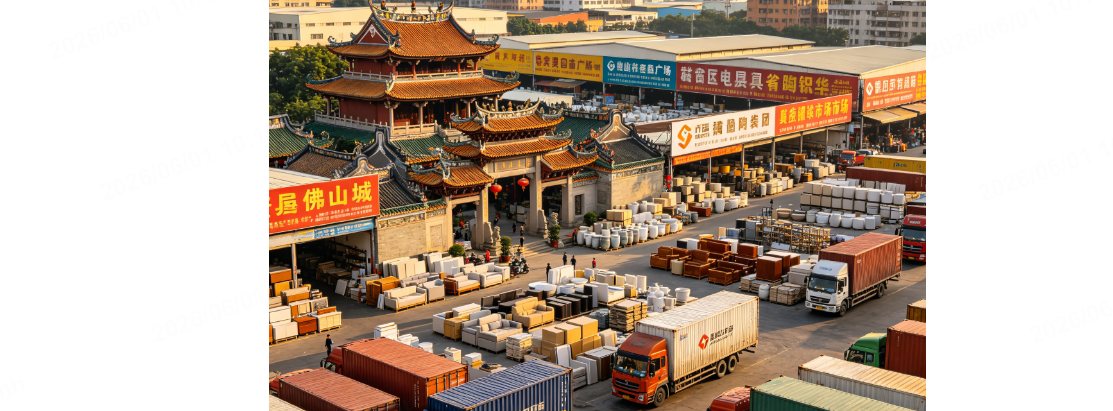
I still remember the sensory overload of my first walk through the Nanhai district. The rhythmic hum of hydraulic presses, the faint smell of lacquer in the air, and the sheer scale of the industrial parks stretching for miles. For a procurement specialist, it was less of a trade trip and more of a pilgrimage. If you are a brand owner or wholesaler navigating the complexities of global supply chains, ignoring Foshan is not just an oversight; it is a strategic liability. This article isn’t a theoretical overview. It is a practical, experience-based guide to executing a flawless Foshan sourcing strategy, built specifically for businesses that demand quality, scalability, and cost-efficiency.
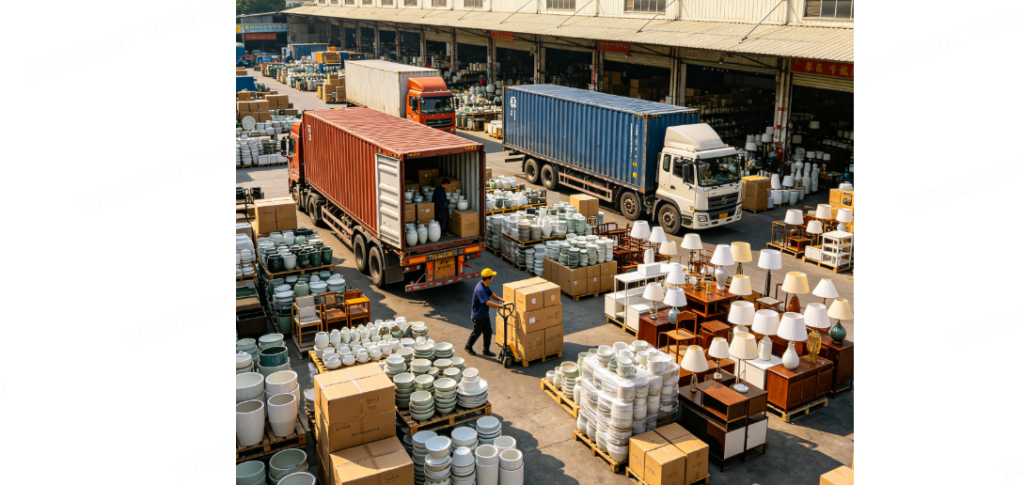
Table of Contents
Why Foshan Defines Chinese Manufacturing Excellence
Most Western buyers fixate on the “lowest price” fallacy. The real value of Foshan sourcing lies in hyper-specialization. Unlike generalized markets that trade in finished trinkets, Foshan is the global epicenter of heavy-duty, high-expertise manufacturing. You don’t come here for a generic gadget; you come here for the furniture that furnishes five-star hotels in Dubai and the ceramic tiles that pave luxury malls in Milan.
The structural advantage is obvious. The city sits adjacent to Guangzhou, the heart of the Canton Fair. The geographical density creates a supply chain where raw material suppliers, mold makers, and assembly plants are neighbors, not continents apart. This proximity shortens lead times drastically. But more importantly, it fosters an environment of fierce craft competition. The welders, glaziers, and upholsterers here are not transient workers; they are generational artisans. When you source a modular sofa from Longjiang or sintered stone from Nanzhuang, you are buying decades of iterative engineering refinement.
The Hidden Complexity: Fragmentation and the “Agent Trap”
However, the landscape is not without its minefields. The market is deeply fragmented. A single furniture piece might require coordinating a timber frame from one township, fabric from a specialized mill, and sponge foam from a chemical plant. For an international buyer operating remotely, this fragmentation creates a logistical nightmare.
I have consulted for a mid-sized European furniture brand that learned this the hard way. They dispatched a junior buyer directly to the Lecong wholesale complex. The buyer secured a price 25% lower than their previous supplier. It was a disaster. The factory used sub-standard internal framing treated with incorrect moisture levels. When the containers hit the humid sea route, the wood warped. The entire shipment arrived commercially unsellable due to mold. The root problem? The supplier was a trading desk with no quality control capability, expertly disguised as a manufacturer. This is the “Agent Trap.” In Foshan, visual showrooms often outclass actual production lines. Verifying the factory floor, not the showroom catalog, is the non-negotiable first step of expert Foshan sourcing.
Case Study: Navigating the Porcelain Crisis with LooperBuy
The gap between a low-cost vendor and a reliable B2B partner becomes painfully clear when technical specifications tighten. A recent success story illustrates this perfectly.
The Scenario: An Australian developer needed 3,000 square meters of calibrated porcelain slabs for a high-end residential project. The tolerance specification was +/- 0.2mm flatness—a threshold many “discount” factories blatantly ignore. The client initially engaged a small Foshan export company that promised compliance. When our team at LooperBuy conducted a pre-audit, we discovered the factory’s calibration machine was uncalibrated. They were shipping variance at +/- 0.8mm, which would have caused severe lippage (uneven tiling) during installation.
The Solution: Leveraging our localized vetting teams, we pivoted the order within 48 hours to a mid-sized, sustainable facility in the Sanshui district. We didn’t just inspect the final product; we embedded a quality controller during the pressing phase. We required back-butter compatible adhesion grid patterns on the slab backs. The outcome? Flawless installation, zero rejection rate, and a 15% landed cost reduction compared to the original contract because we eliminated rework and waste. This is what a technology-enabled sourcing platform delivers: not just matchmaking, but manufacturing governance.
LooperBuy: Re-Engineering the B2B Sourcing Engine
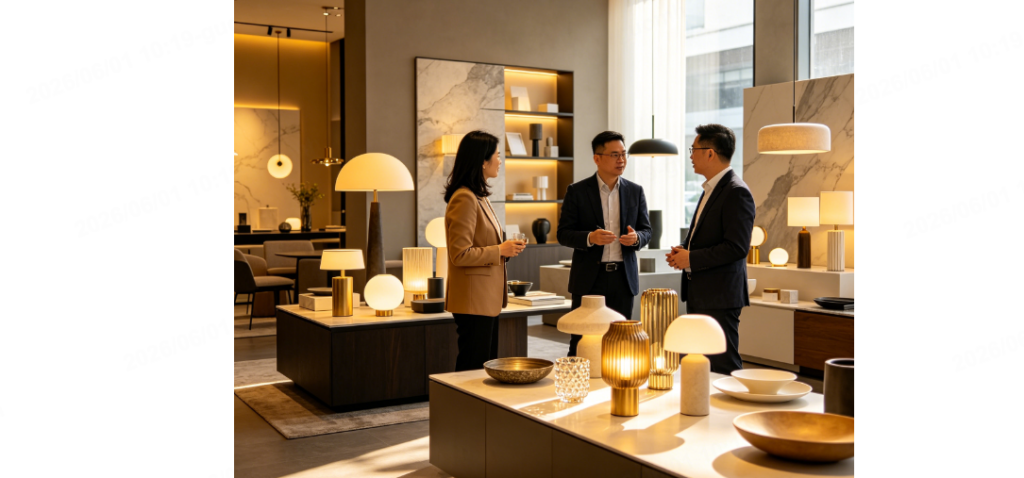
This brings me to the operational core. The traditional procurement model is broken. It relies on blind trust, slow email chains, and costly physical travel. LooperBuy functions as your operational extension on the ground.
- Price Transparency vs. Price Discovery: A conventional agent earns a margin on the factory price, incentivizing them to hide the true cost. We invert this. Our platform aggregates demand across multiple buyers, allowing us to negotiate bulk raw-material discounts for small and medium enterprises (SMEs) that they could never access alone. You see the ex-works price breakdown.
- The Logistics Layer: Securing a great ex-works price is meaningless if your shipping cost erases the margin. Because we ship hundreds of containers weekly from Foshan to hubs in the US, Europe, and the Middle East, our freight consolidation model turns Less than Container Load (LCL) shipments into Full Container Load (FCL) rates. In practical terms, that means a buyer ordering 15 cubic meters of sanitary ware often pays the same per-unit sea freight as someone ordering 68 cubic meters.
- Breadth Without Risk: Some platforms lock you into a single factory. We don’t. Whether you need outdoor rattan sets, hotel lobby chandeliers, or complete aluminum door systems, we source across the entire Greater Bay Area. You manage the purchase order; we manage the production milestones.
A Step-by-Step Protocol for Risk-Free Foshan Sourcing
If you are venturing into this market, even with a partner, understanding the cadence is vital. Here is the operational protocol we deploy:
- Digital Topography Mapping: Do not start with Alibaba filters. Start with industry-specific geological maps. Know which village specializes in lighting (Lecong) versus hardware door accessories (Dali, Lishui). Your partner should guide this zoning.
- The “Sniff Test” Live Audit: A virtual video call is useless if the supplier controls the lens. You need a representative on the ground checking the “back door.” Are there enough raw materials on-site to support the claimed volume? Is the noise level consistent with active production? We look for the silent signs: a spotless, dust-free welding station is a red flag in a metal-fab plant—it implies inactivity, not cleanliness.
- Granular Bill of Materials (BOM) Locking: I cannot stress this enough. Avoid “performance specs” only. Lock the BOM.
- Bad BOM: “High-grade stainless steel.”
- Good BOM: “SUS304 stainless steel, thickness 1.2mm, tolerance +/- 0.05mm, PVD coated.”
Preventing material creep is the most effective cost-containment strategy.
The Logistics Edge: From Foshan Direct to Your Warehouse
The global shipping crisis taught us a crucial lesson: diversification of exit ports matters. While Shenzhen and Nansha are standard, expert Foshan sourcing often utilizes the emerging network of inland waterway barges feeding into Hong Kong for less congested deep-sea access. This multimodal transport approach—trucking goods 50km to a river port instead of waiting in a 3-day queue at a congested container terminal—can shave a full week off a consolidation schedule.
Conclusion: Your Next Strategic Move
Foshan is more than a city; it is a comprehensive industrial ecosystem. Accessing its full potential requires a shift from transactional buying to strategic partnership. You need “boots on the ground” without the opacity of traditional agents. You need logistical scale without losing personal attention to your order.
If you are ready to move beyond the standard marketplace risks and tap directly into the factory floors that define global industry, let’s connect. Visit LooperBuy today to discuss your bill of materials, and let’s build a supply chain designed to survive not just this quarter, but the next decade.
References
- LooperBuy Official Blog. Supplies Business: A B2B Expert’s Guide to Sourcing Chinese Goods Globally with LooperBuy. Link
- Government of Foshan. Foshan Industry Overview: Furniture, Ceramics & Home Appliances. Link
- PR Newswire. China’s Greater Bay Area: The Next-Gen Supply Chain Hub. Link
- Statista. Revenue of the B2B E-commerce Market in China, 2023-2028. Link
- Maersk Line. Multimodal Transport: Inland Waterways and Port Diversification Strategy in Pearl River Delta. Link
Frequently Asked Questions (FAQ)
- What makes Foshan sourcing different from Yiwu sourcing?
Yiwu excels in small commodities, consumer goods, and low-MOQ trinkets. Foshan sourcing specializes in heavy, durable, and technical goods requiring high capital expenditure, such as furniture, sanitary ware, advanced ceramics, and architectural hardware. - How do I verify a ceramic tile supplier in Foshan without visiting?
You cannot rely on a brochure. You must request a “shadow sample” (a tile pulled from bulk current production, not a pre-polished showroom sample) and pay for a third-party lab test for water absorption, flexural strength, and flatness. LooperBuy handles this local sampling as part of the pre-shipment protocol. - What is the typical Minimum Order Quantity (MOQ) for Foshan furniture?
It varies widely, but true factory-direct sources often require a consolidated order volume of at least 20-30 pieces per SKU, or a full 20GP/40HQ container mix. We bypass this restriction by consolidating multiple buyer PO’s. - Is it safe to pay Chinese suppliers via T/T directly?
It’s standard, but risky without verification. Always pay to a corporate account matching the business license and export license. Never pay a personal account. Using a platform with a secure payment gateway adds an additional layer of financial protection. - Can I mix different product categories in one container in Foshan?
Absolutely. The strategic advantage of the Greater Bay Area is that furniture in Longjiang, lighting in Guzhen, and tiles in Chancheng are all within a 40-mile radius. This makes multi-category consolidation cost-effective, a service difficult to execute through a single-category factory.
Brief Introduction
Unlock the full potential of China’s manufacturing core with our expert guide on Foshan Sourcing. We move beyond basic directories to reveal how to navigate hyper-specialized industrial clusters, dodge the costly “Agent Trap,” and lock granular Bills of Materials. Discover how LooperBuy transforms fragmented supply chains into a streamlined, transparent procurement engine, delivering global logistics savings and factory-level quality governance for B2B buyers.
Hot tags: Foshan sourcing, China B2B platform, sourcing agent China, wholesale furniture China, ceramic tile procurement, LooperBuy, global logistics, supply chain management, product quality control, B2B ecommerce