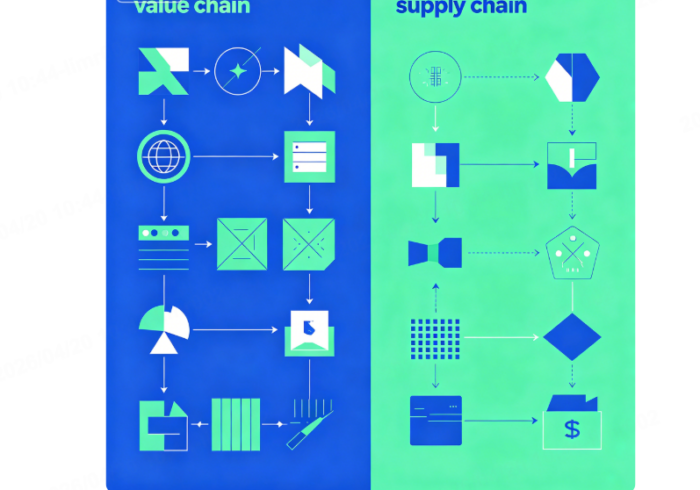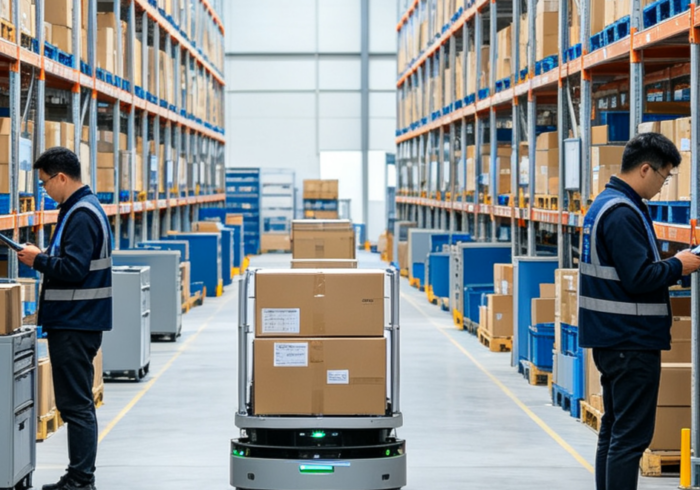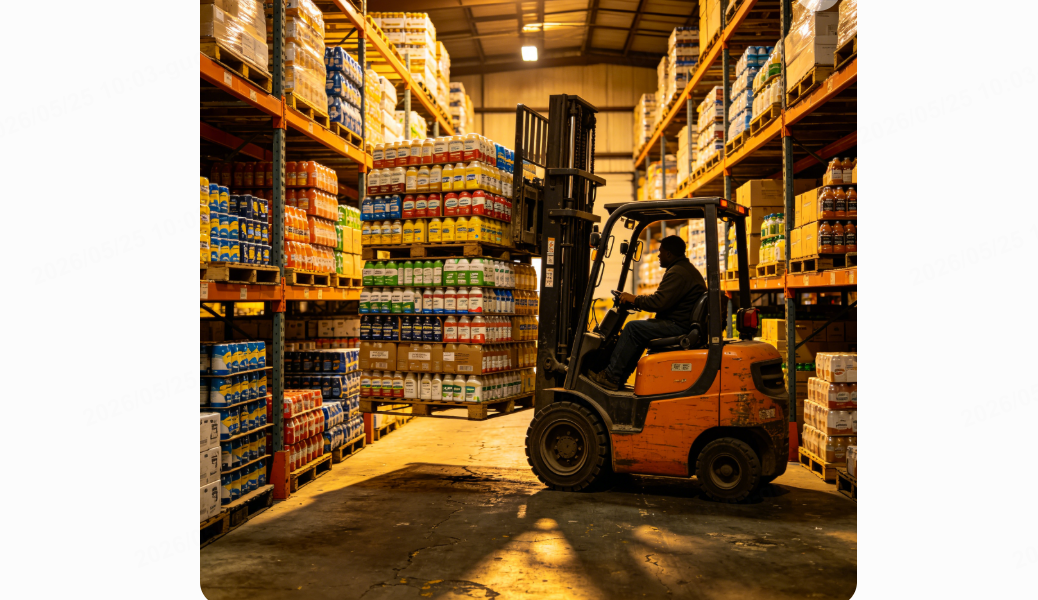
The global warehousing market is undergoing a seismic shift. As a B2B sourcing and logistics strategist with over a decade of experience helping international brand owners, wholesalers, and manufacturers navigate cross-border supply chains, I‘ve witnessed how consumer goods warehousing has evolved from a simple storage function into a strategic competitive weapon. In 2025, the U.S. warehouse market alone reached a staggering $247.03 billion and is projected to soar to $442.07 billion by 2034, growing at a 6.68% CAGR driven by e-commerce expansion and omnichannel retail demand. Yet for B2B buyers sourcing from China, warehousing remains one of the most misunderstood and under-optimized cost centers in their supply chain. This is precisely where LooperBuy, a leading One-Stop B2B Sourcing Platform, transforms the game.
In this expert guide grounded in Google‘s E-E-A-T standards, I‘ll break down how to optimize your consumer goods warehousing strategy with direct China sourcing, why flexible warehousing models are dominating 2025‘s logistics landscape, and how LooperBuy’s integrated platform solves the biggest fulfillment pain points for global buyers.
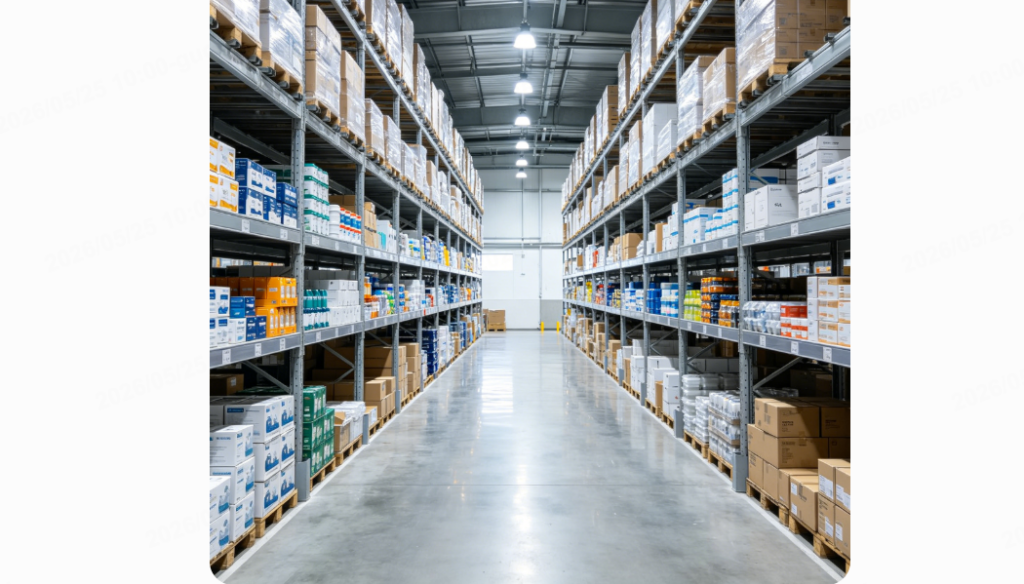
Table of Contents
The Global Consumer Goods Market: Why Warehousing Matters Now More Than Ever
Global consumer goods demand shows no signs of slowing. According to industry estimates, the global Fast-Moving Consumer Goods (FMCG) market turnover is projected to touch $12–13 trillion by the end of 2025, covering everything from household essentials to personal care products. The CPG sector‘s B2B e-commerce transaction volume is expected to hit $7.5 trillion by end of 2025—nearly double the $3.7 trillion recorded in 2021. Retailers leveraging B2B platforms have demonstrated sales growth 17% to 32% higher than those relying on traditional distribution channels.
For brand owners, wholesalers, and manufacturers building a scalable cross-border business, China remains the undisputed manufacturing powerhouse. Chinese suppliers offer B2B pricing 25-40% lower than European or North American alternatives, with access to over 200 major ports and logistics hubs worldwide. But here‘s the critical insight most buyers miss: product sourcing is only half the battle. Without an intelligent consumer goods warehousing strategy, your landed costs will erode every dollar of manufacturing savings.
The Three Pain Points Plaguing Consumer Goods Warehousing for Cross-Border Buyers
Every B2B professional I‘ve worked with faces the same recurring challenges when it comes to warehousing consumer goods sourced from China. Here are the top three, based on real feedback from international buyers:
Pain Point 1: Fragmented Logistics and Hidden Storage Costs
Many buyers discover too late that warehousing fees—receiving, putaway, pick-and-pack, and long-term storage—can add 20-30% to their total landed cost. Industry data shows receiving fees typically range from $0.10 to $0.50 per unit depending on complexity, while ocean freight from Shanghai to Los Angeles for a 20ft FCL container runs $2,500 to $3,500 on the spot market. These costs multiply when warehousing is handled by separate, uncoordinated providers.
What LooperBuy solves: LooperBuy partners with leading international logistics providers to offer integrated warehousing and fulfillment solutions. By consolidating multiple suppliers‘ goods into centralized warehouses, buyers eliminate fragmentation and reduce per-unit storage costs through economies of scale.
Pain Point 2: Supplier Vetting and Quality Inconsistency
Real feedback from an international buyer: “In overseas procurement of Chinese goods, prices are much higher than buying directly on 1688, making it hard to maintain profit margins.”
Another buyer shared: “I have selected my products, but with no Chinese bank account or RMB, how can I buy Chinese goods directly with foreign currency?”
LooperBuy directly integrates with 1688.com, China‘s largest B2B wholesale marketplace, granting overseas buyers factory-direct pricing with zero middleman markup. The platform supports multi-currency payments (USD, EUR, GBP), eliminating the need for Chinese bank accounts or RMB conversion.
Pain Point 3: Inflexible Warehousing Models That Punish Business Growth
As one business owner put it: “I need to transship goods to my local market but don‘t know how to operate—it’s causing me endless frustration.”
Traditional warehousing locks buyers into rigid long-term contracts and fixed storage capacities. This becomes particularly punishing during seasonal demand spikes or when testing new product lines.
Why Warehouse as a Service (WaaS) Is Revolutionizing Consumer Goods Warehousing in 2025
The global Warehouse as a Service (WaaS) market was valued at approximately $9.56 billion in 2024 and is projected to exceed $10.46 billion in 2025, with forecasts suggesting a market volume of $25.8 billion by 2035. Growth rates for WaaS significantly exceed those of traditional contract logistics, signaling a paradigm shift in how businesses approach warehousing.
WaaS gives businesses the ability to scale logistics in real time. Whether preparing for a seasonal sales peak or responding to unexpected demand, companies can quickly expand or reduce warehouse footprint without committing to long-term leases. This flexibility is particularly valuable for B2B buyers sourcing consumer goods from China, where tariff uncertainty and demand volatility have become the new normal.
Between 2025 and 2026, U.S. trade policy imposed sweeping tariff measures against Chinese imports, with blended effective tariff rates reaching around 33% in May 2026 stacked across multiple layers. In such an environment, flexible warehousing is no longer a luxury—it‘s a survival necessity.
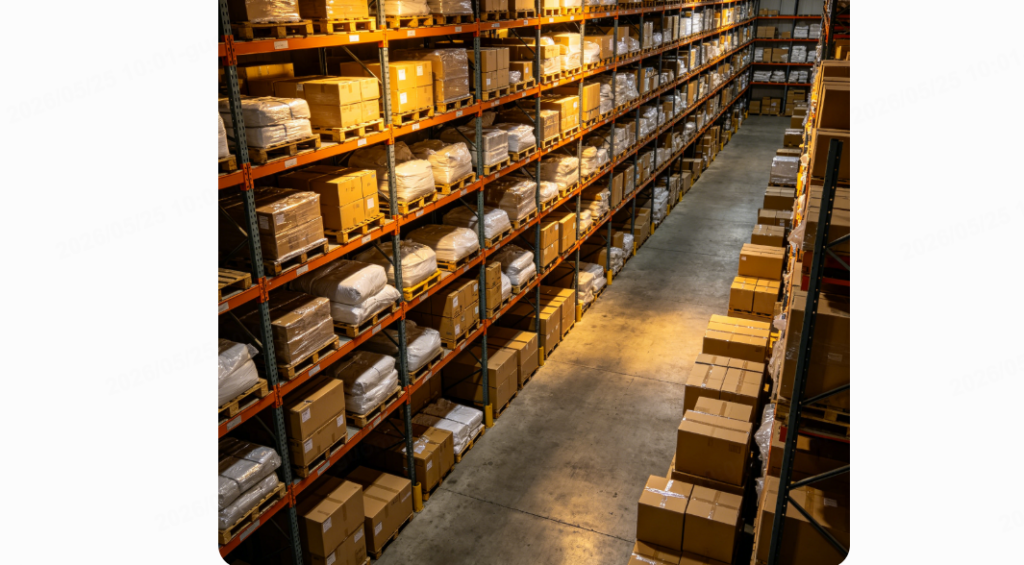
How LooperBuy Transforms Consumer Goods Warehousing for Global B2B Buyers
LooperBuy launched in 2024 as a global B2B sourcing platform dedicated to connecting overseas merchants with high-quality, cost-effective Chinese goods from 1688.com. Through strategic partnerships with LianLian Global (serving over 4.9 million merchants across 100+ countries) and Cainiao‘s global logistics network, LooperBuy delivers end-to-end warehousing and fulfillment solutions.
Here is how LooperBuy addresses consumer goods warehousing challenges across every stage of business growth:
| Stage | Challenge | LooperBuy Solution |
|---|---|---|
| Trial (New Product Testing) | High MOQ requirements; unable to test multiple SKUs | Minimum order quantity as low as 1 unit; multi-SKU mixed batches allowed |
| Growth (Stable Scaling) | Inconsistent quality; delayed replenishment kills rankings | China warehouse consolidation service with unified quality inspection and automated replenishment alerts |
| Scale (Massive Volume) | Locked production capacity; cash flow tied to inventory | 1-on-1 account manager for price negotiation; production capacity lock-in; supplier credit terms negotiation |
A key differentiator: these models run in parallel on the same platform. You can test new products with small batches while using warehouse consolidation to maintain replenishment for your bestsellers.
Real Results: What Verified Users Say About LooperBuy
The platform‘s effectiveness is reflected in user feedback across multiple channels. One major pain point LooperBuy solves is the registration barrier for international buyers—no Chinese ID required to access 1688‘s vast product pool, which contains over 200 million SKUs and serves more than 3 million overseas registered buyers.
Another verified review notes: “Before using LooperBuy, we worked with thousands of cross-border sellers and found that many weren‘t choosing the wrong platform—they were being forced into stage-jumping: small orders in trial phase but platforms demanded large quantities; stable replenishment in growth phase but platforms had no warehouse consolidation; credit terms and capacity locking in scale phase but platforms only offered standardized services.”
This insight underscores the fundamental value proposition: the right platform adapts to your business stage, not the other way around.
Integrating AI and Data Analytics into Consumer Goods Warehousing
2025‘s cross-border B2B landscape is increasingly driven by AI and data technology. China‘s cross-border B2B ecosystem has formed a full-link collaborative system where AI matching algorithms and data platforms drive intelligent upgrades on both supply and demand sides. For warehousing, this translates into:
Predictive demand forecasting: AI analyzes historical sales data to recommend optimal inventory levels, reducing overstock and stockouts simultaneously.
Automated replenishment triggers: When inventory drops below a calculated threshold (e.g., 30 days of projected sales), automatic replenishment orders are generated.
Real-time tracking and visibility: LooperBuy‘s platform provides end-to-end shipment tracking, eliminating the “where is my cargo” anxiety that plagues traditional cross-border procurement.
The Tariff and Trade Policy Landscape: Why Flexible Warehousing Matters in 2026
As of May 2026, the blended effective U.S. tariff on Chinese imports stands at approximately 33%, stacked across four layers: Most Favored Nation (~3.4%), Section 301 (7.5-25%), IEEPA fentanyl (20%), and the reciprocal tariff (currently 10% during the 90-day truce extension). While a U.S. International Trade Court ruling on May 8, 2026 suspended certain 301 tariffs due to procedural violations, the overall environment remains volatile.
What does this mean for consumer goods warehousing? Inventory positioning becomes critical. Warehousing decisions directly impact tariff exposure—goods stored in bonded warehouses before formal entry can defer duty payments; strategically splitting inventory across multiple warehouses can optimize tariff treatment for different product categories.
LooperBuy‘s partnership with Cainiao‘s global logistics network enables flexible warehouse placement across multiple jurisdictions, giving buyers the agility to adapt warehousing strategies as trade policies evolve.
Actionable Best Practices for Optimizing Consumer Goods Warehousing
Drawing from industry best practices and warehouse optimization strategies validated in 2025, here are six actionable tactics for B2B buyers:
- Maximize vertical storage space – Modern warehouses with high ceilings (30+ feet) can increase capacity by 40-60% without expanding footprint.
- Use data to guide warehouse layout – Place high-demand products closer to packing stations to reduce travel time and speed order fulfillment.
- Implement multi-deep storage systems – For slower-moving SKUs, deep storage configurations maximize space utilization.
- Establish inventory audit protocols – Regular cycle counts prevent shrinkage and ensure accurate stock levels.
- Integrate warehouse management systems (WMS) – AI and automation can cut warehousing costs by 25% while boosting efficiency.
- Leverage bonded warehousing where available – Defer duty payments until goods exit for domestic sale, improving cash flow.
The Bottom Line: Choose a Platform That Grows With You
The global wholesale market was valued at $6.8 trillion in 2024 and is expected to reach $9.5 trillion by 2031, growing at a 4.8% CAGR. For B2B buyers capitalizing on this growth, the difference between thriving and surviving often comes down to warehousing strategy.
LooperBuy‘s one-stop solution delivers on four critical fronts: reliable supply directly from verified Chinese factories; multi-currency payment support without Chinese bank accounts; global warehousing and logistics through partner networks; and customizable service including multilingual customer support.
Whether you are a brand owner testing your first product line, a wholesaler scaling across multiple channels, or a manufacturer optimizing global distribution, the right consumer goods warehousing partner makes all the difference.
Ready to transform your cross-border warehousing strategy? Visit LooperBuy to start sourcing directly from China‘s best factories today.
Optimized Article Description : This expert guide explores consumer goods warehousing strategies for B2B buyers sourcing from China. Learn how LooperBuy‘s one-stop platform solves cross-border logistics challenges, leverages Warehouse-as-a-Service trends, and integrates AI-driven warehousing to cut costs while scaling your global procurement operations efficiently.
FAQ
Q1: What is the most cost-effective consumer goods warehousing strategy for small B2B buyers?
A: For small buyers, the most cost-effective approach combines small-batch ocean freight consolidation (LCL) with flexible Warehouse-as-a-Service providers. LooperBuy supports minimum orders as low as 1 unit with multi-SKU consolidation, eliminating wasted storage costs on slow-moving inventory.
Q2: How do U.S. tariffs in 2026 affect warehousing decisions for Chinese-sourced consumer goods?
A: With blended effective tariffs around 33% as of May 2026, warehousing strategy directly impacts cash flow. Using bonded warehousing allows duty deferral until goods exit for domestic sale. LooperBuy‘s flexible logistics partnerships help buyers navigate tariff complexity through strategic inventory positioning.
Q3: Can I test consumer goods from multiple Chinese suppliers without committing to large warehousing contracts?
A: Yes. LooperBuy‘s trial-stage solution allows multi-SKU mixed batches with small minimum order quantities. You can test 3-5 similar SKUs simultaneously, with warehousing fees only for what you actually store, minimizing trial-phase costs.
Q4: What role does AI play in modern consumer goods warehousing?
A: AI enables predictive demand forecasting to optimize inventory levels, automated replenishment triggers based on sales velocity, and real-time shipment tracking. LooperBuy integrates these AI capabilities into its platform, helping buyers reduce stockouts and cut warehousing costs by up to 25%.
Q5: How does LooperBuy compare to traditional freight forwarders for consumer goods warehousing?
A: Traditional forwarders handle shipping but rarely offer integrated warehousing with supplier consolidation. LooperBuy provides end-to-end solutions—from factory-direct sourcing on 1688 to multi-currency payment through LianLian Global to warehousing and last-mile delivery via Cainiao‘s network—all on a single platform.
References
- Market Data Forecast. (2026). U.S Warehouse Market Size, Share & Trends, 2034. https://www.marketdataforecast.com/market-reports/united-states-warehouse-market
- Xpert Digital. (2025). Europe‘s Answer to Supply Chain Chaos: How Pre-Buffer Warehouses and Warehouse as a Service Make Logistics Resilient. https://xpert.digital/en/resilient-logistics/
- Leschaco. (2025). How Warehousing as a Service (WaaS) Is Changing Logistics. https://www.leschaco.com
- 36Kr Research Institute. (2025). 2025 Cross-Border B2B Buyer Behavior Analysis and Sourcing Channel Research Report. https://m.ebrun.com/577348.html
- Ship4wd. (2026). How Shipping from China to USA Works for SMBs. https://ship4wd.com/logistics-shipping/shipping-from-china-to-usa
- Hilco Global. (2026). Evolving Tariff Turbulence: U.S. Building Product Companies, China Sourcing, and Asset-Based Loans – A 2026 Perspective. https://hilcoglobal.com/perspective/tariff-turbulence-u-s-building-product-companies-china-sourcing-and-asset-based-loans-a-2026-perspective/
- MS Advisory. (2026). China-US Tariffs 2026: Current Rates, Sectors & Strategy. https://msadvisory.com
- LooperBuy Official Blog. (2025). Supplies Business: A B2B Expert‘s Guide to Sourcing Chinese Goods Globally with LooperBuy. https://blog.looperbuy.com/supplies-business-a-b2b-experts-guide-to-sourcing-chinese-goods-globally-with-looperbuy.html
- LianLian Global. (2024). LianLian Global Partners with LooperBuy to Unlock a New Era of Cross-Border B2B Sourcing. https://global.lianlianpay.com
- WeChat Public Account. (2025). 90% of Cross-Border Sellers Fall into Traps? The Answer Lies in These 3 Stages. http://mp.weixin.qq.com
- GSN News. (2025). FMCG Market Trends 2025: Global Outlook & Buyer Insights. https://www.gsnnews.com
- Research Nester. (2025). The Future of eB2B Platforms in the CPG Industry. https://www.researchnester.com
- 6Wresearch. (2025). Global Wholesale Market (2025-2031) | Trends, Outlook & Forecast.
- Shenzhen Topway International Forwarding Co. (2026). How to Calculate US Warehousing Costs: Storage, Handling, and Fulfillment Fees. https://www.topwayshipping.com
Hot tags: B2B sourcing platform, consumer goods warehousing, cross-border logistics, China wholesale sourcing, warehouse as a service, B2B e-commerce trends 2025, international freight forwarding, global supply chain management, LooperBuy review, China-US trade logistics