Meta Description: What does BOM mean in supply chain management? Discover why a well-managed Bill of Materials is the backbone of global sourcing and how LooperBuy’s One-Stop B2B Sourcing Platform helps you master BOM management for cost efficiency.
BOM meaning in supply chain is far more than just a list of parts. It is the strategic blueprint that determines how efficiently you source, manufacture, and deliver products across borders. As a B2B sourcing strategist with over a decade of experience helping global brand owners, wholesalers, and manufacturers optimize their supply chains, I’ve witnessed firsthand that businesses who truly understand the BOM meaning in supply chain consistently outperform those who treat it as a mere engineering checklist.
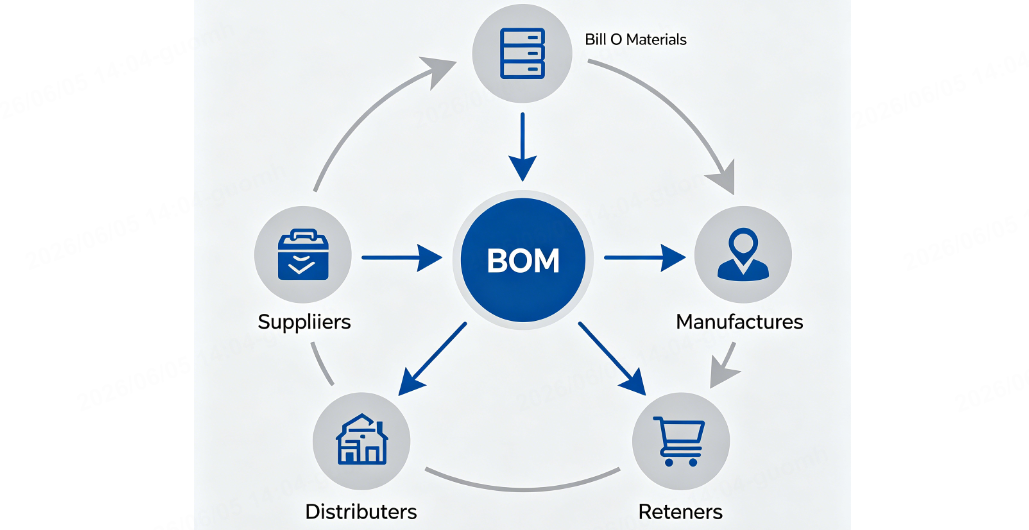
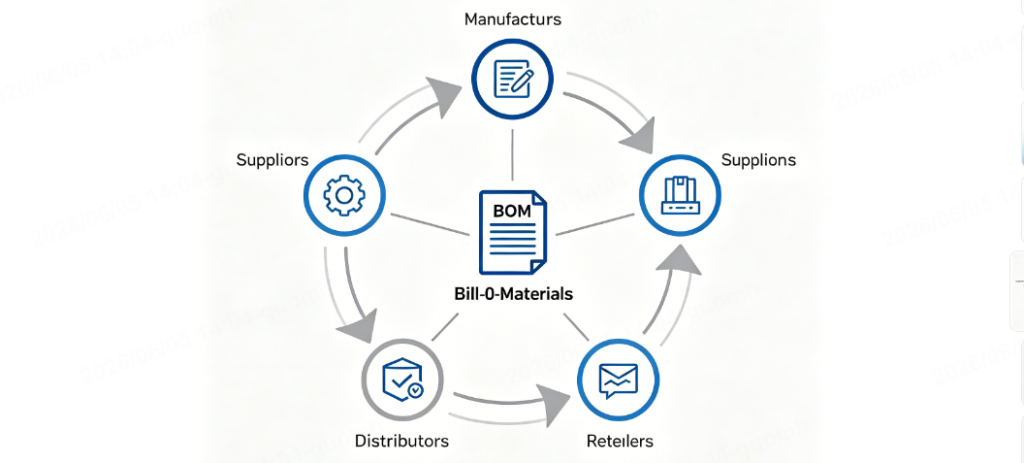
Suggested Image: A professional infographic showing the anatomy of a BOM document—components, quantities, part numbers, sourcing details, cost breakdown, and supplier information—with arrows showing how each element flows into procurement, manufacturing, and logistics.
Table of Contents
BOM Meaning in Supply Chain: Complete Guide for B2B Sourcing Professionals (2026)
Before diving into advanced strategies, let’s establish the foundational BOM meaning in supply chain management. A Bill of Materials is a structured list containing all raw materials, components, sub-assemblies, and instructions required to build or repair a product, along with their exact quantities and specifications. In supply chain operations, the BOM serves as the “connective tissue between engineering intent and procurement reality.” In other words, your BOM tells procurement teams exactly what to buy, in what quantities, and from what suppliers.
So what is a BOM in supply chain management in practice? It is a living data structure that informs purchasing decisions, drives shop-floor execution, supports accurate inventory tracking, and enables precise cost estimation. Without a clean, accurate BOM, no sourcing strategy—no matter how sophisticated—can succeed.
Why the True BOM Meaning in Supply Chain Matters More Than Ever in 2026
The global B2B e-commerce market is projected to exceed $26 trillion in transaction volume, with China’s cross-border B2B exports alone expected to reach approximately 6.9 trillion yuan (around $950 billion), accounting for nearly 30% of the global market share. With that scale comes complexity—and the BOM is your master key to unlocking it.
In today’s volatile trade environment, tariffs, freight inflation, and shifting trade patterns are forcing engineering and sourcing teams to build strategies around what is actually available, not what is ideal. If your BOM does not reflect real-world supply conditions, production will stall.
Suggested Chart: A line graph showing B2B e-commerce market growth from 2020 to 2026, with callouts for cross-border procurement volume and China’s export share.
The Two Main Types of BOM Every Supply Chain Professional Must Know
To fully grasp the BOM meaning in supply chain for sourcing purposes, it is essential to distinguish between engineering and manufacturing BOMs.
H3: Engineering BOM (EBOM)
The EBOM defines how a product is designed—its theoretical component list. This is where product development teams specify part numbers, quantities, and technical requirements.
Manufacturing BOM (MBOM)
The MBOM translates the EBOM into what procurement and production teams actually need—including packaging materials, fasteners, assembly instructions, and sourcing dependencies. The MBOM is tightly connected to ERP, MES, and SCM systems. It informs purchasing, drives shop-floor execution, and supports precise tracking of inventory and cost estimation.
For sourcing professionals, the MBOM is your single source of truth for ordering from suppliers.
How BOM Management Drives Cost Optimization in Global Sourcing
The BOM meaning in supply chain extends directly to the bottom line. A well-managed BOM enables you to:
Track and roll up component costs accurately to get comprehensive cost analysis of finished goods
Compare pricing across multiple suppliers for every line item on your BOM
Identify cost-saving alternates without compromising quality
Simulate changes within the BOM and analyze their impact on raw materials, cost, supplier availability, and production constraints
According to industry data, optimizing BOM costs is not just a matter of price—it is about strategy, collaboration, and agility. Businesses that actively manage their BOMs as dynamic strategic assets achieve 15–25% lower sourcing costs compared to those using static or spreadsheet-based BOMs.
The Supply Chain Pain Points a Broken BOM Creates (And What to Do About It)
Every B2B procurement professional knows these all-too-familiar scenarios:
Unvetted BOM Components: Your BOM lists parts that are obsolete or unavailable, forcing last-minute redesigns and emergency sourcing.
Hidden Logistics Costs: Without accurate component weights, volumes, and sourcing origins in your BOM, freight cost calculations are guesswork at best.
Fragmented Supplier Coordination: Your BOM might require 20+ components from 15 different suppliers. Managing quotes, lead times, and delivery coordination across all of them is a logistical nightmare.
Slow Procurement Cycles: Manual BOM processing—emailing spreadsheets, chasing quotes, reconciling discrepancies—adds weeks to your procurement timeline.
Platforms like OpenBOM are closing this gap by bringing ordering, purchasing, and supplier collaboration closer to the engineering source of truth, using cloud-native, real-time, multi-company BOM collaboration.
Case Study: How Smart BOM Sourcing Saved a Defense Contractor’s Critical Timeline (Real-World Example)
Let me share a documented example that illustrates the power of strategic BOM sourcing.
A Tier-1 defense contractor faced a critical challenge: sourcing a large, complex Bill of Materials for an advanced program on an extremely tight deadline. Using a unified BOM sourcing platform, they validated and sourced their entire component list within days—not weeks—keeping a critical test flight on schedule and avoiding costly delays.
What made this possible? Their BOM was structured for action:
Every line item had clear manufacturer part numbers and alternates
Sourcing strategies were embedded directly into the BOM before RFQs went out
Digital collaboration tools enabled real-time supplier communication
This is exactly the level of BOM discipline that modern sourcing platforms enable. As another example, Diode Computers automates BOM workflows by pushing validated BOMs directly into their procurement system, where programs and kits are created automatically.
Suggested Image: A workflow diagram showing the BOM-to-order process—from BOM creation to supplier quote collection to purchase order generation—with platform automation callouts.
5 Actionable Best Practices for BOM Management in Global Sourcing
Based on my years in B2B sourcing strategy, here are the five practices that deliver the greatest ROI:
1. Establish a Single Source of Truth
The most significant pitfall in BOM management is relying on spreadsheets. Every team should work from the same live BOM—not emailing Excel files back and forth.
2. Integrate Multi-Level BOMs with ERP Systems
Eliminate data silos by accessing centralized BOM data. This reduces errors and duplication across procurement, production, and finance.
3. Add Sourcing Constraints Early
Don’t wait until the BOM is “final” to involve procurement. Add sourcing requirements into product specifications during the design phase. This is the essence of design-to-source—integrating sourcing intelligence into product design so engineering and procurement teams make decisions collaboratively, informed by real-time supply data.
4. Qualify Alternates Before You Need Them
Build an alternates strategy, not a wish list. For every critical component, identify and qualify backup suppliers before supply shocks occur.
5. Monitor BOM Health Continuously
Don’t freeze the BOM and walk away. Use alerts to track lifecycle changes, lead-time spikes, or sudden cost shifts, and act quickly.
How LooperBuy’s One-Stop B2B Sourcing Platform Powers Smarter BOM Execution
Now that we’ve established the critical BOM meaning in supply chain, let’s talk about execution. Understanding what a BOM is and why it matters is only half the battle. The real challenge is turning that BOM into delivered products—efficiently, cost-effectively, and reliably.
This is where LooperBuy transforms BOM management from theory into reality.
LooperBuy is a One-Stop B2B Sourcing Platform connecting global brand owners, wholesalers, and manufacturers directly to China’s manufacturing ecosystem. Unlike traditional sourcing intermediaries that add layers of cost and complexity, LooperBuy eliminates middlemen by providing direct access to vetted Chinese suppliers at factory-direct prices.
LooperBuy directly connects to 1688.com, China’s largest B2B wholesale marketplace—giving buyers access to the most competitive pricing available anywhere. This means every line item on your BOM can be sourced at true factory prices, with complete transparency and zero hidden fees.
Here is how LooperBuy addresses the key BOM execution challenges:
Challenge
LooperBuy Solution
Complex BOM with multiple suppliers
One platform, one order, one shipment—consolidate your entire BOM sourcing
Unverified suppliers
Vetted Chinese suppliers, eliminating the risk of counterfeit or substandard components
Hidden logistics costs
Global logistics at competitive rates, with transparent pricing built into every order
Slow delivery times
Seamless logistics network powered by industry-leading partners, ensuring reliable fulfillment
Limited product categories
Access to 90%+ of global B2B supply categories—from industrial components to consumer goods
For B2B buyers managing large, complex BOMs, having a single point of procurement for the entire Bill of Materials dramatically reduces program management costs and enables dual sourcing for risk mitigation.
LooperBuy also integrates with LianLian Global for multi-currency payments, making cross-border transactions seamless. As one user noted, “Using LianLian account balance to directly pay LooperBuy suppliers, easily achieve foreign currency payment, one-click direct procurement, ensuring efficient fund flow.”
Suggested Video Embed: A 60-second explainer video showing how a buyer uploads their BOM to LooperBuy, gets consolidated quotes, and receives their complete order at their door.
What Our Clients Are Saying
Don’t just take my word for it. Here is what real businesses are experiencing with LooperBuy:
“Looperbuy directly connects to China’s high-quality 1688 supply pool, helping overseas merchants purchase at factory prices, completely eliminating middleman markups. Through direct sourcing and delivery services, Looperbuy ensures price transparency with no hidden fees, significantly reducing procurement costs and increasing profit margins.”
“Looperbuy provides overseas merchants with a one-stop online procurement solution, directly connecting to China’s high-quality 1688 supply pool, enjoying factory prices with no agency fees, supporting multiple foreign currency payments, fast logistics delivery, ensuring orders arrive safely, and helping businesses operate efficiently.”
These testimonials reflect a consistent theme: transparency, efficiency, and cost savings. For B2B buyers, that is exactly what effective BOM execution should deliver.
The Bottom Line: Master Your BOM Meaning in Supply Chain to Win in Global Sourcing
The BOM meaning in supply chain is simple: it is your product’s DNA, encoded for procurement success. A clean, accurate, well-managed BOM is the difference between profit-eating delays and smooth, cost-effective global sourcing.
But a BOM alone cannot source itself. You need a sourcing partner that understands global logistics, vetted suppliers, and factory-direct pricing.
That is what LooperBuy delivers.
If you are a brand owner, wholesaler, or manufacturer looking to source from China with confidence—whether you have a complete BOM ready to go or need help finding the right products for your business—LooperBuy is your gateway to the world’s most competitive supply chain.
Ready to optimize your BOM sourcing? Visit LooperBuy today to start sourcing factory-direct from China with global logistics you can trust.
Frequently Asked Questions (FAQ)
Q1: What exactly does BOM mean in supply chain management? A Bill of Materials (BOM) in supply chain management is a comprehensive, structured list of all raw materials, components, sub-assemblies, and instructions needed to manufacture or repair a product, including exact quantities, part numbers, and sourcing specifications.
Q2: Why is BOM management critical for global sourcing success? BOM management ensures procurement teams know exactly what to buy, in what quantities, from which suppliers, and at what costs. Without accurate BOM data, sourcing becomes guesswork, leading to delays, cost overruns, and quality issues.
Q3: How does LooperBuy help with BOM-based sourcing? LooperBuy provides a One-Stop B2B Sourcing Platform where you can source every component on your BOM from vetted Chinese suppliers, consolidate orders, and leverage global logistics—all from a single interface with no hidden fees.
Q4: What is the difference between an engineering BOM and a manufacturing BOM? An Engineering BOM (EBOM) defines how a product is designed. A Manufacturing BOM (MBOM) translates that into procurement and production requirements, including packaging, assembly instructions, and sourcing dependencies—the version sourcing teams actually use.
Q5: Can small and medium-sized businesses effectively manage BOM sourcing from China? Absolutely. Platforms like LooperBuy are specifically designed to lower the barrier to entry for SMEs by providing factory-direct pricing, supplier vetting, and logistics management that were historically only accessible to large corporations.
References
LooperBuy Blog. Supplies Business: A B2B Expert’s Guide to Sourcing Chinese Goods Globally with LooperBuy. https://blog.looperbuy.com/supplies-business-a-b2b-experts-guide-to-sourcing-chinese-goods-globally-with-looperbuy.html
Altium. The Impact of Supply Chain Disruptions on BOM Management (2025). https://resources.altium.com
Altium. The AI-Driven Procurement Revolution: How Smart BOM Management Is Reshaping Electronics Sourcing (2025). https://resources.altium.com
Autodesk Fusion Blog. Why BOM Management is Needed for Manufacturing Success (2025). https://www.autodesk.com
OpenBOM. How a Digital BOM Simplifies Supplier Collaboration (2025). https://www.openbom.com
OpenBOM. Manufacturing Bill of Materials: From BOM Restructure to Supply Chain Intelligence (2025). https://www.openbom.com
Samsung SDS. Turning the Bill of Materials from a Bottleneck into a Bridge (2026). https://www.samsungsds.com
Baijiahao. 2025 B2B Industry Platform Panorama Trends. https://baijiahao.baidu.com
Cofactr. Case Study: Diode Computers. https://www.cofactr.com
Xometry. Case Study: Expedited Sourcing Keeps Critical Test Launch on Schedule (2026). https://www.xometry.com
Alibaba.com. Strategic Sourcing from Chinese OEMs: Guide for B2B Buyers (2025). https://www.alibaba.com
OpenBOM. ERP Near PLM: How OpenBOM Closes the Supply Chain Gap (2025). https://www.openbom.com
Hot Tags
BOM meaning supply chain, Bill of Materials management, B2B sourcing platform, global procurement solutions, China sourcing strategy, supply chain cost optimization, cross-border e-commerce B2B, LooperBuy B2B platform, BOM cost management, international supplier sourcing
Article Summary
This article explains BOM meaning in supply chain management and why mastering your Bill of Materials is essential for global B2B sourcing success in 2026. Written from an industry expert’s perspective, it covers BOM fundamentals, cost optimization strategies, real-world case studies, and best practices—with actionable insights on how LooperBuy’s One-Stop B2B Sourcing Platform helps buyers source factory-direct from China with transparent pricing and reliable global logistics.