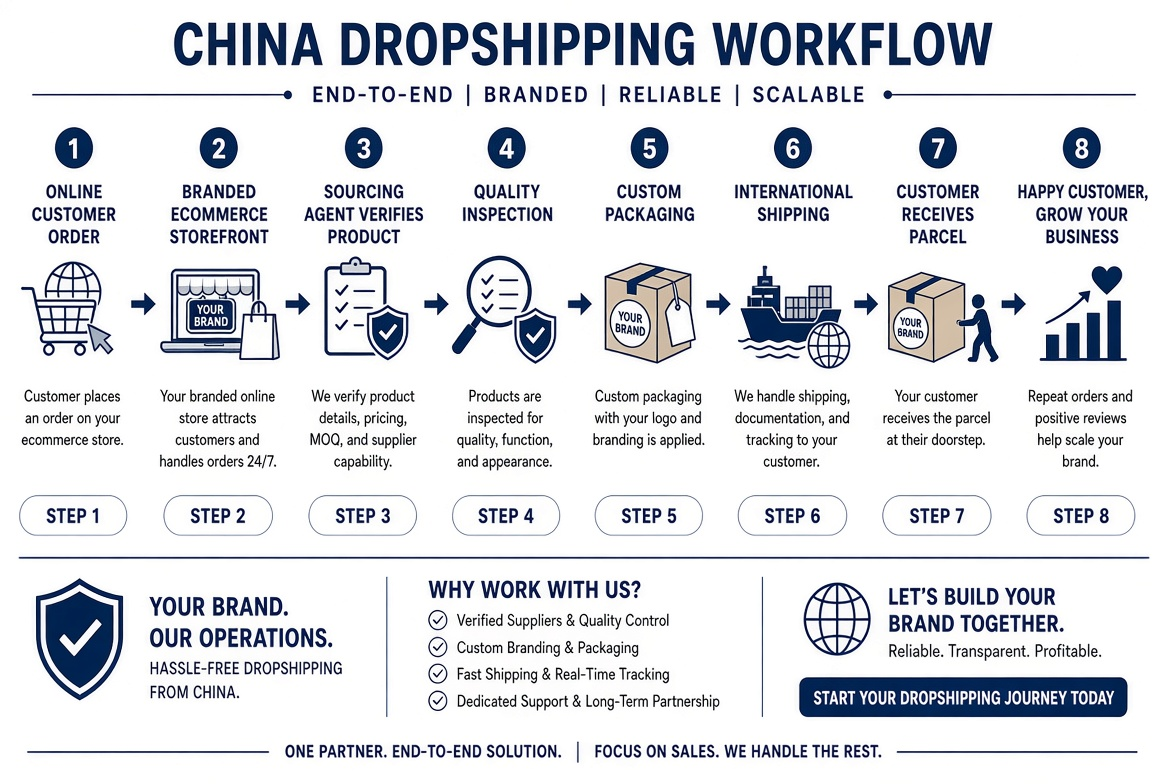
Compare the best automated dropshipping platforms for 2026, including Shopify, WooCommerce, Wix, Doba, Spocket, AutoDS, and Looperbuy. Learn how to evaluate sourcing, fulfillment, inventory sync, total cost, delivery expectations, and the ideal stack for China-sourced products.
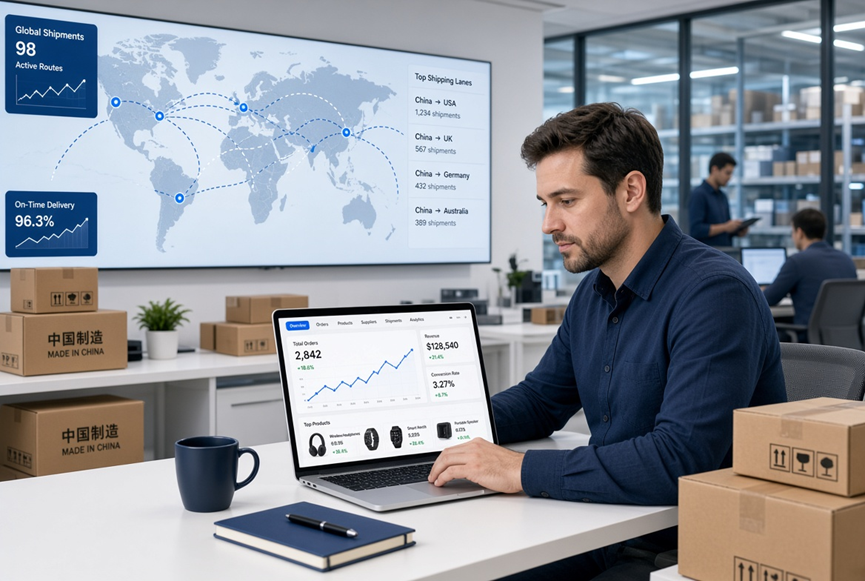
Choosing the best automated dropshipping platform is not just a software decision. It determines how reliably you can source products, update inventory, process orders, control margins, and protect the customer experience as your store grows.
For sellers sourcing from China and serving customers worldwide, the strongest setup is usually not a single tool. It is a connected operating system: a storefront, a sourcing and fulfillment partner, and automation that keeps product, stock, order, and shipping data aligned.
> Editor’s note: This guide compares store-building platforms and dropshipping automation tools from an operator’s perspective. Features, pricing, integrations, and availability can change; confirm current terms directly with each provider before committing.
Table of Contents
What an Automated Dropshipping Platform Actually Does
In a traditional retail model, merchants buy inventory first, store it, pack orders, and arrange shipping. In dropshipping, the supplier or fulfillment partner picks, packs, and ships products directly to the end customer. The seller still owns the storefront, product selection, pricing, marketing, customer communication, and returns experience.
An automated dropshipping platform reduces the manual work between your store and the supply chain. Depending on the tool, this can include:
– Importing product information into your online store
– Synchronizing inventory availability
– Updating product cost or selling price rules
– Routing paid orders for fulfillment
– Pulling tracking data back into the customer-facing store
– Managing products across more than one sales channel
– Monitoring order exceptions, cancellations, or supplier stock changes
Automation is valuable because manual workflows break first at scale. Copying orders into supplier systems, checking stock by hand, and updating tracking one order at a time may work for ten orders a week. It becomes expensive and error-prone when volume rises.
For Looperbuy customers, the operational goal is straightforward: sell without pre-purchasing inventory, while retaining control over what customers see and experience.
The Two Layers of Your Tech Stack
A common mistake is comparing every platform as if it performs the same job. In reality, there are two distinct categories.
Storefront platforms
These are the systems where customers browse products, add items to a cart, pay, and receive order updates.
– Shopify: A hosted commerce platform with a large app ecosystem and a relatively fast path to launch.
– WooCommerce: An open-source commerce platform for WordPress. It gives merchants substantial control over their site, checkout, data, and extensibility, but it also requires more technical ownership.
– Wix: A visual website builder with ecommerce capabilities, designed for merchants that value fast setup and drag-and-drop editing.
Sourcing and automation platforms
These sit behind, beside, or connected to the storefront. Their role is product sourcing, supplier coordination, inventory and order synchronization, and fulfillment automation.
– Looperbuy: A China sourcing and dropshipping partner designed to help global B2B sellers procure goods, avoid holding inventory, coordinate fulfillment, and reduce the operational burden associated with warehousing and logistics management.
– Doba: A supplier marketplace and automation platform that connects with ecommerce channels for product and order workflows.
– Spocket: A dropshipping platform commonly positioned around curated supplier catalogs and integrations with independent stores.
– AutoDS: An automation-focused tool for sellers operating across ecommerce and marketplace channels.
The practical takeaway: Shopify, WooCommerce, and Wix build your sales destination. Looperbuy and other sourcing partners help operate the supply chain behind it.
Automated Dropshipping Platforms Compared
| Platform | Best for | Primary strength | Watch-outs | Recommended use case |
| Shopify | New and scaling brands | Fast launch, mature app ecosystem, hosted infrastructure | Subscription and app costs can accumulate | Branded DTC store or B2B catalog |
| WooCommerce | Content-led or technically capable sellers | Flexibility, WordPress integration, greater ownership | Hosting, maintenance, and plugin compatibility require attention | SEO-rich catalog or highly customized store |
| Wix | Small teams and design-first beginners | Simple visual editing and low technical barrier | Less flexibility for complex operations | Lightweight launch or focused product range |
| Looperbuy | Global sellers sourcing from China | Procurement support, product sourcing, fulfillment coordination, lower inventory exposure | Requires clear product, quality, and shipping specifications | China sourcing plus global dropshipping |
| Doba | Sellers seeking supplier catalog automation | Product discovery and store connection workflows | Supplier economics and catalog fit must be verified | Testing products through supplier networks |
| Spocket | Sellers prioritizing curated catalogs | Store integrations and supplier selection | Product differentiation can be limited | Niche stores with supplier-location priorities |
| AutoDS | Marketplace-oriented operators | Listing and monitoring automation | Marketplace policy compliance still rests with the seller | Multi-marketplace selling and catalog operations |
How to Choose the Right Platform
The best automated dropshipping platform depends on your operating model, not on the loudest feature list. Evaluate each option through the following lenses.
1. Measure automation by exceptions, not promises
Many platforms advertise “automation,” but product import alone is not meaningful automation. The critical question is what happens when something goes wrong.
Ask each provider:
– How frequently is inventory refreshed?
– What happens if a supplier runs out of stock after a customer pays?
– Can product cost changes trigger pricing alerts or rules?
– Are orders automatically routed, or does someone need to confirm each one?
– Does tracking sync back to the store?
– Can staff see delayed, split, canceled, or exception orders in one place?
A workflow is only truly automated if it reduces the number of manual decisions your team must make every day.
2. Calculate total cost, not just monthly fees
A low subscription price can conceal higher operating costs. Consider the full cost of selling each order:
Contribution Margin=Selling Price−Product Cost−Shipping−Payment Fees−Platform Fees−Refund/Support Allowance
Your budget should include:
– Store subscription fees
– Paid themes, plugins, and apps
– Payment-processing charges
– Product and shipping costs
– Product inspection or customization charges
– Customer-support labor
– Refund, replacement, and return costs
– Currency conversion and cross-border transaction costs
For context, Shopify’s plan structure includes different rates and features by tier, while WooCommerce’s core platform is free to install but merchants must separately manage hosting and extensions. Wix states that ecommerce selling plans begin at $29 per month, although merchants should review the applicable plan and regional terms.
3. Match the sourcing model to your promise
If your sales promise is “fast domestic delivery,” you need supplier inventory that supports it. If your advantage is customized, hard-to-find, or competitively priced Chinese products, a China sourcing partner may be the better fit.
Before listing a product, confirm:
– Product specification and material
– MOQ for customization or private labeling
– Unit cost at your expected volume
– Sample availability
– Packaging options
– Processing time
– Shipping method and transit range
– Tracking availability
– Defect, replacement, and return policy
For Looperbuy users, this is where sourcing support can create a practical advantage. Rather than locking capital into uncertain inventory, you can validate product demand, set clear quality requirements, and fulfill after receiving an order.
4. Treat fulfillment as a brand function
Customers rarely distinguish between your store and your supplier. They remember whether the item arrived as described, on time, and in acceptable condition.
This matters commercially and legally. In the United States, the FTC states that the seller—not the fulfillment house or dropshipper—is liable under its Mail, Internet, or Telephone Order Merchandise Rule. Businesses must have a reasonable basis for stated or implied shipping times.
That makes supplier selection a customer-experience decision, not merely a procurement decision.
A Recommended Stack for China-Sourced Products
For many global sellers, a practical structure looks like this:
1. Choose the storefront. Use Shopify for speed and operational simplicity, WooCommerce for deeper control and content flexibility, or Wix for a lighter visual-first launch.
2. Build a focused product catalog. Start with a narrow category, a defined audience, and products you can explain clearly.
3. Use Looperbuy for sourcing and fulfillment support. Share product specifications, target market, packaging needs, and expected fulfillment requirements.
4. Test samples before scaling. Check quality, dimensions, branding, packaging, and real shipping performance.
5. Connect order workflows. Minimize manual exports, copy-paste orders, and disconnected tracking processes.
6. Publish transparent delivery and return policies. Show realistic processing and shipping ranges before checkout.
7. Track exceptions weekly. Measure cancellation rate, late-dispatch rate, delivery complaints, refund reasons, and repeat-purchase rate.
This setup helps sellers preserve cash flow while establishing a more controlled product and fulfillment process.
The Hidden Conversion Lever: Delivery Clarity
Product pages often receive the most attention, but delivery clarity can have just as much impact on conversion and support volume.
Baymard Institute reports a global average cart-abandonment rate of 70.19%. While not every abandoned cart is preventable, unclear cost, delivery, and returns information creates avoidable hesitation.
Add these elements to each high-intent product page:
– A visible processing-time range
– Estimated delivery time by destination
– Shipping price or a clear free-shipping threshold
– A link to your return and refund policy
– Product dimensions, materials, and compatibility details
– Real product photos or approved supplier images
– A customer-support contact path before purchase
Example: Instead of stating “Fast Worldwide Shipping,” write: “Orders are processed in 2–4 business days. Standard delivery to the United States typically takes 7–12 business days after dispatch. Tracking is emailed when available.”
Specific language creates fewer misunderstandings than vague marketing claims.
Which Platform Fits Your Business?
Choose Shopify when speed matters
Shopify is a strong fit if you want to launch quickly, avoid managing servers, and access a broad ecosystem of commerce apps and integrations. It is especially useful when your team is focused on merchandising, conversion, and marketing rather than technical maintenance.
Choose WooCommerce when control matters
WooCommerce is well suited to businesses that already use WordPress or rely heavily on educational content, category pages, guides, and long-form product information. It provides meaningful flexibility but requires disciplined technical management.
Choose Wix when simplicity matters
Wix can work well for first-time sellers, small catalogs, and teams that want to publish a polished storefront without a steep setup curve. Consider future integration requirements before committing if you expect complex operations.
Choose Looperbuy when sourcing flexibility matters
Looperbuy is particularly relevant for merchants who need access to Chinese product sourcing, want to minimize upfront inventory commitments, and prefer support across procurement and fulfillment activities. It is most powerful when paired with clear product requirements, sample approval, transparent delivery expectations, and a consistent customer-service process.
Start Building a More Reliable Supply Chain
Automation should not make your business feel distant from the customer. It should give your team more time to improve product selection, create a better storefront, communicate honestly, and solve exceptions before they become complaints.
If you are ready to source products from China without taking on unnecessary inventory, warehousing, payment, or logistics-management burden, contact Looperbuy to discuss your product category, sourcing needs, target markets, and fulfillment workflow.
Frequently Asked Questions
1. What is the best automated dropshipping platform for beginners?
Shopify and Wix are often easier starting points because they provide hosted storefronts and guided setup. Pairing either with a reliable sourcing and fulfillment partner can reduce manual work as order volume grows.
2. Can I dropship products from China without buying inventory first?
Yes. A dropshipping model allows you to sell products before purchasing them in bulk, with suppliers or fulfillment partners shipping orders after the customer purchases. However, sellers should validate product quality, lead times, and shipping reliability before scaling.
3. Is the seller responsible if a dropshipping supplier ships late?
In many cases, yes. The customer purchased from your business, and U.S. FTC guidance states that the seller is liable for certain shipping-rule violations caused by a fulfillment house or dropshipper.
4. How can I reduce stock-outs in dropshipping?
Use suppliers with reliable inventory data, confirm synchronization frequency, set inventory buffers for fast-selling items, monitor exception orders, and remove or pause listings when supply becomes uncertain.
5. Should I use Shopify or WooCommerce for dropshipping?
Choose Shopify if you value speed, hosting simplicity, and a large app ecosystem. Choose WooCommerce if you need WordPress integration, customization, and greater control over your content and site architecture.
6. What should I verify before working with a China sourcing partner?
Request product specifications, samples, pricing, MOQ requirements, production or processing times, packaging options, shipping methods, tracking procedures, defect handling, and return or replacement terms.
7. How do I prevent delivery expectations from harming conversion?
Display realistic processing and shipping timelines before checkout, clarify shipping costs, provide tracking updates, and avoid claims you cannot substantiate. Clear delivery information helps reduce uncertainty and support tickets.
References
1. [Doba, “Best Automated Dropshipping Platforms: Top 6 Compared”]
2. [Shopify Help Center, “Pricing plans”]
3. [Shopify Help Center, “Dropshipping”]
4. [WooCommerce, “Open-source commerce platform for WordPress”]
5. [Wix, “How much does an eCommerce website cost”]
7. [Baymard Institute, “E-Commerce Cart & Checkout Usability Research”]