In the rapidly evolving landscape of B2B marketing, artificial intelligence (AI) has emerged as a game-changer. Businesses are increasingly leveraging AI tools to enhance their marketing strategies, streamline operations, and improve customer engagement. This article explores some of the best AI tools available for B2B marketing, their functionalities, and how they can help businesses achieve their marketing goals.
Table of Contents
Understanding AI in B2B Marketing
AI in B2B marketing refers to the use of machine learning algorithms and data analytics to automate and optimize marketing processes. These tools can analyze vast amounts of data, predict customer behavior, and personalize marketing efforts, leading to improved ROI and customer satisfaction. The integration of AI into marketing strategies allows businesses to make data-driven decisions, enhance targeting, and create more effective campaigns. By utilizing AI, companies can not only improve their operational efficiency but also gain a competitive edge in their respective markets. This technology enables marketers to understand their audience better, tailor their messaging, and ultimately drive higher conversion rates.
Key Benefits of AI Tools in B2B Marketing
1. Enhanced Data Analysis: AI tools can process and analyze large datasets quickly, providing insights that would take humans much longer to uncover. This capability allows businesses to identify trends, customer preferences, and market dynamics that inform strategic decisions. With AI, marketers can uncover hidden patterns in data that lead to actionable insights, enabling them to refine their strategies and improve overall performance.
2. Personalization: AI enables marketers to deliver personalized content and recommendations to customers based on their behavior and preferences. This level of personalization enhances the customer experience, making interactions more relevant and engaging. By analyzing past interactions and purchase history, AI can help businesses create tailored marketing messages that resonate with individual customers, fostering loyalty and increasing the likelihood of repeat business.
3. Automation: Many AI tools automate repetitive tasks, freeing up marketers to focus on strategy and creative work. Automation can include everything from email marketing campaigns to social media posting and lead scoring. By reducing the manual workload, marketers can allocate their time and resources to more strategic initiatives, such as developing new campaigns or exploring innovative marketing channels.
4. Improved Targeting: AI can help identify and segment target audiences more effectively, ensuring that marketing efforts reach the right people. By analyzing demographic data, online behavior, and engagement metrics, AI tools can create detailed customer profiles that guide targeted marketing efforts. This precision targeting not only improves the efficiency of marketing campaigns but also enhances the overall customer experience by delivering relevant content to the right audience.
5. Predictive Analytics: AI tools can forecast trends and customer behavior, allowing businesses to adapt their strategies proactively. Predictive analytics leverages historical data to identify potential future outcomes, enabling marketers to make informed decisions about resource allocation and campaign strategies. By anticipating customer needs and market shifts, businesses can stay ahead of the competition and respond effectively to changing conditions.
Top AI Tools for B2B Marketing
1. HubSpot CRM
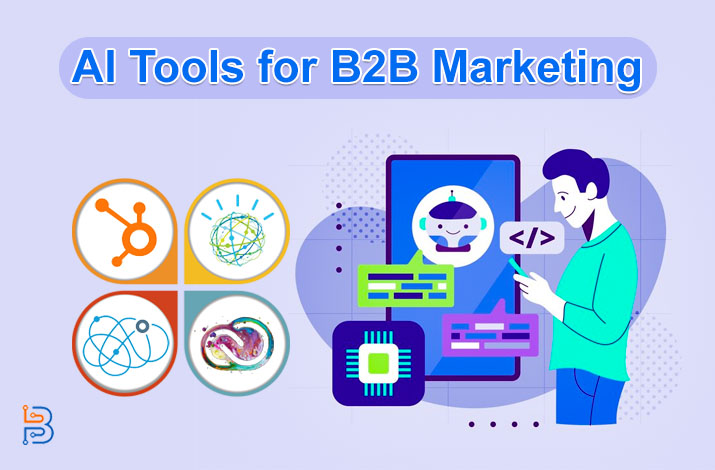
HubSpot is a comprehensive CRM platform that integrates AI to enhance marketing automation, lead generation, and customer relationship management. Its AI features include predictive lead scoring, automated email marketing, and personalized content recommendations. HubSpot’s user-friendly interface makes it accessible for businesses of all sizes. Additionally, HubSpot offers a wealth of resources and support, making it easier for teams to implement and maximize the platform’s capabilities. The integration of AI into HubSpot allows businesses to streamline their marketing efforts, improve lead nurturing, and ultimately drive higher conversion rates.
2. ChatGPT
ChatGPT, developed by OpenAI, is a versatile AI tool that can assist in content creation, customer support, and even social media management. Its natural language processing capabilities allow it to generate human-like text, making it ideal for creating blog posts, email campaigns, and engaging social media content. ChatGPT can also be used to automate responses to customer inquiries, providing timely support and enhancing customer satisfaction. By leveraging this tool, businesses can maintain a consistent brand voice while efficiently managing their content needs.
3. Jasper
Jasper is an AI-powered content creation tool specifically designed for marketers. It helps generate high-quality written content quickly, making it easier for B2B marketers to produce blog posts, articles, and marketing copy. Jasper’s AI can also optimize content for SEO, ensuring better visibility in search engines. This tool not only saves time but also enhances the quality of content produced, allowing marketers to focus on strategy and creativity. With Jasper, businesses can maintain a steady flow of fresh content that engages their audience and drives traffic to their websites.
4. AdCreative.ai
This tool focuses on automating the ad creation process. AdCreative.ai uses AI to generate ad creatives that are tailored to specific audiences, improving engagement rates. It analyzes past ad performance to suggest designs and copy that are likely to resonate with target customers. By streamlining the ad creation process, businesses can launch campaigns more quickly and efficiently, ensuring they stay competitive in the fast-paced digital landscape. The ability to test and optimize ad creatives in real-time further enhances the effectiveness of marketing efforts.
5. Grammarly
While primarily known as a writing assistant, Grammarly’s AI capabilities extend to enhancing marketing content. It provides real-time grammar and style suggestions, ensuring that all written communication is clear and professional. This is particularly useful for B2B marketers who need to maintain a polished brand image. By using Grammarly, businesses can ensure that their messaging is not only error-free but also resonates with their target audience, enhancing overall communication effectiveness.
6. Synthesia
Synthesia is an AI video generation platform that allows marketers to create engaging video content without the need for extensive video production resources. Users can create videos by simply typing in text, which the AI then converts into a video featuring a digital avatar. This tool is perfect for creating personalized video messages for clients or internal communications. The ability to produce high-quality video content quickly and affordably enables businesses to leverage video marketing effectively, increasing engagement and brand awareness.
7. Fireflies AI
Fireflies AI is a meeting assistant that uses AI to transcribe and summarize meetings. This tool is invaluable for B2B marketers who need to keep track of discussions and decisions made during client meetings. It integrates with various video conferencing tools, making it easy to capture important information. By automating the note-taking process, Fireflies AI allows teams to focus on the conversation rather than worrying about documentation, ensuring that critical insights are not lost.
8. Microsoft Clarity
Microsoft Clarity is a web analytics tool that provides insights into user behavior on websites. It uses AI to analyze user interactions, helping marketers understand how visitors engage with their content. This information can be used to optimize website design and improve user experience. By identifying areas where users may be dropping off or struggling, businesses can make data-driven adjustments that enhance the overall effectiveness of their online presence.
9. ClickUp
ClickUp is a project management tool that incorporates AI to enhance productivity. It helps teams manage tasks, set priorities, and track progress. The AI features can automate task assignments and provide insights into team performance, making it easier for B2B marketers to manage their projects efficiently. By streamlining project management processes, ClickUp enables teams to collaborate more effectively and stay on track with their marketing initiatives.
10. LinkedIn Sales Navigator
LinkedIn Sales Navigator is a powerful tool for B2B marketers looking to generate leads and build relationships. Its AI-driven recommendations help users find potential clients based on their profiles and interactions. This tool is essential for targeted outreach and networking in the B2B space. By leveraging LinkedIn’s vast professional network, businesses can connect with decision-makers and influencers, enhancing their lead generation efforts.
Implementing AI Tools in Your B2B Marketing Strategy
To effectively integrate AI tools into your B2B marketing strategy, consider the following steps:
1. Identify Your Needs: Assess your current marketing processes and identify areas where AI can add value, such as content creation, data analysis, or customer engagement. Understanding your specific needs will help you choose the right tools that align with your business objectives.
2. Choose the Right Tools: Select AI tools that align with your business goals and marketing objectives. Consider factors such as ease of use, integration capabilities, and cost. It’s essential to evaluate multiple options and choose tools that will provide the most significant impact on your marketing efforts.
3. Train Your Team: Ensure that your marketing team is trained to use the selected AI tools effectively. This may involve workshops, tutorials, or hands-on training sessions. Providing adequate training will empower your team to leverage the full potential of the tools and maximize their effectiveness.
4. Monitor Performance: Regularly evaluate the performance of the AI tools you implement. Use analytics to measure their impact on your marketing efforts and make adjustments as needed. Continuous monitoring will help you identify areas for improvement and ensure that your tools are delivering the desired results.
5. Stay Updated: The field of AI is constantly evolving. Stay informed about new tools and technologies that can enhance your B2B marketing strategy. By keeping up with industry trends, you can ensure that your marketing efforts remain competitive and effective.
Conclusion
AI tools are revolutionizing B2B marketing by providing businesses with the ability to analyze data, automate processes, and personalize customer interactions. By leveraging these tools, B2B marketers can enhance their strategies, improve efficiency, and ultimately drive better results. As the landscape continues to evolve, staying ahead of the curve with the right AI tools will be crucial for success. Embracing AI not only enhances operational efficiency but also fosters innovation, allowing businesses to adapt to changing market conditions and meet the evolving needs of their customers.
A one-stop online purchasing solution for overseas merchants, helping to facilitate worry-free cross-border transactions throughout the entire process of sourcing, payment, and logistics:https://global.lianlianpay.com/products/looperbuy
Frequently Asked Questions
1. What are the main benefits of using AI tools in B2B marketing?
AI tools enhance data analysis, enable personalization, automate repetitive tasks, improve targeting, and provide predictive analytics.
2. How can AI improve customer engagement in B2B marketing?
AI can analyze customer behavior and preferences, allowing businesses to deliver personalized content and recommendations, thereby increasing engagement.
3. Are AI tools expensive to implement for small businesses?
While some AI tools can be costly, many offer scalable pricing models, making them accessible for small businesses. It’s essential to choose tools that fit your budget and needs.
4. Can AI tools replace human marketers?
AI tools are designed to assist and enhance the work of human marketers, not replace them. They automate repetitive tasks and provide insights, allowing marketers to focus on strategy and creativity.
5. How do I choose the right AI tool for my B2B marketing needs?
Identify your specific marketing needs, research available tools, consider user reviews, and evaluate pricing and features to find the best fit for your business.