Scale an online dropshipping business without taking on the financial burden of bulk inventory, warehousing, and complex cross-border shipping. This guide explains how to validate products, choose reliable suppliers, build transparent fulfillment workflows, protect margins, reduce refunds, and grow with a smarter China sourcing and dropshipping strategy.
Scaling an online dropshipping business without inventory risk is possible—but it requires more than adding products or spending more on ads. The strongest businesses build a controlled fulfillment system: validated suppliers, transparent delivery promises, automated order flows, quality checks, clear product positioning, and customer communication that protects trust at higher order volumes.
For global B2B sellers, the advantage of dropshipping is clear: you can test products, enter new markets, and fulfill orders without purchasing large quantities upfront. Instead of tying cash up in unsold goods, warehouse leases, and complex international logistics, you purchase products after a customer order is confirmed. The supplier or fulfillment partner then prepares and ships the order directly to the end customer.
However, “no inventory” should not mean “no control.” When a store begins receiving more orders, inventory risk can be replaced by supplier risk, quality risk, shipping-delay risk, return risk, and cash-flow risk. The goal is to build a scalable dropshipping operation that keeps inventory ownership low while increasing operational visibility.
According to recent market estimates, global dropshipping was valued at approximately USD 365.7 billion in 2024 and is projected to expand substantially through 2030. That growth creates opportunity, but it also increases competition for products, suppliers, traffic, and customer attention.
For sellers using a China sourcing and fulfillment partner such as Looperbuy, the practical opportunity is to access a broader supplier base while outsourcing sourcing, order processing, packing, shipping coordination, and tracking management. The key is to treat your fulfillment network as a strategic operating system—not simply a back-end vendor.
Table of Contents
What Inventory Risk Really Means in Dropshipping
Inventory risk is the possibility that money invested in stock will not be recovered. This happens when products do not sell fast enough, trends change, demand is forecast incorrectly, products become obsolete, or stored goods are damaged.
In a traditional ecommerce model, a seller may need to:
– Buy products in bulk before proving demand
– Pay suppliers before receiving customer revenue
– Arrange storage space
– Manage warehouse labor and packing materials
– Handle slow-moving or obsolete inventory
– Pay for domestic and international delivery arrangements
– Process returns and write off unsellable items
Dropshipping changes this equation. Instead of purchasing 500 units before launch, a seller can list a product, collect real-market demand data, and purchase only when an order is received.
That does not eliminate every business risk. It changes the type of risk you manage.
| Business Area | Traditional Bulk Inventory Model | Scalable Dropshipping Model |
| Upfront product investment | High | Lower, because products are purchased after orders |
| Warehousing requirement | Seller-managed or third-party warehouse | Usually managed by supplier or fulfillment partner |
| Product testing | Expensive due to minimum order quantities | Faster and less capital-intensive |
| Cash tied up in stock | High | Lower, depending on payment terms and order volume |
| Unsold product exposure | Seller bears most of the risk | Reduced, but not fully eliminated |
| Supplier dependency | Moderate | High, requiring stronger supplier controls |
| Shipping visibility | Often internal | Must be managed through systems and partner communication |
The basic dropshipping model allows sellers to avoid holding stock themselves. A seller facilitates the sale, buys the product when needed, and has a third party fulfill delivery.
The most important lesson is this: you are not removing risk—you are moving risk away from unsold inventory and toward supplier reliability, fulfillment quality, pricing, and delivery performance.
Build a Product Testing System Before You Scale
Many dropshipping stores fail because they scale products before proving that customers actually want them. A viral video, a few early sales, or a competitor’s product page is not enough evidence to justify aggressive advertising spend.
Before expanding a product, validate four areas:
1. Market demand
Confirm that customers search for, discuss, compare, or repeatedly purchase the product category.
2. Product differentiation
Identify why a buyer should choose your offer instead of dozens of similar listings.
3. Supplier reliability
Confirm that the supplier can provide consistent product quality, pricing, packaging, and order processing.
4. Fulfillment feasibility
Confirm realistic delivery routes, shipping costs, tracking availability, and return procedures for your key markets.
Start With a Controlled Test Batch
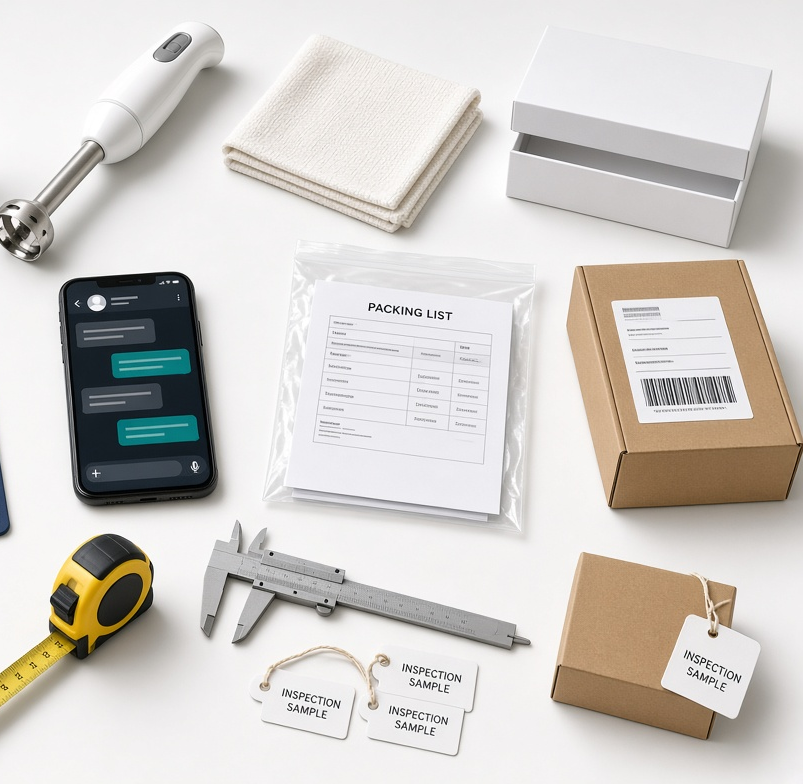
Even if you do not plan to hold inventory, order samples. This is non-negotiable for any serious online seller.
Use samples to evaluate:
– Product materials and actual dimensions
– Packaging quality and damage resistance
– Color accuracy compared with listing images
– Product instructions and labels
– Ease of use and assembly
– Variant consistency
– Shipping speed and tracking quality
– Supplier responsiveness when problems occur
A sample purchase is a small cost compared with refund disputes, negative reviews, chargebacks, or a damaged brand reputation.
Use a Product Validation Scorecard
Before scaling an item, score it on a 1–5 scale across the criteria below.
| Validation Factor | Questions to Ask |
| Demand signal | Is there evidence of real and recurring buyer interest? |
| Margin potential | Does the selling price leave room for product cost, shipping, fees, ads, returns, and profit? |
| Product quality | Does the physical sample match your advertised quality level? |
| Shipping suitability | Is the product compact, durable, non-fragile, and practical to ship internationally? |
| Supplier capability | Can the supplier maintain availability and process volume consistently? |
| Customer support risk | Is the product likely to create setup issues, safety questions, sizing disputes, or high return rates? |
| Differentiation | Can you improve the offer through bundles, packaging, instructions, content, or service? |
A product should not move into a major paid-advertising campaign until it receives a strong overall score and has passed a real fulfillment test.
Choose Suppliers That Can Support Growth
A cheap product price does not automatically create a profitable dropshipping business. A supplier with inconsistent quality, unclear inventory availability, weak communication, or unreliable delivery can cost far more than a slightly higher-priced but capable fulfillment partner.
When evaluating suppliers or China sourcing partners, focus on operational evidence rather than promises.
Supplier Selection Checklist
Ask these questions before committing meaningful order volume:
– Can the supplier provide current product specifications, materials, dimensions, and packaging details?
– Can they provide product samples before a wider launch?
– How often is product availability checked or updated?
– What is the average order-processing time?
– Which shipping routes are available for your target countries?
– Is tracking provided for each shipment?
– What happens when an item is unavailable after a customer has ordered?
– Can the supplier conduct basic quality checks before shipment?
– Can they combine multiple products into one parcel?
– Can they support private labeling, inserts, customized packaging, or bundling as your volume grows?
– What evidence can they provide for product claims, certifications, or compliance statements?
– What is the process for damaged, incorrect, or missing items?
For a platform such as Looperbuy, sellers should prioritize whether the partner can centralize several operational tasks: supplier sourcing, purchase coordination, product inspection, order fulfillment, packaging, delivery routing, and tracking support. Centralization reduces the number of handoffs that can create errors as daily order volume rises.
Avoid Single-Supplier Dependency
A single supplier may be suitable during initial testing, but it creates a serious scaling risk. If that supplier runs out of stock, raises prices, changes product specifications, or experiences production delays, your store may have no immediate alternative.
Build a supplier backup plan for each winning product:
– Primary supplier: Best current product, price, and service combination
– Secondary supplier: Approved alternative that can be activated quickly
– Emergency substitute: Similar product or variation that can protect customer experience if supply changes
For top-selling products, keep a supplier comparison file that records pricing, lead times, quality notes, shipping routes, and contact response times. Update it regularly.
Create a Fulfillment Workflow That Customers Can Trust
Customers do not care whether you hold inventory. They care whether their order arrives on time, matches the product page, and can be tracked.
That makes fulfillment transparency a growth asset.
A reliable ecommerce workflow should include the following sequence:
1. Customer places an order on your online store.
2. Order data is transferred to your sourcing or fulfillment partner.
3. The product is purchased or picked from available supply.
4. The product is inspected when appropriate.
5. The order is packed according to your requirements.
6. A shipping method is selected based on destination, speed, cost, and product restrictions.
7. Tracking details are issued and transferred to the customer.
8. The customer receives automated delivery updates.
9. Your team monitors exceptions such as delayed tracking, failed delivery, address issues, or damaged parcels.
10. Returns, refunds, replacements, and customer support cases are documented for future supplier decisions.
Shopify states that once tracking information is added to a fulfilled order, customers can receive shipment updates and access tracking through the order-status page, notification emails, and the Shop app.
Set Expectations Before Checkout
The fastest way to create customer frustration is to promise delivery timelines that your supply chain cannot reliably meet.
Your product pages and checkout process should clearly state:
– Processing time
– Estimated shipping time by destination
– Shipping method options
– Tracking availability
– Whether orders may ship separately
– Customs duties or import-tax responsibility, where applicable
– Return eligibility and return address rules
– How customers can contact support
For sellers targeting the United States, delivery claims should be especially careful. The U.S. Federal Trade Commission’s Mail, Internet, or Telephone Order Merchandise Rule requires sellers to have a reasonable basis for expecting they can ship within the advertised timeframe—or, if no timeframe is stated, within 30 days. If a delay occurs, sellers may need customer consent for the delay or must issue a refund for unshipped merchandise.
Do not use a supplier’s fastest possible transit time as your standard promise. Use a conservative timeframe based on consistent delivery evidence.
Scale With Data, Not Assumptions
The largest operational mistake in dropshipping is treating revenue growth as proof of business health. Revenue can increase while profit, service quality, and cash flow deteriorate.
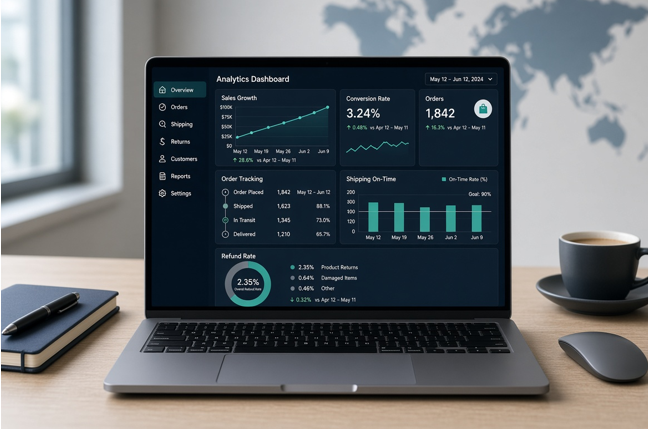
To scale safely, monitor a small group of practical metrics every week.
| Metric | Why It Matters | Warning Signal |
| Conversion rate | Shows whether product pages and offers persuade visitors | Traffic rises but conversions decline |
| Gross margin | Measures the amount remaining after product and shipping costs | Supplier costs increase without price adjustments |
| Cost per acquisition | Shows how much advertising costs to generate a customer | Customer acquisition cost rises faster than margin |
| Refund rate | Indicates product, fulfillment, or expectation problems | Refunds rise after a new supplier or campaign |
| Order defect rate | Tracks wrong items, damaged products, missing parts, or incorrect variants | Defects cluster around specific SKUs or suppliers |
| On-time delivery rate | Measures whether actual deliveries meet your promised window | Delays increase in a target country or shipping route |
| Tracking activation time | Measures the time between order placement and usable tracking | Tracking remains inactive for too long |
| Repeat purchase rate | Reflects customer confidence and product-market fit | First orders grow but retention stays weak |
A Practical Scaling Rule
Do not double advertising spend solely because a product generates sales. Increase budget only when the product meets your operational thresholds.
For example:
– Stable conversion rate for at least 7–14 days
– Positive contribution margin after product, shipping, platform, transaction, advertising, and refund costs
– Supplier availability confirmed for the next expected sales period
– Low order-defect and refund rates
– Realistic delivery performance in the target market
– Responsive customer support capacity
This method may feel slower than aggressive scaling. In reality, it helps protect cash, customer trust, and long-term brand value.
Improve Margins Without Buying More Inventory
The common belief is that higher margin requires bulk purchasing. Bulk buying can reduce unit cost, but it also creates inventory exposure. A better first step is to improve the value of each order without forcing yourself into large stock commitments.
Consider these lower-risk methods:
– Create product bundles with complementary items
– Offer quantity discounts that improve average order value
– Add relevant accessories or warranty-style service options where appropriate
– Use upsells after customers add an item to their cart
– Negotiate packaging and shipping efficiencies with your fulfillment partner
– Focus on lightweight, durable products with lower shipping complexity
– Reduce refund drivers by improving product descriptions, measurements, product videos, and FAQs
– Build email flows for replenishment, cross-selling, and repeat purchases
– Offer differentiated packaging or branded inserts once order volume supports it
The goal is not simply to sell more units. It is to increase contribution profit per order.
A simple formula is:
Contribution Profit=Selling Price−(Product Cost+Shipping+Transaction Fees+Advertising Cost+Expected Refund Cost)
For example, a USD 45 product may look profitable if the product costs USD 12 and shipping costs USD 8. But if payment fees are USD 2, advertising costs USD 15, and the expected refund cost is USD 4, the contribution profit is only USD 4. That leaves little room for customer support, software, taxes, and unexpected delivery issues.
Protect Your Brand With Accurate Product Claims
When you use supplier-provided product content, do not publish it without review. Suppliers may use exaggerated claims, incomplete specifications, copied images, or statements that are not suitable for your target market.
Before publishing a listing, verify:
– Product dimensions and weight
– Materials and ingredient information, where relevant
– Compatibility claims
– Performance claims
– Safety warnings
– Battery, electrical, medical, children’s-product, or regulated-category requirements
– Product certifications and the exact product models covered
– Image accuracy and variant labeling
– Country-of-origin statements
– Delivery claims
The FTC states that advertising claims must be truthful, not deceptive or unfair, and supported by evidence.
This matters even more in dropshipping because the seller—not the factory—is usually the party communicating directly with the customer. If a product page makes an unsupported claim, the seller’s business reputation can suffer even if the wording originally came from a supplier.
When to Use a Hybrid Inventory Model
A no-inventory approach is ideal for launching, testing, and expanding product assortments. But it does not have to remain an all-or-nothing decision.
A hybrid model lets you keep most products on demand while selectively holding small quantities of proven bestsellers closer to high-value customers.
Consider a hybrid inventory strategy when a product has:
– Consistent sales for several months
– Predictable repeat demand
– Low return and defect rates
– Stable supplier quality
– A meaningful savings from buying small batches
– A strong case for faster local delivery
– Enough margin to justify limited stock exposure
For example, you may continue dropshipping 90 percent of your catalog from China while placing a limited quantity of your top 10 percent of products in a regional fulfillment center. This can shorten delivery times for high-volume items without forcing you to stock every SKU.
The decision should be based on data, not on pressure to “look bigger.” Inventory is a tool—not a sign of business maturity.
Frequently Asked Questions
1. Can you scale a dropshipping business without holding inventory?
Yes. You can scale by increasing product validation, supplier capacity, order automation, delivery visibility, customer support, and marketing efficiency without personally stocking products. However, rapid growth still requires supplier backups and strict performance monitoring.
2. What is the biggest risk in dropshipping?
The biggest risk is usually not unsold inventory. It is losing customer trust because of poor product quality, unexpected delivery delays, weak communication, or inaccurate product descriptions. These issues can lead to refunds, chargebacks, negative reviews, and lower repeat-purchase rates.
3. How do I find reliable China dropshipping suppliers?
Start by ordering samples, reviewing product specifications, testing communication speed, verifying available shipping routes, requesting quality-control procedures, and comparing more than one supplier. A China sourcing and fulfillment partner can help centralize product sourcing, inspection, packing, and international delivery coordination.
4. Should I use one supplier or multiple suppliers?
Use at least one approved backup supplier for products that generate significant revenue. A single supplier may be acceptable during early testing, but supplier diversification reduces the chance that stockouts, price changes, or production problems stop your sales.
5. How much money do I need to start a dropshipping business?
The amount varies by category and sales channel. Even without bulk inventory, you should budget for samples, store setup, content production, paid advertising or customer acquisition, software, transaction fees, refunds, and working capital for supplier payments before customer funds settle.
6. How can I reduce dropshipping refund rates?
Reduce refund rates by using accurate product photos and specifications, ordering samples, providing size guides, setting realistic shipping expectations, checking product quality before dispatch, offering order tracking, and responding quickly to customer questions.
7. Is dropshipping suitable for B2B sellers?
Yes. B2B sellers can use dropshipping to test specialized product categories, serve overseas buyers without regional warehouses, expand catalog breadth, and reduce capital tied up in stock. For B2B growth, success often depends on dependable sourcing, consistent quality, documentation, packaging requirements, and clear communication rather than impulse-buy advertising alone.
Build a More Resilient Growth Model
The best way to scale an online dropshipping business without inventory risk is to treat each product as an operating project. Validate demand before scaling ads. Order samples before publishing bold claims. Build supplier backups before a bestseller becomes critical. Monitor delivery performance as carefully as revenue. And increase purchasing commitments only after real sales data supports the decision.
Looperbuy can support this model by helping global B2B sellers source products from China, coordinate purchasing, arrange fulfillment, manage order processing, and ship products directly to end customers. Rather than investing heavily in stock before demand is proven, sellers can focus on validating products, improving their customer experience, and expanding with more controlled operational risk.
Ready to test products and fulfill international orders with less inventory exposure? Explore how Looperbuy can support your sourcing and dropshipping workflow—from product discovery and supplier coordination to order fulfillment and global delivery tracking.
References
1. [Federal Trade Commission — Mail, Internet, or Telephone Order Merchandise Rule]
2. [Federal Trade Commission — Business Guide to the Mail, Internet, or Telephone Order Merchandise Rule]
3. [Federal Trade Commission — Advertising and Marketing Guidance]
4. [Shopify Help Center — Order Tracking at Shopify]
5. [Shopify Help Center — Fulfilling Orders]
6. [Inventory Planner — Dropshipping vs. Holding Inventory In-House]
7. [AutoDS — Dropshipping Statistics]
8. [eCFR — 16 CFR Part 435: Mail, Internet, or Telephone Order Merchandise Rule]