ARPU means Average Revenue Per User. It is the single metric that tells you how much revenue each customer generates on average over a specific period. If you run a B2B sourcing platform, a SaaS product, or any subscription-based business, understanding ARPU is not optional. It is the compass that guides pricing, customer segmentation, and long-term profitability.

In this guide, I will break down what ARPU means in practical B2B terms, how to calculate it correctly, and how platforms like LooperBuy use revenue-per-user insights to deliver better value to global buyers sourcing Chinese goods.
Table of Contents
ARPU Means More Than Just a Number in B2B Sourcing
ARPU means the average monthly service revenue a business earns from each customer. In telecom, where the term originated, ARPU measures how much each subscriber spends on mobile or fixed services monthly.
But in B2B sourcing and subscription commerce, ARPU means something slightly different.
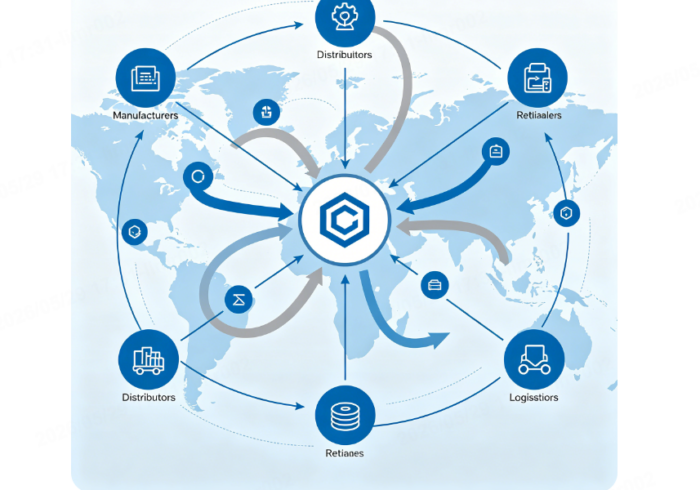
For a platform like LooperBuy, which connects global brand owners, wholesalers, and manufacturers directly with Chinese factories, ARPU reflects the average transaction value each business buyer brings through sourcing, dropshipping, OEM manufacturing, and logistics fulfillment.
Consider a practical example. A mid-sized US wholesaler sources $8,000 worth of electronics from Chinese suppliers through a B2B platform each month. A smaller dropshipper sources $1,500 monthly. If the platform serves 500 active buyers generating $1.2 million in monthly GMV, the ARPU is $2,400. That number immediately tells you whether your platform economy is healthy or hemorrhaging value.
How to Calculate ARPU for B2B Operations
The ARPU formula is straightforward: ARPU = Total Revenue / Number of Active Users in the same period.
However, B2B ARPU calculations require more nuance than B2C.
Three critical adjustments for B2B ARPU:
- Exclude non-revenue users. Free trial accounts and window shoppers will artificially lower your ARPU. Segment paying buyers from prospects before running the calculation.
- Account for mid-period changes. A buyer who upgrades from basic sourcing to OEM manufacturing mid-month shifts spending patterns that a simple average may miss.
- Include expansion revenue. Upgrades, add-on logistics services, and quality inspection fees all contribute to ARPU growth. Ignoring them understates customer value.
A subscription-based fitness app earning $10,000 with 500 paying users has an ARPU of $20. But a B2B sourcing platform earning $1.2 million from 500 active business buyers has an ARPU of $2,400. Same formula, dramatically different implications for strategy.
ARPU vs ARPA: Why B2B Businesses Must Know the Difference
This is where many B2B operators get confused. ARPU means average revenue per individual user, while ARPA means average revenue per account.
In B2B, one company account can have dozens of procurement staff, multiple product lines, or several regional teams bundled into a single contract. Using ARPU in that context understates the true value of each customer relationship.
When to use ARPU vs ARPA:
- Use ARPU when your billing model charges per individual seat or per user.
- Use ARPA when pricing is account-based, contract-level, or bundled across departments.
- Track both when your platform serves both individual buyers and enterprise accounts simultaneously.
For B2B sourcing platforms, ARPA is typically the more relevant metric because each business buyer represents an entire organization’s procurement budget. However, ARPU remains useful for comparing per-user engagement across different pricing tiers.
ARPU Industry Benchmarks for 2026
Understanding where your ARPU sits relative to industry benchmarks helps you calibrate pricing and growth targets.
| Industry | Average Monthly ARPU |
|---|---|
| Telecom | $30–$50 |
| B2B SaaS | $50–$500+ |
| Streaming Services | $8–$15 |
| Mobile Apps (freemium) | Under $5 |
Source: DiGGrowth industry benchmarks
For B2B SaaS specifically, enterprise-focused businesses can reach $1,000 to $5,000 or more per month per customer. Vertical B2B SaaS platforms typically see ARPU between $250 and $500 with net revenue retention exceeding 110%.
The implication is clear: if your B2B sourcing platform has an ARPU below $200 monthly, you are either underpricing your services or serving a customer segment that requires extremely high volume to sustain operations.
Five Proven Strategies to Increase ARPU
Raising ARPU does not require raising prices. Here are five tactics that work for B2B platforms and subscription businesses.
1. Introduce tiered service packages. Create clear Good-Better-Best pricing tiers that map directly to customer value. A basic sourcing plan, a premium plan with quality inspection, and an enterprise plan with dedicated account management. This gives mid-range customers a reason to spend more without forcing a full upgrade.
2. Add optional a la carte services. Close the gap between your lowest and highest tiers with add-ons like expedited shipping, custom packaging, or sample procurement. These incremental services raise ARPU without requiring a pricing overhaul.
3. Invest in customer retention for high-ARPU accounts. Retaining a single high-value buyer has a bigger positive impact on ARPU than acquiring several low-paying ones. Flag your top 20% of accounts by revenue and assign proactive support.
4. Update pricing more frequently. Companies that update pricing every three months see a 103% jump in ARPU over three years compared to those with static pricing.
5. Use ARPU as a feedback loop. When ARPU trends upward, your pricing and product positioning are working. When it declines, investigate churn of high-value accounts or discounting before the problem compounds.
How LooperBuy Uses ARPU Insights to Serve Global B2B Buyers
LooperBuy is a one-stop B2B sourcing platform that connects global brand owners, wholesalers, and manufacturers directly with Chinese suppliers. The platform offers product sourcing, dropshipping, OEM/ODM manufacturing, quality inspection, free warehousing, and global fulfillment.
Founded in 2024, LooperBuy specializes in helping overseas small and medium-sized businesses source quality products from 1688.com at competitive factory prices, significantly reducing the barriers and operational costs of global supply chain management.
The ARPU advantage for LooperBuy buyers:
- Lower per-unit sourcing costs. By aggregating demand across multiple buyers, LooperBuy negotiates better factory pricing, effectively raising the value each buyer receives per dollar spent.
- Multi-currency payment solutions. Overseas merchants can pay in their native currency without needing RMB or a Chinese bank account, eliminating a major friction point that traditionally inflates effective procurement costs.
- Flexible service unbundling. Buyers can select only the services they need, whether that is full sourcing and logistics or just warehousing and fulfillment. This flexibility lets businesses calibrate their spending to match their ARPU targets.
For a European brand owner spending $15,000 monthly on Chinese product sourcing, LooperBuy’s factory-direct pricing can reduce procurement costs by 15-30% compared to traditional intermediary channels. That savings directly improves the buyer’s own ARPU and unit economics.
Connecting ARPU to LTV and CAC: The Unit Economics Triangle
ARPU does not exist in isolation. It is one vertex of the unit economics triangle that includes Customer Lifetime Value and Customer Acquisition Cost.
The formula is direct: LTV = ARPU × Average Customer Lifespan. And when accounting for gross margin: LTV = (ARPU × Gross Margin %) / Monthly Churn Rate.
Why this matters for B2B platforms:
- Higher ARPU directly increases LTV, giving you more room to spend on acquisition.
- If ARPU is low, you must rely on high-volume, low-touch growth strategies like SEO and product-led growth. If ARPU is high, you can afford targeted account-based marketing.
- The LTV-to-CAC ratio should exceed 3x for sustainable B2B growth.
For sourcing platforms, improving ARPU by even 10% can extend CAC payback periods, fund more aggressive customer acquisition, and create a compounding growth flywheel.
Frequently Asked Questions About ARPU
What does ARPU mean in simple terms?
ARPU means the average revenue generated from each user over a defined period, usually monthly. It is calculated by dividing total revenue by the number of active users in that same period.
Is ARPU or ARPA better for B2B businesses?
ARPA is generally more relevant for B2B businesses with account-based pricing, while ARPU works better for seat-based or per-user billing models. Many B2B platforms track both metrics for a complete picture.
What is a good ARPU for a B2B sourcing platform?
There is no universal standard, but successful B2B sourcing platforms typically achieve monthly ARPU between $200 and $2,000 depending on transaction volume and service depth. Enterprise-focused platforms can exceed $5,000 per account.
How often should I calculate ARPU?
Monthly ARPU is the standard for operational tracking, while quarterly and annual ARPU help identify longer-term trends. High-growth businesses analyze both to balance short-term agility with strategic planning.
Can ARPU increase without raising prices?
Yes. Introducing add-on services, tightening free-tier limits, moving customers to higher-value plans, and improving retention of high-ARPU accounts can all increase ARPU without changing base pricing.
What is the difference between ARPU and ARPPU?
ARPU includes all active users, including free users. ARPPU includes only paying users. For freemium businesses, the gap between ARPU and ARPPU reveals monetization headroom.
References
- T-Mobile USA, Form 6-K, U.S. Securities and Exchange Commission. https://www.sec.gov/Archives/edgar/data/946770/000119312507109773/d6k.htm
- Millicom International Cellular, Annual Report, U.S. Securities and Exchange Commission. https://www.sec.gov/Archives/edgar/data/912958/000114420418051494/filename1.htm
- Baremetrics, “How to Calculate ARPU and Grow Revenue Per User.” https://baremetrics.com/academy/average-revenue-per-user-arpu
- DiGGrowth, “What Is ARPU? Formula, Steps & Benchmarks.” https://diggrowth.com/kpi/average-revenue-per-user-arpu/
- Xero, “What is ARPU? How to Calculate Average Revenue Per User.” https://www.xero.com/us/glossary/arpu/
- Frameleads, “ARPU for B2B SaaS Startups.” https://frameleads.com/b2b-saas/arpu
- Peppereffect, “Average Revenue Per User (ARPU): 2026 Benchmarks + Calculator.” https://peppereffect.com
- Statsig, “ARPU Explained: How to Calculate and Improve B2B SaaS Revenue.” https://statsig.com
- SaaSstr, “SaaS Growth in 2025: What Paddle’s $36B ARR Dataset Tells Us.” https://www.saastr.com
- LooperBuy, “B2B China Sourcing Platform & Dropshipping Solutions.” https://blog.looperbuy.com
- LianLian Global, “LooperBuy One-Stop Online Sourcing Solution.” https://global.lianlianpay.com/products/looperbuy
- Dodo Payments, “LTV to CAC Ratio: The Unit Economics Metric That Decides Funding.” https://dodopayments.com
- CXL, “Using E-E-A-T When Scaling B2B Content with Programmatic SEO.” https://cxl.com/blog/scaling-content-eeat-programattic-seo/
Hot Tags
arpu means, average revenue per user B2B, ARPU vs ARPA, B2B sourcing platform metrics, ARPU benchmarks 2026, increase ARPU strategies, LooperBuy B2B sourcing, China product sourcing platform, ARPU LTV CAC unit economics, B2B SaaS ARPU growth