Learn how to choose a B2B e-commerce platform for global sourcing, dropshipping, and fulfillment. Compare costs, supplier management, order automation, shipping consolidation, integrations, security, and practical evaluation criteria for scalable cross-border growth.
Choosing a B2B e-commerce platform is no longer only a website decision. For importers, online sellers, wholesalers, and cross-border merchants, it is an operating-model decision that affects product sourcing, supplier coordination, order processing, fulfillment speed, payment risk, inventory exposure, and customer experience.
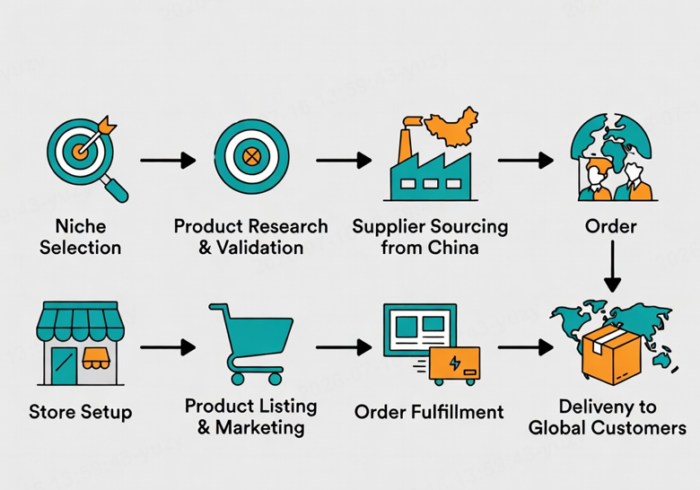
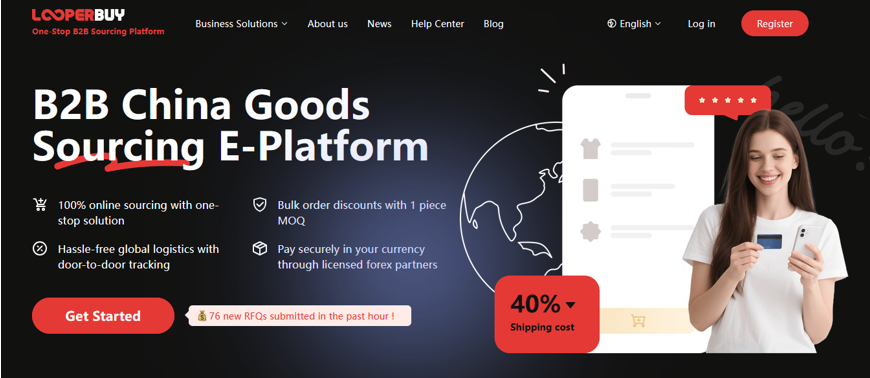
For businesses that buy from China and sell worldwide, the right solution should do more than display products and accept orders. It should help you source reliably, reduce inventory commitments, centralize supplier communication, automate fulfillment workflows, and keep shipping operations visible as order volume grows. That is why a modern B2B sourcing and fulfillment platform such as Looperbuy should be evaluated not simply as a marketplace, but as part of your end-to-end commerce infrastructure.
Digital self-service is becoming a central expectation in B2B buying. Recent buyer research indicates that a large share of buyers prefer a rep-free or self-directed purchasing experience, especially for routine orders and repeat purchasing. However, self-service only works when the platform supports the operational complexity behind the screen: supplier verification, quotations, quality checks, payment coordination, order consolidation, warehouse handling, and international delivery.
This guide explains how to choose a B2B e-commerce platform with a practical lens for global sourcing businesses, dropshippers, wholesalers, and online retailers.
> Key takeaway: The best B2B e-commerce platform is not necessarily the one with the longest feature list. It is the one that fits your purchasing model, reduces operational friction, and can scale without forcing you to rebuild your workflows every year.
Table of Contents
Why Platform Selection Matters for B2B Sellers
B2B e-commerce is expanding because buyers increasingly expect the convenience of consumer-style shopping while still needing commercial features such as bulk pricing, account permissions, quotes, invoices, negotiated terms, and multi-order fulfillment.
Market-size estimates vary substantially because research firms define “B2B e-commerce” differently. Some include only web orders, while others include electronic data interchange, procurement networks, marketplaces, and broader digital transactions. A responsible planning approach is to focus less on a single headline number and more on the clear direction of travel: digital purchasing, marketplace procurement, and self-service workflows are becoming more important across B2B trade.
For global sellers, the pressure is even greater. A customer may only see a storefront and delivery estimate, but your business must coordinate multiple moving parts:
– Product discovery and supplier sourcing
– Supplier quotes and production lead times
– Sample ordering and product verification
– Purchase-order management
– International payment handling
– Quality-control processes
– Multi-supplier order consolidation
– Warehousing and packaging
– Cross-border shipping and tracking
– Returns, disputes, and customer support
A basic online store can collect an order. A capable B2B sourcing platform helps turn that order into a repeatable, visible, and controlled fulfillment process.
Start with Your Business Model, Not Vendor Features
Many teams begin with a platform comparison spreadsheet. They compare catalog features, themes, plug-ins, and monthly fees before defining what they actually need the platform to accomplish.
That sequence is backward.
Before shortlisting providers, document the commercial model your platform must support. A dropshipping seller, a wholesale importer, a private-label brand, and a multi-channel marketplace merchant may all buy from China, but their platform needs are different.
Define the commercial outcome first
Ask your team the following questions:
1. Are we purchasing individual products, bulk orders, or both?
2. Do we need one-off sourcing requests for products not already listed online?
3. Will we hold inventory, use dropshipping, or combine both models?
4. Do we need to consolidate goods from multiple Chinese suppliers into one shipment?
5. Do our customers expect branded packaging, kitting, labeling, or quality checks?
6. Which markets are we shipping to, and what delivery expectations exist there?
7. How will we handle supplier communication, order updates, payment reconciliation, and exceptions?
8. What must improve within the next 12 months: cost, speed, reliability, visibility, or capacity?
Your answers should translate into measurable objectives.
| Business objective | Example platform requirement | How to measure it |
| Reduce inventory exposure | Dropshipping or purchase-to-order workflow | Lower stockholding cost and obsolete inventory |
| Improve sourcing speed | Centralized product request and quotation management | Time from request to approved supplier quote |
| Reduce fulfillment errors | Order-status tracking and quality-control checkpoints | Error rate, refund rate, and customer complaints |
| Lower logistics cost | Shipment consolidation and carrier comparison | Cost per parcel or cost per fulfilled order |
| Expand globally | Multi-country shipping support and transparent tracking | Delivery coverage and on-time delivery rate |
| Scale without hiring excessively | Workflow automation and role-based operations | Orders processed per operations employee |
Expert perspective: A platform should not force you to operate like a standard retailer if your real advantage comes from sourcing flexibility and cross-border fulfillment. The operating model comes first; technology should support it.
Evaluate the Full Cost of Ownership, Not Just Subscription Fees
A low monthly fee can be expensive if it creates manual work, fragmented data, delayed shipping, or costly custom development later. Conversely, a platform with a higher visible fee may create lower total operational cost if it reduces procurement complexity and prevents fulfillment mistakes.
When comparing B2B e-commerce platforms, calculate the total cost of ownership over at least three years.
Include these cost categories
– Platform subscriptions, licenses, or transaction fees
– Setup, migration, and configuration work
– Custom development and integrations
– Supplier onboarding and product-data management
– Payment-processing fees and currency-conversion costs
– Warehouse receiving, storage, and consolidation fees
– Quality inspection and repackaging costs
– Customer-service workload caused by order exceptions
– Shipping and delivery costs
– Training, technical support, maintenance, and upgrades
A platform that looks affordable during a product demo can become expensive when every unusual product request requires manual emails, spreadsheets, separate payments, and multiple logistics providers.
A practical TCO formula
Use this simple framework:
Three-Year TCO=Platform Cost+Implementation Cost+Integration Cost+Operations Cost+Fulfillment Cost+Risk Cost
The often-overlooked category is risk cost. This includes supplier misunderstandings, payment errors, incorrect shipments, product-quality problems, lost parcels, chargebacks, or reputational damage caused by poor delivery visibility.
For sourcing-driven merchants, reducing one major fulfillment error can be more valuable than saving a small amount on software licensing.
Prioritize Sourcing and Fulfillment Capabilities
Traditional B2B commerce guides often focus on catalogs, account management, negotiated pricing, and enterprise integrations. Those features matter. But a global sourcing business also needs to assess what happens after a buyer identifies a product.
This is where a sourcing-and-fulfillment platform can create a major advantage.
Product sourcing and supplier coordination
A suitable platform should make it easier to source products from Chinese suppliers without losing control over specifications, pricing, and lead times.
Look for workflows that support:
– Product links, images, keywords, or specification-based sourcing requests
– Supplier quotation comparisons
– Minimum order quantity visibility
– Product variations, colors, sizes, materials, and packaging requirements
– Sample-order coordination
– Communication records tied to specific products or orders
– Lead-time confirmation before purchase
– Supplier performance tracking over time
A good sourcing process creates a single source of truth. Rather than searching through chat messages and spreadsheets, your team should be able to see what was requested, quoted, approved, purchased, inspected, and shipped.
Inventory-light fulfillment and dropshipping
Many online merchants want to sell more products without tying up capital in inventory. This makes dropshipping and purchase-to-order models attractive, but only when the fulfillment process is dependable.
Evaluate whether the platform can support:
– Individual-order purchasing
– Multi-store or multi-channel order handling
– Automatic or semi-automatic order submission
– SKU mapping between your storefront and supplier products
– Product substitutions and exception management
– Inventory status updates where applicable
– Parcel tracking for customers
– Branded packaging or inserts where available
Important: Inventory-light does not mean risk-free. You are replacing warehouse risk with supplier, quality, lead-time, and logistics risk. The platform should make those risks more visible and manageable.
Consolidation and logistics visibility
International shipping can consume a large part of a merchant’s margin. Sending individual parcels from multiple suppliers may lead to duplicated packaging, higher shipping fees, and a fragmented customer experience.
For this reason, assess whether the provider can offer:
– Consolidation of products from different suppliers
– Warehouse receiving and item verification
– Photo confirmation or quality-check options
– Repackaging to reduce unnecessary package volume
– Split-shipment and combined-shipment controls
– Shipping-method selection based on destination and speed
– Parcel tracking and delivery-status notifications
– Clear handling of customs documentation and shipping restrictions
Looperbuy’s value proposition is especially relevant here: it can support global B2B sellers by combining China product sourcing with order fulfillment and dropshipping services, helping merchants reduce the burden of stocking goods, warehousing products, arranging payments, and managing shipping logistics.
Test Integration Readiness and Workflow Flexibility
A platform does not operate alone. It must connect with the systems that run your business, including storefronts, marketplaces, inventory tools, accounting systems, customer-service software, payment providers, and shipping services.
Instead of asking only, “Do you have an API?”, ask how the API will support your actual workflows.
Questions to ask during evaluation
– Can orders be imported from our existing online store or marketplace?
– Can product, order, shipment, and tracking data be exchanged reliably?
– Can different team members access only the functions relevant to their roles?
– Can we export financial and order data for accounting reconciliation?
– Can we add new storefronts, regions, or sales channels without rebuilding the workflow?
– Can the system handle custom fields for product specifications, labels, or inspection requirements?
– Are integrations documented, maintained, and version-controlled?
– What happens if a supplier, product, shipping method, or payment status changes after an order is placed?
API connectivity is useful only when it is governed well. OWASP identifies risks such as broken authentication, broken authorization, excessive data exposure, and unsafe consumption of third-party APIs as significant API security concerns. When your operations depend on storefront, supplier, payment, and carrier connections, data permissions and integration governance should be part of your platform-selection process—not an afterthought.
Run a real workflow test
Do not make a final decision based only on slides or a polished demo. Give your shortlisted vendors a realistic scenario.
For example:
> “A merchant receives 50 orders through two online stores. The orders contain products from four Chinese suppliers. Ten orders require branded inserts, five need quality checks, and all shipments must be delivered to customers in the United States, Germany, and Australia.”
Ask the provider to explain, step by step:
1. How orders enter the system
2. How products are sourced or purchased
3. How suppliers are coordinated
4. How goods are received and checked
5. How items are consolidated or split
6. How shipping methods are selected
7. How tracking reaches the end customer
8. How exceptions, refunds, or replacements are handled
This test reveals more than a feature checklist ever will.
Build Security, Payment, and Compliance into the Decision
A reliable B2B platform must protect commercial data as carefully as it manages orders. Sensitive information can include customer details, supplier pricing, transaction records, addresses, payment data, and business documents.
The PCI Security Standards Council states that PCI DSS provides baseline technical and operational requirements for protecting payment account data. It applies to entities that store, process, transmit, or can affect the security of cardholder data environments.
Security questions for platform providers
– Which payment data does the platform store, process, or transmit?
– Does the provider use established payment processors where appropriate?
– How are user access permissions managed?
– Is multi-factor authentication available for administrative accounts?
– How is data encrypted during transmission and storage?
– What audit logs are available for orders, refunds, pricing, and account changes?
– How are API credentials created, stored, rotated, and revoked?
– What is the provider’s incident-response process?
– How are supplier and customer data separated across accounts?
Security is not only a technical requirement. It protects business continuity. A compromised account, exposed customer list, or manipulated shipping workflow can quickly become a commercial crisis.
Use a Weighted Scorecard to Shortlist Platforms
A structured scorecard prevents the loudest voice in the room from making the final decision. It also keeps your team focused on the capabilities that affect actual revenue, margin, and customer experience.
Below is a practical weighting model for a global B2B sourcing and fulfillment business.
| Evaluation area | Suggested weight | What to examine |
| Sourcing and supplier management | 20% | Product requests, quotes, communication, lead times, supplier coordination |
| Order fulfillment and dropshipping | 20% | Order routing, packing, tracking, exceptions, multi-store support |
| Shipping and consolidation | 15% | Warehouse handling, repackaging, carrier options, destination coverage |
| Cost and commercial transparency | 15% | Fees, payment process, service charges, shipping quotes, hidden costs |
| Integrations and automation | 10% | APIs, marketplace links, order syncing, data exports |
| Product and workflow flexibility | 8% | Custom requirements, packaging, inspections, regional workflows |
| Security and access control | 7% | Permissions, payment protection, audit records, API governance |
| Support and operational expertise | 5% | Response time, escalation process, sourcing knowledge, onboarding |
Score each provider from 1 to 5. Then multiply the score by the weighting.
A platform with a visually impressive dashboard but weak sourcing support may be a poor fit for your business. A provider with strong supply-chain coordination, transparent order workflows, and fulfillment expertise may create far more long-term value.
Create an Implementation Plan Before You Sign
Platform selection and implementation should overlap. If you wait until after signing a contract to define your workflow, product data, responsibilities, and operating metrics, launch delays are likely.
Start with a focused launch
A practical first release should solve a meaningful problem without trying to automate everything at once.
For example, a Looperbuy customer might begin with:
– One target market
– One online store
– A limited number of high-demand SKUs
– One preferred shipping workflow
– A defined quality-check process
– Basic order tracking and reporting
After the workflow is stable, the merchant can expand to more products, storefronts, regions, suppliers, or shipping methods.
Track the metrics that matter
Measure performance from the first month:
– Time from order submission to supplier purchase
– Time from supplier dispatch to warehouse receipt
– Quality-check failure rate
– Average fulfillment cost per order
– Average shipping cost per parcel
– On-time delivery rate
– Order cancellation rate
– Customer support tickets per 100 orders
– Refund and replacement rate
– Gross margin after sourcing and fulfillment costs
These numbers turn platform performance into a management decision rather than an opinion.
Choose a Partner That Simplifies Global Commerce
The right B2B e-commerce platform should help your business grow without multiplying operational complexity. It should provide dependable workflows for sourcing Chinese products, coordinating suppliers, managing order fulfillment, and shipping internationally—while giving you the flexibility to operate with less inventory and lower fixed overhead.
For merchants selling globally, Looperbuy can be positioned as more than a sourcing service. It can function as a practical operating partner for businesses that want to access China’s supply base, process orders efficiently, and deliver products to customers without building their own warehouse, procurement, payment, and logistics infrastructure.
Ready to reduce sourcing and fulfillment complexity? Explore how Looperbuy can support your product sourcing, China purchasing, order consolidation, dropshipping, and international delivery workflow. Start with a small group of products, validate the process, and scale with better visibility and control.
Frequently Asked Questions
1. What is the most important feature of a B2B e-commerce platform?
The most important feature depends on your operating model. For a global sourcing business, the priority is usually not just storefront design. It is the ability to coordinate sourcing, supplier communication, order processing, quality control, consolidation, and international shipping in one clear workflow.
2. How does a B2B sourcing platform reduce inventory costs?
A sourcing platform can support dropshipping or purchase-to-order workflows. Instead of purchasing and storing large quantities of products in advance, merchants can buy goods when customer demand is confirmed. This may reduce capital tied up in stock, warehouse space, and slow-moving inventory.
3. What should I ask a China sourcing and fulfillment provider?
Ask about supplier sourcing methods, quote accuracy, minimum order quantities, payment procedures, quality inspections, warehousing, consolidation, branded packaging, shipping methods, tracking, prohibited products, dispute handling, and all service fees. Request a walkthrough using a real product and order scenario.
4. Can one platform manage multiple suppliers for a single customer order?
It can, if the provider supports multi-supplier purchasing, warehouse receiving, and order consolidation. This is valuable when products from several suppliers must be packed and shipped together to reduce packaging waste and international shipping costs.
5. Why is shipping visibility important in B2B fulfillment?
Shipping visibility allows merchants and customers to understand where an order is, whether it has cleared key shipment stages, and when it may arrive. Better visibility reduces customer-service inquiries, helps teams manage delivery exceptions, and improves trust after a purchase is made.
6. Should I choose the cheapest B2B platform?
Not automatically. Compare the full cost of ownership, including manual labor, integration needs, shipping expenses, fulfillment errors, service fees, and the cost of scaling. A cheaper platform can become expensive if it creates operational delays or requires many disconnected tools.
7. What security requirements should I consider for online payments?
If your business handles payment-card data, assess how payment information is processed and protected. PCI DSS establishes baseline technical and operational requirements intended to protect payment account data, while secure access controls and API governance are important for connected commerce systems.
References
1. Virto Commerce. “[How to Choose the Right B2B eCommerce Platform: Expert Tips for 2025].”
2. Digital Commerce 360. “[Gartner: Two-thirds of B2B buyers prefer rep-free purchasing].”
3. Elogic Commerce. “[The State of B2B Ecommerce 2026: Trends & Benchmarks].”
4. OWASP Foundation. “[OWASP API Security Top 10 — 2023].”
5. PCI Security Standards Council. “[PCI Data Security Standard (PCI DSS)].” 6. PCI Security Standards Council. “[FAQ Clarifies New SAQ A Eligibility Criteria for E-Commerce Merchants].”