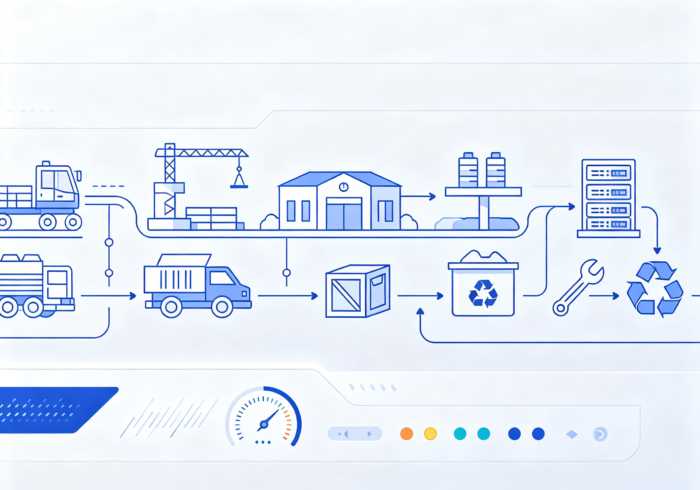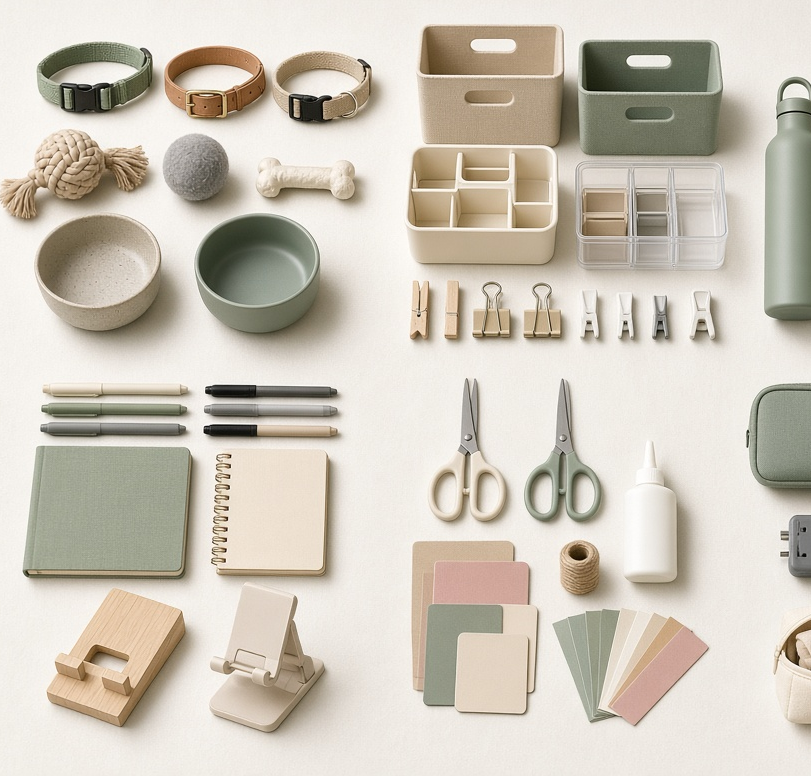
Buying cheap wholesale products to resell is no longer only about finding the lowest supplier price. Profitable online sellers evaluate total landed costs, supplier quality, product compliance, demand, shipping, and fulfillment before investing. This practical guide explains how to source wholesale products from China, verify suppliers, test products, calculate real margins, and scale a resale business with lower inventory risk.

Buying cheap wholesale products to resell can still be a profitable way to build an online business—but the lowest unit price is not always the best deal. Successful sellers evaluate the landed cost, product risk, supplier reliability, delivery speed, compliance requirements, and repeat-purchase potential before placing an order.
For global B2B sellers, China remains an important sourcing market because it offers broad product selection, flexible manufacturing capability, and access to products across price points. However, the modern resale model requires more than simply finding a cheap supplier. You need a sourcing process that protects cash flow, validates demand, and makes fulfillment manageable as your order volume grows.
> Key takeaway: The goal is not to buy the cheapest wholesale products. The goal is to source products that can be sold repeatedly at a sustainable margin after product, freight, payment, platform, packaging, tax, return, and fulfillment costs.
Table of Contents
Why Wholesale Reselling Still Creates Opportunity
Online retail continues to provide a substantial market for independent sellers, niche stores, marketplace merchants, and B2B distributors. The U.S. Census Bureau estimated seasonally adjusted U.S. retail e-commerce sales at $326.7 billion in Q1 2026, up 2.7% from the prior quarter. That scale creates room for sellers who can identify specific customer needs and serve them better than mass-market listings.
Wholesale reselling works when you create value between the factory and the final buyer. That value may come from:
– Finding products customers cannot easily discover.
– Creating a specialized collection for a defined audience.
– Offering better product information, photos, bundles, or instructions.
– Providing localized customer support and faster local delivery.
– Improving packaging or adding private-label elements.
– Using reliable fulfillment so customers receive the right product on time.
For example, a generic silicone kitchen tool may be available from dozens of sellers. But a merchant could turn it into a stronger offer by selling a curated “small-apartment meal-prep kit,” including an instruction card, clear dimensions, upgraded packaging, and fast fulfillment for a specific market.
This is why the most resilient resale businesses are not built around random “trending products.” They are built around repeatable product selection and controlled operations.
Start With the Right Profit Calculation
Many new sellers estimate profit with a simple formula:
Selling Price−Supplier Price=Profit
That calculation is incomplete. A product that appears profitable at the factory can become unprofitable once it reaches the customer.
Use this more practical calculation:
Net Profit per Unit=Selling Price−Total Landed Cost−Selling Costs−Return Allowance
Your total landed cost should include:
| Cost category | What to include |
| Product cost | Unit price, customization, packaging, sample fees |
| Shipping cost | Domestic China shipping, international freight, final-mile delivery |
| Import cost | Duties, taxes, customs brokerage, required declarations |
| Fulfillment cost | Pick-and-pack fees, warehouse handling, storage, shipping materials |
| Marketplace cost | Platform commission, payment processing, advertising spend |
| Quality cost | Inspection, defect replacement, refunds, returns |
| Operating cost | Customer service, software, content production, exchange-rate impact |
A simple wholesale margin example
Assume you source a reusable desk organizer for $3.20 per unit. The product may look inexpensive, but the real cost could be:
| Item | Cost per unit |
| Product price | $3.20 |
| China-side handling and packaging | $0.35 |
| International freight and import costs | $1.10 |
| Fulfillment and final-mile shipping | $3.40 |
| Marketplace and payment fees | $1.30 |
| Returns and defect allowance | $0.65 |
| Total cost before advertising | $10.00 |
If you sell it for $16.99, your gross contribution before advertising is $6.99—not $13.79. If acquiring a customer costs $5.00, the remaining profit is very limited.
This is why sellers should not place large orders until they understand all-in economics. A sourcing partner that can consolidate purchases, inspect goods, store inventory, and fulfill orders may help make those costs more visible earlier in the process.
Choose Products With Resale Potential
The best cheap wholesale products to resell are usually not defined by a single category. They have a combination of positive commercial characteristics.
Product-selection criteria that matter
Prioritize products that are:
– Small and lightweight, reducing freight and fulfillment cost.
– Durable, with a lower likelihood of breakage and return claims.
– Easy to explain, so buyers understand the use case quickly.
– Visually demonstrable, making product photos and short videos more persuasive.
– Low in regulatory complexity, especially when you are new to importing.
– Non-seasonal or reliably seasonal, rather than dependent on a short-lived social-media trend.
– Suitable for bundling, upselling, or repeat purchase.
– Differentiable, through color, packaging, accessories, content, or customer targeting.
– Unbranded or properly authorized, avoiding intellectual-property risk.
Wholesale product categories worth evaluating
The following categories can offer sourcing opportunities, but every product still requires demand validation, compliance review, and margin analysis.
| Category | Why sellers consider it | Key caution |
| Home organization | Lightweight, evergreen, easy to bundle | Competition is often high |
| Kitchen accessories | Strong visual demonstrations and gift potential | Confirm food-contact material requirements |
| Pet accessories | Emotional purchase behavior and broad audience | Avoid unsafe materials or unsupported health claims |
| Beauty tools | Compact and often suitable for repeat content marketing | Cosmetics and electrical devices can trigger compliance needs |
| Phone and desk accessories | Broad demand and low storage footprint | Compatibility and quality issues can drive returns |
| Travel accessories | Useful bundles and seasonal demand | Test material durability and dimensions |
| Fitness accessories | Demand from home and lifestyle buyers | Avoid unsupported medical or performance claims |
| Stationery and craft supplies | Low shipping weight and good bundling potential | Differentiate through design, kits, or niche positioning |
| Reusable lifestyle products | Strong gift and practical use cases | Verify material claims and product safety |
| Basic apparel accessories | Broad audience and easy content creation | Size, color, and fashion trends can increase returns |
Categories that require extra caution
Some products may sell well but are not ideal for inexperienced resellers:
– Medical devices, supplements, and pharmaceuticals.
– Children’s products and toys.
– Batteries, chargers, and electrical goods.
– Cosmetics, skincare formulations, and products making therapeutic claims.
– Food-contact products without appropriate documentation.
– Branded products, replicas, or products using third-party trademarks.
– High-value electronics with warranty expectations.
– Products involving sharp edges, heat, chemicals, or safety hazards.
In the United States, the Consumer Product Safety Commission has authority to determine the admissibility of regulated consumer products and certain hazardous substances offered for import. Product compliance should be treated as a sourcing requirement, not as a later administrative task.
How to Find Reliable Wholesale Suppliers
A supplier’s quotation tells you only one part of the story. A reliable supplier must also be able to meet specifications, communicate clearly, produce consistently, package correctly, and deliver according to the agreed schedule.
Use online sourcing platforms, trade shows, referrals, supplier directories, and direct factory outreach to develop a shortlist. Supplier research, verification, product sampling, and careful negotiation are the core steps in wholesale procurement.
Supplier verification checklist
Before making a meaningful purchase, ask for and evaluate:
1. Business identity and operating history
Confirm the legal company name, location, business registration, export experience, and factory or trading-company status.
2. Product specialization
A supplier focused on your category is often more capable of handling product specifications, materials, production details, and quality expectations.
3. Product documentation
Request relevant test reports, certificates, material information, product specifications, and compliance documentation for your target market.
4. Sample quality
Order samples before a bulk purchase. Evaluate function, finish, durability, packaging, labeling, color consistency, and dimensions.
5. Communication quality
Notice whether the supplier answers questions directly, confirms details in writing, and flags potential risks rather than simply agreeing to every request.
6. MOQ and flexibility
Ask about minimum order quantities, sample fees, mixed-color orders, private labeling, and whether small test orders are possible.
7. Lead time and production capacity
Confirm normal production time, peak-season capacity, and the supplier’s plan if materials or shipping schedules change.
8. Quality-control process
Ask how the supplier inspects goods, what defect rate it targets, how it handles replacement units, and whether third-party inspection is accepted.
9. Payment terms
Use secure, traceable payment methods. Avoid unusual payment requests, pressure to pay outside an agreed channel, or instructions to pay an unrelated entity.
10. References and reputation
Review customer feedback carefully, but do not rely on reviews alone. Combine platform information with samples, documents, and direct communication.
Red flags to take seriously
Pause the transaction if a supplier:
– Refuses to provide company details or product specifications.
– Gives dramatically lower pricing than comparable suppliers without explaining why.
– Pushes you to pay immediately or outside protected channels.
– Will not provide samples for a product where quality matters.
– Avoids written confirmation of materials, packaging, specifications, or delivery terms.
– Uses inconsistent bank-account names or requests payment to an individual account.
– Makes claims about certifications but cannot provide supporting documentation.
– Offers branded goods without clear authorization.
A Low-Risk Sourcing Workflow
Instead of ordering large quantities based on a product photo and an attractive quote, use a staged approach. This method protects your cash flow and helps you learn before scaling.
Step 1: Define the customer and use case
Do not start with “What is cheap?” Start with “Who will buy this, and why?”
Write down:
– Target customer profile.
– Primary purchase motivation.
– Competitive alternatives.
– Target selling price.
– Desired margin.
– Acceptable delivery time.
– Product requirements and likely objections.
A clear customer profile makes it easier to reject products that are cheap but difficult to sell.
Step 2: Validate demand before stocking deeply
Review marketplace listings, category reviews, search behavior, social content, competitor bundles, and customer complaints. Look for unmet needs rather than only high sales volume.
Useful signals include:
– Repeated customer complaints about quality, sizing, instructions, packaging, or missing accessories.
– Popular products with weak photos or poor descriptions.
– A niche audience underserved by generic listings.
– Opportunities to bundle complementary products.
– Products that solve a clear, recurring problem.
Step 3: Compare at least three supplier options
Create a comparison sheet that includes more than price:
| Evaluation factor | Supplier A | Supplier B | Supplier C |
| Unit price | |||
| MOQ | |||
| Sample result | |||
| Lead time | |||
| Packaging quality | |||
| Documentation | |||
| Communication quality | |||
| Estimated landed cost | |||
| Overall risk level |
The cheapest option is often not the lowest-risk option. A supplier with a slightly higher price but stronger documentation, lower defects, better packaging, and faster response can improve your overall profitability.
Step 4: Order samples and test them like a customer
Do not only inspect the product visually. Use it in realistic conditions.
For example, if you source a portable pet water bottle, test:
– Leakage when placed in a bag.
– Ease of one-hand operation.
– Material odor.
– Durability after repeated use.
– Packaging damage during transport.
– Clarity of any instructions.
– Whether the product supports the claims you intend to make.
Document every issue. Photos, videos, and written feedback give you leverage when negotiating product improvements.
Step 5: Place a controlled test order
Start with a quantity that you can afford to hold, inspect, and sell. Your first order is an experiment—not proof that you have found a winning product.
Track:
– Actual product cost.
– Actual shipping cost.
– Delivery time.
– Defect percentage.
– Customer questions.
– Conversion rate.
– Return rate.
– Advertising cost per sale.
– Net profit by SKU.
Step 6: Scale only after the numbers work
Reorder when you have evidence that demand, margin, product quality, and operational delivery are repeatable. Scaling too soon is one of the fastest ways for a reseller to accumulate slow-moving inventory.
Why Fulfillment Strategy Matters More Than Ever
Modern wholesale reselling is not only a purchasing decision. It is an inventory and delivery decision.
Traditional bulk importing can require sellers to pay for large quantities, arrange freight, manage customs, store goods, pack individual orders, handle return logistics, and continually monitor stock. That can be difficult for small and growing businesses—especially those selling across borders.
A sourcing and fulfillment model can reduce operational burden by helping sellers:
– Source products from China through one workflow.
– Consolidate products from multiple suppliers.
– Inspect incoming goods before customer fulfillment.
– Store inventory closer to the sourcing location.
– Process individual orders as they arrive.
– Manage packing, labeling, and shipping coordination.
– Avoid committing to excessive stock before a product is validated.
For Looperbuy users, this can be particularly useful when testing multiple products or suppliers. Rather than treating fulfillment as an afterthought, build it into the product decision from day one. A product with a strong factory price but high breakage, complicated packaging, or expensive shipping may be a weaker business choice than a slightly higher-priced product that ships efficiently.
Import, Customs, and Product Safety Considerations
International resellers should avoid assuming that low-value parcels are automatically exempt from duties and import requirements. U.S. policy has changed significantly: a July 2025 executive order suspended duty-free de minimis treatment for applicable shipments from all countries, subject to stated exceptions and implementation terms.
This means a seller should confirm the current treatment of each product and destination before setting retail prices or advertising “duty-free” delivery. Regulations, tariff classifications, origin rules, duties, taxes, and documentation obligations can change. Work with qualified customs, tax, legal, or compliance professionals when needed.
For U.S.-bound regulated consumer products, documentation requirements also deserve attention. Reports on the CPSC eFiling rollout state that, beginning July 8, 2026, importers must electronically submit applicable product safety certificate information to U.S. Customs and Border Protection at entry.
Before importing, confirm these points
– The correct product classification and applicable duty rate.
– The country-of-origin rules for the product.
– Required labels, warnings, and markings.
– Testing and certification requirements for your category.
– Restrictions on batteries, liquids, chemicals, magnets, sharp items, or regulated materials.
– Your responsibilities as importer, seller, distributor, or marketplace merchant.
– Marketplace-specific policies for product safety, invoices, and authenticity.
– Packaging requirements and local recycling or environmental obligations.
This is not legal or customs advice. The practical lesson is simple: compliance must be included in product selection, pricing, and supplier verification.
Build a More Defensible Resale Business
The resale businesses with the best long-term potential usually do three things well:
– They choose products based on customer need, not only trend data.
– They build supplier and fulfillment systems that reduce avoidable mistakes.
– They use data from early orders to improve products, pricing, bundles, content, and inventory decisions.
Cheap wholesale products can be a useful starting point, but the real advantage comes from execution. Source carefully, verify every important claim, test demand with manageable inventory, and create a better experience than a generic listing can provide.
Ready to test products without carrying unnecessary inventory? Use Looperbuy to source China-made products, coordinate purchasing, manage product fulfillment, and ship orders to your customers through a more streamlined workflow. Start by selecting a focused niche, requesting samples, and building your first controlled product test.
Frequently Asked Questions
1. What are the best cheap wholesale products to resell?
The best products are usually lightweight, durable, easy to ship, easy to explain, and suitable for a defined audience. Home organization items, pet accessories, desk products, travel accessories, craft supplies, and non-regulated lifestyle products can be good areas to research. The right choice depends on your target customer, market competition, compliance requirements, and total landed cost.
2. How much money do I need to start wholesale reselling?
The required budget depends on your product category, sample costs, minimum order quantity, shipping method, content production, and marketing channel. Start with enough capital to order samples, run a controlled test order, pay for shipping and fulfillment, and cover potential returns. Avoid using all available capital on one untested bulk order.
3. Is dropshipping better than buying wholesale inventory?
Neither model is always better. Dropshipping can reduce upfront inventory risk, while buying wholesale inventory may provide stronger unit economics and greater control over packaging, quality, and shipping. A hybrid approach—testing products through low-commitment fulfillment before stocking larger quantities—can be effective for many sellers.
4. How do I verify a China wholesale supplier?
Verify legal business details, request product samples, review documentation, assess communication quality, compare multiple suppliers, confirm payment details, and use written specifications. You should also inspect goods before shipment when the order value or product risk justifies it.
5. What is a good profit margin for reselling wholesale products?
There is no universal target because advertising costs, shipping, category competition, return rates, and marketplace fees vary widely. Focus on net profit after all costs rather than only markup. A product with a high apparent markup can still lose money if shipping, returns, and customer acquisition costs are too high.
6. Do I need to pay import duty on small wholesale orders?
Possibly. Duty and customs treatment depend on the destination country, product category, value, origin, shipping method, and current regulations. U.S. low-value import rules have changed, so sellers should verify current requirements before pricing goods or arranging shipments.
7. Should I buy samples before placing a wholesale order?
Yes. Samples allow you to evaluate product quality, materials, packaging, functionality, and supplier reliability. Test samples as your customer would, record issues, and ask the supplier to confirm improvements in writing before placing a larger order.
References
1. Global Sources. “[How to Buy Cheap Wholesale Products to Resell].” Accessed August 17, 2026.
2. U.S. Census Bureau. “[Quarterly Retail E-Commerce Sales Report].” Published May 18, 2026.
3. U.S. Consumer Product Safety Commission. “[Import Resources].” Accessed August 17, 2026.
4. The White House. “[Suspending Duty-Free De Minimis Treatment for All Countries].” July 30, 2025.
5. Baker Tilly. “[CPSC eFiling Requirements: Key Compliance Considerations].” June 8, 2026.