Learn what wholesale price means, how to calculate landed cost, compare wholesale vs. retail pricing, negotiate with suppliers, and source products from China more efficiently. A practical guide for B2B sellers, online retailers, and global buyers seeking stronger margins and lower inventory risk.
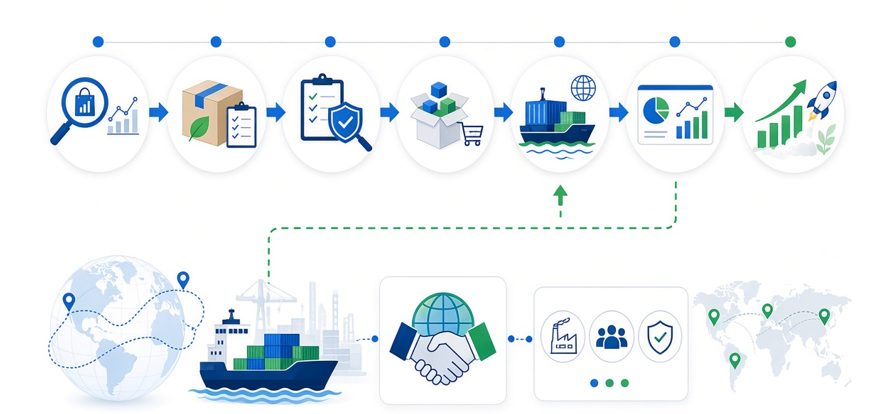
Wholesale price is the price a manufacturer, distributor, or sourcing partner charges another business for goods purchased for resale or business use. For online sellers, retailers, and procurement teams, understanding wholesale pricing is essential because the quoted unit price is only one part of the true cost—and only one part of a sustainable profit strategy.
At Looperbuy, we see a recurring pattern among growing B2B sellers: they focus heavily on finding the lowest factory quote, then discover that shipping, quality issues, payment friction, and unsold inventory have consumed the expected margin. Smart wholesale buying is not simply about paying less. It is about building a reliable, repeatable sourcing model that protects cash flow and allows your business to scale.
> Key takeaway: A good wholesale price is not necessarily the lowest price. It is the price that delivers the best total value after product quality, fulfillment, logistics, risk, and resale potential are considered.
Table of Contents
What Does Wholesale Price Mean?
A wholesale price is the amount a business pays to buy products in bulk from a manufacturer, distributor, wholesaler, or sourcing agent. The buyer may then resell those products to consumers, other businesses, or use them in operations.
For example, an online retailer may purchase 500 insulated water bottles at a wholesale price of $4 per unit. The retailer may later sell each bottle at $15–$20, depending on its sales channel, positioning, shipping cost, marketplace fees, and customer acquisition expense.
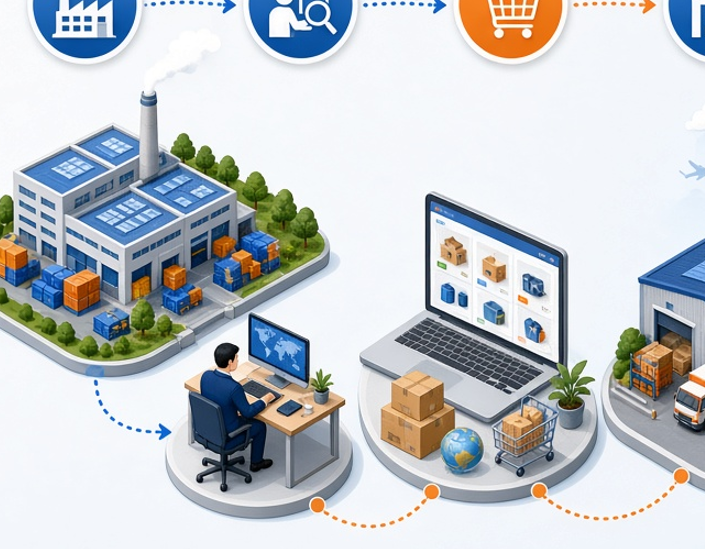
Wholesale pricing supports the movement of goods across the supply chain:
1. Manufacturer produces the item.
2. Wholesaler, distributor, or sourcing partner buys or coordinates inventory.
3. Retailer, online seller, or business buyer purchases at a wholesale rate.
4. End customer buys at the retail price.
Wholesale buyers purchase in greater quantities than consumers, which can reduce the supplier’s per-unit production, handling, and transaction costs. That is why wholesale unit prices are typically below retail prices.
Wholesale Price vs. Retail Price
| Factor | Wholesale Price | Retail Price |
| Buyer | Business, reseller, institution | End consumer |
| Typical order size | Bulk or MOQ-based | One or a few units |
| Unit price | Lower | Higher |
| Main objective | Efficient volume sales and repeat purchasing | Margin per sale and customer experience |
| Pricing factors | MOQ, production cost, freight, payment terms, demand | Branding, marketing, channel fees, promotions, service |
| Relationship | Often negotiated and recurring | Usually transactional |
A retailer does not keep the full difference between wholesale and retail price as profit. That spread must first cover delivery, marketplace commissions, advertising, returns, packaging, taxes, customer service, and operational expenses.
Why Wholesale Pricing Matters in B2B Commerce
Wholesale pricing shapes more than a supplier’s sales volume. It influences inventory risk, buyer loyalty, cash flow, market positioning, and long-term profitability.
For suppliers, bulk orders can create more predictable production schedules and reduce the cost per unit through economies of scale. For sellers, wholesale purchasing creates access to broader product ranges without owning a factory or developing every product from scratch. B2B wholesalers also help manufacturers focus on production while distribution partners handle inventory, sales, and market access.
However, wholesale purchasing has traditionally required buyers to commit significant capital to inventory. This can become a major obstacle for small ecommerce brands, social sellers, and marketplace merchants that want to test products without filling a warehouse.
This is where a modern sourcing and fulfillment model can change the equation. Instead of purchasing a large inventory before demand is proven, sellers can source products from China, validate demand in their target market, and use fulfillment support to ship orders more efficiently. The objective is not to eliminate wholesale buying; it is to make procurement decisions more flexible and data-led.
The Four Business Benefits of Better Wholesale Pricing
– More room for margin: Lower landed cost can provide more flexibility for promotions, advertising, and channel fees.
– Better cash-flow planning: Clear payment terms, smaller test orders, and reliable replenishment reduce capital tied up in slow-moving stock.
– Stronger price positioning: Sellers can remain competitive without entering a destructive price war.
– Faster market testing: Testing a smaller product range before placing a large order can reduce the risk of unsold inventory.
What Determines a Wholesale Price?
A factory quotation can look straightforward, but it is usually the result of multiple commercial variables. Buyers should understand these variables before comparing suppliers.
1. Product and Production Costs
The first component is the cost of making the product. This can include:
– Raw materials and components
– Labor
– Tooling or molds
– Product assembly
– Factory overhead
– Quality-control processes
– Packaging materials
A product made with higher-grade stainless steel, safer electrical components, tighter tolerances, or better packaging should not be compared directly with a cheaper-looking alternative. A lower quotation may reflect lower specifications rather than a better deal.
2. Order Quantity and MOQ
A minimum order quantity (MOQ) is the smallest quantity a supplier is willing to produce or sell under a particular price structure. Suppliers use MOQs to make setup, production, packaging, and shipping economically viable.
As order quantity rises, the unit price may decline. This is commonly presented as tiered pricing:
| Order Quantity | Example Unit Price |
| 100–499 units | $8.00 |
| 500–999 units | $7.20 |
| 1,000–2,999 units | $6.50 |
| 3,000+ units | $5.90 |
The largest order is not automatically the best choice. A buyer who saves $0.60 per unit but cannot sell the inventory for six months may lose more in storage, markdowns, and working-capital pressure than they gain in unit savings.
3. Customization Requirements
Private labels, custom colors, branded packaging, inserts, logo printing, product modifications, and regulatory documentation can all increase the wholesale price. They may also trigger a higher MOQ.
For many early-stage sellers, a practical approach is to start with a standard or lightly customized product, gather sales data, then invest in deeper customization after demand is confirmed.
4. Market Demand and Competition
Demand affects what buyers are willing to pay and how aggressively suppliers price their products. Seasonal categories, trending products, limited components, and high-demand materials can increase quotes. Competitive markets may create downward price pressure, especially when similar items are available from many factories.
A sustainable pricing decision should combine three perspectives:
– Cost-based pricing: Start with your total cost and add the needed return.
– Competitor-based pricing: Compare comparable offers in the market.
– Value-based pricing: Price according to the customer benefit, differentiation, quality, convenience, or brand strength.
These approaches work best together—not in isolation.
5. Logistics, Currency, and Payment Terms
For international buyers, the product quote is only the beginning. Freight rates, destination charges, customs duties, currency movements, insurance, payment-processing fees, and shipping method can materially alter profitability.
A supplier offering a lower EXW price may not be less expensive than another supplier offering a slightly higher FOB or delivered quote. Always confirm the applicable Incoterm and exactly what services are included.
How to Calculate Your Real Wholesale Cost
The most useful number for a buyer is not merely the wholesale unit price. It is the landed cost per sellable unit.
Use this formula:
Landed Cost per Unit= (Product Cost + Packaging + Inspection + Freight + Duties + Fees + Other Direct Costs)÷Sellable Units
“Sellable units” matters. If 1,000 units arrive but 30 are damaged, noncompliant, or unsellable, your costs should be divided by 970—not 1,000.
Example: A Better Cost Calculation
Imagine you source 1,000 units of a kitchen organizer:
| Cost Item | Total Cost |
| Product cost at $3.20 per unit | $3,200 |
| Custom packaging | $250 |
| Product inspection | $180 |
| International freight | $700 |
| Import duties and clearance | $320 |
| Payment and sourcing fees | $150 |
| Total landed cost | $4,800 |
Your landed cost is:
$4,800÷1,000=$4.80 per unit
If 20 units are not sellable, the effective cost becomes:
$4,800÷980=$4.90 per sellable unit
This number should guide your retail price, advertising budget, discount strategy, and reorder decision.
> Expert perspective: Treat every product quote as a hypothesis until you calculate the complete landed cost and confirm product quality. The “cheap” product can become expensive very quickly when it creates returns, negative reviews, or supply interruptions.
Three Wholesale Pricing Models Buyers Should Know
Cost-Plus Pricing
Cost-plus pricing starts with total product cost and adds a markup. It is simple and helps suppliers ensure that direct costs, overhead, and profit are considered.
A common formula is:
Wholesale Price=Total Cost+(Total Cost×Markup)
For example, if a supplier’s total cost is $50 and it applies a 30% markup, the wholesale price would be $65.
The limitation is that cost-plus pricing does not automatically account for customer demand, competitor positioning, or the buyer’s expected retail price.
Tiered Volume Pricing
Tiered pricing provides lower unit prices at larger order volumes. This rewards buyers who offer more predictable demand and allows suppliers to plan production more efficiently.
For buyers, request tiers even if you cannot initially order at the largest level. Seeing the next price break helps you calculate when a reorder may justify a larger commitment.
Value-Based Pricing
Value-based pricing reflects what the product is worth to a specific buyer or market. A product with verified compliance, premium materials, distinctive design, reliable lead times, or strong packaging may justify a higher price than a generic substitute.
This approach is particularly useful for products that solve a clear problem or support a differentiated brand. Competing only on unit price is rarely a durable strategy.
How to Negotiate Wholesale Prices Without Hurting Quality
Good negotiation is not about forcing the supplier to accept the lowest possible price. It is about creating terms that work for both sides.
Use This Five-Step Framework
1. Prepare a comparable specification sheet. List material, dimensions, finish, packaging, certification, target quantity, and required delivery date.
2. Ask for price tiers and quote terms. Request pricing for several quantities and verify whether the quote is EXW, FOB, CIF, DDP, or another Incoterm.
3. Separate price from requirements. If the quote is high, ask which element drives cost: material, packaging, customization, MOQ, or shipping.
4. Negotiate total value, not only the unit price. Better payment terms, lower MOQ, improved packaging, spare units, inspection support, or stable replenishment may matter more than a small price reduction.
5. Document the final agreement. Confirm specifications, quality standard, quantity, pricing, payment milestones, lead time, shipping terms, and defect-resolution process in writing.
Long-term supplier relationships often create better outcomes than one-off transactions. Suppliers are more likely to offer favorable terms when buyers provide clear forecasts, communicate professionally, pay reliably, and give realistic production timelines.
A Smarter Way to Source From China
For global sellers, the key sourcing decision is often not “wholesale or no wholesale.” It is choosing the right level of inventory commitment.
Start With a Product Validation Plan
Before placing a large factory order, consider the following approach:
– Identify products with stable demand, acceptable margins, and manageable shipping dimensions.
– Order samples from shortlisted suppliers and inspect materials, functions, packaging, and labeling.
– Compare quotes using landed cost, not product cost alone.
– Launch a limited test through your store, marketplace, or B2B sales channel.
– Review conversion rate, return rate, customer feedback, fulfillment cost, and reorder velocity.
– Scale inventory only after the product demonstrates repeatable demand.
A sourcing and fulfillment partner can support this process by helping sellers find suitable products, consolidate procurement, coordinate quality checks, manage payment and shipping steps, and fulfill orders without requiring the seller to build their own warehouse operation.
This model can be especially valuable for businesses that want to expand their catalog without taking on excessive stock risk. It does not remove the need for careful due diligence—but it can make international sourcing more accessible and operationally efficient.
Common Wholesale Pricing Mistakes
Choosing the Lowest Quote
The lowest quote may exclude better materials, testing, packaging, quality control, or customer support. Compare specifications line by line before deciding.
Ignoring Non-Product Costs
Freight, duties, payment fees, returns, storage, platform commissions, and advertising can quickly narrow your margin. Calculate landed cost before setting a retail price.
Ordering Too Much Too Early
Large MOQs can reduce unit cost but increase the risk of slow-moving or obsolete stock. A smaller initial order may be more profitable if it protects cash flow.
Selling Without a Reorder Plan
A successful first order can create a stockout if replenishment lead time is ignored. Track supplier production time, transit time, customs clearance, and safety stock before demand peaks.
Accepting Unclear Terms
Never assume a quote includes freight, inspections, taxes, customization, or after-sales support. Ask for written confirmation of every commercial term.
Build Profit Beyond the Factory Price
Wholesale price is the starting point of a B2B transaction—not the final measure of profitability. Successful buyers look beyond a unit quote and evaluate total landed cost, inventory exposure, supplier reliability, product quality, logistics, and the potential resale value of the product.
For sellers sourcing from China, the strongest strategy is usually a balanced one: test demand carefully, use clear product specifications, negotiate on total value, and scale only when the numbers support it. With the right sourcing and fulfillment process, you can reduce unnecessary inventory pressure while keeping more attention on product selection, customer acquisition, and growth.
Ready to source products from China with less inventory and logistics complexity? Explore how Looperbuy can support product sourcing, purchasing, and fulfillment for your B2B business.
FAQs
1. What is the difference between wholesale price and cost price?
Cost price is what it costs to make or acquire a product. Wholesale price is what the supplier charges another business after adding an intended return. A buyer should also calculate landed cost, which includes freight, duties, fees, and other direct procurement expenses.
2. Is wholesale price always 50% lower than retail price?
No. There is no universal wholesale-to-retail percentage. The gap depends on category, product differentiation, distribution costs, retailer overhead, competition, and brand positioning. The claim that wholesale prices are often much lower than retail prices is a general pattern, not a rule for every product.
3. How can a small business buy wholesale with a low MOQ?
Start by asking suppliers for their lowest standard MOQ, mixed-SKU options, sample orders, or ready-stock products. You can also test demand through a sourcing and fulfillment model before committing to a large inventory purchase.
4. What should I ask a supplier before accepting a wholesale quote?
Ask for the exact product specification, MOQ, unit price by quantity tier, packaging details, customization costs, production lead time, Incoterm, payment terms, inspection arrangements, certifications, and defect-resolution policy.
5. How do I know whether a wholesale product will be profitable?
Calculate landed cost per sellable unit, then subtract expected marketplace fees, payment fees, fulfillment costs, advertising expense, returns, and taxes from your projected selling price. Do not rely only on the difference between the factory price and retail price.
6. Can I negotiate a wholesale price with Chinese suppliers?
Yes. The most effective approach is to negotiate with clear volumes, specifications, realistic target terms, and a long-term purchasing plan. You may gain more value through better MOQ, packaging, payment terms, quality controls, or replenishment support than through a small reduction in unit price alone.
References
1. Global Sources. “[What is Wholesale Price? A Comprehensive Guide for Businesses].” Covers wholesale-price definitions, pricing influences, calculation approaches, negotiation practices, and future pricing trends.
2. Oracle NetSuite. “[What Is B2B Wholesale? Benefits and Tips for Success].” Provides background on B2B wholesale operations, pricing tiers, MOQs, inventory management, ecommerce platforms, and buyer relationships.
3. MYOB. “[What Is Wholesale Price & How To Calculate It?].” Explains wholesale-cost components, tiered pricing, markup, margin, and worked pricing examples.
4. Cambridge Dictionary. “[Wholesale Price].” Definition of wholesale price as the price a business pays for goods that it will resell to the public.
5. Minderest. “[Wholesale Pricing: How to Set Prices Correctly].” Discusses cost-based, value-based, and competitor-based approaches to wholesale pricing.