Discover how an enterprise B2B marketplace helps global sellers source products from China, reduce inventory pressure, coordinate fulfillment, improve supplier operations, and create a more reliable buying experience with Looperbuy.
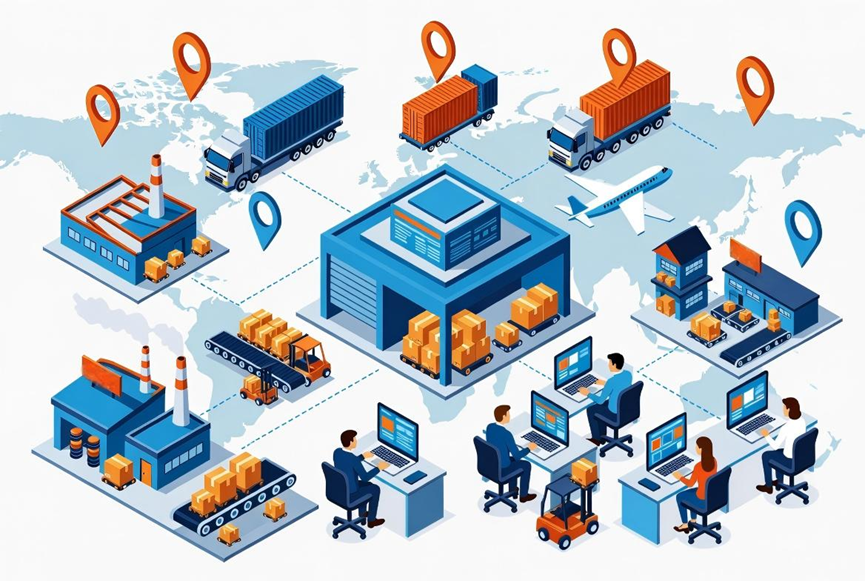
An enterprise B2B marketplace is more than a product catalog or ordering website. It is a commercial operating layer that connects buyers, suppliers, product data, payments, order workflows, and fulfillment partners in one controlled environment.
For global sellers, the opportunity is especially clear: instead of committing cash to bulk inventory, managing a warehouse, and coordinating multiple Chinese suppliers independently, they can use a sourcing and fulfillment partner to build a more flexible supply chain. Looperbuy is designed to support this model by helping B2B sellers source Chinese products and arrange fulfillment without taking on every operational task internally.
Table of Contents
What Makes an Enterprise B2B Marketplace Different?
A traditional online store usually follows a simple pattern: a customer chooses a product, pays, and receives delivery. An enterprise B2B marketplace must handle a far more variable process.
It may involve multiple suppliers, buyer-specific product access, volume quotations, changing inventory, split shipments, payment coordination, customs documentation, and service-level expectations. In other words, the platform must manage workflows, not simply transactions.
For sellers sourcing from China, complexity often appears before an order is placed:
– A buyer needs to compare products from several factories.
– Product specifications or packaging must be confirmed.
– Minimum order quantities may differ by supplier.
– Quality expectations need to be communicated clearly.
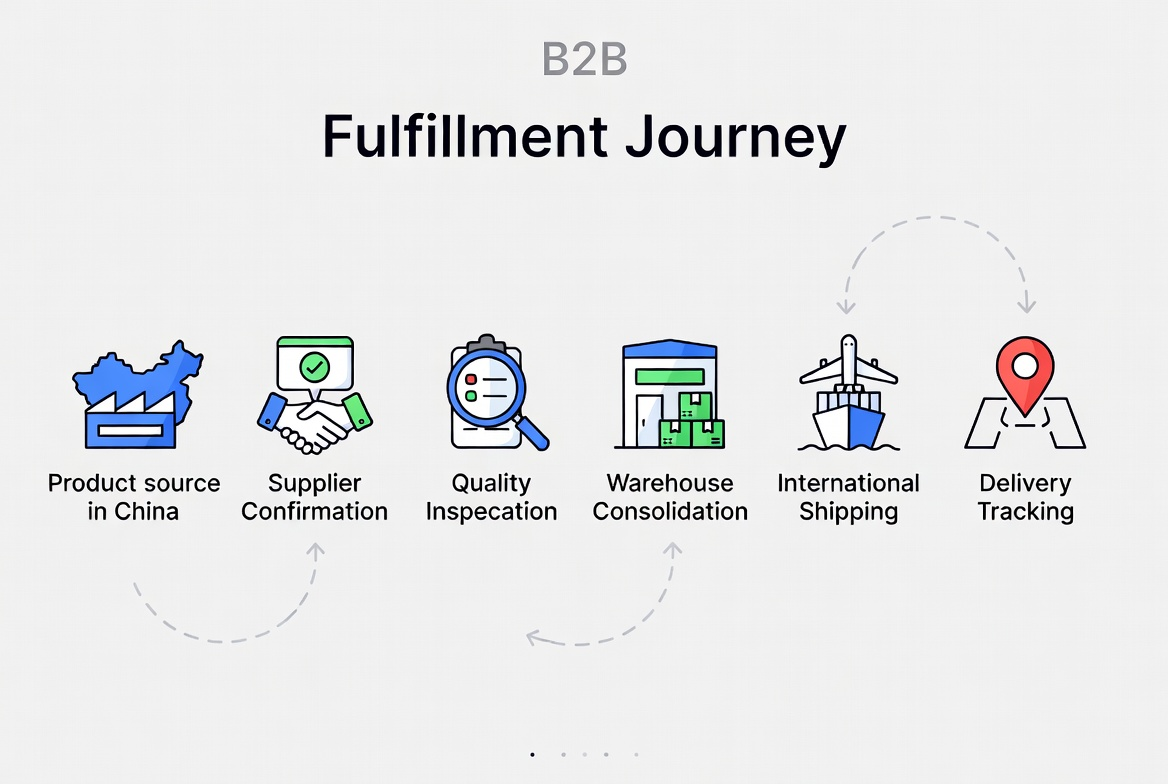
– Orders may need to be consolidated before international shipment.
– Tracking, delivery, and returns can affect buyer trust.
The marketplace model helps turn these scattered activities into a more structured customer experience.
| Traditional sourcing approach | Marketplace-enabled sourcing approach |
| Sellers contact factories one by one | Sellers access a broader supplier and product network |
| Inventory is purchased before demand is proven | Products can be sourced in response to customer demand |
| Warehousing costs are managed internally | Fulfillment can be coordinated through an external service |
| Supplier, payment, and shipping workflows are fragmented | Orders, sourcing, and delivery are managed through a connected process |
| Catalog updates depend on manual work | Product information can be organized and maintained centrally |
This does not eliminate every supply-chain risk. It does, however, give sellers a more practical way to test categories, broaden assortments, and scale operations without building a full procurement and logistics team from day one.
Why the Marketplace Model Matters for Global B2B Sellers
B2B buyers increasingly expect the same convenience they experience in consumer commerce: easy product discovery, clear delivery information, transparent tracking, and a straightforward ordering journey. DHL reports that 58% of global B2B retailers sell through at least three e-commerce platforms, while 78% expect website sales to grow over the next three to five years.
For a B2B seller, this shift creates a strategic choice. They can continue operating through disconnected supplier conversations and manual spreadsheets, or they can create a sourcing model that is easier to repeat and scale.
Broader assortment without speculative stock
Carrying more inventory can increase product availability, but it also locks up working capital. The marketplace approach enables a seller to expand its catalog with less upfront stock exposure.
This is valuable for businesses selling:
– Fast-changing consumer accessories
– Seasonal products
– Niche tools and equipment
– Private-label test products
– Complementary items for an established catalog
– Products with uncertain local demand
Instead of buying deeply across every category, the seller can validate demand first. Once a product line demonstrates repeat sales, the business can decide whether holding stock, negotiating better factory pricing, or using a dedicated fulfillment model makes sense.
A more resilient sourcing operation
Relying on one supplier creates risk. A production delay, product-quality issue, stock shortage, or price change can immediately affect the customer experience.
A marketplace-supported sourcing process makes it easier to build alternatives. The goal is not simply to find the cheapest supplier. It is to create a dependable supply network with documented standards for product specifications, response time, packaging, delivery performance, and communication.
In my experience working with export-oriented manufacturers, the sourcing problem is rarely just “Where can I find a product?” The real issue is whether the seller can consistently deliver the product a customer expects, at the promised time, with accurate information.
Better buyer experience through fulfillment visibility
Delivery is a commercial issue, not merely an operational one. DHL’s B2B research notes that 48% of sellers prioritize logistics partners with faster transit times, while cross-border delivery cost, return cost, and customs complexity remain major barriers to international selling.
This means sellers should make fulfillment information visible early in the buying journey:
– Estimated processing and dispatch time
– Available shipping options
– Destination-specific delivery expectations
– Tracking availability
– Packaging or consolidation options
– Return and issue-resolution procedures
A clear process reduces avoidable presale questions and helps business buyers plan with more confidence.
The Operating Model: From Supplier Discovery to Global Delivery
A successful B2B marketplace does not depend on having the largest catalog. It depends on making the sourcing and fulfillment process reliable enough for buyers to use repeatedly.
1. Standardize product information before publishing
Poor product data is one of the fastest ways to lose buyer trust. A listing should communicate the practical information a commercial buyer needs to make a decision.
At minimum, product records should include:
– Product name and model number
– Core specifications and materials
– Dimensions, weight, and packaging details
– Minimum order quantity, where applicable
– Variants, colors, and customization options
– Compliance or certification information when relevant
– Production or processing lead time
– Clear images of the actual product and packaging
For sellers working with multiple Chinese suppliers, consistent product templates are essential. A supplier may describe a product differently from your sales team, but customers should see a standardized, easy-to-compare listing.
2. Build supplier onboarding around accountability
Supplier onboarding should not be treated as an administrative task. It is a quality-control system.
Before adding a supplier or product range, define what information must be verified and who owns each step. This can include business credentials, factory capabilities, product samples, packaging rules, specification accuracy, and communication standards.
A practical supplier scorecard can evaluate:
| Evaluation area | Questions to ask |
| Product consistency | Does the delivered item match approved specifications and samples? |
| Communication | Can the supplier respond clearly and quickly to order questions? |
| Production reliability | Can the supplier meet agreed lead times at realistic order volumes? |
| Packaging quality | Is packaging suitable for consolidation and international transit? |
| Data accuracy | Are inventory, variants, images, and specifications updated correctly? |
| Problem resolution | Does the supplier cooperate when defects or shipping exceptions occur? |
Enterprise marketplace projects often fail when businesses focus only on the buyer-facing interface and overlook supplier operations.
3. Design for exception management
Cross-border commerce will always include exceptions: missing product details, damaged packaging, delayed dispatch, inaccurate inventory, customs holds, or buyer address issues.
The best process is not the one that assumes nothing will go wrong. It is the one that defines what happens when something does.
Set clear internal procedures for:
1. Supplier stock cannot be confirmed.
2. Product quality differs from the agreed standard.
3. An order must be split across suppliers.
4. A customer requests a specification change.
5. A shipment is delayed or stopped during customs clearance.
6. A buyer reports a delivery or product issue.
For each situation, assign an owner, response deadline, customer communication template, and escalation path. This protects the customer relationship when operational conditions change.
4. Use data to decide which products deserve investment
Not every listed product should receive equal attention. Marketplace data can reveal which categories deserve deeper sourcing, better content, or more secure inventory planning.
Track metrics such as:
– Product page views and inquiry rate
– Quote-to-order conversion rate
– Repeat order rate
– Average order value
– Supplier response time
– Order cancellation rate
– Dispatch accuracy
– Delivery time by destination
– Return or dispute reasons
The marketplace model becomes more powerful when product and fulfillment data guide decisions. Mirakl notes that marketplace operators can use aggregated commercial data to understand preferences, improve assortment decisions, and support strategic planning.
A Practical Rollout Plan for Looperbuy Sellers
For many global sellers, the right starting point is not a large catalog launch. It is a focused pilot that proves the product, supplier, and fulfillment model before major investment.
Phase 1: Choose a focused commercial opportunity
Begin with one product category, one buyer profile, and a small number of suppliers. Avoid launching hundreds of disconnected products with unclear positioning.
For example, a seller serving independent retailers could begin with a tightly curated category such as mobile accessories, beauty tools, home organization products, or business packaging supplies. The selection should solve a recognizable buying need and allow for repeat purchasing.
Phase 2: Validate products and delivery expectations
Before promoting products widely, confirm the details that influence customer satisfaction:
– What is the real processing time?
– Can packaging survive international shipping?
– Are product photos and descriptions accurate?
– Can orders be consolidated?
– What shipping options fit the target market?
– How will customers receive tracking updates?
This is where a sourcing and fulfillment partner can reduce operational burden. Looperbuy can help sellers coordinate China-based sourcing and fulfillment so they do not need to independently manage supplier communication, warehousing, payment arrangements, and logistics administration for every order.
Phase 3: Publish a buyer-friendly catalog
Business buyers should be able to understand an offer without opening a long email thread. Use clear category structures, specification-led product titles, concise comparison tables, and visible order conditions.
For higher-value or custom products, provide an inquiry or quotation path rather than forcing every buyer into a standard checkout flow. Complex B2B purchasing is often non-linear and may involve quotations, approval steps, negotiated terms, or staged fulfillment.
Phase 4: Expand based on evidence
After the initial launch, expand only where data supports it. Add suppliers when they improve assortment quality, delivery reliability, price competitiveness, or customization capability.
Do not confuse catalog size with marketplace strength. A focused selection with accurate information and reliable delivery is more valuable than thousands of poorly maintained listings.
Build a More Flexible China Sourcing Model
The future of B2B commerce is not defined by one sales channel or one warehouse. It is defined by the ability to connect demand, supplier capability, product data, and fulfillment in a way that remains manageable as the business grows.
For global B2B sellers, sourcing from China no longer has to mean placing large speculative orders, maintaining excess stock, or coordinating every logistics detail alone. A marketplace-enabled model can help sellers test more products, reduce operational friction, and give buyers a clearer purchasing experience.
Ready to simplify your China sourcing and order fulfillment process? Explore how Looperbuy can support your product sourcing, purchasing, and dropshipping workflow—so your team can focus more on customers and growth.
Frequently Asked Questions
What is an enterprise B2B marketplace?
An enterprise B2B marketplace is a platform that coordinates multiple suppliers, buyers, product catalogs, pricing rules, order workflows, and fulfillment processes. It is designed for complex commercial relationships rather than simple one-product transactions.
How does a B2B marketplace reduce inventory risk?
It allows sellers to offer and validate a broader assortment without purchasing large volumes of every product in advance. Sellers can use order and demand data to decide which products deserve deeper inventory investment.
What products are suitable for China sourcing and dropshipping?
Products with stable specifications, practical packaging, reliable supplier availability, and clear demand are often good candidates. Sellers should assess product quality, shipping feasibility, margin, lead time, and any destination-market compliance requirements before launch.
Why is supplier onboarding important?
Supplier onboarding establishes product-data standards, communication expectations, packaging rules, and accountability for quality and delivery. Without it, inconsistent listings and fulfillment problems can quickly damage buyer confidence.
Can B2B buyers still request customized products?
Yes. Many B2B orders require custom packaging, branding, materials, dimensions, or order quantities. A strong marketplace process should provide a clear quotation workflow for requests that do not fit standard product listings.
What should sellers track after launching a sourcing program?
Key indicators include inquiry-to-order conversion, repeat order rate, supplier response time, cancellation rate, dispatch accuracy, shipping speed, delivery exceptions, and the reasons behind customer complaints or returns.
References
1. Lvova, E. (2026). [Enterprise Marketplace Guide 2026: How to Build and Operate Complex B2B Platforms]. Virto Commerce. [virtocommerce]
2. DHL eCommerce. (2025). [2025 B2B E-Commerce Trends Report]. [dhl]
3. Conley, B. (2025). [2025 eCommerce Trends: Marketplaces, Retail Media, and AI]. Mirakl. [mirakl]