In 2026, dropshipping is still profitable – but only for operators who treat it as a real supply chain business. This article explains margins, tariffs, AI‑driven optimization, and how B2B platforms like Looperbuy help global sellers build asset‑light, resilient operations.
Dropshipping has moved far beyond the “plug‑in an app and sell anything” era. In 2026, profitability depends on how well you design and manage your end‑to‑end supply chain – from supplier selection and inventory visibility to cross‑border logistics and customer experience. As someone who works closely with global B2B sellers on platforms like Looperbuy, I see the biggest wins coming from businesses that engineer their supply chains deliberately, not just their ads or storefront design. [sticky]
For B2B dropshippers using Chinese suppliers, the opportunity is still strong: global dropshipping is projected to reach hundreds of billions of dollars in market size, but competition and tariffs are compressing margins. This is exactly where a platform‑driven approach – centralizing sourcing, quality control, and fulfillment – can preserve profit and reduce operational friction. [arjankc.com]
Table of Contents
The State of Dropshipping Profitability in 2026
Is Dropshipping “Dead” or Just Different?
Most recent analyses agree: dropshipping is not dead, but the easy version is. New data from platforms and agencies that manage tens of thousands of stores shows that profitability now concentrates around sellers who build brands, control supplier quality, and manage unit economics tightly. In other words, the model has matured – it rewards operators, not speculators. [crunch.co]
From a practitioner’s perspective, I’ve seen three clear patterns among 2026 dropshippers:
– Sellers who treat dropshipping as a low‑effort side hustle generally see thin or negative net margins.
– Sellers who specialize in a niche, build differentiated content, and negotiate supplier terms sustain healthy profit per order.
– B2B operators who leverage dedicated procurement platforms to consolidate sourcing and logistics enjoy lower service costs and fewer failures.
This split explains why you can find creators claiming “dropshipping is dead” while others are quietly scaling to seven‑figure revenue. [youtube]
Key Profit Drivers from a Supply Chain Lens
Dropshipping profitability in 2026 is shaped by a few core supply chain variables: [dropbuild]
– Product cost and landed cost (including tariffs, duties, and cross‑border shipping).
– Fulfillment speed and reliability.
– Return and replacement policies.
– Supplier responsiveness and compliance.
– Demand forecasting and assortment planning.
If you mismanage any of these, even strong marketing cannot save your margins. The most profitable stores are those that model the entire cost‑to‑serve per order, then design their assortment and pricing strategy around realistic numbers rather than optimistic ROAS screenshots. [branvas]
Margin Discipline: From Gross Revenue to Net Profit
Understanding 2026 Dropshipping Margins
Recent breakdowns of 2026 dropshipping stores show that:
– Gross margins can look attractive (often 20–40% on paper), but
– Net margins collapse after ads, platform fees, chargebacks, and logistics overhead. [sticky]
Analyses covering more than 26,500 stores highlight that what separates profitable operators is their focus on profit per order and contribution margin, rather than raw revenue. In practice, this means: [dropbuild]
– Tracking customer acquisition cost (CAC) at product level.
– Accounting for average refund/return rate in your margin model.
– Including cross‑border logistics, customs clearance, and after‑sales support in your cost structure.
For B2B dropshippers, this is even more critical: buyers order in bulk, and a single failure in lead time or quality can wipe out months of profit.
Example Margin Model (High‑Level)
Here is a simplified view of how a 2026 dropshipping margin can look across different product tickets. [sticky]
| Product type | Avg price | Gross margin % | Typical CAC % | Typical net margin % |
| Low‑ticket (B2C) | $20 | 30% | 25–35% | 0–5% |
| Mid‑ticket (B2C) | $80 | 30–40% | 15–25% | 5–10% |
| High‑ticket (B2B) | $800+ | 25–35% | 5–15% | 10–20% |
Data and discussions from 2026 creators and platforms consistently show that high‑ticket and B2B‑oriented stores have more room for sustainable profit because CAC is spread over higher order values. [youtube]
Supply Chain Trends Reshaping Dropshipping in 2026
Tariffs, Cross‑Border Logistics and Lead Times
New U.S. tariffs and logistics shifts have tightened the economics of importing consumer goods, forcing dropshippers to rethink routes and partners. Slow and unpredictable shipping is now a competitive disadvantage rather than a tolerated norm; consumers also expect clear estimated delivery times and reliable logistics tracking information. [autods]
From a supply chain standpoint, this pushes serious operators toward:
– Regional warehousing or near‑shoring for top SKUs.
– Hybrid models that combine dropshipping with selective stockholding.
– Stronger SLAs with Chinese suppliers and freight partners.
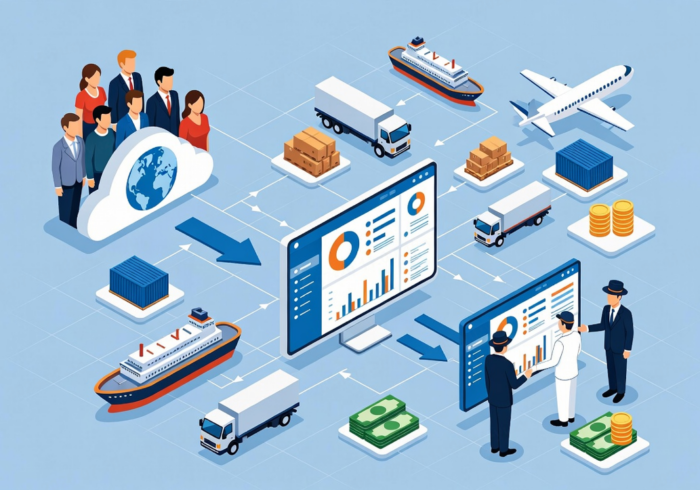
Platforms that centralize procurement and logistics for global sellers, like Looperbuy, can absorb part of this complexity by standardizing supplier vetting, shipment consolidation, and exception handling. That, in turn, keeps per‑order servicing costs under control.
Market Growth and AI‑Driven Optimization
Global dropshipping and cross‑border ecommerce continue to grow in 2026, with estimates pointing to a market size around several hundred billion dollars. In parallel, AI tools are transforming how stores select products, forecast demand, and automate fulfillment. Reports and guides from ecommerce platforms emphasize that up to 90% of routine fulfillment tasks can be automated with the right stack. [halothemes]
For a B2B‑oriented platform, AI improves:
– Supplier selection – ranking factories by historic reliability, defect rate, and lead time.
– Demand forecasting – anticipating seasonal spikes at category level.
– Exception management – automatically flagging delayed shipments and triggering buyer updates.
These improvements don’t just reduce work; they directly protect margin by cutting waste and failure costs.
The Role of Platforms like Looperbuy in B2B Dropshipping Profitability
Reducing Inventory, Warehousing, and Logistics Burden
Looperbuy’s positioning – helping global B2B sellers source Chinese products and fulfill orders without holding inventory – aligns well with the macro shift toward asset‑light supply chains. By letting sellers avoid warehousing, in‑house logistics teams, and complex payment arrangements, the platform shifts fixed costs into variable costs tied to actual demand. [arjankc.com]
From the perspective of a B2B buyer, the value is clear:
– No need to pre‑purchase and store product for months.
– Lower risk of dead stock or obsolete SKUs.
– More flexibility to test new product lines and suppliers.
From the operator’s perspective, a platform like Looperbuy becomes a margin stabilizer because it standardizes inbound quality checks, shipment processes, and supplier communications, which are traditionally fragmented when you try to “DIY” your sourcing.
Practical Steps to Keep Dropshipping Profitable in 2026
Supply Chain‑First Strategy Framework
To keep dropshipping profitable, especially with a China‑sourcing model, you can follow a simple five‑step framework:
1. Define your product strategy around unit economics.
Only list SKUs where you’ve calculated realistic net margin after logistics, platforms, returns, and payment fees. [dropbuild]
2. Consolidate sourcing through vetted suppliers and platforms.
Use platforms like Looperbuy to centralize quality checks, MOQ negotiations, and logistics routing rather than juggling dozens of ad‑hoc suppliers.
3. Design your logistics for reliability, not just lowest cost.
Balance shipping cost against delivery speed, tracking transparency, and customs risk. [shopify]
4. Automate routine operations with AI and integrations.
Automate order routing to suppliers, status updates, and exception alerts to free bandwidth for strategic work. [autods]
5. Embed transparent service levels and expectations into your content.
Use your website and product pages to set realistic delivery windows, return policies, and communication channels – this reduces disputes and protects margin.
These steps are simple, but consistently applying them is what separates stable, profitable operations from stores that burn out after a few months.
Example B2B Workflow Using Looperbuy
A typical profitable B2B dropshipping workflow in 2026 might look like this:
– The seller identifies a niche (e.g., industrial tools) with steady demand and manageable tariffs.
– Looperbuy helps source multiple factories for the same SKU, with data on quality and lead times.
– The seller uses platform data and AI tools to set pricing, taking into account landed cost and expected return rates.
– Orders from global buyers are routed directly to the chosen supplier through Looperbuy, which coordinates packaging, shipping, and tracking.
– The seller focuses on relationship management, content, and upstream sales, while the platform handles most of the downstream operations.
This division of labor allows margins to stay healthy even as competition increases, because supply chain complexity is absorbed by a specialized partner rather than improvised on the fly.
Is Dropshipping Still Worth It for New B2B Sellers in 2026?
For new B2B sellers, dropshipping in 2026 is worth pursuing if you treat it as a long‑term supply chain partnership, not a speculative traffic experiment. The model still offers low upfront capital requirements and high flexibility in product range, especially when you can rely on a platform to consolidate sourcing and fulfillment. [crunch.co]
The biggest risks – margin compression, logistics delays, and supplier inconsistency – can be mitigated with proper planning and platform support. Ultimately, the question is less “Is dropshipping profitable?” and more “Can you design a supply chain that makes dropshipping profitable in your segment?”
If you are a B2B seller considering dropshipping from China in 2026, here are the three most important actions:
– Audit your current or planned products for realistic net margins, including tariffs and shipping.
– Decide whether you will build your own supplier network or leverage a platform like Looperbuy to centralize sourcing and logistics.
– Develop a professional and authoritative content strategy, and build trust with global buyers through transparent process explanations.
If you want to explore how Looperbuy can help you run a more profitable, asset‑light dropshipping operation in 2026, consider requesting a tailored sourcing and fulfillment plan based on your niche, target regions, and expected order volumes.
FAQs
1. Is dropshipping still profitable in 2026 for small B2B sellers?
Yes, it can be, provided you focus on high‑value products, reliable suppliers, and realistic margins rather than chasing ultra‑low ticket items with heavy ad spend. [crunch.co]
2. How do new tariffs affect dropshipping from China?
Tariffs increase landed cost and compress margins, so you must factor them into pricing and explore alternative routes or product categories where duties are lower. [sticky]
3. Does AI really make dropshipping easier in 2026?
AI tools simplify product research, demand forecasting, and fulfillment automation, but they cannot replace fundamental supply chain discipline or good supplier relationships. [halothemes]
4. Why is high‑ticket or B2B dropshipping often more profitable?
High‑ticket and B2B orders spread acquisition and service costs over larger order values, leaving more room for sustainable net margins when executed well. [youtube]
5. How does a platform like Looperbuy reduce risk for global buyers?
By centralizing supplier vetting, quality control, and logistics management, a procurement platform reduces the complexity and failure risk that individual sellers would otherwise face when sourcing directly.
References
1. Branvas – *Is Dropshipping Still Profitable in 2026? Real Margins & Failure Rates*[branvas]
2. HaloThemes – *Dropshipping in 2026: Is It Still Profitable? (And How to Start Right)*[halothemes]
3. sticky.io – *Is Dropshipping Still Profitable in 2026? Tariffs, Costs & What’s Next*[sticky.io]
4. Arjan KC – *Global Dropshipping Playbook 2026: Strategy & Market Trends*[arjankc]
5. Crunch – *Is Dropshipping Still Profitable in 2026? An Honest Look*[crunch]
6. AutoDS – *Is Dropshipping Worth It In 2026? Find Out Here!*[autods]
7. FluentCart – *Is Dropshipping Worth It in 2026? You’ll Be Surprised!*[fluentcart]
8. Shopify – *Is Dropshipping Worth It in 2026?*[shopify]
9. Doba – *2026 Dropshipping Trends: Surviving the Free Platform Era*[doba]
10. Entri – *Is Dropshipping Still Profitable in 2026?*[entri]
11. Dropship Breakthru – *Is Dropshipping Still Profitable In 2026?* (YouTube)[youtube]
12. DropBuild – *Is Dropshipping Still Profitable? Real Numbers From 26,500+ Stores*[dropbuild]