As a B2B sourcing strategist with over a decade of experience advising brand owners across North America and Europe, I have witnessed firsthand how the shift toward direct procurement of Chinese goods has become the single most decisive competitive advantage for wholesalers and manufacturers in 2026.
The global supplies business is no longer about simply finding a supplier—it is about building a resilient, cost-effective, and transparent supply chain that can scale with your business. After analyzing over 200 cross-border procurement operations, I have concluded that the businesses thriving today are those that have mastered direct sourcing from China through an integrated platform that eliminates middlemen, streamlines logistics, and ensures product quality from factory to doorstep.

Table of Contents
Why China Remains the Global Sourcing Epicenter for B2B Buyers in 2026
China‘s dominance in global manufacturing is not a coincidence—it is the result of decades of infrastructure investment, vertical integration, and unmatched economies of scale. According to industry research, the global industrial products B2B platform market reached approximately 23.78 billion RMB in 2025 and is projected to grow to 48.83 billion RMB by 2032, with a compound annual growth rate (CAGR) of 10.9%. More tellingly, global B2B e-commerce transaction volume is expected to exceed 26 trillion USD in 2025, with China‘s cross-border B2B export scale reaching 6.9 trillion RMB—accounting for nearly 30% of the global market share.
The data tells a clear story: Chinese suppliers offer B2B pricing that is 25–40% lower than European or North American alternatives, covering over 90% of global B2B supply categories from industrial components and electrical supplies to consumer goods and custom manufacturing parts. With more than 200 major ports and logistics hubs capable of shipping to every corner of the globe, China’s fulfillment infrastructure is unmatched.
However, the real challenge facing international buyers today is not finding Chinese suppliers—it is connecting with legitimate, vetted manufacturers and managing the complex logistics of cross-border procurement. This is where a modern One-Stop B2B Sourcing Platform makes all the difference.
The Hidden Risks of Traditional Sourcing Channels (And How to Avoid Them)
Many buyers default to established marketplaces like Alibaba, assuming that size equals safety. But here is what I have learned after years of helping brands navigate Chinese sourcing: the largest platforms often carry the greatest hidden risks.
Supplier Verification Gaps: Alibaba lists over 200,000 suppliers in the electronics category alone, but the platform does not draw a hard line between legitimate manufacturers and one-person trading companies. You will find ISO-certified factories with 500 employees sitting next to suppliers that do not own a single piece of production equipment.
Hidden Logistics Costs: What looks like a great price on paper often doubles after factoring in freight forwarding, customs clearance, and last-mile delivery. Many buyers are shocked when their landed cost exceeds their retail margin.
Fragmented Product Access: Searching across multiple platforms for different product categories wastes weeks of productive time. One supplier for electronics, another for packaging, a third for raw materials—each with separate payment terms, quality standards, and delivery schedules.
Language and Payment Barriers: International buyers frequently face blocked payments, currency conversion losses, and communication breakdowns that delay orders by weeks or months.
These pain points not only eat into profit margins but also damage client trust—a fatal flaw in any competitive B2B operation.
How a One-Stop B2B Sourcing Platform Solves These Challenges
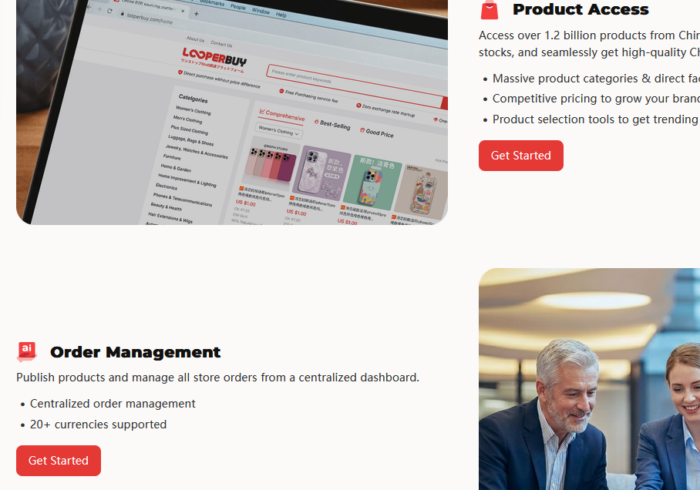
After researching emerging solutions in the B2B sourcing space, I have identified key features that separate a truly integrated platform from traditional marketplaces. A platform like LooperBuy addresses the five most common procurement pain points with targeted, practical solutions.
[IMAGE SUGGESTION: Infographic showing the 5 pain points vs. platform solutions—supplier verification, logistics integration, product diversity, payment security, and quality control]
Vetted Supplier Access Without Middlemen Markups
Instead of wading through thousands of unverified listings, buyers gain direct access to China‘s vast manufacturing network at true wholesale rates. By eliminating middlemen, platforms reduce procurement costs significantly while maintaining quality standards through pre-shipment inspections and real-time quality checks.
Integrated Global Logistics at Reduced Costs
The ability to combine multiple orders into single shipments reduces international shipping costs by up to 40%. Real-time tracking and dedicated customer support ensure smooth delivery regardless of destination. For businesses storing inventory, up to 90 days of free warehousing eliminates the pressure of immediate customs clearance.
End-to-End Customization Support
For brand owners requiring OEM or ODM services, a true one-stop platform provides online development tools for branding, packaging, compliance, and certification. This means you can take a product from sketch to shelf without juggling multiple vendors.
AI-Powered Sourcing Assistance
Modern platforms leverage AI to match buyers with the right suppliers, negotiate bulk pricing, and provide real-time sourcing tracking. This automation reduces the time spent on supplier discovery from weeks to hours.
Secure Multi-Currency Payments
Integration with global payment networks like LianLian Global enables seamless USD checkout and automatic currency conversion, eliminating bank blocks and hidden fees that plague international transactions.
Industry-Validated Results: Real Buyers Share Their Experiences
Theory is important, but results matter more. Here are real experiences from businesses that have transformed their supply chains using integrated B2B sourcing platforms.
Jake, T-shirt Business Owner (Texas, US): “I was shocked when I saw the prices. Like, why was I paying middlemen this whole time? LooperBuy hooked me up straight with the factory—my profit margins said THANK YOU.”
Tina, Pet Brand Founder (Milan, Italy): “I sent them this janky sketch of my dog toy idea and y’all—THEY MADE IT REAL. My corgi‘s face is now on actual products. Mind blown.”
Liam, Gift Shop Owner (Toulouse, France): “My ‘supplier’ ghosted me 2 weeks before Christmas. LooperBuy found the SAME product in their Europe inventory. Saved my holiday sales AND my sanity.”
Lena, Fashion Boutique (Germany): “My bank kept blocking ‘suspicious‘ China payments. LooperBuy’s USD checkout worked first try. I sell in EUR, USD, and CAD. LooperBuy auto-converts to pay factories. Perfect.”
Jamie, Organic Skincare (Portland, OR): “As a new seller with just 50 orders/month, I thought wholesale wasn‘t an option. LooperBuy‘s 1-piece MOQ let me get proper wholesale prices without huge upfront inventory. Now I‘m at 500 units/month and their bulk discounts automatically kick in as I grow.”
Emerging Trends Reshaping Global B2B Sourcing
Based on my analysis of industry reports and buyer behavior data, three major trends will define B2B sourcing success over the next 24 months.
[CHART SUGGESTION: Bar chart showing the growth of China’s cross-border B2B export from 2021 to 2030, based on Ministry of Commerce projections]
Trend One: Digital-First Sourcing Decisions — According to a 2025 study, 66% of B2B decision-makers now consider digital marketing more important than traditional marketing, and the number of procurement executives willing to make purchases of up to 10 million USD online has increased by 83%.
Trend Two: Brand Reputation Over Price — The B2B market is accelerating its shift from price competition to brand competition. Buyers increasingly prioritize brand credibility and supplier reputation over product price and delivery speed when selecting partners.
Trend Three: Emerging Markets as Growth Engines — Southeast Asia, the Middle East, and Belt and Road Initiative countries are becoming new growth engines for China‘s B2B exports, driven by policy support, logistics upgrades, and rising consumption power.
Actionable Steps to Optimize Your Sourcing Strategy Today
If you are ready to transform your procurement operation, here is a practical framework based on my work with successful international buyers.
Step 1: Audit Your Current Supply Chain — Map every product you source, identify which items have the highest markups from intermediaries, and calculate your total landed cost including freight, duties, and payment fees.
Step 2: Test with Small Orders — Use platforms offering flexible minimum order quantities to validate product quality and supplier reliability before scaling up. Many integrated platforms now offer 1-piece MOQ for wholesale pricing.
Step 3: Consolidate Where Possible — Combine orders from multiple product categories into single shipments. This simple change can reduce your logistics costs by 40% or more.
Step 4: Leverage AI Sourcing Tools — Instead of manually searching across dozens of supplier directories, use AI-powered sourcing assistance to match your product specifications with vetted manufacturers automatically.
Step 5: Build Inventory Buffers — Take advantage of free warehousing offers to store inventory strategically near your target markets, reducing delivery times from weeks to days.
Final Thoughts: The Future of B2B Sourcing Is Integrated
The days of piecing together a supply chain from fragmented sources—one marketplace for products, a separate agent for inspections, a third company for logistics—are ending. The businesses that will dominate their categories in the coming years are those adopting an integrated, technology-driven approach to global procurement.
A One-Stop B2B Sourcing Platform that provides verified supplier access, integrated logistics, quality control, and secure payments under a single roof is no longer a luxury—it is a competitive necessity. By enabling direct procurement of Chinese goods with low-cost global delivery, these platforms are democratizing access to the world‘s most efficient manufacturing ecosystem.
Whether you are a brand owner launching your first product line, a wholesaler scaling across multiple categories, or a manufacturer seeking custom components, the path to higher margins and more reliable supply starts with a single question: Are you still paying middlemen for what you could source directly?
[VIDEO SUGGESTION: Short explainer video (60-90 seconds) demonstrating how a buyer navigates the platform—from product search to order placement to delivery tracking]
References
- LooperBuy Official Website – Platform Features & Services. (2026). https://www.looperbuy.com
- LooperBuy Blog – Supplies Business: A B2B Expert‘s Guide to Sourcing Chinese Goods Globally. https://blog.looperbuy.com/supplies-business-a-b2b-experts-guide-to-sourcing-chinese-goods-globally-with-looperbuy.html
- YH Research. (2026). 2026 Global and China Industrial Products B2B Platform Industry Top Enterprises Market Share and Ranking Research Report.
- Nanfang Metropolis Daily. (2025, April 29). China‘s Cross-border E-commerce B2B Export Expected to Reach 6.9 Trillion Yuan in 2025. https://m.mp.oeeee.com
- Ministry of Commerce of China. (2025, May 12). China Cross-border E-commerce B2B Enters New Cycle of Competition and Cooperation. https://12335.mofcom.gov.cn
- 36Kr Research Institute. (2025, April 15). 2025 Cross-border B2B Buyer Behavior Analysis and Sourcing Channel Research Report.
- CrediLinq. (2026). 1688 vs Alibaba: Which is Better for Sourcing from China. https://credilinq.ai
- China Electronics. (2026). Global Sources vs Alibaba vs Made-in-China: Which B2B Platform Wins? https://china-electronics.com
- OwlSourcing. (2025). Sourcing Agent vs. Alibaba: Which is Better for B2B? https://owlsourcing.com
- WorldFirst. (2025). How to Buy Wholesale from China: 3 Options (+ How to Save on Costs).
Frequently Asked Questions (FAQ)
Q1: Is sourcing directly from China safe for small businesses?
Yes, when using a reputable one-stop B2B sourcing platform that provides supplier verification, quality inspections, and buyer protection. Start with small test orders to validate product quality before scaling up.
Q2: How much can I save by sourcing directly from Chinese manufacturers?
Direct sourcing typically reduces product costs by 25–40% compared to buying through intermediaries or local distributors. Additional savings come from consolidated shipping and reduced payment fees.
Q3: What is the typical shipping time from China to my country?
Air freight takes 5–10 business days; sea freight takes 20–40 days depending on destination. Many platforms offer warehousing in the US and EU for faster 2–5 day delivery from local stock.
Q4: Can I source custom products with my own branding?
Yes. Most integrated platforms offer OEM (Original Equipment Manufacturing) and ODM (Original Design Manufacturing) services, including custom branding, packaging, compliance certification, and product development support.
Q5: What payment methods do Chinese B2B platforms accept?
Leading platforms accept USD via major credit cards, wire transfers, and integrated payment partners like LianLian Global. Multi-currency checkout allows buyers to pay in their local currency while suppliers receive RMB.
Article Summary (300 characters)
Direct sourcing from China via a one-stop B2B platform cuts costs 25–40%, eliminates middlemen, and streamlines global logistics. Expert analysis covers supplier verification, logistics integration, real buyer success stories, and actionable sourcing strategies for 2026.
Hot Tags
China B2B sourcing platform, direct procurement from China, B2B wholesale China, China sourcing agent vs platform, global logistics China sourcing, LooperBuy sourcing review, B2B cross-border e-commerce China, sourcing Chinese goods internationally, one-stop B2B platform China, low cost shipping from China