The global logistics market is undergoing its most dramatic transformation in decades. According to Deep Market Insights, the global shipping and logistics market was valued at USD 11.72 trillion in 2025 and is projected to reach USD 18.19 trillion by 2031, growing at a CAGR of 7.6 percent. For B2B buyers—brand owners, wholesalers, and manufacturers—this growth represents both an opportunity and a challenge. The same forces driving market expansion—e-commerce ecosystems, cross-border industrial supply chains, and digital freight infrastructure—have also introduced unprecedented complexity into international procurement.
As a sourcing strategist working closely with LooperBuy, a one-stop B2B sourcing platform connecting global buyers to vetted Chinese suppliers, I’ve watched supply chain logistics companies evolve from simple freight movers into strategic enablers of global trade. The question is no longer whether to source from China—it is how to do it intelligently, cost-effectively, and reliably.
In this expert guide, I’ll break down what’s actually working in B2B sourcing in 2026, where traditional supply chain logistics companies fall short, and how platforms like LooperBuy are rewriting the rules of global procurement.
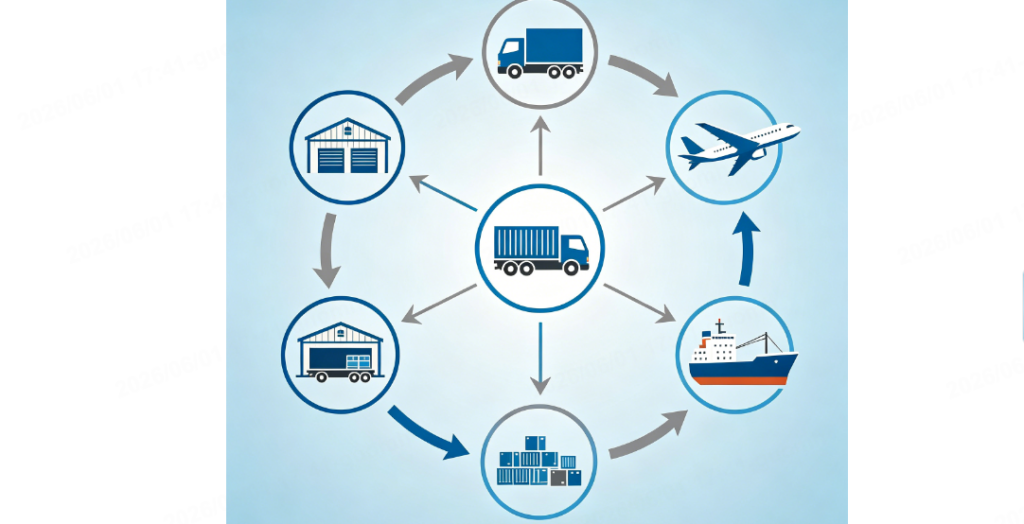
Table of Contents
2026 B2B Supply Chain Trends: What Top Platforms Get Right
Before diving into solutions, let‘s look at the data shaping today’s sourcing decisions.
Trend 1: Supply chain visibility and automation are now non-negotiable. According to FedEx‘s B2B Business Trends 2026 report, businesses now rely on connected systems and predictive tools to monitor shipments in real time. IoT-enabled sensors can detect more than 60 percent of potential disruptions before they escalate.
Trend 2: B2B buyers now expect B2C-grade experiences. The same FedEx report found that 75 percent of B2B buyers would switch suppliers for a better experience. Real-time tracking, transparent delivery timelines, and digital self-service are no longer differentiators—they are table stakes.
Trend 3: AI adoption is accelerating across procurement. China‘s cross-border e-commerce exports reached 2.75 trillion yuan in 2025, up 69.7 percent from 2020, with over 80 percent of cross-border sellers now using AI for product analytics and customer service. In procurement specifically, Gartner reports that 94 percent of supply chain leaders have deployed or plan to deploy intralogistics smart robots.
Trend 4: Tariff volatility is reshaping sourcing strategies. The U.S. and China have agreed in principle to a reciprocal tariff reduction framework covering USD 30 billion or more on each side, though implementation remains under active negotiation. Smart supply chain logistics companies are helping buyers navigate this uncertainty not by abandoning China, but by building agile, multi-route logistics networks.
These trends tell a clear story: B2B sourcing is no longer just about finding the lowest product price. It is about building a logistics-first procurement strategy.
Why Traditional Supply Chain Logistics Companies Can‘t Keep Up
Here’s the uncomfortable truth most logistics providers won‘t tell you. Traditional supply chain logistics companies excel at moving freight but struggle with three critical gaps that directly impact B2B buyers.
Gap 1: Fragmented supplier access. Most logistics companies focus purely on transportation. They don’t help you find vetted manufacturers, negotiate pricing, or manage quality control. This forces buyers to juggle multiple relationships—supplier agents, freight forwarders, customs brokers—each adding their own markup and friction.
Gap 2: Opaque, all-in pricing. Hidden costs—port handling fees, fuel surcharges, customs duties, last-mile delivery—frequently inflate logistics budgets by 20-30 percent beyond quoted rates. For B2B buyers operating on thin margins, these surprises can be devastating.
Gap 3: No end-to-end visibility beyond shipment tracking. Traditional logistics companies can tell you where your container is. They cannot tell you whether your order is actually in production, whether quality inspection passed, or when customs clearance will finalize.
How a One-Stop B2B Platform Bridges These Gaps
This is where LooperBuy fundamentally differs from traditional supply chain logistics companies. We don‘t just move freight. We orchestrate the entire sourcing lifecycle—from supplier discovery and vetting to logistics optimization and final delivery.
Real-World Case Study: A European Wholesaler’s 6-Month Transformation
Take the example of a mid-sized European electrical supply wholesaler serving clients across Germany, France, and the UK. Before partnering with LooperBuy, their supply chain faced three roadblocks:
- European supplier pricing was 35 percent higher than Chinese alternatives, crushing profit margins
- They sourced from eight different vendors to meet client demand, creating fragmented procurement and logistical delays
- Shipping times for industrial supplies averaged 6-8 weeks, causing missed deadlines and lost repeat business
LooperBuy helped them restructure their entire approach:
- They accessed 200+ vetted Chinese suppliers of electrical and construction supplies, with pricing 30 percent lower than European vendors
- All supplies were sourced from a single platform, reducing administrative work by 40 percent
- Dry port integration and optimized logistics cut shipping times to Europe to 2-3 weeks, with real-time tracking for client updates
The result after six months: Profit margins increased 22 percent, client retention rose 30 percent, and they added 15 new supply categories to their portfolio, attracting over 50 new corporate clients.
This isn‘t an isolated success story. It’s what happens when supply chain logistics companies evolve from freight movers into full-service sourcing partners.
Actionable Steps to Optimize Your Global Sourcing Strategy
If you are ready to move beyond traditional logistics providers, here is a five-step framework that works.
Step 1: Consolidate supplier discovery and vetting. Instead of hunting for Chinese manufacturers across fragmented directories, use a one-stop platform that pre-vets every supplier. LooperBuy employs an 8-step verification process covering manufacturing capacity, ISO/CE certifications, B2B order fulfillment records, and quality control protocols.
Step 2: Calculate all-in costs upfront. Hidden costs erode margins. Use integrated cost calculators that factor in product costs, ocean or air freight, customs duties, and final-mile delivery before you commit to an order. This is where integrated platforms outperform traditional logistics companies every time.
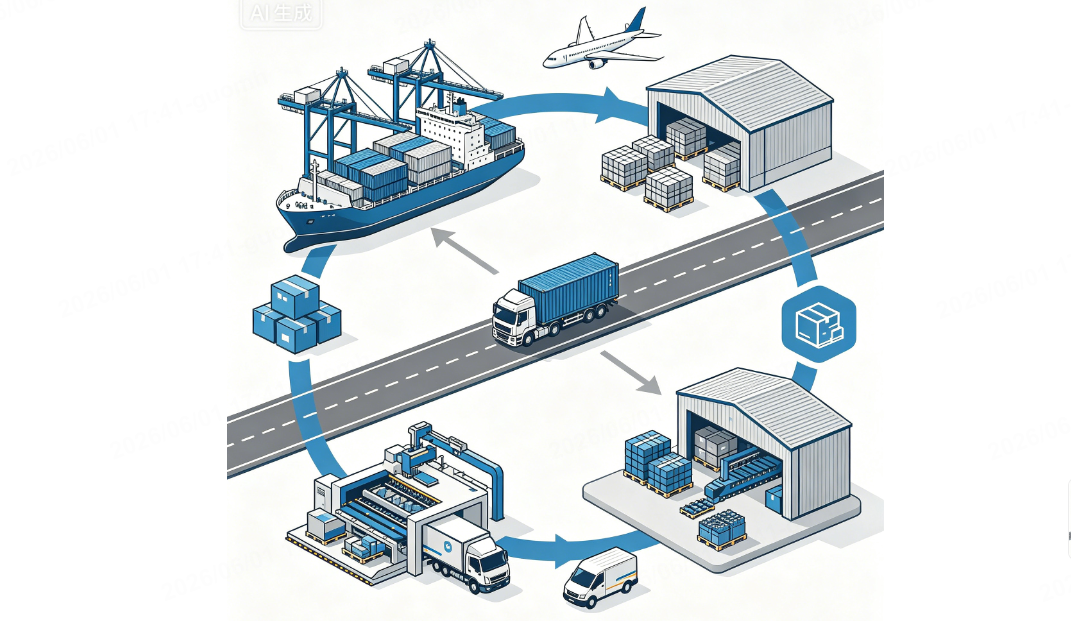
Step 3: Optimize logistics routing. Not all shipping routes are equal. Dry port integration—using inland logistics hubs to bypass congested seaports—can reduce transit times by 15-20 percent while lowering costs. Ensure your logistics partner has the network depth to offer multimodal options.
Step 4: Demand end-to-end visibility. Real-time tracking isn‘t enough. You need production updates, pre-shipment quality inspection reports, and live customs status—all integrated into a single dashboard. LooperBuy provides exactly this: from factory floor to client door, every step is transparent.
Step 5: Scale product diversity without multiplying vendors. A one-stop platform gives you access to 50+ B2B supply categories and 10,000+ vetted suppliers from a single interface. Whether you need industrial wiring, food packaging, electronic components, or custom manufacturing parts, you can source everything in one place.
Looking Ahead: The Future of Supply Chain Logistics Companies
The next five years will separate logistics providers from platform orchestrators. Gartner predicts that autonomous supply chains—combining AI-driven decision-making with human oversight—will become the competitive standard.
For B2B buyers, the implication is clear: choose partners who treat logistics as an integrated service, not a disconnected transaction. The companies that win in global sourcing will be those who consolidate procurement, demand transparency, and leverage platforms that bridge the gap between Chinese manufacturing excellence and worldwide distribution.
At LooperBuy, we‘ve built our entire model around this philosophy. One platform. Vetted suppliers. Integrated logistics. End-to-end visibility. It’s how supply chain logistics companies should operate—and how we help B2B buyers succeed.
Ready to optimize your global sourcing strategy? Visit LooperBuy to explore our supplier network, calculate all-in logistics costs, and start sourcing with confidence today.
Frequently Asked Questions
Q1: What is the difference between a traditional logistics provider and a one-stop B2B sourcing platform?
A traditional logistics provider only moves freight from point A to point B. A one-stop platform like LooperBuy handles the entire procurement lifecycle—supplier discovery, vetting, negotiation, quality inspection, logistics, customs clearance, and final delivery.
Q2: How do I know Chinese suppliers on LooperBuy are legitimate?
LooperBuy uses an 8-step verification process for every supplier on its platform, including factory audits, certification verification (ISO/CE), B2B order fulfillment history checks, and quality control protocol reviews.
Q3: Can LooperBuy handle small-batch B2B orders?
Yes. China’s manufacturing ecosystem supports both bulk and small-batch B2B orders. LooperBuy’s platform connects buyers to suppliers with flexible minimum order quantities across 50+ supply categories.
Q4: How does LooperBuy compare to Alibaba or other B2B marketplaces?
While traditional marketplaces connect you to suppliers, LooperBuy integrates logistics and procurement into a single workflow—including real-time cost calculators, dry port routing optimization, and end-to-end shipment visibility that most platforms do not offer.
Q5: Are there additional tariffs or duties when importing from China in 2026?
Tariff policies remain in flux, though the U.S. and China have agreed in principle to reciprocal tariff reductions covering USD 30 billion or more on each side. LooperBuy provides current duty estimates within its cost calculators and works with customs experts to ensure compliance.
Article Summary
This expert guide, written from the perspective of a sourcing strategist working with LooperBuy, examines how supply chain logistics companies are evolving in 2026’s fast-changing B2B landscape. Drawing on data from Deep Market Insights (USD 11.72 trillion global logistics market in 2025, 7.6% CAGR through 2031), FedEx (75% of B2B buyers would switch suppliers for better experience), and Gartner (94% of supply chain leaders deploying smart robotics), the article contrasts traditional logistics providers with integrated one-stop platforms. A real-world case study shows how a European wholesaler increased profit margins by 22% after switching to LooperBuy. The guide concludes with five actionable steps and a clear CTA for B2B buyers ready to optimize their China sourcing strategy.
References
- Deep Market Insights. (2026). Shipping and Logistics Market Size, Share & Growth Report | 2031. Retrieved from https://deepmarketinsights.com/report/shipping-and-logistics-market-research-report
- FedEx. (2026). These B2B Business Trends Are Defining 2026. Retrieved from https://newsroom.fedex.com/newsroom/global-english/these-b2b-business-trends-are-defining-2026
- Gartner. (2026). Gartner Highlights Three Building Blocks for Autonomous Supply Chain Future. Retrieved from https://www.gartner.com/en/newsroom/press-releases/2026-05-04-gartner-highlights-three-building-blocks-for-autonomous-supply-chain-future
- China Industrial Development Research Network. (2026). 2026 China Cross-border E-commerce Enters New Era of High-Quality Development. Retrieved from https://m.chinaidr.com/tradenews/254098.html
- LooperBuy Blog. (2026). Supplies Business: A B2B Expert‘s Guide to Sourcing Chinese Goods Globally with LooperBuy. Retrieved from https://blog.looperbuy.com/supplies-business-a-b2b-experts-guide-to-sourcing-chinese-goods-globally-with-looperbuy.html
Hot Tags
supply chain logistics companies, B2B sourcing platform China 2026, cross border logistics for B2B buyers, one stop procurement platform, China supplier verification process, global freight cost calculator, dry port shipping optimization, end to end supply chain visibility, China plus sourcing strategy 2026, LooperBuy B2B sourcing platform