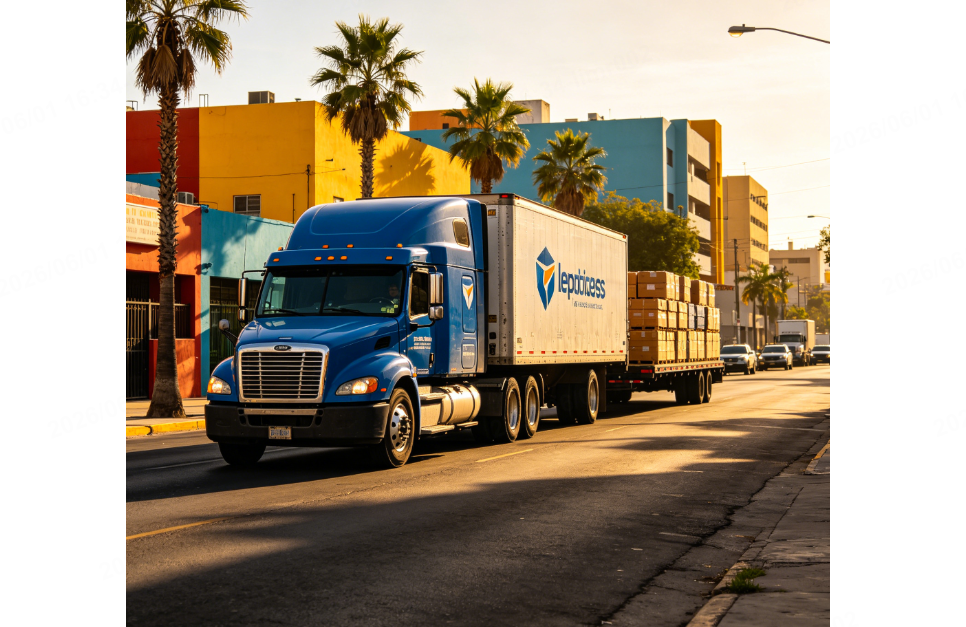
Imagine this: You‘ve just landed a major contract with a Mexican brand. The products are ready at your Chinese factory. But now comes the part that keeps you up at night—getting your goods from Shanghai to Mexico City on time, under budget, and through customs without a hitch.
Welcome to logistics in Mexico in 2026. The numbers are staggering. The Mexico freight and logistics market is estimated to reach USD 131.06 billion in 2026 and is projected to hit USD 170.39 billion by 2031, growing at a compound annual growth rate (CAGR) of 5.39%. The Mexican third-party logistics (3PL) sector alone is worth USD 25.51 billion this year, climbing steadily to USD 33.58 billion by 2031 with a 5.66% CAGR. And the courier, express, and parcel (CEP) market? That’s USD 2.93 billion in 2026, on its way to USD 3.92 billion by 2031.
Behind these numbers is a simple truth: Mexico is booming. And for B2B buyers sourcing from China, understanding this logistics landscape isn‘t just helpful—it’s mission-critical.
As an industry insider working with LooperBuy, a leading one-stop B2B sourcing platform, I‘ve helped global brands, wholesalers, and manufacturers navigate this exact challenge. From electronics to automotive parts, textiles to medical devices, the demand for Chinese goods in Mexico is surging. The bilateral trade volume between China and Mexico reached USD 1,093.8 billion in 2025, with China exporting USD 891.6 billion worth of goods to Mexico. That’s an enormous flow of products crossing oceans every single day.
But here‘s the challenge. Shipping goods from China to Mexico is only half the battle. What happens once your container arrives at Manzanillo—Mexico’s busiest port, which handled 3.89 million TEU in 2025—or Veracruz? How do you navigate customs, last-mile delivery, warehousing, and distribution across a country where 85% of freight still moves by road on aging highways? And how do you do all of this cost-effectively?
In this expert guide, I‘ll walk you through everything you need to know about B2B logistics in Mexico. You’ll learn the key market trends reshaping supply chains, the hidden opportunities (and risks) in cross-border shipping, and a step-by-step logistics playbook that helps you source from China with confidence using LooperBuy’s end-to-end platform.
Let‘s dive in.
Table of Contents
Why Logistics in Mexico Matters Right Now for Global B2B Sourcing
Three forces are colliding to make logistics in Mexico the hottest topic in global supply chains today.
Force One: Nearshoring is rewriting the global trade map.
Foreign direct investment (FDI) in Mexico surged to a record USD 21.4 billion in Q1 2025, a 5.4% increase from the same period in 2024. Global manufacturers are shifting production from Asia to Mexico to shorten lead times, reduce shipping costs, and minimize geopolitical risks. The Mexican government’s National Infrastructure Plan 2025—valued at MX$811 billion (USD 43.35 billion)—is pouring money into over 3,000km of new rail lines, highway upgrades, and port expansions. This creates unprecedented opportunities for B2B buyers sourcing from China to leverage Mexico as both a final market and a manufacturing hub.
Force Two: E-commerce is exploding, and logistics are struggling to keep up.
Online platforms like Mercado Libre, Amazon México, Temu, and Shein are driving a wave of digital retail. Mercado Libre boasts a staggering 97% penetration rate in Mexico’s online market. In 2025 alone, Mercado Libre announced a USD 3.4 billion investment in Mexico, while Amazon, Mercado Libre, and Geodis collectively committed USD 1.2 billion to expand logistics infrastructure in the State of Mexico, including new facilities in Lerma, Tultepec, and Tultitlan.
The result? Consumer delivery expectations have compressed to 24 hours or less in major cities (with e-commerce penetration surpassing 15% of total retail in urban centers). And that pressure is spilling over into B2B logistics, where just-in-time delivery is becoming the new baseline.
Force Three: Trade policies are changing the game.
Mexico has raised tariffs on imports from non-FTA countries—including China. As of August 2025, courier-imported goods valued under USD 2,500 from non-FTA nations now face a 33.5% duty (up from 19%). This has made direct-to-consumer cross-border shipping significantly more expensive, creating a massive competitive advantage for buyers who partner with platforms like LooperBuy that manage full-container loads and consolidated shipments through proper customs channels, minimizing duty exposure.
Bottom line: Logistics in Mexico is no longer just about moving boxes. It’s about strategic advantage. Companies that get it right will outpace competitors. Companies that don’t will get left behind.
The B2B Logistics Playbook: 5 Steps to Source from China and Ship to Mexico Like a Pro
Based on my experience working with LooperBuy’s global network, here is a proven step-by-step process for managing B2B logistics from China to Mexico.
Step 1: Understand the Shipping Options
Ocean freight remains the backbone of China-Mexico trade. Major ports in China (Shanghai, Ningbo, Shenzhen) connect to Mexican ports like Manzanillo, Lázaro Cárdenas, Veracruz, and Altamira. The journey typically takes 25–35 days depending on routes and carrier schedules. For time-sensitive B2B shipments, air freight offers delivery in 3–7 days at higher cost—ideal for urgent restocks, prototypes, or high-value goods.
- Use air freight for urgent deliveries, high-value electronics, medical supplies, or seasonal products where speed justifies the premium. It’s also excellent for sample orders and small-batch replenishments.
- Use sea freight for bulk orders, heavier products, large manufacturing equipment, and goods where cost efficiency is the primary goal. Ocean freight typically costs 80–90% less than air freight per kilogram for the China-Mexico route.
Step 2: Master Mexico’s Customs Clearance
Mexican customs (SAT) has been tightening enforcement. The Complemento Carta Porte 3.0 documentation rules require stricter cargo tracking and reporting. For B2B shipments from China, key considerations include:
- Tariff classification: Use correct HS codes to avoid costly reclassification. Mislabelling common products can add days to clearance and thousands in penalties.
- IMMEX program eligibility: If you‘re manufacturing in Mexico, the IMMEX program allows duty-free and VAT-free import of raw materials and components for re-export.
- General Import Tax (IGI): Temporary increases ranging from 5% to 50% apply to 544 tariff items, so it’s critical to verify product-specific rates before shipping.
Pro tip: LooperBuy‘s platform handles customs documentation and compliance for you, so you never face unexpected delays or surprise duty bills.
Step 3: Plan Your In-Country Logistics
Once cleared, how do goods reach their final destination? Mexico’s logistics network is highly road-dependent—85% of freight travels by truck. Port congestion (Manzanillo delays are currently raising logistics costs up to 20%) is forcing many B2B buyers to diversify entry points and carriers.
- Partner with reliable 3PL providers who know local routes and carrier options.
- Consolidate shipments where possible to reduce per-unit shipping costs and lower the total number of customs entries.
- Consider warehousing near major industrial zones like Monterrey, Querétaro, Mexico City, or Guadalajara to minimize last-mile delivery distances.
“iMile adopted a full-chain operations strategy built on deep optimization of its capacity network and technology stack. The result: average delivery time improved 25% year on year, with more than 90% of parcels now delivered within six days.”
— Rita Huang, Founder of iMile
Step 4: Build Security and Cargo Protection into Your Budget
Cargo theft remains a real concern in Mexico. Well-organized theft rings target high-value and easily resold cargo, forcing route deviations and convoy protocols that lift unit costs. Real-time GPS monitoring, geofencing, and sometimes armed escorts are becoming standard on vulnerable lanes. Factor these costs into your logistics budget—it‘s better to pay for security up front than to lose an entire container.
Step 5: Partner with a Platform That Does It All
This is where LooperBuy changes the game. Instead of juggling freight forwarders, customs brokers, warehousing partners, and last-mile carriers—each with their own invoices, timelines, and headaches—LooperBuy provides an integrated end-to-end B2B sourcing solution.
Here’s what that means for your business:
| Logistics Challenge | How LooperBuy Solves It |
|---|---|
| Finding reliable Chinese suppliers | Verified manufacturer network across all product categories |
| Managing customs clearance | Automated documentation + expert compliance support |
| Reducing shipping costs | Consolidated shipments + bulk freight rates |
| Tracking shipments globally | Real-time visibility from factory to final destination |
| Warehousing in Mexico | Partner 3PL network with facilities in key industrial hubs |
| Last-mile delivery | Optimized carrier selection for every region |
You focus on growing your business and serving your Mexican customers. LooperBuy handles everything from supplier discovery to doorstep delivery.
Industry Spotlight: Automotive Sector Leads the Logistics Surge
One sector tells the story better than any other. Automotive manufacturing captured 31.13% of Mexico’s freight brokerage services market in 2025. With automotive production expected to reach roughly USD 127.5 billion in 2025, the demand for cross-border component flows from China is skyrocketing.
Just-in-time manufacturing schedules require precision logistics: temperature-controlled shipping for sensitive electronics, guaranteed delivery windows for assembly line components, and bidirectional parcel flow for returns and repairs. LooperBuy’s platform integrates seamlessly with these demanding schedules, helping automotive suppliers manage inventory buffers, restock forecasts, and emergency shipments across the Pacific.
Real Feedback: What B2B Buyers Are Saying About China-to-Mexico Logistics
“We tried managing logistics ourselves for two years. Port delays, customs holds, missed delivery windows—it was a nightmare. LooperBuy took over everything from supplier sourcing to final delivery in Monterrey. We cut our shipping costs by 22% and our lead times by nearly two weeks. I wish we had found them earlier.”
— Carlos M., Industrial Equipment Importer, Mexico City
“The new tariff rules on cross-border shipments caught us completely off guard. One day our landed costs went up 19%, the next day 33.5%. LooperBuy restructured our entire supply chain around consolidated FCL shipments, and we‘re paying less now than before the tariff hike. Their customs team is worth every penny.”
— David K., E-commerce Wholesaler, Guadalajara
“What surprised me most was the transparency. We can log into LooperBuy and see exactly where our shipment is—whether it’s sitting at Shanghai port, crossing the Pacific, or sitting in customs at Manzanillo. No more guessing games. That peace of mind is priceless.”
— Sarah W., Apparel Brand Owner, Querétaro
The Bottom Line: Don’t Let Logistics Be Your Bottleneck
The Mexico logistics market is growing fast. Nearshoring is creating unprecedented opportunities. E-commerce is compressing delivery windows. Trade policies are rewarding smart, compliant shippers and punishing those who cut corners.
But here‘s the truth: You don’t have to navigate this alone.
LooperBuy combines global sourcing power (direct access to China‘s vast manufacturing ecosystem) with local logistics expertise (customs compliance, warehousing, and last-mile delivery across Mexico) into a single, seamless B2B platform. Whether you’re a brand owner launching a new product line, a wholesaler expanding into Mexico, or a manufacturer relocating supply chains closer to North American markets, LooperBuy delivers the speed, savings, and peace of mind you need to compete.
Ready to take your Mexico logistics strategy to the next level? Visit LooperBuy today to start sourcing smarter, shipping faster, and scaling with confidence.
Disclaimer
Market data and forecasts cited in this article are based on industry research reports and publicly available sources as referenced below. While every effort has been made to ensure accuracy, market conditions, trade policies, and regulatory frameworks are subject to change. Readers should conduct their own due diligence or consult with qualified professionals before making business or logistics decisions.
References
- Research and Markets. (2026). Mexico Courier, Express, and Parcel (CEP) – Market Share Analysis, Industry Trends & Statistics, Growth Forecasts (2026-2031). View Report
- Research and Markets. (2026). Mexico Freight and Logistics – Market Share Analysis, Industry Trends & Statistics, Growth Forecasts (2026-2031). View Report
- Research and Markets. (2026). Mexico 3PL – Market Share Analysis, Industry Trends & Statistics, Growth Forecasts (2026-2031). View Report
- Globe Newswire. (2026, January 23). Mexico 3PL Market Worth $25.51 Billion in 2026; Set to Reach $33.58 Billion by 2031 as Near-shoring Boom Revamps Mexico‘s Role in North American Supply Chains. Read Article
- 华经产业研究院. (2026, January 28). 2025年中国与墨西哥双边贸易额与贸易差额统计. View Data
- Mexico Business News. (2025, September 16). Amazon, Mercado Libre, Geodis Announce US$1.2 Billion Investment. Read Article
- IndexBox. (2025, June 2). Mexico‘s FDI Hits Record $21.4 Billion in Q1 2025, Fueled by Nearshoring. Read Article
- KR Asia. (2025, November 5). How iMile Cracked Mexico’s Logistics, and What It Means for Global E-commerce. Read Article
- Mexico Business News. (2025, September 8). How Can Logistics Unlock Mexico’s Nearshoring Potential? Read Article
- Mexico Business News. (2026, February 17). Logistics Sector Shifts to Verticality Amid Land Scarcity. Read Article
- Mexico Business News. (2026, February 26). Port Volumes Remains Flat, But Container Trade Gains Momentum. Read Article
- Upseller. (2025, August 18). 墨西哥6大本土电商平台,2025入驻指南. Read Article
- Globe Newswire. (2026, January 21). Mexico Freight and Logistics Market 2026-2031 – CEP Boom and Multimodal Expansion Propel Mexico‘s Logistics Sector Forward. Read Article
Frequently Asked Questions (FAQ)
Q1: How long does shipping from China to Mexico typically take for B2B orders?
A: Ocean freight from major Chinese ports (Shanghai, Ningbo, Shenzhen) to Mexican ports (Manzanillo, Lázaro Cárdenas, Veracruz) typically takes 25–35 days. Air freight offers delivery in 3–7 days for urgent B2B shipments. Door-to-door delivery adds another 3–7 days depending on final destination and customs clearance.
Q2: What is the IMMEX program and how can it benefit my B2B imports?
A: IMMEX (Manufacturing, Maquiladora and Export Services Industry program) allows companies manufacturing in Mexico to import raw materials, components, and equipment duty-free and VAT-free for re-export. This can significantly reduce landed costs and improve cash flow for B2B buyers establishing production operations in Mexico.
Q3: What are the main challenges of logistics in Mexico for B2B buyers?
A: Key challenges include port congestion (Manzanillo delays currently add up to 20% to logistics costs), cargo theft (requiring GPS tracking and sometimes armed escorts), aging road infrastructure (85% of freight moves by truck on highways needing USD 18.9 billion in upgrades), and complex customs documentation under Complemento Carta Porte 3.0 rules.
Q4: How has Mexico‘s new tariff policy affected imports from China?
A: As of August 2025, courier-imported goods under USD 2,500 from non-FTA countries (including China) face a 33.5% duty (up from 19%). This has made direct small-package shipping significantly more expensive, creating a strong advantage for B2B buyers using full-container loads and consolidated shipments managed through proper customs channels.
Q5: How can LooperBuy help my business with Mexico logistics?
A: LooperBuy provides a one-stop B2B sourcing platform that connects you with verified Chinese suppliers, manages customs documentation and compliance, consolidates shipments for lower freight rates, provides real-time tracking from factory to destination, and partners with 3PL providers for warehousing and last-mile delivery across Mexico. Everything is integrated into a single dashboard.
Article Synopsis: This expert guide explores logistics in Mexico for B2B buyers sourcing from China in 2026. Backed by the latest market data (freight and logistics market reaching USD 131.06 billion; 3PL market at USD 25.51 billion; China-Mexico trade exceeding USD 1,093 billion), it covers nearshoring trends, e-commerce logistics pressures, tariff changes, customs compliance, cargo security, and a practical 5-step playbook. Includes real customer feedback and showcases how LooperBuy‘s one-stop platform simplifies cross-border logistics from supplier sourcing to doorstep delivery.
Hot Tags: logistics in mexico, china to mexico shipping, mexico b2b sourcing, mexico customs clearance, near shoring mexico 2026, mexico freight market, looperbuy b2b platform, china mexico trade 2026, mexico 3pl services, cross border logistics mexico

-4-700x490.png)