Learn how to buy products directly from Chinese manufacturers without losing money. This expert guide covers supplier vetting, samples, pricing, quality control, logistics, and how Looperbuy enables low‑risk, no‑inventory sourcing for global B2B sellers.
Buying directly from manufacturers in China can transform your margins, product quality, and supply chain control—if you know what you’re doing. As a B2B procurement strategist who has helped hundreds of global sellers source from China, I’ll walk you through a practical, low‑risk framework that works in 2026, and show you when it makes sense to lean on a one‑stop platform like Looperbuy instead of going it alone. [global.lianlianpay]
Table of Contents
Why Buying Direct from Manufacturers Matters in 2026
Direct purchasing has moved from “advanced strategy” to “basic survival” for serious B2B sellers. Instead of paying layers of middlemen, you can work directly with factories to secure better prices, higher consistency, and more control over customizations. [trydecoding]
Key advantages include: [baysourceglobal]
– Higher margins by cutting out traders and wholesalers.
– Better product control (materials, specs, packaging, compliance).
– Faster feedback loops between your customers and the factory floor.
However, direct sourcing also exposes you to quality risks, communication breakdowns, payment issues, and logistics complexity—especially if you’re buying from China for the first time. That’s why many professional sellers increasingly work through specialized procurement platforms like Looperbuy, which combine direct‑from‑factory pricing with quality control, payment protection, and logistics management. [blog.looperbuy]
Core Keywords and Who This Guide Is For
From conversations with manufacturers, cross‑border sellers, and marketplace brands, this guide targets: [gushwork]
– Primary keyword: buy products directly from manufacturers
– Supporting keywords: buy direct from China suppliers, sourcing from Chinese manufacturers, B2B procurement platform, factory direct sourcing, no‑inventory dropshipping from China
This article is written for: [wise]
– E‑commerce sellers (Amazon, Shopify, TikTok Shop, etc.).
– Wholesale and retail buyers.
– Brand owners and startups testing new product lines.
Step 1: Define Clear Product and Quality Requirements
Before you even open a sourcing platform, you need a clear product brief. Most sourcing failures I’ve seen started because the buyer simply said “I want this cup” instead of specifying every critical detail. [baysourceglobal]
At minimum, define: [wise]
– Exact materials and grade (e.g., 304 stainless steel, BPA‑free PP).
– Dimensions and tolerances (size, weight, capacity, thickness).
– Performance requirements (load capacity, waterproof rating, battery life).
– Compliance/standards (CE, FCC, ROHS, FDA, ASTM, etc.).
– Packaging requirements (retail packaging, barcodes, inserts, language).
Expert tip: Turn customer complaints and reviews from your existing listings into quality checkpoints. If buyers complained about “thin fabric” or “weak zippers,” specify GSM, yarn count, zipper brand, or test cycles in your brief. [trydecoding]
Step 2: Where to Find Reliable Manufacturers in China
Most global buyers start with large B2B marketplaces or trade shows, then narrow down to a shortlist of factories. [statrys]
Common sourcing channels include: [statrys]
– Online platforms (e.g., Global Sources, Alibaba, specialized B2B platforms).
– Trade shows (Canton Fair, Global Sources shows, sector‑specific expos).
– Industry referrals and local business networks.
– Sourcing agents or procurement platforms like Looperbuy that pre‑vet suppliers in your category. [global.lianlianpay]
The challenge is not finding suppliers, but filtering out traders, unreliable factories, and high‑risk partners. [baysourceglobal]
Step 3: How to Vet Chinese Manufacturers Like an Expert
This is where real experience shows. In my own projects, I use a three‑layer vetting process: paper check, capability check, and risk check. [statrys]
3.1 Paper Check: Basic Legitimacy
Ask for and verify: [wise]
– Business license and registration details.
– Factory address (look for a real, physical industrial address, not a PO box).
– Certifications (ISO, product compliance certificates, audit reports).
– Client references or export records.
3.2 Capability Check: Can They Actually Deliver?
Evaluate whether the factory is a good fit rather than just “cheap.” [baysourceglobal]
– Production lines and core product categories.
– Monthly and peak capacity vs. your forecasted demand.
– In‑house vs. outsourced processes (e.g., in‑house injection vs. outsourced printing).
– Quality control systems (incoming material inspection, in‑process checks, final AQL).
3.3 Risk Check: Financial & Operational Risk
Be wary of: [statrys]
– Extremely low prices vs. market average (often a red flag).
– Poor communication, vague answers, or refusal to share documents.
– Frequent staff changes or contact person turnover.
– No track record in your target markets.
A platform like Looperbuy essentially pre‑does much of this work—factories are screened, evaluated, and continuously monitored for quality, on‑time performance, and communication reliability. [blog.looperbuy]
Suggested table: Supplier vetting cheat sheet
| Checkpoint | What to Ask For | Red Flag Example |
| Business legitimacy | License, full legal name, tax ID | No official documents shared |
| Factory capability | Photos, machinery list, capacity data | Very broad product range, no focus |
| Quality control | QC procedures, AQL standards, reports | “We check everything 100%, don’t worry” |
| Market experience | Main export markets, client references | No stable clients, no export experience |
| Communication & service | Response speed, clarity, professionalism | Slow replies, pressure to pay quickly |
[wise]
Step 4: Requesting Samples and Running a Proper Pilot
Ordering samples is not optional when buying direct from manufacturers. It’s your only real window into how the factory thinks about quality. [baysourceglobal]
Best practices for samples: [wise]
1. Send a detailed brief (including drawings or reference photos).
2. Request 2–3 rounds if necessary: a first concept, then a refined version based on feedback.
3. Test samples in real‑world usage scenarios similar to your customers.
4. Document every issue with photos and clear comments—this becomes part of your QC checklist.
Many Looperbuy users send samples to the platform’s local team for independent inspection before mass production, which significantly reduces misalignment and rework. [global.lianlianpay]
Step 5: Negotiating Terms, Pricing, and Incoterms
Price is important, but long‑term success comes from sustainable terms—not the cheapest quote. [baysourceglobal]
Key elements to negotiate: [wise]
– Unit price by quantity tiers.
– Minimum order quantity (MOQ) and flexibility for first order.
– Payment terms (deposit vs. balance, methods, currency).
– Lead times for sampling and mass production.
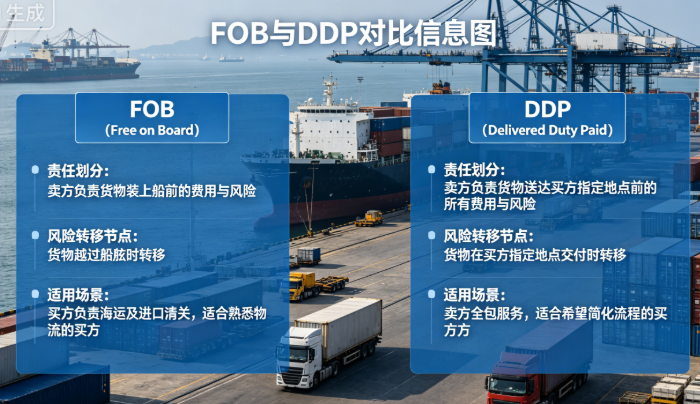
– Incoterms (EXW, FOB, CIF, DDP, etc.) and clear handoff points.
For many overseas buyers, navigating international payments, currency conversion, and cross‑border fees is complex and risky. Platforms like Looperbuy bundle sourcing, payments, and logistics, letting you pay in a familiar way while they handle factory payments and FX on the back end. [blog.looperbuy]
Step 6: Quality Control and Pre‑Shipment Inspections
The most common nightmare scenarios—entire containers of defective goods, wrong colors, inconsistent sizes—almost always trace back to weak quality control. [baysourceglobal]
Build a simple but strict QC process: [wise]
– Golden sample: Approve one physical sample as the standard for mass production.
– Written quality specification: Tie your spec sheet to production and inspection.
– In‑process checks: Spot‑check during production for critical issues.
– Pre‑shipment inspection: Third‑party or platform‑based inspection before final payment.
Looperbuy‑style platforms typically maintain local quality teams and standardized inspection checklists, which is especially useful if you don’t yet have a QC partner in China. [global.lianlianpay]
Step 7: Logistics, Customs, and Fulfilment Options
Shipping from China is no longer just about choosing between sea and air. For B2B and e‑commerce sellers, the bigger question is: Are you prepared to manage the entire logistics chain yourself—or should you use a service that bundles it? [buymadeeasy]
Typical logistics choices: [wise]
– Sea freight (FCL/LCL): Lower cost, longer lead time.
– Air freight: Faster, higher cost, suitable for high‑value/urgent goods.
– Courier/express: Small loads, samples, urgent replenishments.
– DDP services or fulfillment‑style solutions: All‑in‑one freight, customs, and sometimes last‑mile delivery.
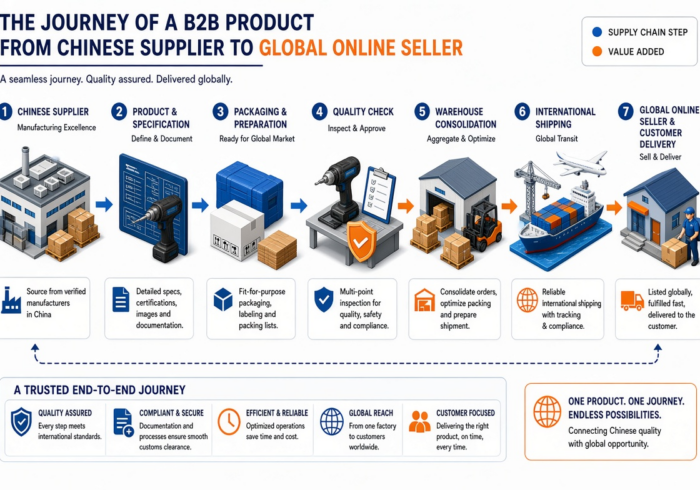
Looperbuy’s model focuses on one‑stop procurement and dropshipping, allowing you to: [blog.looperbuy]
– Purchase from multiple Chinese suppliers.
– Consolidate goods in their warehouse.
– Ship directly to global customers or your own facilities, without you handling customs or warehousing.
This is particularly powerful for D2C brands and marketplace sellers who want to operate without heavy inventory or self‑managed logistics. [global.lianlianpay]
When You Should NOT Buy Direct from Manufacturers on Your Own
In some scenarios, going directly to factories without a local partner or platform is more risk than reward: [statrys]
– You’re launching your first product and don’t understand import or compliance rules.
– Your volumes are too small to be attractive to top‑tier factories.
– You can’t afford to fly to China or hire independent QC.
– You don’t have experience with international payments, FX risk, or trade terms.
In these cases, using a B2B procurement platform like Looperbuy lets you still enjoy factory‑direct pricing, but with: [blog.looperbuy]
– Centralized supplier sourcing and negotiation.
– Consolidated shipping and customs handling.
– Reduced need for your own staff, warehousing, or logistics infrastructure.
How Looperbuy Reduces Sourcing Risk and Operational Cost
As an online B2B purchasing platform focused on overseas merchants, Looperbuy is built around a simple promise: help you buy Chinese products directly and safely, while eliminating unnecessary inventory, warehousing, and logistics overhead. [global.lianlianpay]
From a procurement and UX perspective, the key benefits include: [blog.looperbuy]
– Pre‑vetted supplier network: Factories filtered by reliability, export experience, and performance.
– One‑stop workflow: Product discovery, quotations, payments, quality control, and logistics in one interface.
– No‑inventory or low‑inventory operation: Options for dropshipping or consolidated shipping instead of bulk warehousing.
– Simplified payments: Localized payment options while Looperbuy handles cross‑border settlements.
For many B2B sellers, this hybrid approach—factory‑level pricing with platform‑level security and logistics—is more sustainable than trying to build an entire sourcing and operations team from scratch. [buymadeeasy]
Practical Mini‑Case: Scaling a Category Without Warehouses
Imagine a mid‑size Amazon/Shopify seller who started with simple home goods sourced via local distributors. As they gained traction, they faced three constraints: thin margins, slow product updates, and no control over quality or branding. [trydecoding]
By switching to direct sourcing through a platform like Looperbuy, they: [global.lianlianpay]
– Identified 3–5 core factories in their niche instead of juggling dozens of distributors.
– Launched new SKUs faster because sampling, negotiation, and logistics were centralized.
– Reduced dead stock and storage fees by using on‑demand shipments and smaller batches.
This is the kind of transformation direct‑from‑manufacturer sourcing can enable when combined with the right infrastructure. [trydecoding]
UX Checklist: Making Your Sourcing Process Sustainable
Beyond supplier selection, your internal process needs to be structured and repeatable. [apiko]
Create internal templates for:
– Product requirement document (PRD) with specs, target price, and compliance.
– Supplier evaluation sheet with standardized scores.
– Sample review form including test steps and customer‑centric checks.
– Order and shipment tracker integrated with your B2B platform or ERP.
Platforms like Looperbuy reduce friction by embedding many of these steps into their interface (requests, quotes, orders, tracking), so your team can follow a consistent workflow without building tools from scratch. [buymadeeasy]
Start Your First Low‑Risk Direct Sourcing Project
If you’ve only ever bought from local distributors or wholesalers, now is the time to test one controlled direct‑from‑China project. [trydecoding]
You can:
1. Pick a product you already sell with decent demand.
2. Translate your current complaints and issues into a tighter spec.
3. Use Looperbuy to source 2–3 factory options, compare quotes, and order samples. [blog.looperbuy]
4. Run a small test order using the platform’s quality control and logistics support.
You’ll quickly see whether direct sourcing—and possibly no‑inventory operation via dropshipping or consolidated shipments—can become your new standard. [global.lianlianpay]
FAQs: Buying Directly from Manufacturers in China
1. Is buying directly from Chinese manufacturers always cheaper?
Not always. While you avoid middlemen, you also take on sampling, QC, compliance, and logistics costs. For smaller volumes, a platform or hybrid model can be more cost‑effective overall. [baysourceglobal]
2. How many suppliers should I work with for a single product?
For most SKUs, start with 2–3 qualified factories in testing, then narrow down to 1–2 long‑term partners to gain better pricing and priority in production. [baysourceglobal]
3. Do I need to visit factories in person?
Visiting is ideal for large, long‑term projects, but not mandatory for smaller or early‑stage orders if you use proper documentation, third‑party or platform‑based inspections, and clear contracts. [statrys]
4. Can I do direct sourcing if I don’t understand international logistics?
Yes, if you work with a partner that bundles sourcing, payments, and logistics, such as Looperbuy, which can handle freight and customs while you focus on product and sales. [buymadeeasy]
5. What’s the biggest mistake new buyers make when sourcing from China?
Most new buyers either focus only on the lowest price or skip detailed specifications and written agreements. This leads to quality issues, delays, and disputes that are much more expensive than negotiating properly at the beginning. [statrys]
References
1. Wise – *Sourcing from China: A Guide to Finding Reliable Suppliers*[wise]
2. Baysource Global – *How the Experts are Sourcing from China*[baysourceglobal]
3. Statrys – *China Sourcing Agent Guide 2026: How to Find Reliable …*[statrys]
4. Looperbuy – *How to Buy Direct from China Suppliers: A Complete Guide to Cutting Out Middlemen*[blog.looperbuy]
5. LianLian Global – *Looperbuy Product Page*[global.lianlianpay]
6. Gushwork – *SEO for Manufacturers: A Comprehensive Guide*[gushwork]
7. Decoding – *SEO for Manufacturers: Complete Guide to Ranking in 2026*[trydecoding]
8. BuyMadeEasy – *Optimizing B2B Purchases: A Complete Guide for Businesses* [buymadeeasy]
9. Apiko – *How to Optimize the Procurement and Sourcing Process On Your B2B Marketplace*[apiko]
10. Precoro – *Procurement Optimization Guide: Best Practices & Strategies*[precoro]