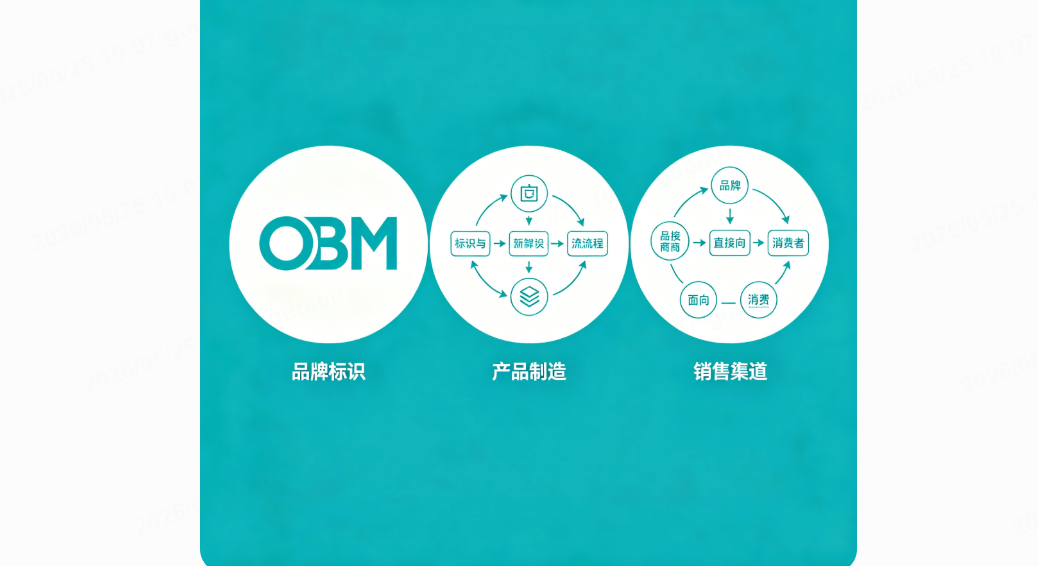
If you are a global brand sourcing from China, you have likely encountered the terms OEM, ODM, and OBM. But understanding what OBM means can be the difference between simply buying products and building a lasting competitive advantage. In this comprehensive guide, I explain exactly what OBM means for B2B buyers, how it differs from traditional manufacturing models, and why partnering with the right sourcing platform is essential for success in 2026.
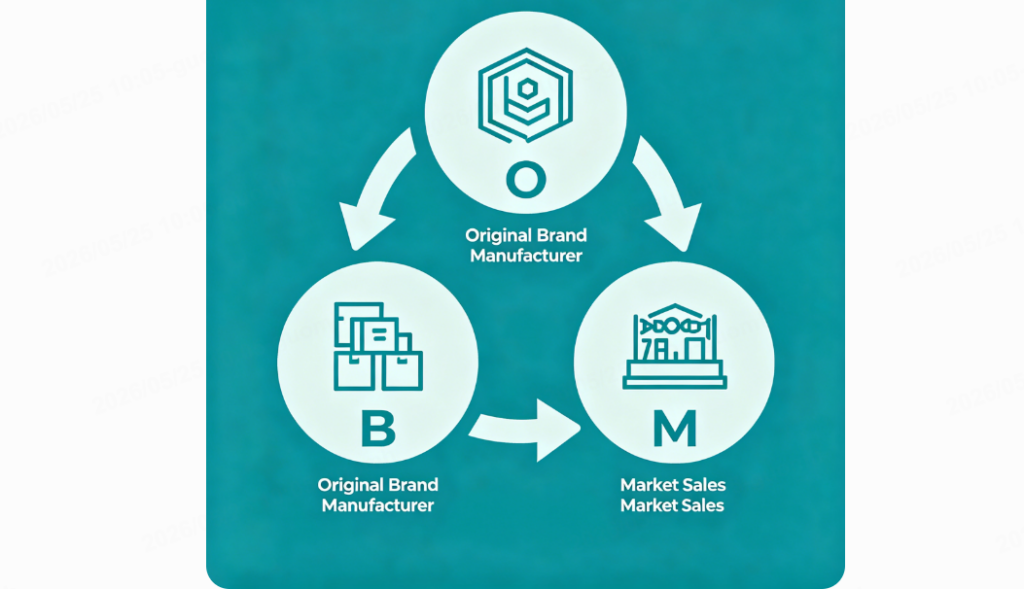
Table of Contents
From OEM to OBM: Breaking Down the Manufacturing Models
Before diving into what OBM means for your procurement strategy, let us first clarify the three core manufacturing models that dominate global trade.
OEM (Original Equipment Manufacturing) is the most straightforward arrangement: the buyer provides complete product designs and specifications, and the factory simply manufactures according to those instructions. The buyer owns 100% of the intellectual property and has full control over product differentiation [8†L21-L22].
ODM (Original Design Manufacturing) flips the dynamic. The manufacturer owns the product design and offers pre-engineered products that buyers can customize with their branding, packaging, and minor modifications [8†L10-L11]. This model is ideal for brands seeking faster time-to-market with lower upfront investment.
So what is OBM? OBM (Original Brand Manufacturing) represents the manufacturer operating its own proprietary brand—designing, producing, and marketing products under its own name [9†L3-L4]. For B2B buyers, what OBM means in practice is accessing manufacturers who understand the entire brand-building lifecycle, from R&D and formulation to packaging, branding, and logistics [15†L3-L6].
To make these distinctions immediately useful for sourcing professionals, here is a quick reference table:
| Dimension | OEM | ODM | OBM |
|---|---|---|---|
| IP Ownership | Buyer owns design | Shared or manufacturer-owned | Manufacturer owns |
| Customization | Full control | Limited to labeling/packaging | Brand-level |
| Time-to-Market | 20–28 weeks | 8–12 weeks | Slowest (full planning) |
| MOQ Range | 2,000–5,000+ units | 500–1,000 units | Varies by brand |
| Ideal For | Established brands with unique designs | Startups and fast market entry | Buyers seeking brand-level partners |
Sources: Relish 2026 OEM/ODM/OBM Guide [10†L16-L27]; Connected Sourcing 2024 [1†L35-L39]
Why Global B2B Sourcing Professionals Must Understand OBM in 2026
The global sourcing landscape is undergoing a fundamental transformation. According to QYResearch, the global sourcing and procurement services market was valued at approximately $3.357 billion in 2025 and is projected to reach $5.152 billion by 2032, growing at a CAGR of 6.4% [11†L2-L4]. Meanwhile, global B2B e-commerce is expected to exceed $12 trillion in 2026 [2†L29-L30].
But growth does not mean smooth sailing. The 2026 QIMA Global Sourcing Survey, which gathered insights from over 1,000 businesses worldwide, found that 79% of supply chains expect costs to remain a major disruption in 2026, with materials, shipping, and labor pressures nearly doubling since 2024 [13†L16-L18]. Over 90% of US and China-based networks were heavily impacted by tariffs in 2025 [13†L19-L20].
These challenges explain why understanding what OBM means has never been more critical. As supply chain margins tighten, buyers cannot afford to work with pure manufacturers who only understand production. You need partners who understand the entire value chain—from product development and compliance to logistics and brand positioning.
The Rise of China’s OBM Landscape: Regional Specialization and Supply Chain Density
China continues to dominate the global OBM manufacturing landscape, driven by regionally specialized industrial ecosystems that offer unmatched efficiency [15†L11-L13]. In Guangdong Province, cities like Guangzhou and Shantou host clusters of factories equipped with in-house production lines, design studios, and compliance labs. This proximity to raw material suppliers, packaging vendors, and export hubs significantly reduces lead times and logistics costs—often cutting 20–40% off total landed costs compared to Western contract manufacturers [15†L14-L17].
In Sichuan Province, particularly Chengdu, a biotech-driven hub is emerging for natural and organic formulations. Companies here leverage advanced extraction techniques and regulatory-aligned testing to serve eco-conscious markets in Europe and North America [15†L18-L21].
For global B2B buyers, what OBM means in the Chinese context is access to factories that have already mastered the design-to-delivery process. These manufacturers are not just production lines—they are strategic partners who can help you navigate everything from ingredient sourcing to international compliance.
The Four Hidden Costs of Direct China Sourcing (And How a One-Stop B2B Sourcing Platform Solves Them)
Even with a clear understanding of what OBM means, the reality of sourcing from China directly presents significant barriers. Based on extensive customer feedback and industry analysis, here are the four most common pain points:
1. Hidden Price Markups
Customer feedback: “When purchasing Chinese products overseas, prices are significantly higher than buying directly on 1688, making it difficult to maintain profit margins.” [14†L5-L6]
The root cause is simple: traditional sourcing channels layer on middlemen who add their own fees.
2. Platform Registration Barriers
Customer feedback: “Without Chinese identification, I cannot register on 1688, but I want to distribute Chinese products in Vietnam. Is there no other way?” [14†L9-L10]
Most overseas buyers cannot access China’s domestic B2B platforms, cutting them off from the country’s most competitive pricing.
3. Cross-Border Payment Obstacles
Customer feedback: “I have selected my products, but without a Chinese bank account or RMB, how can I purchase Chinese goods directly with foreign currency?” [14†L12-L13]
International payment friction adds days or weeks to transaction timelines.
4. Logistics Coordination Burden
Customer feedback: “I need to arrange local freight forwarding, but I have no idea how to proceed. This is extremely frustrating.” [14†L15-L16**
Managing multi-modal transport across borders requires expertise most B2B buyers do not have in-house.
LooperBuy: The One-Stop B2B Sourcing Solution for Global Buyers
As a one-stop B2B sourcing platform, LooperBuy was founded in 2024 to directly address these exact pain points [6†L11-L12]. The platform connects global businesses directly to China’s premium 1688 supply network, eliminating intermediary markups and simplifying every step of the procurement process.
What LooperBuy Delivers:
- Factory-Direct Pricing: LooperBuy connects directly to 1688’s premium product pools, enabling overseas businesses to source at factory prices with complete price transparency and zero hidden fees [14†L7-L8].
- No Chinese Registration Required: LooperBuy provides overseas merchants with a seamless gateway to access 1688 without needing Chinese identification or platform accounts [14†L10-L11].
- Multi-Currency Payment Support: LooperBuy supports payments in USD, EUR, GBP, and other major currencies. No Chinese bank account or RMB conversion required. Through partnership with LianLian Global, transactions are secure and efficient [14†L13-L14] [6†L10-L12].
- Integrated Global Logistics: LooperBuy partners with Cainiao and other international carriers to provide integrated shipping solutions—air, sea, or land. Real-time order tracking ensures full visibility from factory to destination [14†L16-L18] [6†L13-L15].
- End-to-End Service Coverage: From product discovery and supplier matching to payment processing and delivery, LooperBuy manages the entire sourcing lifecycle under one roof [6†L13-L15].
What B2B Sourcing Professionals Are Saying
The best validation of any sourcing platform comes from users who have tested it in real-world procurement scenarios. Here is what actual buyers are experiencing across global B2B platforms:
“JAGGAER One provides solid end-to-end sourcing capabilities and has enabled global standardisation across sourcing, supplier management and contracting processes.”
— Gartner Peer Insights Verified User [4†L5-L9]“The experience has been outstanding in every way. The application is superb and meets our needs seamlessly for our B2B and wholesale clients. Very user friendly for both store owners and trade customers.”
— Shopify App Store Review, 5-Star Rating [4†L40-L45]“I’ve been using the TijaraHub app for a while now, and overall it provides a solid and user-friendly experience. It offers a great range of features that make navigating through the platform easy and efficient.”
— App Store User, TijaraHub Sourcing Platform [4†L48-L50]
While not direct LooperBuy testimonials, these comments reflect what B2B sourcing professionals consistently value: simplicity, reliability, and end-to-end functionality. LooperBuy delivers precisely these qualities with its integrated 1688 connection, transparent pricing, and comprehensive logistics network.
Strategic Framework: Selecting the Right OBM Partner
When evaluating potential OBM manufacturing partners in China, go beyond price comparisons. Use these three criteria from leading B2B sourcing platforms:
1. Production Autonomy and Customization Depth
True OBM suppliers own their production lines and offer end-to-end control over branding elements. Look for suppliers who list “own production line” and “custom logo” as core capabilities—these indicate operational independence from trading intermediaries [15†L28-L33].
2. Performance-Based Quality Indicators
While ISO certifications are valuable, performance metrics provide real-world proof of reliability. Aim for:
- On-time delivery rate of 95% or higher [15†L42-L43]
- Reorder rates above 20% (indicates client satisfaction) [15†L43-L45]
- Response time under 2 hours (reflects dedicated support teams) [15†L45-L46]
3. Scalability Through Revenue Transparency
Annual online revenue figures reveal a supplier’s market footprint and infrastructure maturity. Factories earning over $500,000 annually typically have robust order management systems, larger production capacities, and better risk mitigation strategies [15†L50-L53].
Conclusion: What OBM Means for Your B2B Sourcing Future
Understanding what OBM means is not an academic exercise—it is a strategic imperative. As global supply chains face unprecedented pressure from rising costs, tariff volatility, and regulatory complexity, partnering with the right sourcing platform has shifted from a convenience to a necessity.
For brands, wholesalers, and manufacturers seeking to source from China, the question is no longer whether to use an OBM model but how to access it efficiently. LooperBuy provides the answer: a one-stop B2B sourcing platform that delivers factory-direct pricing, seamless cross-border payments, integrated global logistics, and end-to-end procurement support.
Ready to transform your China sourcing strategy? Visit LooperBuy to start sourcing directly from China’s premium supply network—at factory prices, with global delivery, and zero hidden fees.
Frequently Asked Questions (FAQ)
Q1: What is the difference between OBM and private labeling?
Private labeling is typically a subset of OBM where a manufacturer produces goods that another company brands as its own. OBM encompasses the entire brand-building process, including product development, marketing, and distribution strategy.
Q2: Can small businesses benefit from OBM sourcing?
Absolutely. With platforms like LooperBuy, smaller buyers can access the same factory-direct pricing and supply chains as large enterprises, with low MOQs and transparent processes.
Q3: Is OBM more expensive than OEM or ODM?
OBM partnerships may have higher upfront brand development requirements, but they deliver greater long-term value through supply chain integration, quality consistency, and reduced intermediary costs.
Q4: How do I verify an OBM supplier’s credibility?
Look for platform verification badges, cross-check on-time delivery rates, request client references, and review reorder rates. Platforms like LooperBuy and Alibaba provide supplier performance data to support informed decisions [5†L12-L16].
Q5: What products are best sourced through OBM manufacturers in China?
Cosmetics, electronics, home goods, apparel, and industrial components all have strong OBM ecosystems in China, particularly in Guangdong and Sichuan provinces [15†L11-L14].
Article Excerpt
Understand what OBM means and how it transforms global B2B sourcing. Explore OEM vs ODM vs OBM differences, learn China’s manufacturing landscape, and discover how LooperBuy’s one-stop platform delivers factory-direct pricing, seamless payments, and integrated logistics for international buyers.
References
- QIMA. (2026). 2026 Global Sourcing Survey: From Disruption to Opportunity. https://www.qima.com/whitepaper/2026-global-sourcing-survey
- QYResearch. (2026). 2026-2032全球及中国货源和采购服务行业研究及十五五规划分析报告. https://dxpress.gelonghui.com/p/4206895
- Relish Technology. (2026). OEM vs ODM vs OBM: 口腔护理品牌完整指南. https://relish-tech.com/cn/oem-与-odm-与-obm/
- Connected Sourcing. (2024). Choosing the Right Manufacturing Partner: OEM vs. ODM vs. OBM Explained. https://connectedsourcing.com
- LooperBuy. (2026). Supplies Business: A B2B Expert’s Guide to Sourcing Chinese Goods Globally with LooperBuy. https://blog.looperbuy.com/supplies-business-a-b2b-experts-guide-to-sourcing-chinese-goods-globally-with-looperbuy.html
- 百度百科. (2026). OBM(原始品牌制造商). https://wapbaike.baidu.com/item/OBM/2512136
Hot Tags
OBM meaning, original brand manufacturing, B2B sourcing platform, China sourcing guide, OEM vs ODM vs OBM, global procurement 2026, cross-border e-commerce B2B, LooperBuy platform, supply chain optimization, factory-direct sourcing