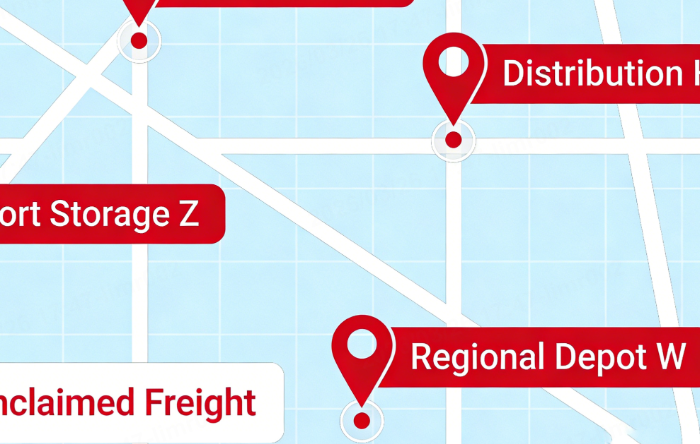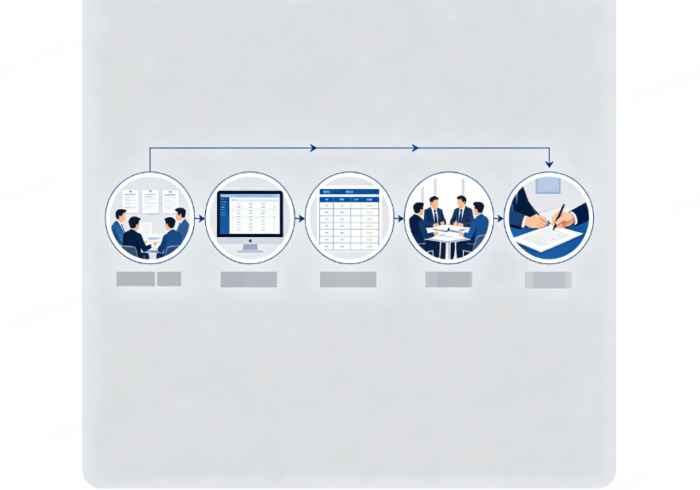
Choosing the right path to bring your products to market is as critical as the products themselves. Whether you are a brand owner, wholesaler, or manufacturer, your distribution channel strategy dictates your market reach, brand image, and bottom line. Among the various channel strategies, what is exclusive distribution, and when should it be your top choice?
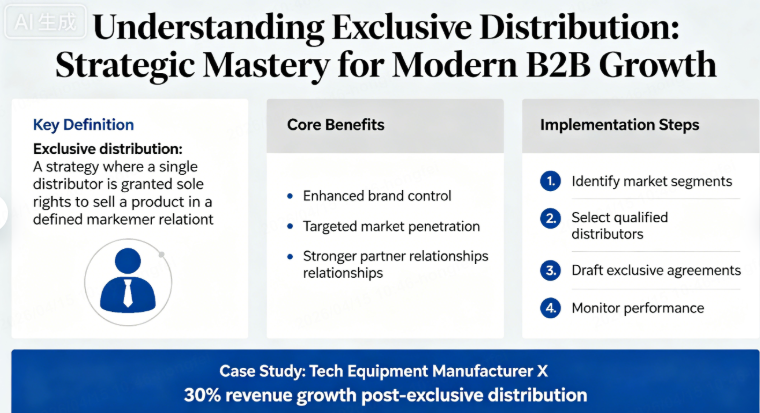
In this guide, we explore the nuances of exclusive distribution—a model where a manufacturer grants sole selling rights to a single distributor within a defined region or market segment. As a sourcing expert, I have seen firsthand how this high-control approach can transform a struggling product launch into a dominant market presence when implemented with precision.
Table of Contents
Defining Exclusive Distribution: The Power of Control
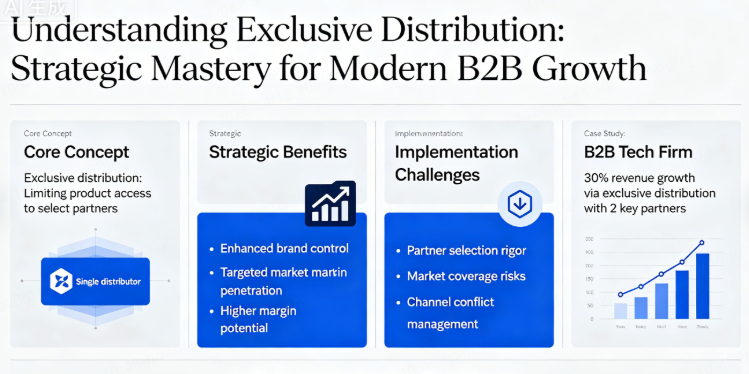
At its core, exclusive distribution is a deliberate channel limitation strategy. It represents a formal, often contractual, partnership where a manufacturer authorizes only one distributor or retailer to promote and sell their products in a specific geographical area advergize, durriesales, complawyers.
Unlike intensive distribution—which seeks maximum coverage through as many outlets as possible—or selective distribution—which balances coverage with control—exclusive distribution prioritizes brand integrity and partner investment over sheer volume upcounsel, go-sidely.
The Strategic Advantages of Exclusive Distribution
Why would a company voluntarily limit its sales points? The benefits often outweigh the lost potential for reach, especially for high-end or specialized products.
- Superior Brand Control: By restricting distribution, manufacturers maintain tight oversight over how their products are priced, displayed, and marketed youtube, upcounsel. This ensures a consistent, premium brand experience.
- Incentivized Partners: When a distributor is granted exclusive rights, they feel secure. This protection often compels them to invest more heavily in local marketing, staff training, and brand-building activities, knowing they won’t have to compete with other retailers selling the same goods complawyers, upcounsel.
- High-End Positioning: Exclusive distribution is a hallmark of luxury, niche, and industrial technical products where specialized customer support and product knowledge are required to close a sale complawyers.
Weighing the Risks: Challenges of the Exclusive Model
While the benefits are significant, the exclusive distribution model is not without its risks.
| Risk Factor | Impact |
|---|---|
| Limited Market Reach | Your product is only as accessible as your single distributor’s physical presence or marketing prowess upcounsel. |
| Partner Dependency | If your exclusive distributor underperforms, your sales in that entire region suffer immediately and significantly complawyers. |
| Increased Legal Complexity | Exclusivity agreements require robust, ironclad contracts to protect both the manufacturer’s IP and the distributor’s regional rights upcounsel, mecalux. |
(Visual Suggestion: Insert a comparison infographic here illustrating “Intensive vs. Selective vs. Exclusive Distribution” showing decreasing coverage but increasing control.)
When Should You Choose Exclusive Distribution? (Expert Insights)
The decision to adopt an exclusive strategy should be driven by business objectives, not just convenience. My experience suggests you should consider this model if:
- You have a premium brand: Your brand relies on perceived scarcity or a high-end customer experience that is easily diluted by mass-market presence.
- The product requires technical expertise: If your product is complex (e.g., specialized industrial equipment), you need a distributor who can provide high-level training and customer support complawyers.
- You need to build deep loyalty: If your primary goal is to encourage a partner to build your brand from the ground up in a new territory, exclusivity provides the necessary insurance for them to commit resources complawyers.
Practical Steps for Implementing an Exclusive Distribution Strategy
Successfully executing this strategy requires more than just a handshake. Follow these professional steps to set your business up for success:
- Define Your Territory Precisely: Use clear geographic or customer segment boundaries in your contracts to avoid ambiguity.
- Perform Rigorous Due Diligence: Since you are putting “all your eggs in one basket” for a specific region, ensure your chosen distributor has the financial stability, reputation, and reach you need.
- Establish Clear KPIs: Do not rely on trust alone. Set measurable performance targets—such as regional sales volume, marketing spend, or customer satisfaction scores—and review them regularly.
- Leverage B2B Sourcing Platforms: If you are sourcing products globally—like those available through LooperBuy—ensure your distribution strategy is supported by an efficient supply chain that can keep your exclusive partner stocked without lead-time issues.
The Evolution of Distribution in a Digital-First World
The traditional view of exclusive distribution is shifting. Today, many brands are adopting a hybrid distribution strategy laceupsolutions. They might grant a brick-and-mortar retailer exclusive rights in a specific city while maintaining a direct-to-consumer (DTC) e-commerce channel, or vice versa. This allows for both the intimacy of high-touch service and the reach of a global online presence.
Conclusion
Understanding what is exclusive distribution is the first step toward reclaiming control over your brand’s destiny. By carefully selecting your partners and fostering deep, mutually beneficial relationships, you can build a distribution network that doesn’t just move products, but builds a legacy. Whether you are a brand looking for the perfect distributor or a manufacturer needing reliable supply chain support, strategy is the key to global growth.
References
- [1] Advergize: Exclusive Distribution Strategy: Definition, Examples, and Trade-Offs
- [3] Durrie Sales: Pros and Cons of Exclusive Distribution Agreements
- [10] COMP. Lawyers: What you need to know about exclusive distribution
- [11] UpCounsel: Strategic Partnerships Through Exclusive Distribution
- [16] LaceUp Solutions: Types of Distribution Strategy
Frequently Asked Questions (FAQ)
- What is the main difference between exclusive and selective distribution?
Exclusive distribution involves only one distributor in a territory, while selective distribution uses a limited number of chosen retailers to balance reach and control. - Is exclusive distribution illegal?
Generally, no, but it is heavily regulated under antitrust and competition laws in many jurisdictions to prevent anti-competitive behavior. Always consult a legal professional. - How does LooperBuy help with distribution strategies?
LooperBuy acts as a one-stop B2B sourcing platform, providing brands and wholesalers with easy access to a vast array of Chinese goods, ensuring reliable, low-cost logistics to support your chosen distribution model globally. - Can I use a hybrid distribution strategy?
Yes. Many modern companies combine exclusive partnerships for physical retail with direct-to-consumer (DTC) online sales to maximize market coverage while maintaining brand control. - What is the biggest risk of exclusive distribution for manufacturers?
The highest risk is over-dependency on a single partner; if they fail to meet sales targets or provide poor service, your brand’s presence in that entire market suffers.
Article Summary:
This comprehensive guide examines exclusive distribution, defining it as a strategic, high-control channel method where a single distributor is granted sole selling rights. We explore its advantages for brand positioning and partner investment, while outlining risks like dependency. The article provides expert insights into when to use the model, implementation steps, and the modern shift toward hybrid strategies, highlighting how B2B platforms like LooperBuy support global distribution efficiency.
Hot tags: Exclusive distribution strategy, B2B wholesale platform, global supply chain management, B2B sourcing from China, distribution channel management, international wholesale distribution, brand market expansion, B2B procurement solutions, manufacturer-distributor partnership, cross-border B2B trade.