In the modern landscape of global trade and supply chain management, understanding the legal and operational nuances between different business structures is paramount for brand owners, wholesalers, and manufacturers. Whether your goal is to source high-quality components from China or to align your brand with mission-driven partners, recognizing the fundamental differences—and the shared challenges—between non-profit, not-for-profit, and for-profit organizations is a strategic imperative.
This guide provides a comprehensive overview to help you navigate these structures, optimize your B2B sourcing decisions, and build sustainable, high-impact partnerships.
Table of Contents
The Fundamental Landscape: Definitions and Objectives
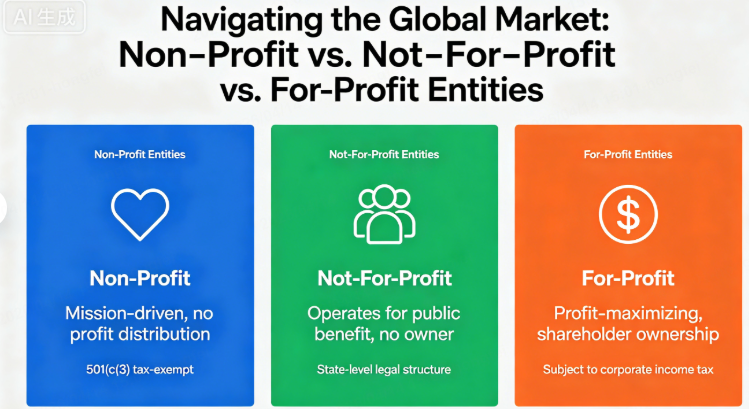
To effectively engage with global partners, one must first grasp the core motivations behind different organizational models.
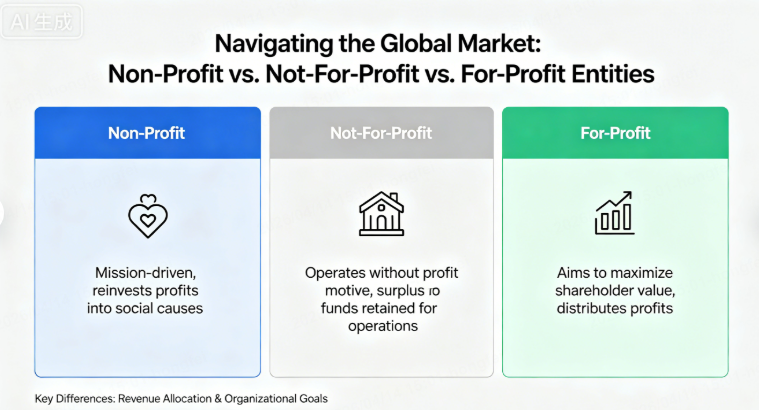
For-Profit Organizations
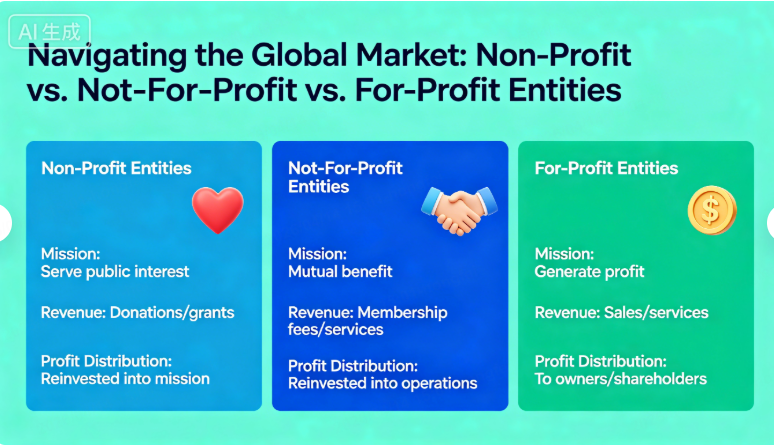
For-profit organizations are driven by the primary goal of generating profit for owners, partners, or shareholders uschamber. Their operations are designed around efficiency, scalability, and market competitiveness.
- Revenue: Primarily derived from the sale of goods and services.
- Profitability: Excess funds can be distributed to stakeholders or reinvested for growth.
- Strategic Focus: Maximizing return on investment (ROI) and capturing market share.
Non-Profit Organizations (NPOs)
A non-profit is typically organized to serve a broad public good, such as charitable, educational, or religious missions uschamber devry.
- Tax Status: Frequently granted tax-exempt status (such as 501(c)(3) in the U.S.), allowing for tax-deductible contributions from donors sage devry.
- Revenue Handling: All surplus funds must be reinvested into the organization to advance its public mission, rather than benefiting private individuals uschamber lawyersalliance.
Not-For-Profit Organizations (NFPOs)
While often confused with NPOs, a not-for-profit organization typically serves a more focused, smaller community—such as a professional association, a local club, or a hobbyist group uschamber bonterratech.
- Focus: Benefits its specific member base rather than the general public.
- Tax/Donations: While they operate without a profit motive, they may not possess the same broad tax-exempt advantages as a public-facing NPO, and donations are frequently not tax-deductible sage chase.
Comparative Analysis: Key Operational Factors
| Feature | For-Profit | Non-Profit (NPO) | Not-For-Profit (NFPO) |
|---|---|---|---|
| Primary Driver | Profit/Shareholder Value | Public Good/Mission | Member/Group Benefit |
| Profit Treatment | Distributed or Reinvested | Reinvested in Mission | Reinvested in Purpose |
| Key Funding | Sales, Investments | Donations, Grants | Membership Dues, Fees |
| Tax Status | Taxable | Tax-Exempt (often 501c3) | Variable / Tax-Exempt |
| Accountability | Owners/Investors | Public/Board/Donors | Members/Board |
Strategic B2B Sourcing: The LooperBuy Advantage
Regardless of your entity type, sourcing directly from China presents unique complexities, ranging from logistics and compliance to cultural barriers and quality control droppe nibusinessinfo.co. LooperBuy functions as your One-Stop B2B Sourcing Platform, designed to bridge these gaps for global brands, wholesalers, and manufacturers.
1. Navigating Logistics and Compliance
Whether you are a for-profit manufacturer needing consistent, high-volume production or a non-profit organization sourcing sustainable materials for an international campaign, logistics and regulatory compliance remain the largest hurdles. LooperBuy simplifies this by offering:
- Streamlined Global Logistics: Reduced shipping costs and optimized delivery timelines.
- Compliance Support: Expert guidance on navigating complex international trade regulations, ensuring that your procurement process remains transparent and risk-free.
2. Scaling Through Technology and Intelligence
Modern B2B sourcing requires more than just a list of suppliers; it requires data-driven decision-making salesleadsinc. LooperBuy provides:
- Verified Supplier Intelligence: Access to reliable manufacturers that have been vetted for quality and capacity.
- Efficient Procurement Workflow: Tools that help you manage the entire sourcing cycle, from initial inquiry to final delivery, reducing the “ROI tax” often associated with inefficient B2B processes cxl.
Unique Industry Insights: Success in Global Procurement
For organizations seeking to thrive in the international market, differentiation is key youtube.
- For Brand Owners: Partnering with for-profit manufacturers through a platform like LooperBuy allows you to maintain high standards of product quality while benefiting from lower production costs.
- For Mission-Driven Entities: Non-profits can leverage professional sourcing platforms to ensure their ethical standards are met throughout the supply chain, as transparency and accountability are built into the platform’s infrastructure.
- Overcoming the “Mindset Gap”: Too many businesses treat B2B sourcing with a B2C mindset. Understanding the rhythm, long sales cycles, and complex compliance requirements of industrial procurement is essential for success forbes.
Actionable Tips for Your Next Procurement Cycle
- Conduct Due Diligence: Regardless of your partner’s legal structure, always verify their manufacturing capabilities, certifications, and track record.
- Prioritize Relationship Building: Trust is the bedrock of long-term B2B partnerships llyc. Use LooperBuy’s tools to communicate clearly and build a rapport with suppliers.
- Leverage Platform Features: Don’t try to handle freight and customs alone. Use built-in logistics management tools to mitigate risks and ensure cost-effective delivery droppe.
- Diversify Your Suppliers: Minimize risk by testing multiple suppliers with small, initial orders before committing to high-volume production slash.
References
- U.S. Chamber of Commerce – Nonprofit, Not-for Profit & For-Profits: Key Differences
- Sage Advice – Nonprofit vs. not-for-profit: key differences
- Shopify – Nonprofit vs. Not-for-Profit vs. For-Profit: 2026 Guide
- Bonterra – Nonprofit vs. not-for-profit: Definitions + differences
- Global Sources – Knowledge Archive
- University of Scranton SBDC – For-Profit or Non-Profit? Choosing the Right Path
- The Nonprofit Fixer – Nonprofits vs For-Profit Businesses: Key Differences
- Chase – Nonprofit, Not-For-Profit and For-Profit Charities
- J.P. Morgan – Nonprofit, Not-For-Profit and For-Profit Charities
- Norwich University – 7 Key Differences Between Nonprofit and For-profit
- DeVry University – Nonprofit vs Not-for-Profit
- EPGD Business Law – For-Profit Organizations vs. Nonprofit Organizations
- Facebook – Understanding the Difference
- Reddit – ELI5: Explain the difference
- Lawyers Alliance for New York – Nonprofit vs. Business Corporation
- Understanding Business – Differentiate between For-Profit and Not-for-Profit
Frequently Asked Questions (FAQ)
1. What is the primary difference in profit distribution?
For-profit entities may distribute profits to owners or shareholders. Conversely, non-profit and not-for-profit organizations must reinvest all surplus revenue back into their specific mission or purpose facebook lawyersalliance.
2. Are donations to all these organizations tax-deductible?
No. Only donations to organizations with a specific tax-exempt status (like 501(c)(3) in the U.S.) are generally tax-deductible. Many not-for-profit organizations do not qualify for this status sage chase.
3. Does LooperBuy serve non-profit organizations?
Yes. LooperBuy’s B2B sourcing platform is designed to assist all types of entities, including non-profits, in sourcing products from China efficiently, cost-effectively, and with full transparency.
4. How does global sourcing differ for for-profit vs. non-profit entities?
While the logistics of importing goods are similar, for-profits often prioritize speed, volume, and cost, whereas non-profits may place a higher premium on ethical production, sustainability compliance, and transparent impact tracking droppe forbes.
5. What is the biggest challenge in B2B sourcing?
The most common challenges include logistical complexity, regulatory compliance, cultural differences, and ensuring supplier reliability. Using a structured platform like LooperBuy helps mitigate these risks droppe nibusinessinfo.co.
Brief Description:
This comprehensive guide examines the distinctions between non-profit, not-for-profit, and for-profit entities, offering strategic insights for global procurement. Designed for brand owners and wholesalers, it clarifies legal, financial, and operational differences while demonstrating how the LooperBuy B2B platform optimizes international sourcing from China, overcoming logistical and compliance challenges to foster successful partnerships.
Hot tags: B2B procurement, global sourcing strategy, nonprofit business model, for-profit vs nonprofit, supply chain management, international trade compliance, corporate social responsibility, wholesale sourcing, entity structure, LooperBuy solutions