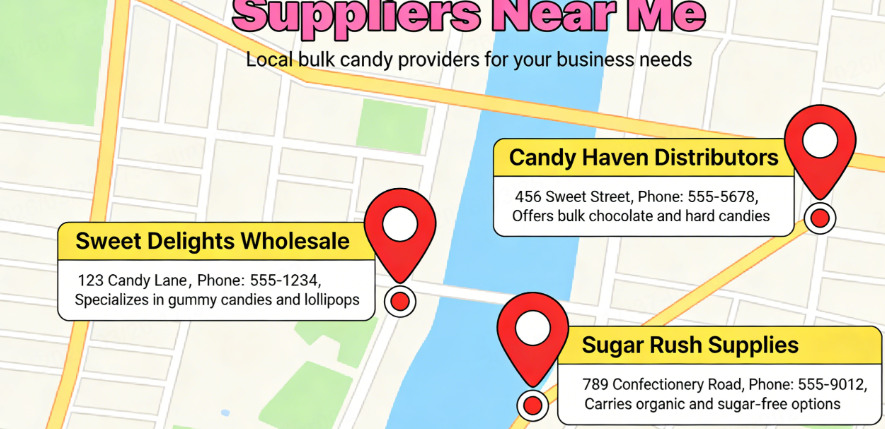
In the competitive world of retail and hospitality, the quest for the perfect inventory often begins with a simple localized search: “wholesale candy suppliers near me.” For years, this was the standard operating procedure for corner store owners, event planners, and regional distributors. The logic was sound—proximity meant lower shipping costs and faster turnaround. However, as we navigate the complexities of the 2026 global economy, the definition of “near me” is being fundamentally redefined by digital connectivity and logistics innovation.
For modern brand owners, large-scale wholesalers, and confectionery manufacturers, relying solely on local middleman distributors is becoming a strategic bottleneck. Local suppliers often carry limited variety, rely on aging inventory, and add significant markups to cover their own overhead. To achieve true scalability and industry-leading margins, savvy business leaders are looking past their immediate geographic borders and embracing One-Stop B2B Sourcing Platforms like LooperBuy. By connecting directly with the world’s largest candy manufacturing clusters in China, businesses can now access factory-gate pricing and infinite variety with the same ease as ordering from a local warehouse.
Table of Contents
The Hidden Costs of Sticking to Local Wholesale Candy Suppliers
While the convenience of a local supplier is enticing, it often comes with a “hidden tax” that erodes your competitive edge. When you search for local suppliers, you are essentially looking for a distributor who has already imported, stored, and marked up the product.
The Middleman Markup and Margin Erosion
A local wholesaler typically operates on a margin of 20% to 50%. By the time a bag of premium gummies reaches your shelf through a local “near me” supplier, it has passed through at least two or three hands. For a brand owner looking to maintain a specific price point while absorbing rising marketing costs, this margin loss is unsustainable. Direct sourcing eliminates these layers, allowing you to capture the profit that previously went to the distributor.
The Variety Deficit in Localized Inventories
Local suppliers tend to play it safe. They stock what is popular now, not what will be trending next season. This leads to a homogenized market where every store in a 50-mile radius is selling the same five brands of hard candy or chocolate. By leveraging a global platform, you gain access to the latest innovations in the confectionery world—such as functional “vitamin-infused” gummies or eco-friendly packaged sweets—months before they hit the local wholesale circuit.
Why Global Sourcing is the New “Local” for B2B Buyers
In the age of hyper-efficient logistics, a factory in Guangdong can effectively be “closer” to your business than a local warehouse that is out of stock. The shift from localized procurement to global B2B platforms is driven by three pillars: Price, Variety, and Control.
Harnessing the Power of China’s Candy Manufacturing Hubs
China has emerged as a global powerhouse in confectionery production, specifically in regions like Fujian and Guangdong. These areas host massive “Candy Cities” where hundreds of specialized factories operate in a single ecosystem. This concentration allows for incredible efficiency. Whether you need high-volume sugar-free mints or artisanal-style lollipops, these hubs provide a level of production capacity that local domestic suppliers simply cannot match.
LooperBuy: Bridging the Gap Between Factory and Storefront
As a One-Stop B2B Sourcing Platform, LooperBuy acts as the digital infrastructure for this global shift. It isn’t just a directory; it is a comprehensive ecosystem that handles the “complexity of distance.” By offering a unified interface for discovery, negotiation, and payment, the platform makes sourcing from a factory 6,000 miles away feel as intuitive as a domestic transaction. For the brand owner, this means the ability to direct the manufacturing process, ensuring that the final product aligns perfectly with their brand’s DNA.
Navigating Food Safety and International Quality Standards
The most common hesitation when moving away from “wholesale candy suppliers near me” to a global model is the concern over food safety and quality control. In the confectionery industry, trust is the ultimate currency.
Compliance with FDA and International Food Regulations
Top-tier B2B platforms prioritize E-E-A-T (Experience, Expertise, Authoritativeness, and Trustworthiness) by vetting their manufacturers against rigorous standards. Reputable Chinese candy manufacturers today operate with HACCP, ISO 22000, and FDA certifications. When sourcing through a professional platform, you can filter for suppliers who already have a proven track record of exporting to the US and European markets, ensuring that every batch of candy meets the necessary safety protocols.
Implementing Third-Party Quality Inspections
The “Expert” approach to global sourcing involves verification at the source. Instead of waiting for the shipment to arrive to check the quality, B2B buyers can utilize on-site inspection services. These inspectors check for everything from sugar crystallization and texture consistency to the integrity of the vacuum seals. This proactive quality management is a level of service that local liquidators or small-scale wholesalers rarely provide.
The Logistics of Confectionery: Managing the “Cold Chain” Globally
Candy is a sensitive commodity. It can melt, crack, or lose its flavor if not handled correctly. Moving from local sourcing to global procurement requires a sophisticated understanding of the supply chain.
Optimizing Shipping Routes for Temperature-Sensitive Goods
For chocolate-based products or soft gummies, “Reefer” (Refrigerated) containers are essential during the summer months. A professional B2B platform coordinates these specialized logistics. By using Intermodal Transport—combining ocean freight with temperature-controlled rail and trucking—businesses can move bulk candy from a Chinese factory to a Midwest warehouse while maintaining a consistent climate, preserving the product’s shelf life and “mouthfeel.”
The “Last-Mile” Convenience of Global Sourcing
The myth that global sourcing is slow is being debunked. With the rise of Overseas Warehousing, many top-performing Chinese manufacturers now stock their best-selling items in regional hubs within the US. This means you can get “Factory-Direct” pricing while still enjoying the “Near Me” delivery speeds of 3-5 business days. This hybrid model represents the pinnacle of modern B2B procurement strategy.
Innovative Trends: The 2026 Confectionery Market Outlook
To surpass competitors who rely on local suppliers, you must offer products that reflect the future of consumer demand. The global market is currently pivoting toward several key “Innovation Zones.”
The Rise of Functional and Health-Conscious Sweets
The “Better-for-You” movement is no longer a niche market. Consumers are looking for candies that offer more than just a sugar high. This includes Prebiotic Gummies, CBD-infused lozenges, and candies sweetened with Monk Fruit or Allulose. China’s material science labs are at the forefront of developing these low-glycemic sweeteners, making them the ideal partners for brands looking to lead the health-conscious confectionery trend.
Sustainable Packaging and the Eco-Friendly Brand Image
Packaging is a major part of the B2B candy cost. Local suppliers often use standard plastic wraps. Global sourcing allows you to specify Biodegradable films, compostable wrappers, and FSC-certified paper boxes. By controlling the packaging at the factory level, you can build a brand that appeals to the environmentally aware Gen Z and Alpha consumers, a demographic that is increasingly vocal about their “Zero-Waste” preferences.
Maximizing Margins: A Financial Comparison Table
To illustrate the impact of shifting from a local “wholesale candy suppliers near me” model to a global platform, consider the following cost breakdown for a standard order of 5,000 units of premium gummy bears.
| Expense Category | Local Wholesaler (“Near Me”) | LooperBuy (Direct-from-China) |
|---|---|---|
| Unit Cost (Bulk) | $1.25 | $0.45 |
| Custom Branding/Labels | $0.20 (limited) | Included in MOQ |
| Logistics & Duty | $0.05 (local delivery) | $0.25 (Ocean + Customs) |
| Middleman Fee | $0.30 | $0.00 |
| Total Landed Cost | $1.80 | $0.70 |
| Potential Profit Margin | 35% | 72% |
Step-by-Step Guide: How to Transition to Global B2B Sourcing
Transitioning your procurement strategy doesn’t have to be overwhelming. Following a structured roadmap ensures a smooth move from local to global.
- Audit Your Current Supply Chain: Identify the 20% of your products that generate 80% of your revenue. These are your candidates for direct sourcing.
- Request Samples and Certifications: Use the platform to communicate with manufacturers. Ask for their COA (Certificate of Analysis) and physical samples to verify taste and texture.
- Start with “Small-Batch” Air Freight: To test the market with a new product, use air freight for your first 100-200 units. It is more expensive but allows for rapid market testing.
- Graduate to Sea Freight Consolidation: Once the product is proven, move to LCL (Less than Container Load) shipping to drop your landed cost significantly.
- Build a Private Label Brand: Work with the factory’s design team to create unique packaging that differentiates your product from the generic items found at local wholesalers.
The Manufacturer’s Perspective: Scaling Through Technology
At the factory level, the integration of AI and automated production lines is revolutionizing candy manufacturing. Leading factories in the Foshan area are now using AI-driven color sorting and automated packaging robots that can process thousands of units per hour with zero human error. When you source through a tech-forward platform like LooperBuy, you are essentially plugging your business into these high-efficiency production lines. This allows for “Just-in-Time” manufacturing, reducing the need for you to hold massive amounts of expensive inventory in your own warehouse.
Conclusion: Embracing the Global Marketplace
The era of limiting your business growth to “wholesale candy suppliers near me” is over. While local relationships will always have a place for emergency restocks or small-scale needs, the foundation of a successful, modern confectionery brand must be built on a global scale. By leveraging the one-stop capabilities of platforms like LooperBuy, brand owners and wholesalers can access the best the world has to offer—lower prices, higher quality, and unparalleled innovation.
Success in 2026 and beyond belongs to those who view the world as their warehouse. By moving beyond the “near me” mindset and embracing a global B2B sourcing strategy, you are not just buying candy; you are investing in the long-term scalability and profitability of your business. The future is sweet, and it is more accessible than ever before.
References & Data Sources
- Statista: Global Confectionery Market Outlook and Revenue Forecast (2024-2029).
- FDA.gov: Importing Food Products into the United States: Compliance and Safety Guidelines.
- China Candy Industry Association: Report on Manufacturing Clusters and Export Growth in Fujian Province.
- Grand View Research: Functional Sweets and Gummies Market Size & Share Analysis.
- World Trade Organization (WTO): Trends in Global Logistics and Intermodal Freight Costs.
Related Questions & Answers
· Why should I choose a global B2B platform over local wholesale candy suppliers near me?
Choosing a global B2B platform like LooperBuy allows you to bypass the multiple markups of local middlemen. While local suppliers offer proximity, they often have limited variety and higher costs. Global sourcing provides direct access to manufacturers, enabling higher profit margins, custom branding (Private Labeling), and access to the latest product innovations that haven’t yet reached local markets.
· How do I ensure the quality and safety of candy imported from China?
Trust is established through verification. You should always source from manufacturers who hold international certifications such as HACCP, ISO 22000, and FDA registration. Furthermore, professional B2B platforms offer third-party inspection services that test the product at the factory before it is shipped, ensuring it meets your specific standards for taste, safety, and packaging.
· What is the Minimum Order Quantity (MOQ) for direct candy sourcing?
MOQs vary by factory, but many manufacturers on B2B platforms are becoming more flexible. While traditional factory orders required full containers, many now offer “Small-Batch” options starting at 500 to 1,000 units. This allows small-to-mid-sized wholesalers to test new products without a massive upfront capital investment.
· How is temperature-sensitive candy handled during global shipping?
To prevent melting or degradation, B2B platforms coordinate “Cold Chain” logistics. This involves using refrigerated (Reefer) containers for sea freight and climate-controlled trucks for inland delivery. Proper insulation and moisture-absorbent packaging are also used to protect the candy from humidity and temperature fluctuations during the journey.
· Can I create my own brand of candy through a global sourcing platform?
Yes, this is a major advantage of the “One-Stop” model. Most manufacturers offer OEM (Original Equipment Manufacturer) and ODM (Original Design Manufacturer) services. You can work with their design teams to create unique flavors, shapes, and custom-branded packaging, allowing you to build your own proprietary brand instead of just reselling existing ones.
Article Introduction Summary:
This expert-led article explores the strategic shift from searching for localized “wholesale candy suppliers near me” to utilizing a global, one-stop B2B sourcing model. It analyzes the financial benefits of direct-from-factory procurement via LooperBuy, addresses food safety compliance (FDA/HACCP), and highlights the latest 2026 trends in functional sweets and sustainable packaging for brand owners and wholesalers.
Hot Tags:
Wholesale Candy Suppliers; B2B Confectionery Sourcing; China Factory Direct; LooperBuy Platform; Private Label Candy; Global Logistics Management; Food Safety Compliance; Bulk Gummy Suppliers; Confectionery Market Trends; International Trade Sourcing.