Table of Contents
The Enchanting World of Vintage Vine Glassware
Historical Evolution and Craftsmanship
The decorative vintage vine glass with painted red gold green leg represents a remarkable fusion of artistry and craftsmanship that emerged during the mid-20th century. These exquisite pieces showcase the pinnacle of glassmaking expertise, combining traditional techniques with innovative artistic expression. Each glass tells a story of meticulous craftsmanship, where skilled artisans carefully balanced form and function to create pieces that would become cherished heirlooms. The evolution of these pieces can be traced back to European glassmaking traditions, particularly those of Venice and Bohemia, where master craftsmen developed and refined the techniques that would later influence the creation of these distinctive glasses.
The post-war period saw a surge in the production of decorative glassware, as prosperity and social entertaining became increasingly important. During this time, manufacturers began experimenting with more elaborate designs, incorporating multiple colors and complex painting techniques that had previously been reserved for more exclusive pieces. This democratization of fine glassware allowed more households to own and display these beautiful objects.
Design Elements and Artistic Features
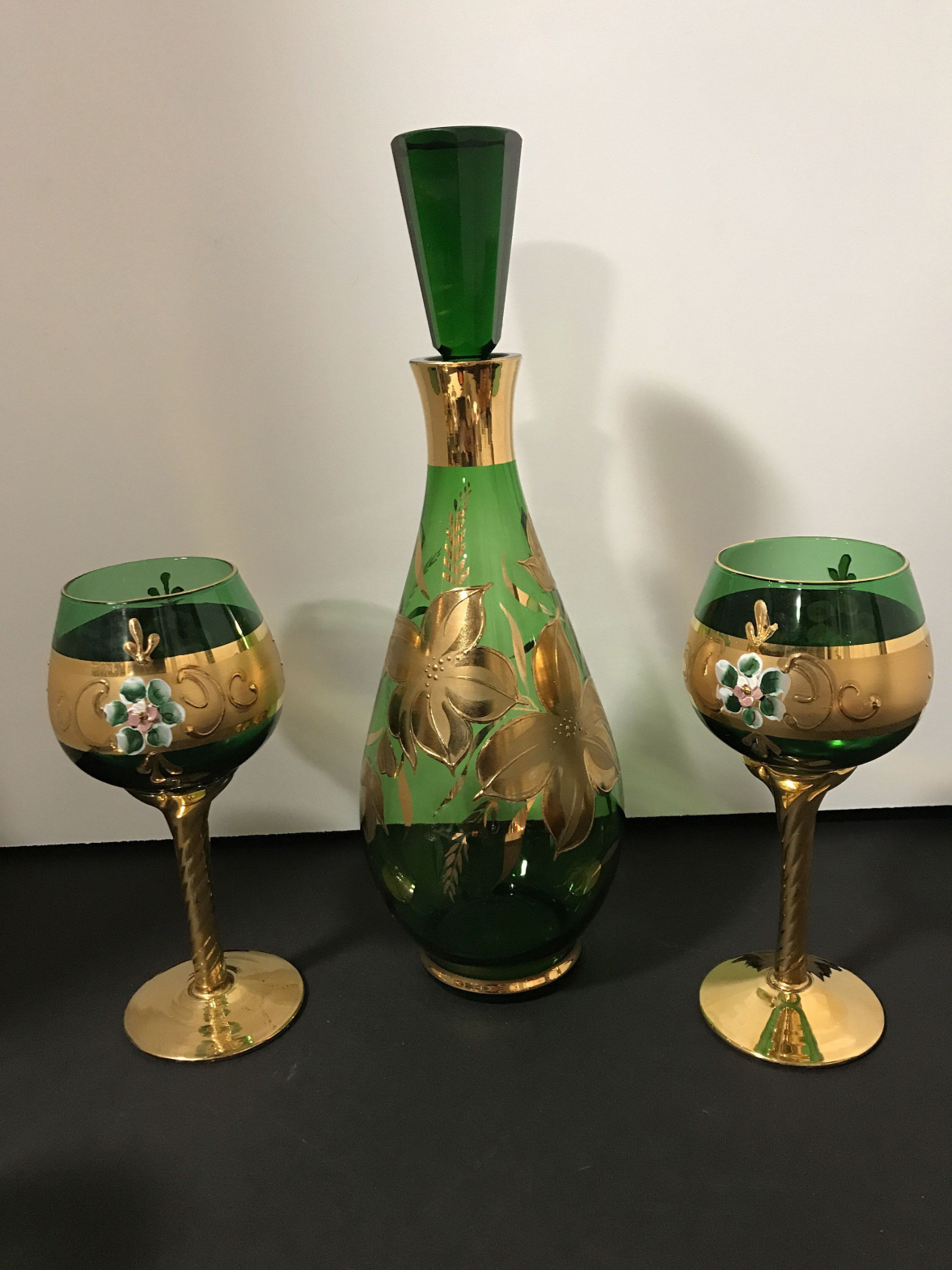
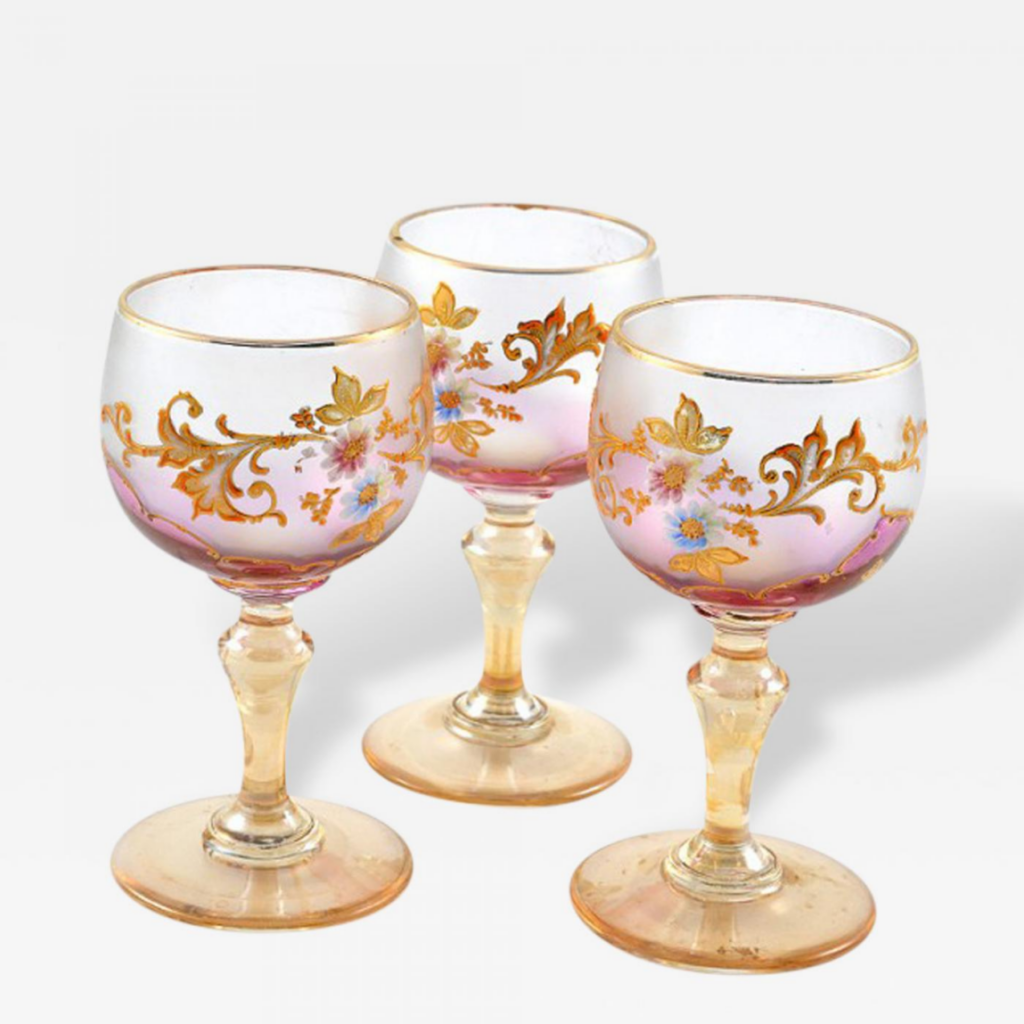
The distinguishing characteristics of these vintage vine glasses lie in their intricate details. The bowls typically feature hand-painted vine motifs executed in rich gold and vibrant red hues, creating an elegant dance of color across the crystal-clear surface. The green legs, often crafted with spiral or twisted designs, provide both structural support and aesthetic appeal, making each piece a standalone work of art.
The complexity of these designs goes beyond mere decoration. Each element serves both an aesthetic and functional purpose. The painted vine patterns, for instance, often incorporate subtle variations in thickness and texture that catch and reflect light in fascinating ways. The gold detailing isn’t simply applied as a flat color but often features raised elements that add dimension and tactile interest to the piece.
The Artistry of Production
Hand-Painting Techniques
The process of creating these decorative vine glasses involves multiple stages of careful artistry. Master craftsmen first shape the glass using traditional glassblowing techniques, paying particular attention to the distinctive green leg that must support the bowl while maintaining its decorative appeal. The painting process follows, with artisans carefully applying gold and red pigments to create the characteristic vine patterns, requiring steady hands and years of experience.
The painting process itself is a complex choreography of timing and technique. Artists must work with specialized brushes and tools, often creating their own implements to achieve specific effects. The gold work, in particular, requires exceptional skill as the metallic pigments must be applied at just the right consistency and temperature to achieve the desired brilliance and durability.
Materials and Construction
These vintage pieces typically incorporate high-quality crystal or fine glass as their base material. The green coloring in the leg is achieved through the addition of specific minerals during the glass-making process, while the painted decorations utilize specially formulated enamels that bond permanently with the glass surface when fired at precise temperatures.
The composition of the glass itself is crucial to the overall quality of the piece. The best examples use a lead crystal base, which provides exceptional clarity and brilliance while being soft enough to allow for detailed cutting and engraving. The green coloration in the stems often comes from the addition of copper or chromium oxides, carefully controlled to achieve the perfect shade and transparency.
Cultural Significance and Collecting
Social Context and Usage
During their heyday, these decorative vine glasses represented the epitome of sophisticated entertaining. They were often reserved for special occasions and formal dining, serving as both functional vessels and conversation pieces that reflected the owner’s refined taste and appreciation for craftsmanship.
These glasses became symbols of social status and cultural refinement, often featured in entertaining guides and home decoration magazines of the era. They were particularly popular during holiday celebrations and formal dinner parties, where their festive appearance added to the overall ambiance of special occasions.
Value in Modern Collections
Today, these vintage pieces are highly sought after by collectors and interior designers alike. Their unique combination of decorative elements – the painted red and gold vine motifs, the distinctive green leg, and the overall artistic composition – makes them valuable additions to any collection of vintage glassware.
The market for these pieces continues to grow as contemporary collectors appreciate both their historical significance and their aesthetic appeal. Complete sets in excellent condition are particularly valuable, though even individual pieces can command significant prices when they exhibit exceptional craftsmanship or rare design elements.
Care and Preservation
Maintenance Guidelines
Proper care is essential for preserving these delicate treasures. The painted decorations require gentle handling, and specific cleaning methods must be employed to maintain their vibrant appearance without damaging the detailed artwork or the underlying glass structure.
Experts recommend using only the mildest cleaning solutions and avoiding any abrasive materials that might scratch or dull the surface. Temperature changes should be gradual to prevent thermal shock, and handling should always be done with clean, dry hands to avoid leaving fingerprints that could potentially damage the decorative elements over time.
Storage Recommendations
Appropriate storage conditions play a crucial role in maintaining these vintage pieces. Temperature control, proper spacing, and protection from direct sunlight are essential considerations for preserving both the structural integrity and the painted decorations.
Individual pieces should be stored separately to prevent contact damage, ideally in acid-free tissue paper or soft cloth bags. Display cases should be equipped with UV-protective glass to prevent fading of the painted elements, and humidity levels should be monitored to prevent deterioration of the metallic decorations.
Contemporary Appreciation
Modern Market Appeal
The enduring appeal of decorative vintage vine glasses with painted red gold green legs continues to grow in today’s market. Their unique aesthetic perfectly complements both traditional and contemporary interior designs, making them versatile additions to modern collections.
Interior designers often incorporate these pieces into eclectic designs, where their vintage charm adds character and sophistication to modern spaces. The combination of clear glass, metallic decoration, and colored stems works particularly well in settings where traditional and contemporary elements are mixed.
Influence on Current Design
Contemporary glassmakers often draw inspiration from these vintage pieces, incorporating elements of their design into modern creations while adapting to current tastes and technological capabilities. Many modern artisans study these historical pieces to understand and recreate the complex techniques used in their production.
The influence of these vintage designs can be seen in current glassware trends, where manufacturers combine traditional elements with contemporary production methods to create pieces that honor the past while meeting modern standards for durability and functionality.
Frequently Asked Questions
Q: How can you authenticate a genuine decorative vintage vine glass with painted red gold green leg?
A: Authentic pieces typically show signs of hand-craftsmanship, including slight variations in the painted patterns and green leg design. The quality of the glass, the precision of the painting, and the overall weight and balance of the piece are key indicators of authenticity. Look for signs of age-appropriate wear and examine the quality of the painted details under magnification.
Q: What is the typical age range for these vintage glasses?
A: Most decorative vine glasses with painted red gold green legs were produced between the 1950s and 1970s, with the peak of production occurring during the 1960s. Dating can often be confirmed through maker’s marks, design characteristics, and production techniques specific to certain periods.
Q: How should these vintage glasses be cleaned safely?
A: Use lukewarm water with mild soap, avoiding harsh chemicals or abrasive materials. Hand wash gently and dry immediately with a soft, lint-free cloth to preserve the painted decorations. Never use dishwashers or abrasive cleaning tools, and avoid soaking the glasses for extended periods.
Q: What makes the green leg so special in these vintage glasses?
A: The green leg represents a technical achievement in glassmaking, combining structural support with decorative appeal. The color is achieved through specific mineral additions during manufacturing, and the twisted or spiral designs demonstrate the craftsman’s skill. The complexity of creating these stems while maintaining structural integrity makes them particularly noteworthy.
Q: What factors determine the value of these vintage glasses?
A: Value is determined by condition, rarity of the design, quality of craftsmanship, completeness of sets, and the preservation of the painted decorations. Original documentation or provenance can also significantly impact value. Market trends, historical significance, and the reputation of the manufacturer all play roles in determining a piece’s worth.
How To Purchase:https://looperbuy.com/search?keywords=decorative+vintage+vine+glass+