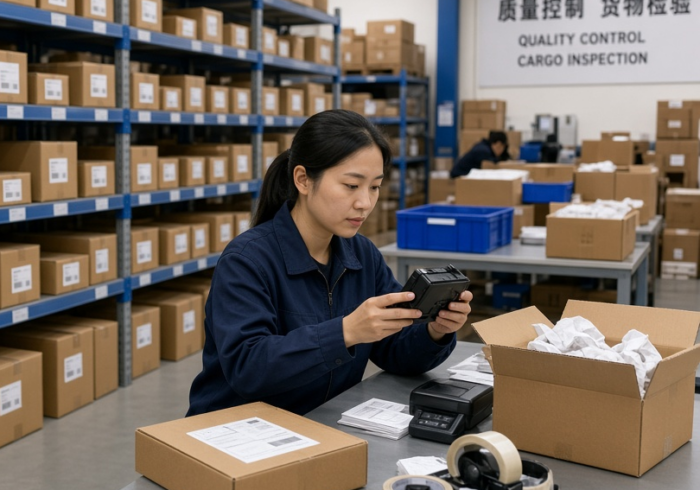
Discover how a strategic sourcing company can reduce logistics costs through smarter supplier selection, packaging, shipment planning, and fulfillment. Explore practical cost comparisons, a 30-day pilot framework, and ways to assess China sourcing and dropshipping options with Looperbuy.
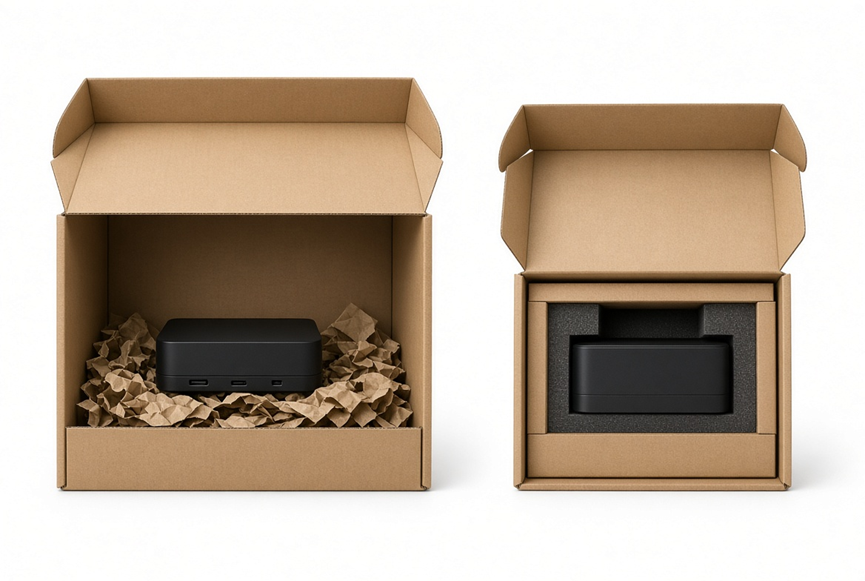
Yes—a strategic sourcing company can reduce logistics costs by improving decisions before products leave the supplier. Better supplier selection, packaging, order coordination, and fulfillment planning can lower avoidable expenses across the supply chain. However, the real measure of success is total cost, not simply a cheaper shipping quote.
For global B2B sellers sourcing from China, this distinction matters. A low factory price can become expensive once you add oversized cartons, fragmented shipments, storage, customs delays, and replacements.
Looperbuy’s online B2B procurement and dropshipping model addresses this broader challenge: helping global merchants source Chinese goods while reducing the burden of holding inventory and managing fulfillment. The opportunity is not to eliminate every logistics expense, but to organize purchasing and delivery more intelligently.
Table of Contents
What Does a Strategic Sourcing Company Do?
A strategic sourcing company evaluates purchasing decisions beyond the supplier’s unit price. It considers product specifications, supplier reliability, packaging, delivery requirements, commercial terms, and the costs associated with getting goods to customers.
A purchasing agent may primarily help you locate and buy products. A freight forwarder primarily organizes transportation. Strategic sourcing connects upstream purchasing decisions with downstream logistics outcomes.
For example, two suppliers might offer an identical product at similar prices. However, one may use compact, protective packaging and provide consistent shipping documentation. The other may offer a small product discount but create additional handling and shipping expenses.
From a procurement perspective, the better supplier is the one that supports your delivery promise at the lowest sustainable overall cost.
Not every sourcing provider handles freight, inspections, or fulfillment directly. Before appointing one, clarify which services it performs, which it coordinates, and which remain your responsibility.
Why Logistics Cost Reduction Starts Before Shipping
Shipping conditions are partly outside a buyer’s control. UN Trade and Development’s *Review of Maritime Transport 2025* reported elevated and volatile freight rates during 2024 and 2025. It also found that vessel rerouting increased ton-miles by 6% in 2024, illustrating how longer journeys can increase transport pressure even without equivalent growth in cargo volumes.
These findings do not establish today’s price for a particular route. They demonstrate why relying exclusively on freight-rate negotiations is an incomplete strategy.
A sourcing partner cannot control geopolitical disruption or guarantee stable carrier prices. It can, however, help reduce avoidable exposure through better shipment planning, packaging specifications, and supplier coordination.
The practical question is therefore: “Which costs can we influence before booking transportation?”
Six Ways a Strategic Sourcing Company Can Reduce Logistics Costs
1. Select Suppliers With Logistics Requirements in Mind
Supplier selection should include shipment readiness, not just manufacturing capability.
Evaluate:
– Distance from the intended collection or consolidation point.
– Production lead-time consistency.
– Carton dimensions and packing methods.
– Order accuracy and documentation quality.
– Ability to meet agreed dispatch schedules.
– Minimum order quantities relative to demand.
A lower-priced supplier may not be the better choice if its location, packaging, or unreliable production schedule repeatedly creates additional transport costs.
For China sourcing, supplier geography also matters when purchasing multiple products. Coordinating collection from widely separated factories can offset some consolidation benefits.
Ask for a complete delivered-cost comparison before changing suppliers solely to obtain a lower unit price.
2. Reduce Dimensional Weight Through Better Packaging
For many international express shipments, the space a parcel occupies matters as much as its actual weight.
DHL explains that chargeable weight is the greater of actual weight and volumetric weight. Its published metric calculation uses carton length × width × height in centimeters, divided by 5,000. Confirm the applicable divisor and billing rules for your chosen service.
Consider an illustrative parcel:
| Packaging measure | Original carton | Revised carton |
| Dimensions | 50 × 40 × 30 cm | 40 × 30 × 25 cm |
| Actual weight | 5 kg | 5 kg |
| Volumetric weight, using 5,000 | 12 kg | 6 kg |
| Chargeable weight before carrier rounding | 12 kg | 6 kg |
The revised carton halves calculated chargeable weight. It does not necessarily halve the shipping bill because pricing bands, minimum charges, and surcharges still apply.
A sourcing company can coordinate packaging requirements before production. That is usually a better starting point than repeatedly repacking unsuitable cartons after collection.
Protection remains essential. Packaging changes should pass appropriate handling tests before rollout.
3. Consolidate Compatible Orders
When products come from several suppliers, separate dispatches can duplicate collection, handling, and shipment charges.
Consolidation brings compatible orders together before onward shipment. It may improve shipping efficiency when products share a destination and delivery window.
However, consolidation creates trade-offs:
– Waiting for the final supplier can delay completed orders.
– Receiving and repacking introduce additional fees.
– Storage may be required between arrivals.
– Certain goods need separate handling or transport arrangements.
Calculate net savings after these costs. A slower consolidated shipment is not automatically better if it causes stockouts or misses a customer deadline.
For dropshipping orders going to different customers, distinguish origin-side collection efficiencies from destination-side parcel costs. Consolidation does not make every individual delivery charge disappear.
4. Match Transportation to Product Economics
The lowest freight rate is not always the lowest-cost delivery decision.
A useful sourcing strategy separates products according to urgency, value, demand stability, and replenishment needs.
| Order situation | Transportation approach to evaluate |
| Predictable bulk replenishment | Ocean freight with sufficient planning time |
| Urgent replacement or critical shortage | Air freight or express |
| Small customer-specific orders | Parcel fulfillment with clear delivery expectations |
| Mixed product demand | Different shipment plans by product group |
These are evaluation options, not universal recommendations. Availability and suitability depend on the route, cargo, regulations, and service requirements.
Include the cost of arriving late. A cheaper shipment that triggers lost sales, refunds, or emergency replenishment may be the more expensive decision.
5. Reduce Inventory Exposure Through Appropriate Fulfillment
Dropshipping can reduce the merchant’s need to purchase and warehouse large quantities before receiving customer orders.
For sellers testing new products or serving uncertain demand, this can lower exposure to unsold inventory and reduce some warehouse-related expenses.
Nevertheless, dropshipping is not automatically the cheapest model. Individual international parcels may cost more per unit than planned bulk replenishment. Returns can also be more complicated.
The comparison should include:
– Inventory ownership and payment timing.
– Storage and handling charges.
– Per-order delivery costs.
– Dispatch and transit times.
– Customer-service workload.
– Return and replacement procedures.
A hybrid approach may deserve consideration: bulk replenishment for predictable products and order-driven fulfillment for selected low-volume items. Validate the economics rather than assuming one model fits every SKU.
6. Clarify Documentation and Delivery Responsibilities
Unexpected charges often arise because buyers compare quotations with different responsibilities.
Incoterms define responsibilities for activities such as transport, documentation, insurance, and customs clearance. They help establish which party manages and pays for specific parts of the shipment.
For example, under DAP, the buyer generally handles import clearance and related duties. Under DDP, those obligations fall to the seller. Both require careful agreement on the named destination and practical responsibilities.
Do not compare a DAP quote directly with a DDP quote without adjusting the included costs.
Specify the delivery term, named place, exclusions, and destination charges in writing. No sourcing arrangement removes applicable duties or legitimate compliance obligations.
A Practical Cost Model: Measure Delivered, Saleable Units
I would evaluate a sourcing proposal using cost per delivered, saleable unit—not freight cost per shipment alone.
Start with:
Delivered cost per saleable unit=Total relevant purchasing and fulfillment costs÷Saleable units delivered
Depending on your business, the numerator may include product purchases, origin collection, inspection, packaging, freight, duties, nonrecoverable taxes, receiving, storage, and fulfillment.
The denominator matters. Damaged or incorrect products can make a seemingly inexpensive shipment costly because fewer units remain available for sale.
Keep the cost model consistent. Avoid counting the same handling expense twice, and distinguish recoverable taxes from genuine business costs.
For customer-level profitability, extend the model to include attributable returns, replacements, and customer-service expenses.
Illustrative Example: Savings After Sourcing Fees
The following example is hypothetical. It is not a Looperbuy customer result, market benchmark, or savings guarantee.
Assume a seller processes 1,000 comparable monthly orders. Product purchase costs, duties, destination delivery, and other unchanged expenses are excluded from this limited comparison.
| Monthly expense | Existing process | Revised process |
| Freight and origin collection | $8,000 | $6,700 |
| Storage and handling | $1,200 | $900 |
| Packaging and repacking | $500 | $400 |
| Damage and replacement costs | $600 | $350 |
| Sourcing coordination fee | $0 | $650 |
| Total included costs | $10,300 | $9,000 |
The modeled net saving is $1,300 per month, approximately 12.6% of the original included costs.
This example shows why fees must be included. Gross operational savings are not the same as net business savings.
Actual results depend on shipment characteristics, order volume, product protection, service performance, and the provider’s charging structure.
A 30-Day Pilot for Evaluating a Sourcing Partner
Before moving your entire purchasing operation, test a representative product group.
Days 1–7: Establish the Baseline
Collect recent invoices and shipment records. Record carton dimensions, actual weight, billed weight, delivery performance, damage rates, storage charges, and unexpected fees.
Separate predictable expenses from unusual one-off incidents.
Days 8–14: Identify Controllable Changes
Ask the provider to propose specific improvements. These could include packaging revisions, supplier dispatch coordination, alternative transport services, or different replenishment quantities.
Require written assumptions and itemized fees.
Days 15–23: Run a Controlled Trial
Use comparable products and destinations. Keep customer delivery requirements unchanged where possible.
If you change several variables simultaneously, acknowledge that attributing savings to one intervention becomes harder.
Days 24–30: Review Cost and Service Together
Compare:
– Delivered cost per saleable unit.
– On-time delivery against the promised window.
– Damage and incorrect-order rates.
– Unexpected charges per shipment.
– Administrative time spent resolving exceptions.
Where transit exceeds the pilot period, continue measurement until delivery and relevant claims are complete. Do not declare success based only on dispatch quotations.
When a Strategic Sourcing Company May Not Save Money
The benefits may be limited when your operation already has optimized packaging, reliable suppliers, predictable full-container shipments, and competitive transport agreements.
Savings can also disappear if the provider adds unnecessary handling or obscures charges.
Warning signs include:
– Unitemized “all-inclusive” quotations.
– Guaranteed savings without examining shipment data.
– Unclear responsibility for damaged or missing goods.
– Recommendations that ignore delivery deadlines.
– Shipping comparisons based on different service levels.
An effective partner should explain where savings come from and which trade-offs remain. Transparency matters more than an impressive headline percentage.
How Looperbuy Fits Into a Lower-Cost Sourcing Strategy
Looperbuy’s stated focus is reliable Chinese product sourcing and dropshipping for global B2B sellers. That makes procurement and fulfillment coordination the appropriate starting point for evaluating its potential value.
The strongest discussion begins with operational details rather than a generic request for “cheap shipping.”
Prepare your product list, supplier locations, order volumes, destinations, carton specifications, and delivery targets. Then ask Looperbuy to clarify available services, itemized costs, payment terms, dispatch expectations, and exception procedures.
Any additional requirements—such as inspections, custom packaging, consolidation, or particular delivery arrangements—should be confirmed explicitly rather than assumed.
Share a representative order profile with Looperbuy and request a sourcing-and-fulfillment proposal that compares total delivered cost against your current process. Begin with a measurable pilot before expanding.
Frequently Asked Questions
Can a strategic sourcing company guarantee lower logistics costs?
No. Savings depend on existing inefficiencies, shipment volumes, routes, service requirements, and fees. A credible provider should identify measurable opportunities rather than promise universal results.
What is the difference between strategic sourcing and freight forwarding?
Strategic sourcing evaluates suppliers and purchasing decisions. Freight forwarding organizes transportation. Their responsibilities can overlap, but the contracted scope should clearly establish who manages each activity.
Does dropshipping always cost less than holding inventory?
No. It can reduce upfront inventory exposure and some storage expenses, but individual deliveries may cost more per unit. Compare the complete fulfillment model, including returns and delivery expectations.
Can smaller packaging reduce international shipping costs?
It can when volumetric weight determines the chargeable weight. Savings depend on carrier pricing and whether the revised package still protects the product adequately.
Should I choose DDP or DAP shipping?
Choose based on import capability, destination requirements, and transparent pricing. DDP assigns import-clearance responsibilities to the seller; DAP generally assigns them to the buyer. Confirm practical arrangements before contracting.
What information is needed for a useful cost assessment?
Provide products, quantities, origins, destinations, carton dimensions, actual weights, delivery requirements, recent invoices, and damage or return records. Without comparable data, a savings estimate remains provisional.
Referencs
1. **UN Trade and Development (UNCTAD)** [Read the UNCTAD publication]
2. DHL Express *Weight and Dimensions*[Read DHL’s weight and dimensions guide]
3. International Trade Administration, U.S. Department of Commerce[Read the International Trade Administration guide]
4. ICC Academy, International Chamber of Commerce[academy.iccwbo]
5. DHL Express[Read DHL’s volumetric-weight explanation]