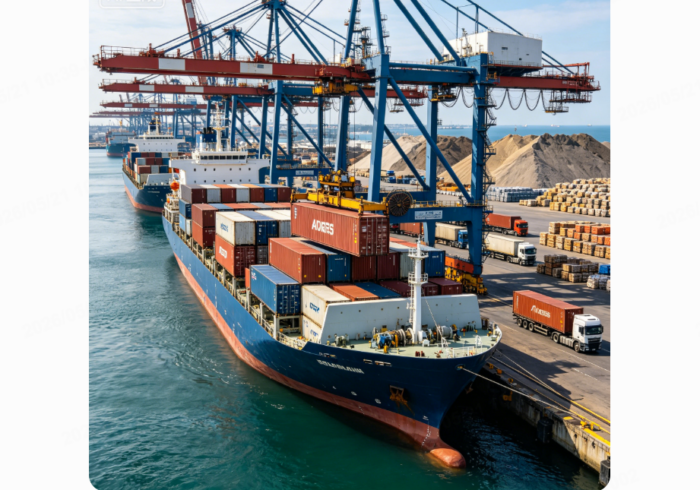
Learn how to identify sourcing company red flags before they lead to late shipments, product-quality issues, and lost sales. This practical guide covers supplier verification, lead-time planning, inspections, payment risks, Incoterms, logistics ownership, and a simple supplier delay risk scorecard for global B2B sellers.
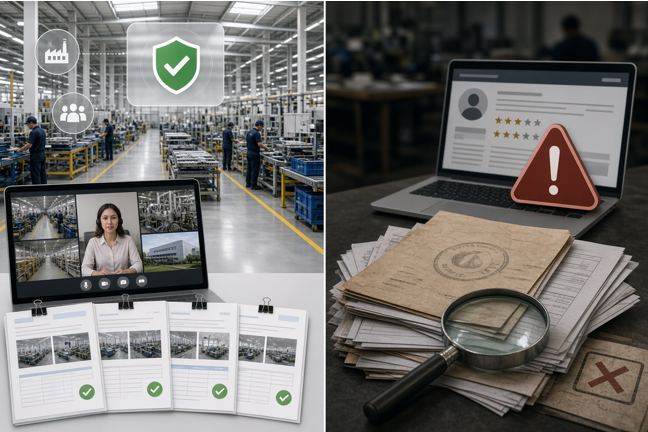
Choosing the wrong sourcing company can turn a promising product launch into a chain of late deliveries, missed sales windows, unhappy customers, and expensive emergency freight. The most damaging supplier delays rarely appear without warning: they are usually preceded by weak communication, unclear production planning, unreliable documentation, inconsistent quality control, or a sourcing partner that cannot clearly explain who is responsible for each step.
For global B2B sellers sourcing from China, the goal is not simply to find the lowest product price. It is to work with a sourcing company that can verify suppliers, control production milestones, manage quality, coordinate fulfillment, and provide accurate logistics visibility. A reliable partner helps you avoid unnecessary inventory, warehousing, payment, and shipping-management burdens—while still maintaining control over your supply chain.
This guide explains the most important sourcing company red flags, how to identify signs your supplier will cause delays, and what practical safeguards can protect your business before you place an order.
Table of Contents
Why Supplier Delays Start Before Production
A delayed shipment is often treated as a logistics problem. In reality, many delays start much earlier—during supplier selection, quotation, sampling, payment, production planning, and quality approval.
A supplier may promise a 20-day lead time, for example, but that number is meaningless if it does not specify:
– When production officially starts.
– Whether raw materials are already available.
– Whether the quoted lead time includes sample approval.
– Whether the factory has capacity during your requested production window.
– Whether quality inspection happens before or after the stated completion date.
– Whether packaging, export documentation, and handover to the freight carrier are included.
– Which party owns the risk at each shipping stage.
International trade terms matter because they define the buyer’s and seller’s obligations, costs, and risks for delivery. Incoterms® also clarify responsibilities for shipment, insurance, documentation, customs clearance, and related logistics activities.
A capable sourcing company should translate these moving parts into a realistic delivery plan. If it cannot, the risk is not only a late order. It is a lack of operational control.
The Biggest Sourcing Company Red Flags
1. Vague Lead Times With No Production Schedule
One of the clearest signs your supplier will cause delays is a lead-time promise that sounds precise but has no supporting plan.
A sourcing company may say, “Production takes 15–20 days,” but fail to explain the timeline behind that statement. Ask for a milestone schedule that covers material preparation, production, inspection, packing, booking, and dispatch.
Red-flag language includes:
– “It should be ready soon.”
– “The factory says there is no problem.”
– “We will update you after production starts.”
– “Shipping time depends on the forwarder.”
– “The lead time is approximate.”
– “We cannot confirm the exact completion date yet.”
A reliable sourcing company should be able to provide a written order timeline before you pay. It should identify dependencies and tell you what could change the date.
| Stage | What a reliable sourcing company should confirm | Delay risk if unclear |
| Order confirmation | Product specifications, quantity, price, payment terms | Incorrect order details and rework |
| Material preparation | Material availability and expected arrival date | Production cannot begin on time |
| Production | Factory start date, completion date, capacity status | Overbooked factory or unplanned queue |
| Quality control | Inspection date, acceptance criteria, rework process | Defects discovered too late |
| Packing and labeling | Packaging approval, carton marks, barcode requirements | Relabeling or shipment rejection |
| Freight handover | Booking, pickup date, shipping method, documents | Missed vessel, flight, or warehouse cutoff |
Best practice: Ask for the supplier’s lead time in the format: “X calendar days from approved deposit and final artwork/sample confirmation to goods ready for inspection.” That wording reduces ambiguity.
2. Poor Communication Before You Pay
A sourcing company’s behavior during the quotation stage is often its best performance. If communication is already slow, incomplete, or inconsistent before payment, it will rarely improve once your deposit has been received.
Watch for these communication red flags:
– Replies take several days without explanation.
– Different representatives provide conflicting answers.
– Your questions are answered selectively.
– The supplier avoids confirming details in writing.
– Product specifications change between messages and quotations.
– The company relies on vague chat messages rather than formal order records.
– There is no single accountable contact person.
Poor responsiveness is not merely inconvenient. It can prevent timely decisions when a sample fails, a material is unavailable, a label changes, or a carrier deadline approaches.
A dependable sourcing company should have an escalation path. You should know who to contact if your regular account manager is unavailable, and you should receive a clear update cadence—for example, weekly production updates plus immediate notice of exceptions.
3. No Verifiable Supplier or Factory Information
A sourcing company that refuses to disclose basic supplier information creates a major visibility problem. Not every platform can reveal every commercial detail at the beginning of a relationship, but a legitimate partner should still be able to demonstrate that it has verified the manufacturer, trading company, or fulfillment provider behind your order.
Be cautious if the company cannot provide:
– Legal company name and business registration details.
– Factory address or a credible explanation of the production location.
– Product-category experience.
– Factory audit evidence, production photos, or live video verification.
– Certification documents relevant to the product.
– Evidence of past export capability.
– A clear explanation of whether it is a factory, trading company, agent, or marketplace intermediary.
Supplier due diligence should include checking registration status, legal and financial signals, company age, registered capital, and third-party information such as customs, logistics, audit, or certification data where available.
This does not mean that every new supplier is automatically unsafe. It means that unverifiable information should change your risk level. Start with a smaller test order, insist on inspection, and avoid building your entire product line around an unproven source.
4. Prices That Are Far Below Every Other Quote
A very low quote may look like a sourcing win. Often, it is a future delay waiting to happen.
When one supplier’s price is significantly below comparable offers, ask what is different. Lower pricing can result from legitimate advantages such as scale, direct material sourcing, or simpler packaging. But it can also signal omitted costs, lower-grade materials, unrealistic labor assumptions, poor capacity planning, or a bait-and-switch strategy.
Common outcomes include:
– The supplier requests a price increase after receiving the order.
– The factory substitutes materials without approval.
– Production starts later because the quoted price did not cover real costs.
– The supplier prioritizes higher-margin customers.
– The final product fails inspection and requires rework.
– The order is delayed while the sourcing company searches for another factory.
A professional sourcing company should break down meaningful variables: material grade, dimensions, finish, packaging, tooling, MOQ, inspection level, and shipping terms. It should help you compare offers on a like-for-like basis instead of presenting the lowest number as the best answer.
5. Resistance to Samples, Inspections, or Quality Standards
A supplier that discourages samples or third-party inspections is telling you that verification may be difficult after payment.
Quality failures cause delivery delays because they create rework, replacement production, repacking, relabeling, and shipment rescheduling. In some cases, goods must be remade completely.
Before placing a production order, define:
– The approved sample or “golden sample.”
– Product specifications and acceptable tolerances.
– Material and color requirements.
– Packaging and labeling requirements.
– Defect classification: critical, major, and minor.
– Inspection timing.
– What happens if goods fail inspection.
– Who pays for rework, replacement, inspection, and expedited shipping if the supplier is at fault.
A reliable sourcing company will treat inspection as a normal control point, not a sign that you distrust the supplier. It should be prepared to document defects, communicate corrective actions, and confirm a realistic revised shipment date.
6. Unclear Payment Requests and Pressure Tactics
Payment terms can reveal a supplier’s financial stability and operating discipline.
Be cautious if a sourcing company:
– Demands 100% payment upfront for an unfamiliar supplier.
– Requests payment to a personal bank account.
– Changes beneficiary details without formal notice.
– Pushes immediate payment while refusing to finalize specifications.
– Adds unexplained fees after you agree on the quote.
– Refuses to issue a pro forma invoice or commercial documentation.
– Uses urgency to stop you from completing verification.
Payment should follow documented milestones. For many orders, that may include a deposit after order confirmation and a balance payment after goods pass agreed inspection conditions or before shipment, depending on the commercial arrangement.
Do not treat payment controls as an administrative detail. They are a core part of supplier risk management.
7. A Supplier Cannot Explain Shipping Responsibility
A sourcing company may be competent at finding products but weak at export coordination. That gap becomes serious when goods are ready but no one has booked transport, prepared documents, confirmed destination requirements, or managed final-mile delivery.
Ask directly:
– Which Incoterm applies to the order?
– Who books the freight?
– Who is responsible for export clearance?
– Who provides the commercial invoice, packing list, and shipping documents?
– Who pays insurance?
– Who handles import customs clearance?
– What is the expected warehouse receiving process?
– What happens if cartons, labels, or documents are rejected?
Trade terms define how costs, obligations, and risks are allocated between buyer and seller. If your sourcing company cannot explain those responsibilities in clear language, expect avoidable confusion during dispatch.
For U.S.-bound imports, product descriptions, country of origin, manufacturer details, composition, intended use, and pricing/payment information are among the details import specialists may need to determine shipment treatment.
8. Repeated Changes to Specifications or Delivery Dates
An occasional adjustment can happen in any supply chain. A pattern of changes is different.
Pay attention when the supplier repeatedly revises:
– Production completion dates.
– Material choices.
– Product dimensions.
– Packaging methods.
– Minimum order quantities.
– Freight quotes.
– Payment conditions.
– Factory assignments.
The key question is not, “Did something change?” It is, “Did the sourcing company identify the issue early, explain its impact, provide alternatives, and document the revised plan?”
A good sourcing partner alerts you before a risk becomes a delay. A weak partner waits until the delivery date is already missed.
A Practical Supplier Delay Risk Scorecard
Before confirming a supplier, score each category from 1 to 5. A score of 1 means high risk; a score of 5 means strong evidence and control.
| Evaluation area | Questions to ask | Strong signal |
| Identity verification | Is the legal entity and factory role clear? | Documents and third-party proof are consistent |
| Communication | Are replies complete, timely, and documented? | A named account manager and escalation contact |
| Capacity | Can the factory support your quantity and timing? | Written production schedule and capacity confirmation |
| Quality controls | Is there a sample, inspection plan, and rework process? | Approved standards and inspection checkpoints |
| Pricing clarity | Does the quote explain scope and exclusions? | Comparable, itemized quotation |
| Payment security | Are payment terms formal and reasonable? | Contractual milestones and verified beneficiary details |
| Logistics readiness | Are shipping responsibilities and documents defined? | Clear Incoterm and shipment plan |
| Track record | Can the supplier show relevant order experience? | Credible references, product evidence, and repeat activity |
How to use it: If a supplier scores below 28 out of 40, do not move directly to a large order. Consider a sample order, limited SKU test, or alternative supplier search first.
How to Prevent Supplier Delays Before They Happen
Build a Supplier Verification Workflow
The strongest way to reduce sourcing company risk is to use a repeatable approval process rather than relying on instinct.
1. Define the product specification first. Include materials, dimensions, quality standards, labeling, packaging, and compliance needs.
2. Compare at least two or three qualified quotes. Compare the complete scope, not only unit price.
3. Verify the supplier’s legal and operating identity. Confirm whether you are dealing with a manufacturer, trading company, or sourcing agent.
4. Request a sample or product proof. Use the approved version as the reference for bulk production.
5. Require a production timeline. Confirm milestone dates, not just a general lead-time range.
6. Set inspection checkpoints. Do not wait until goods are already packed and booked for shipment.
7. Confirm shipping terms in writing. Define costs, risks, documentation, and delivery responsibility.
8. Maintain a backup option. For high-revenue SKUs, identify an approved secondary supplier or alternative production route.
This process is especially important for sellers using dropshipping, private label, marketplace fulfillment, or multi-country distribution. These models reduce inventory exposure, but they depend heavily on reliable sourcing and fulfillment coordination.
What Reliable Sourcing Support Looks Like
A reliable sourcing company does more than forward quotations between buyers and factories. It acts as a control layer between product selection, supplier verification, quality assurance, warehousing, fulfillment, and international delivery.
For B2B sellers, this can create meaningful operational advantages:
– Less capital tied up in excess inventory.
– Reduced need to manage multiple supplier conversations.
– Better visibility into production and fulfillment status.
– More consistent documentation and inspection coordination.
– Faster response when product, packaging, or delivery issues arise.
– A simpler path from China sourcing to global customer delivery.
Looperbuy helps global B2B sellers source Chinese products and arrange fulfillment without requiring them to manage every supplier, warehouse, payment, and logistics task independently. The right workflow starts with transparency: clear sourcing requirements, documented supplier information, quality checkpoints, and shipping responsibilities that every party understands.
Final Takeaway
The most dangerous sourcing company red flags are rarely dramatic at first. They often appear as small signs: a vague answer, a missing document, an unrealistic price, a delayed reply, or a refusal to confirm the production plan in writing.
Treat those details seriously. A supplier that cannot show control before production is unlikely to create control during a disruption.
Before placing your next order, ask for evidence—not assurances. Verify the supplier, approve the sample, document the timeline, define inspection standards, and confirm delivery responsibilities. These steps may take more effort at the start, but they are far less costly than explaining a late shipment to your customers.
Looking for a more controlled way to source and fulfill products from China? Work with Looperbuy to centralize product sourcing, supplier coordination, order fulfillment, and global delivery support—so your team can focus on sales and growth rather than chasing production updates.
Frequently Asked Questions
1. What are the most common sourcing company red flags?
The most common red flags are vague lead times, poor communication, unverified supplier information, unrealistic pricing, resistance to inspection, unclear payment terms, undocumented shipping responsibilities, and frequent changes to product specifications or delivery dates.
2. How can I tell whether a supplier will cause delays?
Look for evidence of planning. A reliable supplier or sourcing company can provide a written production schedule, confirm material availability, explain factory capacity, define quality-control checkpoints, and document shipping responsibilities. If answers remain vague, the delay risk is high.
3. Should I choose the lowest-priced supplier?
Not automatically. The lowest quote may exclude materials, packaging, inspection, tooling, logistics, or compliance costs. Compare every quote against the same product specification, quality standard, delivery term, and service scope before making a decision.
4. Why are samples important before bulk production?
Samples allow you to confirm product quality, color, material, dimensions, packaging, and branding before the factory begins large-scale production. They reduce the risk of discovering defects after the order is complete, when rework can create major delays.
5. What should a supplier production schedule include?
It should include order confirmation, material procurement, production start, production completion, inspection date, rework allowance, packing, shipping booking, and goods handover. It should also identify what events could change the schedule.
6. How do Incoterms affect delivery delays?
Incoterms define which party manages and pays for shipping, insurance, documentation, customs clearance, and other logistics tasks. If the terms are unclear, goods can be delayed because each party assumes someone else is responsible.
7. Can a sourcing company help reduce inventory costs?
Yes. A sourcing company with fulfillment capabilities can help sellers coordinate products, suppliers, warehousing, packing, and delivery. This can reduce the need to purchase and store large amounts of inventory before demand is proven, although the exact benefit depends on the product category, order volume, customer location, and fulfillment model.
References
1. U.S. International Trade Administration. “[Know Your Incoterms].” Explains how Incoterms® clarify buyer and seller responsibilities for costs, risk, shipment, insurance, documentation, and customs-related activities.
2. U.S. International Trade Administration. “[Terms of Sale].” Overview of how terms of sale allocate delivery-related obligations, costs, and risks in international transactions.
3. U.S. Customs and Border Protection. “[Tips for New Importers and Exporters].” Guidance on information needed to support import treatment, including country of origin, manufacturer, composition, intended use, and pricing.
4. U.S. Customs and Border Protection. “[Marking of Country of Origin on U.S. Imports].” Guidance stating that foreign-origin articles entering the United States generally require legible English country-of-origin marking unless an exception applies.
5. Bureau of Industry and Security. “[BIS’s Know Your Customer Guidance and Red Flags].” Explains that businesses should investigate abnormal circumstances and unresolved transaction red flags rather than proceeding without further inquiry.
6. ChinVerify. “[How to Run Due Diligence on a Chinese Supplier].” Discusses supplier registration checks, legal and financial signals, company background, and third-party verification sources.
7. CFO Leadership. “[Top Red Flags When It Comes to Suppliers].” Notes that unreliable communication and ongoing quality or delivery inconsistency are key warning signs in supplier relationships.