The global B2B e-commerce landscape is undergoing a fundamental transformation. As we move through 2026, the product forecast for cross-border sourcing points to one clear conclusion: businesses that adapt to digital procurement platforms will outperform those that cling to traditional sourcing methods. The numbers tell a compelling story.

The 2026 B2B Market Forecast: Numbers That Demand Attention
Let’s start with the scale. The B2B e-commerce market, measured by gross merchandise value, is projected to increase from USD 33.02 trillion in 2025 to USD 36.86 trillion in 2026, reaching USD 61.66 trillion by 2031 at a CAGR of 10.84%. The broader wholesale market is forecast to grow from USD 60.08 trillion in 2025 to USD 63.7 trillion in 2026. These aren’t incremental changes—they represent a fundamental shift in how the world does business.
What’s driving this growth? According to the QIMA Q1 2026 Supply Chain Barometer, global supply chains demonstrated remarkable resilience throughout 2025 despite US-China trade tensions, tariff shocks, and shifting buyer demand. The data reveals record diversification, with major regional sourcing shifts across Asia Pacific and the Mediterranean.
For North American buyers, the combined share of the top three supplier countries (China, India, Vietnam) fell from 61% to 54% in a single year. Western European brands saw a similar trend, with the top three suppliers dropping from 77% in 2021 to 70% in 2025. Yet here’s the critical insight: much of the volume redirected from China landed beyond the second- and third-biggest supplier markets. Chinese exporters pivoted toward emerging markets, with South and Latin American clients’ share of inspections and audits in China rising to 30% in 2025.
China’s Manufacturing Engine: Still the World’s Factory, Now Smarter
Despite diversification narratives, China remains the world’s primary manufacturing source. Global imports from China reached a record USD 3.77 trillion in 2025, representing 6.1% year-over-year growth. The product forecast for Chinese exports in 2026 remains robust, with multiple institutions projecting 5%–6% steady growth.
What’s changed is what China exports. The first half of 2026 saw a significant shift toward high-end manufacturing. Official customs data shows that in the first two months of 2026, China’s exports of mechanical and electrical products reached 2.89 trillion yuan, up 24.3% year-on-year. In 2025 alone, exports of specialized equipment grew 20.6%, high-end machine tools 21.5%, and industrial robots a staggering 48.7%. China has officially become a net exporter of industrial robots.
The message for B2B buyers is clear: China’s manufacturing capability is not diminishing—it’s upgrading. The product forecast points to increasing availability of high-value, technologically sophisticated goods at competitive prices.
The Procurement Revolution: AI, Automation, and Sourcing Intelligence
Inverto’s Procurement Trends 2026 report identifies four major strategic imperatives shaping the year ahead. The most significant? Scaling AI across the procurement function and turning it into a “connected value engine”. AI is no longer confined to isolated tasks—in 2026, it must link demand forecasting, cost estimating, negotiations, supplier coordination, and product specification refinement.
According to Gartner’s 2026 Market Guide for Sourcing Applications, sourcing platforms have improved how events are run, but the next wave of innovation focuses on how those events are shaped, with more emphasis on AI. AI-native platforms now bring market intelligence to every sourcing event, compress RFx cycle times from weeks to days, and execute negotiation strategies that human-only processes cannot replicate.
The autonomous procurement and intelligent sourcing market is expected to grow from USD 2.31 billion in 2025 to USD 2.69 billion in 2026, reaching USD 6.12 billion by 2031 at an impressive 17.87% CAGR.
Why Diversification Demands a Smarter Sourcing Partner
The product forecast for 2026 reveals a paradox: while buyers are diversifying their supplier networks to mitigate risk, they’re simultaneously seeking greater efficiency and cost reduction. DP World’s Global Trade Observatory survey found that 58% of Chinese supply-chain executives plan to increase suppliers and diversify sourcing in 2026.
This creates a challenge. More suppliers mean more complexity—more vetting, more communication overhead, more logistics coordination, and more payment friction. The businesses that win in 2026 will be those that leverage platforms capable of managing this complexity at scale.
LooperBuy: One-Stop B2B Sourcing for the New Era
This is where LooperBuy enters the picture. Launched in 2024, LooperBuy is a global B2B sourcing platform dedicated to helping international businesses source quality Chinese products from 1688.com. The platform specifically focuses on lowering the barriers and operational costs of global supply chain services for overseas small and medium-sized businesses.
What makes LooperBuy distinctive in the 2026 product forecast landscape?
Direct factory access. LooperBuy connects buyers directly with Chinese manufacturers, ensuring competitive pricing without middleman markups.
Multi-currency payment support. Through its partnership with LianLian Global, LooperBuy enables overseas merchants to pay suppliers in their original foreign currency denominations.
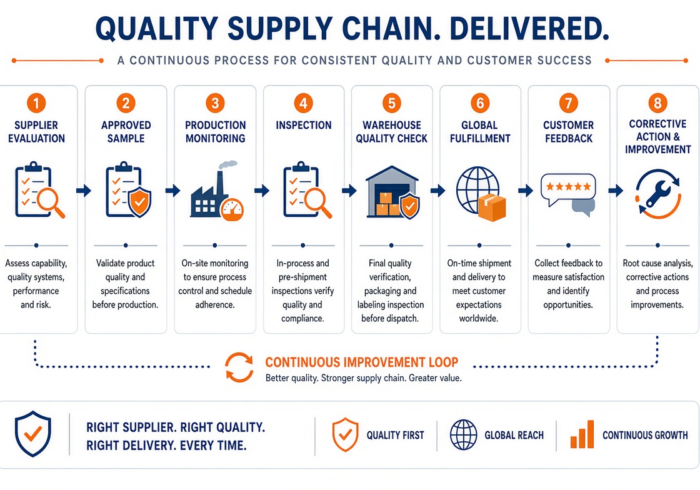
End-to-end service coverage. The platform offers China product sourcing, dropshipping, OEM/ODM manufacturing, quality inspection, free warehousing, and global fulfillment.
Diverse buyer support. LooperBuy serves e-commerce platform self-operated procurement, marketplace sellers, local brick-and-mortar retailers with China sourcing needs, and more.
Global logistics at competitive rates. The platform’s integrated logistics network ensures fast, flexible shipping to over 40 countries.
From Product Forecast to Sourcing Action: What Smart Buyers Are Doing
Based on the data and trends outlined above, here’s what a forward-looking product forecast strategy looks like in 2026:
Prioritize platform-based sourcing. The B2B e-commerce platform market is entering a phase where digital commerce is inseparable from enterprise transformation. Single-supplier relationships are giving way to marketplace models that offer multi-vendor comparison and transparent pricing.
Embrace AI-enhanced decision-making. Machine-learning engines embedded in procurement suites now predict demand, recommend suppliers, and auto-approve low-risk purchases. SAP Ariba’s generative AI assistant trimmed cycle times by 30%. Buyers who ignore these capabilities will fall behind.
Diversify without losing control. The goal isn’t just to add suppliers—it’s to add the right suppliers efficiently. Platforms like LooperBuy that provide vetting, quality inspection, and fulfillment integration make diversification manageable.
Focus on total cost of ownership, not just unit price. In 2026, procurement leaders are shifting from cost-focused to value-focused sourcing. This means considering logistics, payment friction, quality assurance, and supplier reliability alongside price.
The Bottom Line
The product forecast for 2026 is unambiguous: B2B e-commerce is growing at an unprecedented rate, China’s manufacturing capabilities are becoming more sophisticated, and AI is transforming how sourcing decisions are made. For international brands, wholesalers, and manufacturers, the question isn’t whether to source from China—it’s how to source smarter, faster, and more cost-effectively.
LooperBuy offers a compelling answer. By combining direct factory access, multi-currency payments, integrated logistics, and end-to-end service coverage, the platform addresses the core challenges of cross-border B2B sourcing in 2026. Whether you’re a small business looking to enter the Chinese market or an established brand seeking to optimize your supply chain, the tools for success are available.
Ready to transform your sourcing strategy?
Visit LooperBuy today and discover how one-stop B2B sourcing can give your business the competitive edge it needs in 2026 and beyond.
FAQs
Q1: What is the projected growth of the B2B e-commerce market in 2026?
The B2B e-commerce market is forecast to grow from USD 33.02 trillion in 2025 to USD 36.86 trillion in 2026, with further growth to USD 61.66 trillion by 2031 at a CAGR of 10.84%.
Q2: Is China still a reliable sourcing destination in 2026?
Yes. China remains the world’s primary manufacturing source, with exports reaching a record USD 3.77 trillion in 2025. The country’s manufacturing sector is upgrading toward high-end, value-added production, with industrial robot exports growing 48.7% in 2025.
Q3: How is AI changing B2B procurement in 2026?
AI is being integrated across the entire procurement process—from demand forecasting and cost estimating to negotiations and supplier coordination. AI-native platforms can compress RFx cycle times from weeks to days and execute negotiation strategies beyond human capability.
Q4: What services does LooperBuy offer for international buyers?
LooperBuy provides China product sourcing, dropshipping, OEM/ODM manufacturing, quality inspection, free warehousing, and global fulfillment. The platform connects buyers directly with Chinese factories and supports multi-currency payments.
Q5: Why should businesses use a B2B sourcing platform instead of direct supplier relationships?
Platforms offer multi-vendor comparison, transparent pricing, integrated logistics, payment facilitation, and quality assurance. As supply chains diversify, platforms provide the efficiency and control needed to manage multiple supplier relationships at scale.
Article Introduction (300 characters):
This article examines the 2026 product forecast for global B2B sourcing, analyzing market data, procurement trends, and China’s manufacturing evolution. It explores how AI is transforming procurement, why diversification demands smarter sourcing solutions, and how LooperBuy’s one-stop platform helps international businesses source Chinese products efficiently. Backed by industry research and real data.
References
- Mordor Intelligence. (2026). B2B E-commerce – Market Share Analysis, Industry Trends & Statistics, Growth Forecasts (2026-2031). Research and Markets. https://www.researchandmarkets.com/reports/6074196/b2b-e-commerce-market-share-analysis-industry
- QIMA. (2026, January 15). Q1 2026 Supply Chain Barometer: Global Sourcing Trends, Risk & Opportunities. https://www.qima.com/newsroom/news/news-q1-2026-barometer
- Inverto/BCG. (2026). Procurement Trends 2026. https://inverto.com/en/procurement-trends-2026/
- Wedbush Investor. (2026, July 24). High-End Manufacturing Drives China’s Foreign Trade Growth in 2026. https://investor.wedbush.com/wedbush/article/abnewswire-2026-7-24-high-end-manufacturing-drives-chinas-foreign-trade-growth-in-2026
- Research and Markets. (2026). Wholesale Global Market Report 2026. https://www.giiresearch.com
- Arkestro/Gartner. (2026). 2026 Gartner Market Guide for Sourcing Applications. https://arkestro.com
- DP World. (2026). Global Trade Observatory Survey. https://www.dpworld.com
Hot Tags
B2B e-commerce market size 2026, China sourcing platform, cross-border procurement trends, global supply chain diversification, AI in B2B procurement, product sourcing forecast, China manufacturing export 2026, B2B wholesale market growth, one-stop sourcing platform, LooperBuy B2B services