Amazon dropshipping can still be profitable in 2026, but only for sellers who understand margins, shipping speed, supplier quality, and customer expectations. This guide rebuilds the topic from the ground up with practical steps, market context, and sourcing insights for global B2B sellers.
Yes—Amazon dropshipping can still be profitable in 2026, but the winning formula is very different from a few years ago. The businesses that survive today are built on reliable suppliers, fast fulfillment, disciplined pricing, and strong customer experience, not on random product uploads and wishful thinking.
Amazon still offers one of the strongest buyer-intent environments in e-commerce, which means good listings can convert well if the operational side is under control. But fees, returns, shipping delays, and ad costs can erase margins quickly, so profitability now depends on execution.
Table of Contents
What Changed in 2026
The biggest shift is that Amazon customers now expect near-Prime delivery speed even from third-party sellers. That puts pressure on suppliers, inventory monitoring, and order handling.
Another change is that competition has become more professional. Sellers increasingly use automation, data-driven product selection, and tighter operational workflows, which leaves less room for low-effort arbitrage.
Why This Model Still Works
Amazon still gives sellers immediate access to high-intent traffic, which is hard to replicate on a standalone store. If you pair that traffic with the right product and a clean fulfillment system, the model can still produce steady profit.
It also remains attractive because sellers can test demand without heavy inventory risk. That makes it useful for new entrepreneurs and for experienced merchants who want to validate products before scaling.
Where Most Sellers Lose Money
Most failures happen in the same places: poor supplier quality, weak pricing discipline, slow shipping, and thin margins. Once you add Amazon referral fees, ad spend, returns, and shipping costs, a seemingly profitable product can turn negative fast.
A second common problem is treating Amazon as a shortcut instead of an operating model. In practice, this business rewards careful systems, not shortcuts.
Amazon Dropshipping Profit Drivers
| Profit Driver | Why It Matters | What to Do |
| Product margin | Low margins disappear after fees and ads | Target products with enough spread to survive promotions |
| Shipping speed | Fast delivery improves conversion and reviews | Use suppliers with domestic or fast-fulfillment options |
| Listing quality | Better pages convert more traffic | Improve titles, bullets, images, and A+ content |
| Supplier reliability | Stockouts and delays damage accounts | Work only with dependable suppliers |
| Cost control | Hidden fees reduce net profit | Track landed cost before listing |
This table is useful because it gives readers a fast decision framework before they start sourcing.
What Makes It Profitable
The most profitable sellers focus on evergreen demand, not hype. Categories like home goods, pet products, office tools, and practical accessories often outperform fad items because they sell consistently and generate repeat demand.
They also protect margins with better sourcing and smarter logistics. This is where a platform like Looperbuy fits naturally, because it helps global sellers reduce the cost and complexity of sourcing from China while avoiding the burden of managing everything manually.
A Better Way to Source
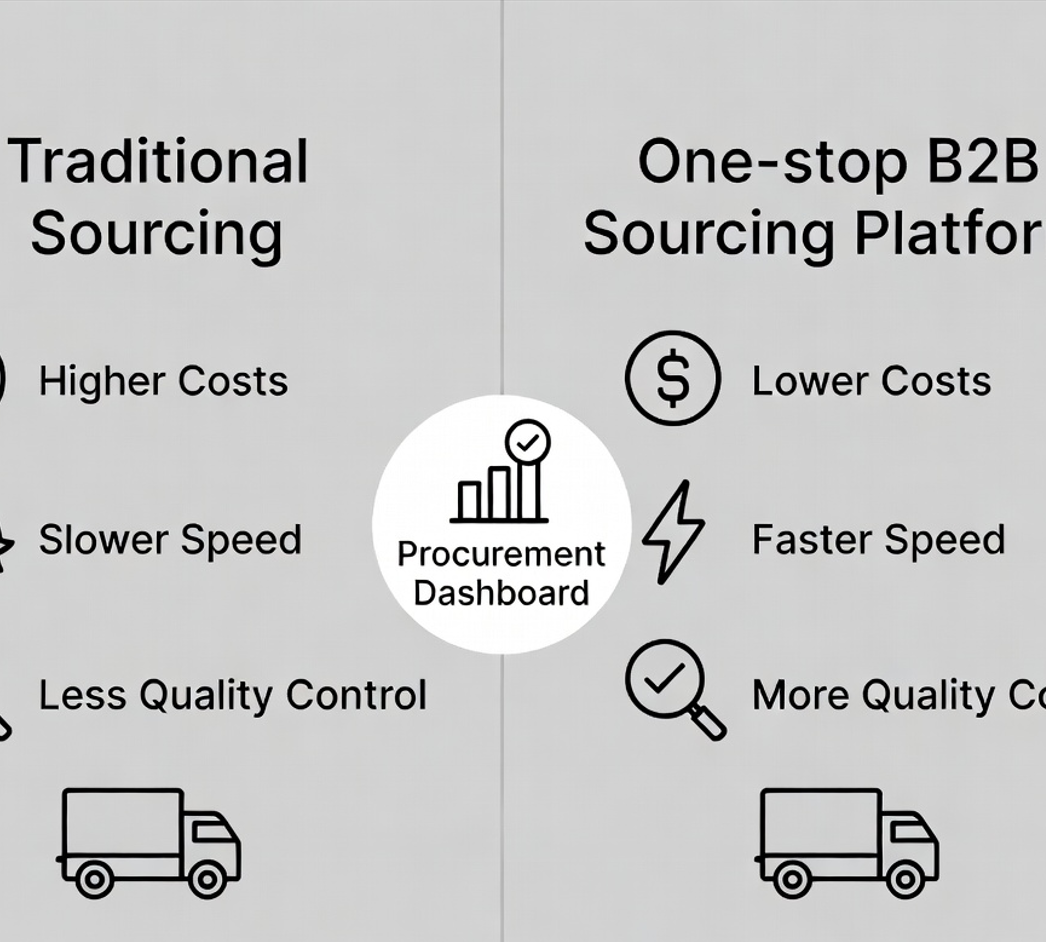
For B2B sellers, the biggest hidden cost is not the product itself—it is the friction around procurement. Multiple suppliers, hidden fees, inconsistent quality, and fragmented logistics all eat into profit and time.
A one-stop sourcing platform can reduce this friction by centralizing supplier access, pricing visibility, shipment handling, and order management. That is especially valuable for sellers who want to move beyond small tests and build a repeatable supply chain.
Latest Market Signals
Recent industry commentary shows that global B2B e-commerce and cross-border procurement continue to grow, while buyer expectations are becoming more digital and more operationally demanding. At the same time, dropshipping as a model remains viable, but only when sellers build around efficiency rather than low-cost shortcuts.
The practical takeaway is simple: the opportunity still exists, but the margin for error is smaller. Sellers who can control costs and speed will outperform those chasing the cheapest product.
What To Sell
The strongest Amazon dropshipping products usually share three traits: stable demand, reasonable margins, and low return risk. That is why products that solve everyday problems often work better than novelty items.
Good categories include:
– Home organization.
– Kitchen accessories.
– Pet supplies.
– Office essentials.
– Auto accessories.
– Fitness accessories.
A Practical Workflow
1. Identify one narrow niche with repeated demand.
2. Validate that the product has enough margin after fees.
3. Check whether shipping can stay fast and consistent.
4. Confirm supplier reliability before you list.
5. Optimize the listing for clarity and conversion.
6. Launch with controlled ad spend.
7. Review data weekly and cut weak SKUs quickly.
This workflow helps sellers avoid the common trap of listing too many products before they have a stable operating process.
When Looperbuy Helps Most
Looperbuy is most useful when a seller wants to source Chinese products with less operational drag. Its value is strongest for merchants who need reliable procurement, lower logistics friction, and a cleaner buying process across categories.
For global B2B sellers, that means less time coordinating suppliers and more time improving margin, assortment, and customer experience. In a market where speed and control matter, that can be a real competitive edge.
If your goal is to build a more scalable Amazon or cross-border dropshipping operation, the next step is to tighten sourcing, reduce logistics friction, and standardize your supplier workflow. Looperbuy is positioned to support that process for global B2B sellers who want more control with less overhead.
FAQ
1. Is Amazon dropshipping still profitable in 2026?
Yes, but only if you manage margins, shipping speed, supplier quality, and compliance carefully.
2. What products work best for Amazon dropshipping?
Evergreen products with consistent demand, low return risk, and enough margin after fees usually work best.
3. Why do many Amazon dropshippers fail?
They usually fail because of thin margins, unreliable suppliers, poor listing quality, and weak cost control.
4. How can Looperbuy help?
Looperbuy can help sellers source Chinese goods with less procurement friction, better logistics coordination, and a more centralized workflow.
5. Should beginners start with Amazon dropshipping?
Beginners can start, but they should begin with a narrow niche, small test budgets, and a strong focus on fulfillment quality.
6. Is fast shipping important?
Yes. Fast shipping has become a major factor in conversion, reviews, and account stability.
References
1. Looperbuy, “Simplifying B2B Procurements: An Expert Review of LooperBuy’s One-Stop Sourcing from China.” [looperbuy]
2. Looperbuy, “The Strategic Advantages of B2B Ecommerce: A Global Sourcing Expert’s Guide to Cross-Border Procurement in 2026.” [blog.looperbuy]
3. Looperbuy, “Why Sourcing Services Firms Are Shifting to One-Stop B2B…” [looperbuy]
4. Looperbuy, “The Strategic Advantage of Using a Modern B2B…”[looperbuy]
5. Doba, “Amazon Dropshipping 2026: Costs, Fees & Profit Strategy.” [doba]
6. AutoDS, “Is Amazon Dropshipping Profitable In 2026? Beginners…”[autods]
7. FluentCart, “Is Dropshipping Worth It in 2026? You’ll Be Surprised!” [fluentcart]
8. Looperbuy attachment article excerpt, “Is Amazon Dropshipping Still Profitable? Discover the Secrets – Doba.” [doba]