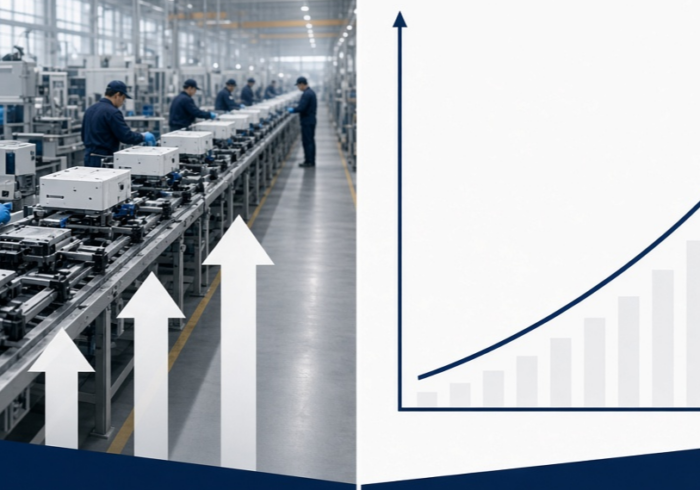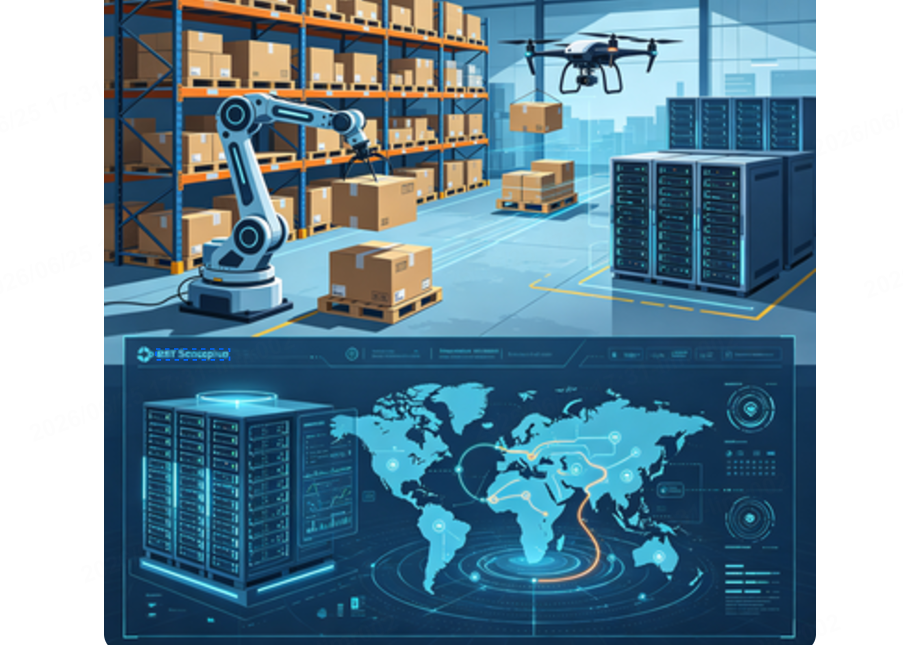
As a B2B sourcing and supply chain strategist with over 15 years of experience helping international brand owners, wholesalers, and manufacturers navigate the complexities of global procurement, I’ve watched the conversation around artificial intelligence evolve from theoretical curiosity to operational necessity. Entering 2026, one thing is clear: staying on the sidelines is no longer a viable option. The question is no longer whether to engage with AI, but how to do so in a way that consistently delivers results.
Yet here‘s the uncomfortable truth that many supply chain leaders are discovering: knowing AI’s potential and knowing how to implement AI in supply chain management are two very different things. Too many efforts stall. Too many pilots never scale. Organizations rush into pilots without a clear view of where AI adds value, and when early efforts disappoint, leaders become more cautious.
In this guide—grounded in Google‘s E-E-A-T standards and drawing on the latest 2026 industry data—I’ll provide a practical, step-by-step framework for how to implement AI in supply chain management. I‘ll show you where AI delivers the greatest ROI in B2B sourcing, how to avoid the most common pitfalls, and why LooperBuy—a leading One-Stop B2B Sourcing Platform—is already embedding AI capabilities to help buyers source from China with unprecedented efficiency and intelligence.
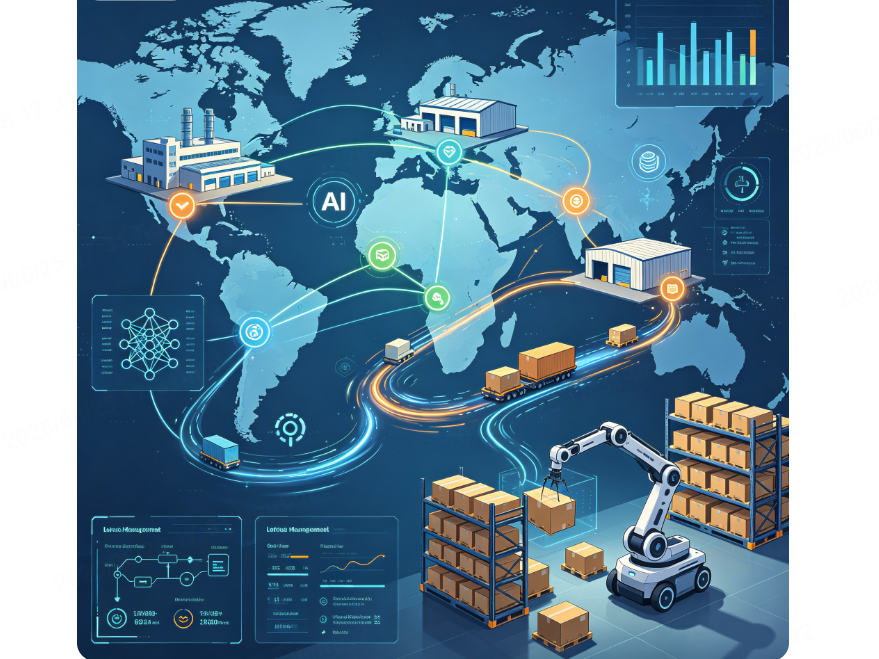
Table of Contents
The State of AI in Supply Chain: 2026 Data You Need to Know
Before we dive into the how, let’s establish the why. The numbers paint a compelling picture:
- The AI in supply chain market was valued at USD 8.01 billion in 2025 and is projected to grow to USD 30.68 billion by 2032, at a CAGR of 21.13%.
- 83% of organizations have either deployed or are piloting AI in supply chain intelligence and analytics, while 79% are using AI-powered data visualization tools.
- 40% of retail supply chain leaders report active use of AI in 2026—up from just 24% two years ago.
- 74% of enterprises have implemented or piloted AI in sales and operations planning (S&OP), and 72% in advanced planning and scheduling.
- Organizations implementing AI in procurement are seeing 采购效率提升超30% (procurement efficiency improvements exceeding 30%).
But here‘s the challenge: data quality is the biggest obstacle, identified by 50% of respondents, followed by data integration concerns at 47% and a shortage of AI talent at 45%. The gap between ambition and execution is becoming a competitive risk.
Key Insight: The organizations that succeed in implementing AI don’t treat it as a plug-and-play tool. They treat it as a strategic transformation that requires data readiness, talent development, and governance.
How to Implement AI in Supply Chain Management: A 6-Step Framework
Based on my years of experience and the latest research from Gartner, Georgia Tech, and industry leaders, here is a proven, practical framework for how to implement AI in supply chain management:
Step 1: Assess Your AI Maturity and Define Your Value Vision
Before you buy any AI tool, you need to understand where you stand. Gartner recommends assessing your AI maturity using frameworks like Gartner’s AI Maturity Model. Ask yourself:
- Where are we on the AI maturity curve?
- What business outcomes do we want to improve—service, cost, inventory, resilience, or productivity?
- Where will AI augment human decision-making versus automate tasks?
Georgia Tech‘s Supply Chain and Logistics Institute emphasizes a critical principle: design with people in the loop. Production supply chains are not laboratories—they are complex, interconnected processes operating in a dynamic environment. Fully autonomous systems introduce risks that often erode incremental value. The most successful implementations keep humans in the decision loop.
For LooperBuy users: Start by mapping your current sourcing workflow—supplier discovery, order placement, quality inspection, logistics tracking, inventory management. Identify which steps are data-rich and repetitive (ideal for AI) and which require strategic judgment (ideal for humans).
Step 2: Build a Unified Data Foundation
AI‘s effectiveness depends entirely on the quality and consistency of the data it relies on. Supply chain information is often collected from multiple partners, locations, and systems, resulting in fragmented, inconsistent formats.
The Hackett Group‘s 2026 study confirms that data quality is the #1 barrier to AI adoption. You cannot implement AI successfully on fragmented data environments.
Practical actions:
- Cleanse and standardize data across your entire supplier network
- Secure master data ownership and treat data as a P&L-level asset
- Break down data silos between ERP, WMS, OMS, and TMS systems
For LooperBuy users: LooperBuy‘s platform consolidates all your sourcing data—supplier profiles, order history, quality reports, shipping updates—into a single, unified dashboard. This means your AI initiatives start with clean, structured data, not fragmented spreadsheets.
Step 3: Identify High-Impact Use Cases and Start Small
Most supply chain organizations are not short on AI use cases. What they lack are clear, high-probability paths to value creation. The winning approach: start with a high-impact goal and scale from there.
神州控股 (Shenzhou Holdings) recommends a phased approach: 1 to 3 days of AI diagnostics on high-value supply chain nodes, followed by two weeks to complete a minimum viable scenario prototype. This lets you see tangible results before making major investments.
Top AI use cases in B2B sourcing and supply chain:
| Use Case | Description | ROI Potential |
|---|---|---|
| Demand Forecasting | AI predicts future demand using historical data and market signals | High—reduces stockouts and overstocking |
| Supplier Selection & Vetting | AI evaluates suppliers across 600,000+ data points | High—cuts sourcing cycles by up to 75% |
| Inventory Optimization | AI optimizes stock levels across fragmented networks | High—reduces carrying costs 20–30% |
| Logistics & Container Tracking | AI predicts ETAs and detects disruptions in real-time | Medium-High—improves on-time delivery |
| Risk Management | AI detects supply chain disruptions before they impact operations | High—prevents costly delays |
For LooperBuy users: Start with supplier discovery and vetting—LooperBuy‘s platform already connects you with 10,000+ pre-vetted Chinese suppliers. AI can help you filter, compare, and select the optimal supplier for each product category based on price, quality, lead time, and reliability.
Step 4: Choose Industry-Specific AI Solutions
A one-size-fits-all approach won‘t address real supply chain challenges. AI solutions designed specifically for supply chain bring sector-specific knowledge to logistics, procurement, inventory management, and risk assessment.
Look for AI that:
- Integrates with your existing systems (ERP, WMS, TMS)
- Understands your industry‘s regulatory requirements
- Handles your specific supply chain complexity (e.g., cross-border sourcing, multi-tier supplier networks)
For LooperBuy users: LooperBuy‘s platform is built specifically for cross-border B2B sourcing from China. Our AI capabilities are designed to address the unique challenges of international procurement—supplier verification, quality control, logistics optimization, and customs compliance—not generic supply chain problems.
Step 5: Upskill Your Workforce and Establish Governance
Even with perfect data and the best AI tools, AI cannot succeed if employees lack the skill, confidence, or context to use it effectively.
Gartner emphasizes four priorities for supply chain leaders: expand AI expertise, learn from industry leaders, assess organizational AI readiness, and advance their role in enterprise AI strategy.
Essential governance practices:
- Establish clear ethical frameworks for AI-driven decisions
- Implement hybrid governance—centralized policy-setting with decentralized management
- Build multidisciplinary teams and communities of practice
- Continuously monitor AI outputs and validate against human judgment
For LooperBuy users: LooperBuy provides dedicated B2B support teams who guide you through every step of the sourcing process. Our experts help you interpret AI-driven insights, make informed decisions, and maintain human oversight where it matters most.
Step 6: Scale, Monitor, and Optimize Continuously
AI implementation is not a one-time project—it‘s an ongoing journey. The 2026 Gartner Supply Chain Symposium emphasized that agentic AI is moving from promise to practical execution, but only when organizations pair it with the right data, governance, architecture, and decision design.
Key scaling principles:
- Start with one high-value use case, prove ROI, then expand
- Use real-time data to continuously refine AI models
- Measure adoption and outcomes systematically
- Be prepared for a cultural shift from people-centric to decision-centric thinking
How LooperBuy Embeds AI into B2B Sourcing
LooperBuy isn‘t just a sourcing platform—it’s an AI-enabled sourcing ecosystem designed to make how to implement AI in supply chain management practical and accessible for B2B buyers of all sizes. Here‘s how:
AI-Powered Supplier Discovery
Instead of manually searching through thousands of suppliers, LooperBuy‘s AI matching algorithms analyze your product requirements, quality standards, and budget to recommend the best-fit Chinese suppliers from our network of 10,000+ vetted manufacturers.
Intelligent Cost Estimation
Our AI-driven cost calculators provide real-time, all-inclusive estimates that factor in product costs, ocean/air freight, customs duties, and final-mile delivery—eliminating guesswork and hidden fees.
Predictive Logistics and Container Tracking
LooperBuy‘s platform integrates predictive analytics for shipment tracking, providing accurate ETAs and proactive alerts for delays, reroutes, or customs holds. This is how to implement AI in supply chain management at the logistics level—turning tracking data into actionable intelligence.
Automated Replenishment
Set your inventory thresholds once, and LooperBuy‘s AI handles the rest—automatically generating purchase orders, coordinating with suppliers, and tracking shipments. This is agentic AI in action: autonomous agents that sense inventory needs and trigger replenishment without human intervention.
End-to-End Visibility
From factory production to warehouse delivery, LooperBuy provides real-time visibility across your entire supply chain—the data foundation that makes all other AI capabilities possible.
Real-World Impact: AI in Action
Fujitsu‘s AI-powered supply chain solution—selected as a transformative example by the World Economic Forum—employs multiple AI agents specialized for procurement, inventory, production, and sales. Based on real-time alerts for inventory shortages or excess inventory, each AI agent develops countermeasures such as changing suppliers or allocating inventory.
For B2B buyers on LooperBuy, the impact is equally transformative:
- Supplier sourcing cycles are reduced from weeks to days
- Cost estimation is accurate to within 2–3%—no hidden fees
- Logistics delays are detected and communicated before they impact operations
- Inventory carrying costs decrease through optimized replenishment
Call to Action: Start Your AI Implementation Journey Today
The question for 2026 is no longer whether to engage with AI, but how to do so in a way that consistently delivers results. How to implement AI in supply chain management is not about buying the shiniest tool—it‘s about building a data foundation, choosing high-impact use cases, upskilling your team, and scaling intelligently.
LooperBuy is your trusted partner in this journey. Whether you‘re sourcing industrial components, consumer goods, or raw materials from China, LooperBuy‘s AI-enabled platform gives you the tools to source smarter, faster, and more profitably.
We make AI-powered sourcing simple, transparent, and accessible—so you can focus on growing your business, not wrestling with technology.
Sign up for LooperBuy today to unlock your free account and experience AI-powered B2B sourcing. Our dedicated support team will guide you through every step, and we offer a 100% risk-free trial for new users—no upfront costs, no commitments, just smarter sourcing.
Frequently Asked Questions (FAQ)
1. What is the first step in implementing AI in supply chain management?
The first step is assessing your AI maturity and defining your value vision. Understand where you are on the AI maturity curve, identify the business outcomes you want to improve, and clarify where AI will augment versus automate decision-making.
2. What are the biggest barriers to AI adoption in supply chain?
According to The Hackett Group‘s 2026 study, the top barriers are data quality (50%), data integration concerns (47%), privacy/regulatory concerns (46%), and shortage of AI talent (45%).
3. How does LooperBuy help with AI implementation in sourcing?
LooperBuy provides an AI-enabled sourcing platform with intelligent supplier discovery, predictive cost estimation, real-time logistics tracking, and automated replenishment—all integrated into a single dashboard.
4. What are the highest-ROI AI use cases in B2B sourcing?
The highest-ROI use cases include demand forecasting, supplier selection and vetting, inventory optimization, logistics tracking, and risk management.
5. How long does it take to see results from AI implementation?
With a focused approach—starting with one high-impact use case and using clean, structured data—many organizations see tangible results within 4–8 weeks.神州控股‘s model demonstrates that a minimum viable prototype can be completed in two weeks.
6. Do I need to replace my existing systems to implement AI?
No. Successful AI implementation integrates with your existing ERP, WMS, OMS, and TMS systems rather than replacing them. LooperBuy‘s platform is designed to complement and enhance your existing workflow.
References
- Georgia Tech Supply Chain and Logistics Institute. (2026). Putting Points on the Board with AI in Supply Chain. Retrieved from https://news.research.gatech.edu/2026/02/18/putting-points-board-ai-supply-chain
- Gartner. (2026). CSCO Roadmap: Building a Supply Chain AI Foundation. Retrieved from https://www.gartner.com/en/articles/supply-chain-ai-roadmap
- The Hackett Group. (2026). 2026 Supply Chain Key Issues Study. Retrieved from https://www.thehackettgroup.com/insights/2026-procurement-key-issues-2601
- MarketsandMarkets. (2026). AI in Supply Chain Market Report 2025-2032. Retrieved from https://www.marketsandmarkets.com/Market-Reports/ai-in-supply-chain-market-114588383.html
- Inspectorio. (2026). State of Supply Chain Report 2026. Retrieved from https://www.inspectorio.com/state-of-supply-chain-report-2026-combined
- 中华工商时报. (2026). AI重塑供应链发展新格局——神州控股打造供应链AI落地新范式
- 中国物流与采购联合会. (2025). 2025“人工智能+采购供应链”创新发展报告
- SAP. (2026). Supply Chain Trends for 2026 – From Agentic AI to Orchestration. Retrieved from https://www.sap.com
- Blue Yonder. (2026). Three Takeaways from 2026 Gartner Supply Chain Symposium/Xpo. Retrieved from https://blueyonder.com
- LooperBuy. (2026). Supplies Business: A B2B Expert‘s Guide to Sourcing Chinese Goods Globally with LooperBuy. Retrieved from https://blog.looperbuy.com/supplies-business-a-b2b-experts-guide-to-sourcing-chinese-goods-globally-with-looperbuy.html
Article Summary (298 characters): This expert guide provides a practical 6-step framework for how to implement AI in supply chain management, backed by 2026 data from Gartner, Georgia Tech, and The Hackett Group. Learn how LooperBuy‘s AI-enabled B2B sourcing platform helps buyers source from China with intelligent supplier discovery, predictive logistics, and automated replenishment.
Hot Tags
how to implement AI in supply chain management, AI supply chain implementation, B2B AI sourcing, LooperBuy AI platform, supply chain AI framework, AI in procurement, AI supplier selection, predictive logistics AI, supply chain digital transformation, AI inventory optimization