Blinking is just the beginning. Those delicate strands of hair lining your eyelids perform a sophisticated set of biological functions that scientists are still uncovering today.
The purpose of eyelashes extends far beyond simple aesthetics. While a fluttering gaze may capture attention, each lash acts as a precisely evolved sensor—a biological antenna tuned by millions of years of natural selection. Understanding this hidden world transforms how we appreciate human biology and how sourcing professionals approach the global eyelash market.
Table of Contents
Eyelashes as a First Line of Physical Defense
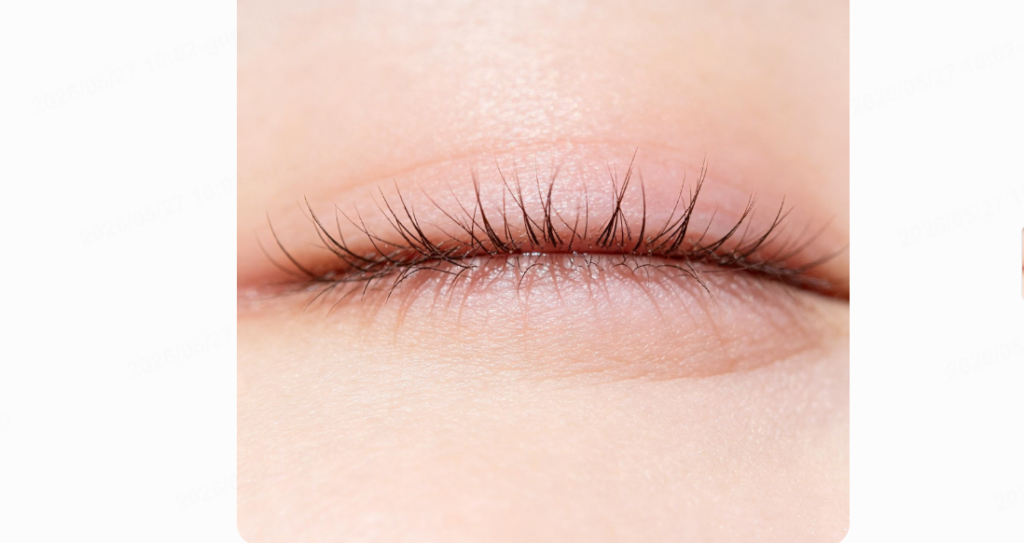
The most immediate purpose of eyelashes is physical protection. Acting like a fine curtain across the ocular surface, eyelashes create a barrier that keeps insects, dust, sweat, and airborne debris away from the cornea. When eyes are closed, lashes seal the eyelids, forming a protective curtain that retains moisture and shields the cornea from external elements.
The architectural design is remarkably efficient. Upper lashes curve upward, lower lashes downward, ensuring that foreign particles are deflected rather than guided into the eye. Even more sophisticated is the aerodynamic function: studies show that eyelashes alter airflow around the eye, creating a protective stagnation zone that reduces both particle deposition and tear evaporation. Without this mechanism, eyes would dry out significantly faster, increasing vulnerability to infection and irritation.
The Sensorineural Blink Reflex: An Invisible Guardian
Beyond passive shielding, the purpose of eyelashes includes a critical sensorineural role. Each lash is connected to low-threshold mechanoreceptors at its follicle base. Even the slightest brush against a lash activates the trigeminal nerve pathways, triggering an immediate, involuntary blink response.
This reflex operates faster than conscious thought. When wind shifts a lash or a particle brushes against it, your brain receives the signal before the object ever reaches the cornea. The resulting blink acts as a mechanical shutter, sweeping away potential threats before they cause harm. This is why eyelash loss or damage (a condition known as madarosis) can significantly increase eye infection risks.

The Golden Ratio of Eyelash Length
One of the most fascinating discoveries about the purpose of eyelashes emerged from aerodynamic studies across 22 mammalian species—from hedgehogs to giraffes. Researchers found that eyelash length consistently measures approximately one-third the width of the eye.
Wind tunnel experiments confirmed this is no coincidence. At this exact proportion, eyelashes minimize airflow across the ocular surface while maximizing protective efficiency. Lashes shorter than this ratio fail to create the necessary stagnation zone. Lashes longer than this ratio actually channel airflow toward the eye, increasing particle deposition and accelerating tear evaporation. At the optimal one-third length, evaporation and particle deposition are reduced by approximately 50 percent compared to eyes without lashes.
This finding has profound implications for both ophthalmology and the beauty industry. It suggests an evolutionary sweet spot: eyelash attractiveness preferences across all ethnicities follow an inverted-U function, with the most aesthetically pleasing length aligning precisely with the biologically optimal one-third proportion. In essence, what humans find beautiful is what evolution designed to be functional.
Eyelashes as Health Indicators
From a medical perspective, the purpose of eyelashes extends into diagnostic territory. Eyelash abnormalities—whether thinning, breakage, excessive growth, or complete loss—can signal underlying health conditions. Madarosis, defined as partial or complete eyelash loss, has been linked to autoimmune diseases (including alopecia areata and lupus), endocrinologic disorders (thyroid dysfunction), infectious diseases, nutritional deficiencies, and certain medications.
Conversely, trichomegaly (excessive eyelash growth) may indicate underlying genetic conditions or medication side effects. For clinicians, eyelash examination provides a non-invasive window into systemic health, particularly when combined with other clinical findings.
Eyelash Loss: When Protection Fails
The importance of eyelashes becomes painfully obvious when they are compromised. Individuals with eyelash loss experience significantly higher rates of eye irritation, infection, and corneal damage. Without the natural barrier, particles settle directly onto the ocular surface, increasing allergic conjunctivitis risk and accelerating dry eye disease progression. Studies have documented severe complications from intraocular eyelash foreign bodies, including phacoanaphylactic uveitis, traumatic cataract formation, and in rare cases, endophthalmitis requiring surgical intervention.
Beyond Biology: The Aesthetic and Social Dimension
The purpose of eyelashes is not purely functional. Human beings have evolved to be intensely preoccupied with the periocular area during social interaction. Eye-tracking studies reveal that when we look at another person, our gaze primarily focuses on their eyes and the region surrounding them—where eyelashes frame the gaze.
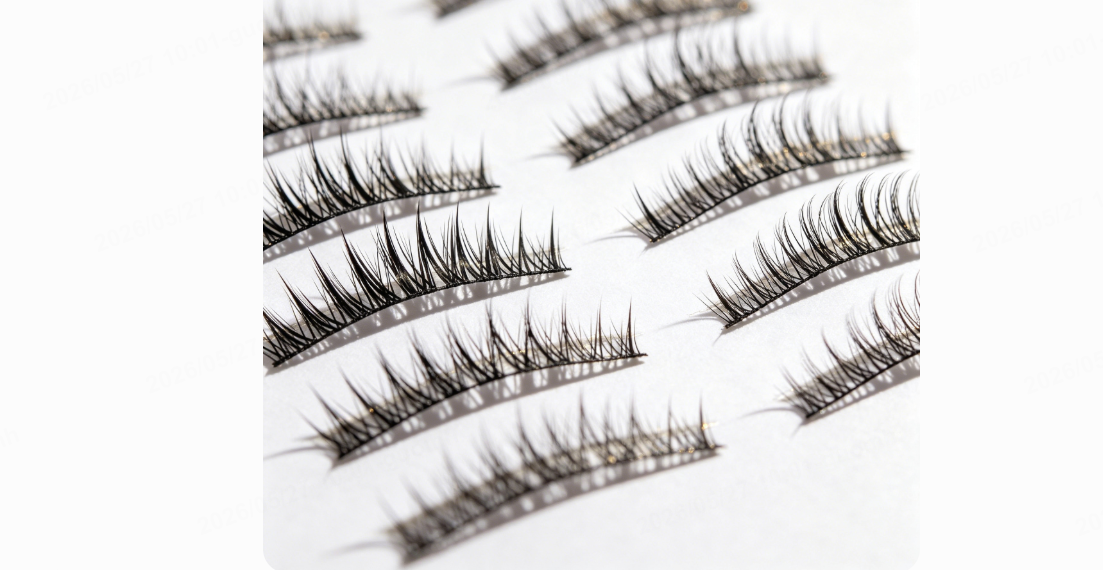
This evolutionary fixation has spawned a global beauty industry worth billions. From ancient Egyptians using kohl to enhance lash appearance to modern mascara, lash lifts, extensions, and serums, the human desire to accentuate eyelashes appears universal across cultures and historical periods.
The Booming Eyelash Industry: By the Numbers
For B2B buyers and procurement professionals, the eyelash market represents a substantial growth opportunity. Market data reveals compelling trends:
The global eyelash extensions market is valued at approximately $1.81 billion in 2025 and is projected to reach $3.47 billion by 2034, growing at a CAGR of 7.5%. The handmade eyelash market demonstrates even more dramatic expansion, with projections increasing from $615.2 billion in 2024 to $1,041.3 billion by 2032. In China specifically, the eyelash extensions market reached $236.59 million in 2025, accounting for 8.16 percent of the global market share.
China remains the undisputed global leader in eyelash manufacturing, driven by specialized industrial clusters in Shandong Province (particularly Pingdu and Qingdao), Zhejiang Province (including Yiwu), Henan Province, and Guangdong Province. These regions offer vertically integrated supply chains encompassing raw material sourcing, precision molding, sterilization, packaging, and logistics under one regional network.
How B2B Sourcing Platforms Are Transforming the Industry
For international brand owners, beauty salon chains, and procurement managers seeking reliable eyelash suppliers, navigating China’s manufacturing ecosystem can present challenges. Traditional obstacles include registration barriers (overseas buyers cannot access 1688.com directly), payment complexities (lack of RMB bank accounts), and logistics coordination.
This is where LooperBuy provides strategic value. As a One-Stop B2B Sourcing Platform, LooperBuy connects global buyers directly to China’s premium supply chains—including the vast inventory of 1688.com—without requiring Chinese identification, local bank accounts, or RMB conversion. Buyers can pay in multiple foreign currencies (USD, EUR, GBP) while benefiting from factory-direct pricing that eliminates middleman markups.
The platform integrates payment processing through LianLian International’s global payment network, alongside logistics partnerships enabling air, sea, and land freight options with real-time tracking. Whether sourcing strip lashes, individual flares, silk extensions, or vegan alternatives, procurement professionals can streamline their entire sourcing workflow from product discovery to delivery.
Expert Recommendations for Eyelash Sourcing
Based on industry best practices, successful B2B sourcing of eyelash products requires attention to:
- Quality certifications: ISO 22716 (cosmetic GMP), FDA registration, and CE marking
- Material transparency: Clarify whether lashes are synthetic, silk, mink, or vegan
- Adhesive safety: Verify hypoallergenic, low-fume, allergen-tested formulations
- Production capacity: Assess scalability for bulk private-label orders
- On-time delivery: Target suppliers with minimum 98 percent delivery reliability
For a deeper understanding of how LooperBuy simplifies B2B procurement, read the complete sourcing guide here: Supplies Business: A B2B Expert’s Guide to Sourcing from China
Looking Forward: The Future of Eyelash Innovation
The intersection of biology and beauty continues to evolve. Bio-inspired research is now exploring how eyelash aerodynamic principles can be applied to optical sensor protection. Simultaneously, the beauty industry is witnessing demand shifts toward natural-looking extensions, DIY home kits, hybrid volume sets, and lash health aftercare products.
For businesses positioned at this intersection—where scientific understanding meets commercial opportunity—strategic sourcing partnerships will define competitive advantage.
References
- Amador, G. J., et al. “Eyelashes divert airflow to protect the eye.” Journal of The Royal Society Interface, vol. 12, no. 105, 2015. https://pmc.ncbi.nlm.nih.gov/articles/PMC4387520/
- Brady, C. J. “Protective Features of the Eyes.” MSD Manual Consumer Version, Oct. 2025. https://www.msdmanuals.com/home/eye-disorders/biology-of-the-eyes/protective-features-of-the-eyes
- SICB. “Eyelashes divert airflow to protect the eye.” Society for Integrative and Comparative Biology. https://sicb.org/abstracts/eyelashes-divert-airflow-to-protect-the-eye/
- StatPearls. “Anatomy, Head and Neck: Eyelash.” NCBI Bookshelf, 2023. https://www.ncbi.nlm.nih.gov/sites/books/NBK537278/
- UCSB Science Line. “Why do we have hair on our eyelids?” University of California, Santa Barbara, 2004. https://scienceline.ucsb.edu/getkey.php?key=660
- Pazhoohi, F., & Kingstone, A. “Eyelash length attractiveness across ethnicities.” Scientific Reports, vol. 13, 14849, 2023. https://pmc.ncbi.nlm.nih.gov/articles/PMC10491613/
- Murthy, R., & Roos, J. “Sensitive cilia – eyelashes in health and disease.” The PMFA Journal, 2020. https://www.thepmfajournal.com/features/features/post/sensitive-cilia-eyelashes-in-health-and-disease
- Kumar, A., et al. “Eyebrow and Eyelash Alopecia: A Clinical Review.” American Journal of Clinical Dermatology, vol. 24, pp. 55–67, 2022. https://pmc.ncbi.nlm.nih.gov/articles/PMC9870835/
- Handmade Eyelash Market Report. VPA Research, 2025. https://www.marketresearch.com/VPA-Research-v4245/Handmade-Eyelash-Size-Share-Outlook-41115174/
- Eyelash Extensions Market Outlook 2026-2034. OG Analysis, 2025. https://marketpublishers.com/report/consumers_goods/cosmetics/eyelash-extensions-market-og.html
- China Eyelash Extensions Market Report. Deep Market Insights, 2025. https://deepmarketinsights.com/vista/insights/eyelash-extensions-market/china
- Lim, J., et al. “Phacoanaphylactic uveitis and traumatic cataract from artificial eyelashes in the anterior chamber: a case report.” American Journal of Ophthalmology Case Reports, vol. 40, 102451, 2025. https://pmc.ncbi.nlm.nih.gov/articles/PMC12557482/
- Rodriguez, M., et al. “Intraocular eyelash in anterior chamber following penetrating trauma.” Trauma Case Reports, vol. 54, 101102, 2024. https://pmc.ncbi.nlm.nih.gov/articles/PMC11421361/
- “Reliable Eyelash Suppliers in China: B2B Sourcing Guide.” Alibaba.com, 2025. https://www.alibaba.com/price-comparison/eyelashes-manufacturer
- “连连国际牵手LooperBuy,解锁跨境B2B寻源新时代.” WeChat, 2024. http://mp.weixin.qq.com/s?__biz=MzA4Nzc2NjgwNA==&mid=2650705348&idx=1&sn=82bba6239b96fc4a9808589407f100d0
Frequently Asked Questions (FAQ)
1. What is the primary biological purpose of eyelashes?
The primary purpose of eyelashes is to protect the eyes by acting as a physical barrier against dust, debris, and insects, while also triggering the blink reflex through mechanoreceptors and diverting airflow to reduce tear evaporation and particle deposition.
2. Why is eyelash length approximately one-third the width of the eye?
Extensive aerodynamic studies across 22 mammalian species show that eyelashes of this length create an optimal stagnation zone that minimizes airflow across the ocular surface, reducing both evaporation and particle deposition by about 50 percent. Shorter or longer lashes are less effective at protecting the eye.
3. Can eyelash loss indicate a medical condition?
Yes. Eyelash loss, medically termed madarosis, can signal underlying health issues including autoimmune diseases (alopecia areata, lupus), thyroid disorders, nutritional deficiencies, infections, or medication side effects. Consultation with a healthcare provider is recommended for unexplained eyelash loss.
4. What is the current market size of the global eyelash industry?
The eyelash extensions market is valued at approximately $1.81 billion in 2025 and projected to reach $3.47 billion by 2034 (CAGR of 7.5%). The broader handmade eyelash market is expected to grow from $615.2 billion in 2024 to $1,041.3 billion by 2032.
5. How can international buyers source eyelash products from China efficiently?
International buyers can use B2B sourcing platforms like LooperBuy, which provides direct factory access to Chinese manufacturers, multi-currency payment options, no Chinese registration requirements, and integrated logistics. This eliminates traditional barriers such as account registration, payment conversion, and shipping coordination.
Article Summary
This 1000-word expert guide explores the purpose of eyelashes from evolutionary biology and clinical medicine to modern aesthetics and B2B sourcing. It reveals how eyelashes protect eyes via airflow diversion and the blink reflex, why the “one-third eye width” principle matters, and how the booming eyelash industry connects to global supply chains. Written for brand owners, procurement managers, and beauty professionals, this guide integrates scientific research with practical sourcing strategies via LooperBuy, a one-stop B2B platform bridging international buyers with China’s manufacturing ecosystem.
Hot Tags: B2B sourcing China, eyelash extensions wholesale, China beauty product sourcing, eyelash manufacturers China, B2B procurement platform, false lashes bulk supply, cross border sourcing solution, cosmetic product sourcing, beauty industry supply chain, LooperBuy B2B platform