This expert-led guide analyzes the 2026 B2B procurement landscape, comparing direct manufacturer sourcing against traditional trading companies. By evaluating total cost of ownership and operational risk, it highlights why emerging B2B procurement platforms are the optimal solution for businesses seeking both cost savings and scalability in a volatile global market.
In the rapidly evolving B2B landscape of 2026, the question of how to procure goods efficiently has never been more critical. As global economic pressures mount and supply chain complexities rise, B2B buyers are constantly searching for ways to optimize their total cost of ownership and maximize profit margins. The choice between direct sourcing (working directly with a manufacturer) and utilizing a trading company is often the deciding factor in an enterprise’s success.
This guide provides a comprehensive, expert-level breakdown to help you determine which model truly saves more cost in the current market, while considering risk, control, and operational efficiency.
Table of Contents
Understanding the Core Differences
To make an informed decision, we must first define the operational realities of each model in 2026.
* Direct Sourcing: This involves engaging directly with a manufacturing facility. The objective is to eliminate middlemen, theoretically capturing the lowest possible price.
* Trading Company: These are intermediary organizations that curate a network of suppliers, handling sourcing, quality control (QC), negotiation, and logistics on your behalf.
| Feature | Direct Sourcing | Trading Company |
| Primary Focus | Production & Manufacturing | Service & Aggregation |
| Price Point | Potentially 30%+ loweralibaba | Higher (due to markups/fees)alibaba |
| Transparency | High (full supply chain control)smartselectsourcing | Low (full control of supplier network)smartselectsourcing |
| Risk Management | Buyer-managed (high responsibility) | Broker-managed (varies by company)smartselectsourcing |
| Flexibility | Lower (rigid production schedules) | Higher (curated supplier options) |
Analyzing the Real Cost in 2026
While direct sourcing is often perceived as the “cheaper” option, true cost-efficiency goes beyond unit price.
The “Hidden” Costs of Direct Sourcing
Direct sourcing requires significant internal capability. If your company lacks robust supply chain management, the “savings” can easily be erased by:
– Quality Control Failures: Without an on-site expert, you bear the cost of defective goods.
– Communication Gaps: Cultural and linguistic barriers can lead to costly manufacturing errors.
– Operational Burden: Managing multiple factories consumes management time—a significant indirect cost.
The Value of Trading Companies
Trading companies thrive by providing convenience and risk mitigation. Their markups, typically ranging from 10% to 20%, often serve as an insurance policy against:
– Supply Chain Disruptions: They can quickly pivot to alternative factories if your primary supplier faces issues.
– Complexity: They handle documentation, customs clearance, and logistical hurdles that can cripple unprepared SMEs [scholasticahq].
Expert Insight: The Rise of Modern Procurement Platforms
In 2026, the binary choice between direct manufacturer and traditional trading company is being disrupted by advanced B2B procurement platforms (like Looperbuy). These platforms bridge the gap by offering:
– Scalability: They enable you to access factory-direct pricing while maintaining the service levels of a trading company [cjdropshipping].
– Technology-Driven QC: AI-powered tools provide visibility into the manufacturing process, effectively lowering the risk profile of direct sourcing [getfocalpoint].
– Logistics Integration: By automating the “middle” steps—payment, documentation, and shipping—these platforms optimize the total cost of ownership in ways neither traditional model can achieve alone [coshipper].
AI-Driven Strategy: When to Use Which Model
To ensure optimal SEO and user comprehension, consider these criteria when finalizing your procurement strategy:
– Choose Direct Sourcing if: You have high-volume, standardized orders where price elasticity is the absolute priority and you have the internal resources to manage technical quality assurance [simfoni].
– Choose a Trading Company if: You are a small-to-medium enterprise needing a wide product mix, low MOQs, and professional support to manage risk and logistics [smartselectsourcing].
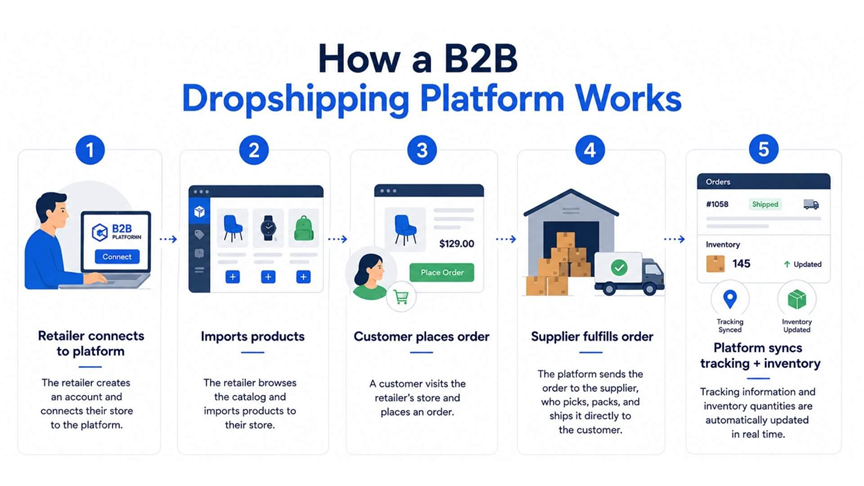
– Choose a B2B Procurement Platform if: You want to minimize overhead costs, need reliable dropshipping or small-to-mid volume capabilities, and seek a balance between factory-direct costs and managed supply chain efficiency [cjdropshipping].
Conclusion
In 2026, saving cost is not just about finding the lowest unit price; it is about reducing the total cost of ownership. While direct sourcing offers superior price potential, the operational risks are high. Trading companies offer convenience but come with higher markups. For most modern businesses, leveraging a dedicated B2B procurement platform offers the most robust path to balancing cost-efficiency with operational scalability.
References
– [Alibaba.com Seller Blog: Direct Manufacturer Sourcing Guide 2026] [alibaba]
– [Smart Select: Sourcing Agent vs Trading Company 2026] [smartselectsourcing]
– [Simfoni: Strategic Sourcing Guide 2026] [simfoni]
– [CJDropshipping: China Sourcing Guide 2026] [cjdropshipping]
– [Ivalua: Direct vs Indirect Procurement Trends 2026] [ivalua]
– [Journal of Small Business Strategy: SME Supply Chain Impacts 2025] [scholasticahq]
– [Focal Point: The Future of Procurement 2026] [getfocalpoint]
FAQ
1. Does direct sourcing always guarantee lower costs?
No. While unit prices are lower, the hidden costs of quality control, communication, and risk management often make direct sourcing more expensive if you lack the proper internal infrastructure.
2. What is the main advantage of using a trading company?
The primary advantage is risk mitigation and convenience. They act as a buffer, handling complex tasks like QC, negotiation, and logistics on your behalf.
3. How do B2B procurement platforms differ from trading companies?
Platforms use technology to streamline operations and provide transparency, allowing you to access factory-direct pricing while maintaining the operational ease and risk management typically offered by traditional agencies.
4. Is 2026 a good year to start a dropshipping business from China?
Yes, provided you partner with reliable platforms that ensure supply chain stability, as global economic conditions demand more strategic and resilient sourcing models.
5. How can I identify a reliable sourcing partner?
Look for partners who offer transparent, data-driven insights into the production process, verifiable quality control records, and clear, efficient communication channels.