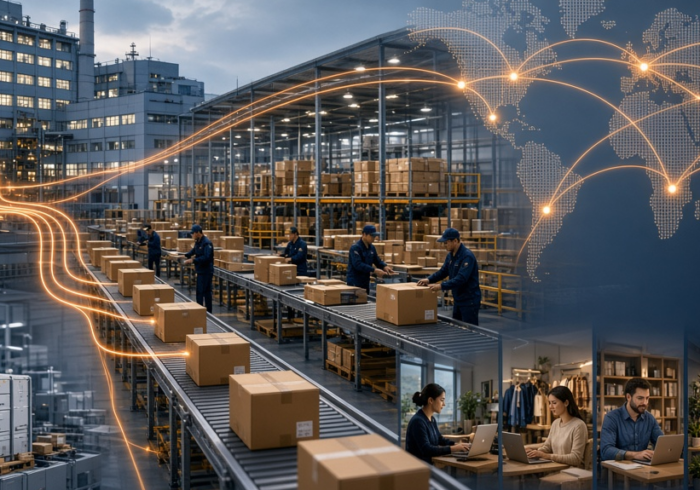
This authoritative guide for e-commerce business owners in 2026 delves into how to achieve sustainable expansion within the increasingly mature dropshipping market. The article highlights the pivotal roles that operational automation, multi-channel strategies, and partnerships with high-quality suppliers play in business growth. By analyzing current market trends and expert strategies, it aims to empower entrepreneurs to build branded businesses that are not only highly efficient but also resilient against industry fluctuations, thereby ensuring long-term profitability.
The era of “get-rich-quick” dropshipping is officially over. In 2026, the marketplace has matured significantly; customers are more discerning, platform policies are stricter, and the competition has adopted more sophisticated, data-driven strategies [12, 16, 7]. For B2B platforms like Looperbuy and their global sellers, success today is no longer just about finding a winning product—it’s about building a resilient, scalable supply chain that operates like a professional enterprise [11, 6].
Scaling is the difference between a side hustle and a sustainable, high-growth business [1, 4]. When you transition from your first few sales to high-volume monthly orders, the manual processes that worked in the beginning will quickly become bottlenecks, leading to burnout and operational collapse [1, 6].

Table of Contents
The Foundations of Scaling: Moving Beyond the Basics
Scaling effectively requires a shift in mindset from “testing products” to “operational excellence.” Here are the three critical pillars you must master to scale without losing your competitive edge.
1. Operational Automation: Your Scaling Engine
When orders move from dozens to hundreds per month, manual data entry is your greatest enemy. Relying on spreadsheets or manual order forwarding will inevitably lead to errors, delays, and frustrated customers [6].
* Centralized Command: Utilize platforms that integrate via API to your sales channels (Shopify, Amazon, TikTok Shop) and your suppliers [11, 19]. This ensures real-time synchronization of inventory, pricing, and order status [1, 2].
* Automated Order Routing: Implement systems that automatically route orders to the best-performing supplier based on inventory location, shipping speed, and cost [2, 19].
* Proactive Inventory Management: Advanced tools in 2026 use AI to predict stockouts and demand spikes, ensuring you never accept an order for an item that is out of stock—a major factor in preventing account suspensions [1, 2, 20].
2. Strategic Supplier Partnerships
Your supplier is the invisible partner in your brand’s success. In 2026, you cannot afford to rely on suppliers with opaque processes or unreliable fulfillment [2, 12].
* The Domestic Advantage: To compete with giants like Amazon, prioritize suppliers with domestic warehousing [8, 11]. Shipping times of 2–5 days are now considered the minimum standard for high-converting stores [8, 11].
* Quality Assurance & Branding: The most successful stores in 2026 have moved beyond “blind shipping.” Partner with suppliers who offer custom packaging, allowing you to build brand recognition even when dropshipping [11].
* Vetted Networks: Utilize platforms that offer vetted supplier directories [16, 11]. Working with pre-verified suppliers dramatically reduces the risk of quality issues, disputes, and order cancellations [16].
3. Multi-Channel Diversification
Relying on a single marketplace is a massive risk. If an algorithm changes or a policy is updated, your entire business could vanish overnight [19].
* Diversify Your Presence: Build your own direct-to-consumer (DTC) store on platforms like Shopify or WooCommerce, while simultaneously maintaining a presence on high-traffic marketplaces like Amazon, TikTok Shop, or Walmart [19, 13].
* Sync Your Data: Use centralized management tools to sync listings, inventory, and order data across all channels simultaneously, preventing “overselling” incidents [1, 10, 17].
Unique Expert Insights: The Path to Long-Term Profitability
To thrive, move beyond the traditional “low-quality, cheap product” dropshipping model [16].
| Strategy | Why It Matters for 2026 |
| High-Ticket Niches | Focus on products with higher margins to offset rising customer acquisition costs (CAC) [5, 16]. |
| AI-Driven Analytics | Use AI agents to identify trending products based on real-time market data rather than guessing [15, 20]. |
| Brand Identity | Build a community and unique value proposition to defend your business against copycats [4, 9]. |
Conclusion
Scaling a dropshipping business in 2026 is a complex but highly rewarding endeavor. It is no longer about finding “winners” through trial and error; it is about building a robust, automated ecosystem that provides consistent value to your customers. By focusing on operational efficiency, diversifying your sales channels, and building strong relationships with reliable, domestic-warehousing suppliers, you position your brand for sustainable, long-term profit. As you scale, always remember: your business is not the product you sell—it is the brand and the service you provide.
References
* [Doba: 2026 Best Dropshipping Companies: Scale with AI Logistics] [facebook]
* [Doba: Top 5 Inventory Management Tools to Scale Your Store in 2026] [doba]
* [AutoDS: How To Scale A Dropshipping Business In 2026] [autods]
* [TopDawg: How to Scale a Dropshipping Business in 2026 Without Burnout] [topdawg]
* [Flxpoint: Managing Inventory Across Multiple Dropshipping Suppliers] [flxpoint]
* [ZIK Analytics: 11 Proven Dropshipping Marketing Strategies to Scale Your Store in 2026] [zikanalytics]
Frequently Asked Questions
1. Is dropshipping still a profitable business model in 2026?
Yes, it is highly profitable for sellers who treat it as a brand-building exercise rather than a “get-rich-quick” scheme [10, 16].
2. How can I prevent inventory-related order cancellations?
Implement robust multi-channel inventory management software that offers real-time synchronization across all your suppliers and sales channels [2, 14, 16].
3. Why is domestic warehousing important for scaling?
Fast, reliable shipping (2-5 days) is crucial for maintaining high seller ratings on platforms like Amazon and TikTok Shop, directly impacting your conversion rates [8, 11].
4. What should I look for in a dropshipping supplier in 2026?
Prioritize suppliers with local stock, automated API integration capabilities, custom packaging options, and a track record of reliability [11, 8].
5. What is the best way to scale without burning out?
Focus on automating your operational tasks—order routing, inventory updates, and customer communications—so you can spend your time on strategy and brand growth [6, 1, 3].