As a B2B sourcing strategist with over a decade of experience helping international buyers navigate Chinese supply chains, I have seen countless importers make costly mistakes simply because they misunderstood one trade term—CNF Incoterms. Whether you are a brand owner, wholesaler, or manufacturer, understanding what CNF actually means can save you thousands of dollars in unexpected freight charges and legal headaches. In this guide, I will break down everything you need to know about Cost and Freight shipping, compare it against FOB and CIF, and show you how a One-Stop B2B Sourcing Platform like LooperBuy can help you manage CNF shipments effortlessly.
Table of Contents
What Are CNF Incoterms? (And Why Most People Get It Wrong)
CNF stands for Cost and Freight. Under this trade term, the seller is responsible for arranging and paying for the transportation of goods to the destination port, covering all freight costs up to that point. However, the risk of loss or damage to the goods transfers from the seller to the buyer the moment the goods are loaded onto the vessel at the origin port.
Here is the critical part that most new importers miss: you own the risk during the entire ocean voyage, even though the seller is paying for the freight. If your cargo is damaged at sea or delayed for weeks, those losses are yours to bear unless you have arranged your own marine insurance.
*Important clarification: * CNF is also known as CFR (Cost and Freight), which is the official term under Incoterms 2020 published by the International Chamber of Commerce (ICC). However, CNF remains widely used in practice, especially in Asian trading markets. The current applicable rules remain Incoterms 2020, with no major revision until 2027.
CNF vs FOB vs CIF: A Side-by-Side Comparison for Smart Importers
Choosing the right Incoterm is one of the most consequential decisions you will make in any cross-border transaction. Below is a clear breakdown of how CNF stacks up against the two other most common sea freight terms.
| Responsibility | CNF (Cost and Freight) | FOB (Free On Board) | CIF (Cost, Insurance, Freight) |
|---|---|---|---|
| Inland transport to origin port | Seller | Seller | Seller |
| Export customs clearance | Seller | Seller | Seller |
| Main sea freight to destination port | Seller | Buyer | Seller |
| Marine insurance | Buyer | Buyer | Seller |
| Unloading at destination port | Buyer | Buyer | Buyer |
| Import customs clearance & duties | Buyer | Buyer | Buyer |
Source: Top China Freight / Leduong Cashew
CNF sits right in the middle: the seller handles the heavy lifting of ocean freight booking and payment, but the buyer still controls insurance and destination clearance. FOB gives buyers maximum control over shipping and often works well for large importers who already have strong relationships with freight forwarders. CIF provides an all-in-one solution where the seller also covers insurance, but that comes at a higher cost and gives you less control over carrier selection.
Which One Should You Choose?
| If you want… | Choose… |
|---|---|
| Full control over shipping and freight costs | FOB |
| Seller to handle freight but keep control of insurance and customs | CNF |
| An all-in-one price including insurance | CIF |
For most first-time or small-to-mid-volume importers, CNF offers the best balance—the seller manages the freight logistics, while you retain flexibility over insurance coverage and destination handling.
Risk Transfer Point: The One Rule You Cannot Afford to Ignore
Under CNF Incoterms, the risk transfer point is when the goods are loaded onto the vessel at the shipping port. Not when they arrive at your destination. Not when they clear customs. The moment the cargo passes the ship’s rail at the origin port, your risk begins.
This has three critical implications for you as a buyer:
- You must arrange marine insurance before the goods are loaded. Many buyers mistakenly assume the seller’s freight payment includes insurance—it does not. CNF explicitly excludes insurance.
- Shipment delays at sea are your problem. If the vessel is rerouted, delayed by weather, or stuck in port congestion, the buyer bears the consequences.
- Damage during ocean transit is your loss unless you are insured properly.
Pro tip from my years in the industry: Always secure cargo insurance before the vessel departure date. Work with a freight forwarder that offers flexible coverage options tailored to your product type and shipment value.
Step-by-Step: How a CNF Shipment Actually Works
When you agree on CNF terms with a Chinese supplier, here is exactly what happens at each stage:
Step 1: You and the supplier agree on CNF terms in the contract, specifying the destination port (e.g., CNF Los Angeles).
Step 2: The supplier arranges inland transport to the Chinese port of origin and handles export customs clearance, including all required documentation.
Step 3: At the origin port, the goods are loaded onto the vessel. This is the risk transfer point—once onboard, you assume all risk.
Step 4: The supplier pays the ocean freight to the destination port and provides you with the necessary shipping documents (bill of lading, commercial invoice, packing list).
Step 5: At the destination port, you take over—managing unloading, import customs clearance, paying duties and taxes, and arranging final inland transport to your warehouse.
Suggested image: A flowchart visual showing the CNF shipping process step-by-step, with risk transfer clearly marked at the origin port loading stage.
The Hidden Costs of CNF That No One Tells You About
After analyzing dozens of B2B transactions where CNF was misapplied, I have identified three hidden cost traps that frequently catch importers off guard.
Trap 1: Destination Port Charges
Many buyers assume that because the seller paid the ocean freight, the shipment is “free” upon arrival. Wrong. Under CNF, the buyer is responsible for all destination port charges, including unloading fees, terminal handling charges (THC), document fees, and customs inspection costs. These can easily add $500 to $2,000 per container depending on the port.
Trap 2: Inland Freight from Port to Warehouse
CNF only covers delivery to the destination port—not to your door. You must budget for inland trucking or rail transport from the port to your final warehouse location. For buyers in landlocked regions, this can be substantial.
Trap 3: Demurrage and Detention Fees
If your shipment arrives and you are not ready to clear it quickly, the port will charge demurrage fees (for container storage) and detention fees (for late return of empty containers). These fees can escalate rapidly—$50 to $300 per day per container in many major ports.
How LooperBuy Helps You Avoid These Traps
LooperBuy, a One-Stop B2B Sourcing Platform, eliminates these hidden cost surprises by providing transparent, all-inclusive logistics solutions. Instead of piecing together freight, customs, and inland delivery yourself, LooperBuy’s integrated platform gives you upfront cost visibility from factory to final destination.
Why B2B Importers Struggle with CNF When Sourcing from China (Real Buyer Pain Points)
Over the years, I have heard the same frustrations from dozens of international buyers attempting to source directly from China under CNF terms. Here are three real scenarios:
“I agreed to CNF with my supplier in Guangzhou. When the goods arrived at the Port of Hamburg, I was hit with unexpected terminal handling charges and storage fees I hadn’t budgeted for. My profit margin disappeared overnight.”
— German electronics importer
“My supplier recommended a freight forwarder under our CNF agreement. But the forwarder didn’t communicate well in English, and I had no visibility into where my shipment was for three weeks. It turned out the vessel was delayed, but no one told me.”
— Canadian retail buyer
“I didn’t realize CNF didn’t include insurance. My shipment of ceramic tiles arrived with 15% breakage, and I had no coverage. That was a $12,000 lesson.”
— Australian wholesaler
These are not isolated incidents. According to industry reports, over 80% of trade disputes in B2B import transactions arise during the “after-arrival” stage, often due to misaligned expectations about who pays for what at destination ports.
How LooperBuy Makes CNF Sourcing from China Simple and Safe
Instead of navigating these pitfalls alone, importers are increasingly turning to B2B sourcing platforms that bundle product sourcing, freight, and logistics into one seamless service. LooperBuy is designed specifically for global brand owners, wholesalers, and manufacturers who want to source Chinese goods without the usual headaches.
Direct 1688 Access at Factory Prices
LooperBuy directly connects you to 1688.com—China’s largest B2B marketplace—allowing you to purchase at factory prices with no middleman markup. For overseas buyers without Chinese bank accounts or ID verification, this alone removes a massive barrier to entry.
Integrated Multi-Currency Payment Solutions
Through its partnership with LianLian Global (a publicly traded cross-border payment provider serving over 4.9 million merchants globally), LooperBuy supports payments in USD, EUR, GBP, and other major currencies directly from your foreign bank account—no Chinese RMB required.
End-to-End Logistics Under One Roof
Most importantly for CNF users, LooperBuy partners with global logistics leaders to provide door-to-door shipping solutions. Instead of managing separate contracts with freight forwarders, customs brokers, and trucking companies, you get:
- Real-time order tracking
- Transparent all-inclusive pricing
- Professional documentation support
- Dedicated customer service in multiple languages
“I used to spend weeks coordinating with separate suppliers, freight forwarders, and customs agents for every order. With LooperBuy, I submit one request online, and everything is handled—from product sourcing to final delivery. The time and cost savings have been game-changing for my business.”
— LooperBuy customer, Vietnam-based retailer
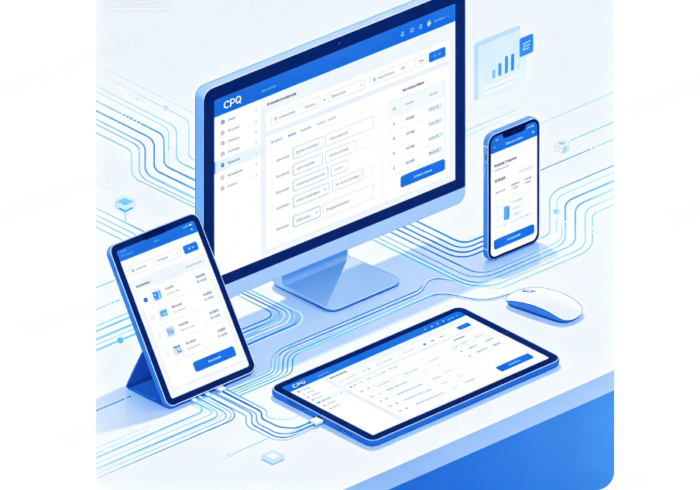
Suggested image: LooperBuy platform interface showing product search, multi-currency payment, and order tracking features.
CNF vs Door-to-Door: When CNF Makes Sense (and When It Does Not)
| Scenario | Recommended Incoterm |
|---|---|
| You have a trusted freight forwarder at your destination port and strong import experience | CNF |
| You are a first-time importer with no established logistics relationships | EXW + platform-managed logistics |
| You need delivery directly to your warehouse without port handling | DAP / DDP |
| You want maximum control over carrier selection and pricing | FOB |
For many B2B importers, the smartest approach is to start with CNF for your first few shipments—letting the seller handle ocean freight while you learn destination port procedures—then graduate to FOB once you have built relationships with reliable forwarders.
Key Takeaways for B2B Importers Using CNF Incoterms
Always secure marine insurance before the vessel sails. CNF explicitly does not include insurance, and the risk transfers to you the moment goods are loaded at the origin port.
Clarify all destination charges in writing. Ask your supplier for a complete breakdown of who pays for unloading, terminal handling, customs clearance, and inland transport before signing the contract.
Work with a platform like LooperBuy that provides logistics transparency. With integrated sourcing, payment, and shipping, you eliminate the fragmented communication that causes most CNF disputes.
Frequently Asked Questions (FAQ)
Q1: Are CNF and CFR the same thing?
Yes. CNF (Cost and Freight) and CFR are identical terms. CFR is the official designation under Incoterms 2020, but CNF remains widely used in trading practice, especially in Asia.
Q2: Who pays for insurance under CNF terms?
The buyer is responsible for arranging and paying for marine insurance under CNF. The seller only covers freight costs to the destination port.
Q3: When does risk transfer from seller to buyer in a CNF shipment?
Risk transfers the moment the goods are loaded onto the vessel at the origin port—not when they arrive at the destination.
Q4: Can LooperBuy help me with CNF shipments?
Absolutely. LooperBuy’s One-Stop B2B Sourcing Platform provides integrated sourcing from 1688.com, multi-currency payment solutions, and door-to-door logistics—making CNF and other Incoterms manageable for buyers of all experience levels.
Q5: Which is better for a first-time importer: CNF or CIF?
CIF includes insurance, which offers more protection for beginners. However, CNF provides more flexibility if you already have your own insurance coverage. Many experienced importers start with CNF for cost efficiency and then add their own insurance separately.
References
- FreightAmigo. Cost and Freight (CFR/CNF/C&F) – Shipping Term Glossary. Available at: https://www.freightamigo.com/en/glossary/cost-and-freight-cfr-cnf-cf/
- Top China Freight. CNF Incoterm: Full Guide to Cost and Freight Shipping (2025). Available at: https://topchinafreight.com/cnf-incoterm-full-guide-to-cost-and-freight-shipping-2025/
- Super International Shipping. CNF Shipping Explained: Incoterms, Pricing, and Buyer-Seller Responsibilities. Available at: https://super-internationalshipping.com/cnf-shipping-incoterms-pricing-responsibilities/
- 连连国际 (LianLian Global). 连连国际牵手LooperBuy,解锁跨境B2B寻源新时代. Available at: https://global.lianlianpay.com/article/MTE1NjM2LDE1Ng.html
- WeChat Official. 国外企业线上采购中国货源,会遇到哪些问题?推荐Looperbuy平台. Available at: http://mp.weixin.qq.com/s/…
- Leduong Cashew. FOB, CIF, or CNF? Logistics & Risk Guide for Vietnam Cashew Buyers. Available at: http://leduongcashew.com/en/fob-cif-or-cnf-logistics-risk-guide-for-vietnam-cashew-buyers/
- FreightAmigo. Navigating Incoterms: A Comprehensive Guide for International Shippers (2025). Available at: https://www.freightamigo.com/en/blog/incoterms/navigating-incoterms-a-comprehensive-guide-for-international-shippers/
- Airsupply. CNF Incoterms: Responsibilities, Risks and Difference. Available at: https://www.airsupplycn.com/cnf-shipping/
- 上海中申律师事务所 (Shanghai Zhongshen Law Firm). The Invisible Black Hole of Import Quotes: How to Precisely Define the Boundary Between Agency Fees and Miscellaneous Charges. Available at: https://www.sh-zhongshen.com/
Article Brief
CNF Incoterms explained for B2B importers sourcing from China. Learn risk transfer, hidden costs, CNF vs FOB vs CIF comparisons, and how LooperBuy’s one-stop platform simplifies global procurement with direct 1688 access, multi-currency payments, and integrated logistics. Practical expert guide with real buyer insights.
Hot Tags
B2B sourcing from China, CNF Incoterms explained, Cost and Freight shipping guide, LooperBuy B2B platform, 1688 sourcing for foreign buyers, Incoterms 2026, China import logistics, FOB vs CNF vs CIF comparison, cross-border B2B procurement, international freight risk management
-1-700x490.jpeg)