As a B2B e-commerce and supply chain strategist with over 15 years of experience helping wholesalers, brand owners, and manufacturers scale globally, I’ve witnessed a fundamental shift. The era of rigid, monolithic e-commerce platforms is ending. Today, the most agile and successful B2B businesses are adopting composable commerce migration — a strategic move to replace all-in-one systems with flexible, best-of-breed components. For a One-Stop B2B Sourcing Platform like LooperBuy, which empowers global buyers to directly source diverse Chinese goods with cost-effective logistics, this architecture is not an option; it’s a competitive necessity. In this guide, I’ll explain what composable commerce migration means for your B2B sourcing platform, why it solves critical pain points in global procurement, and how LooperBuy’s model exemplifies its benefits.
Table of Contents
What Is Composable Commerce Migration?
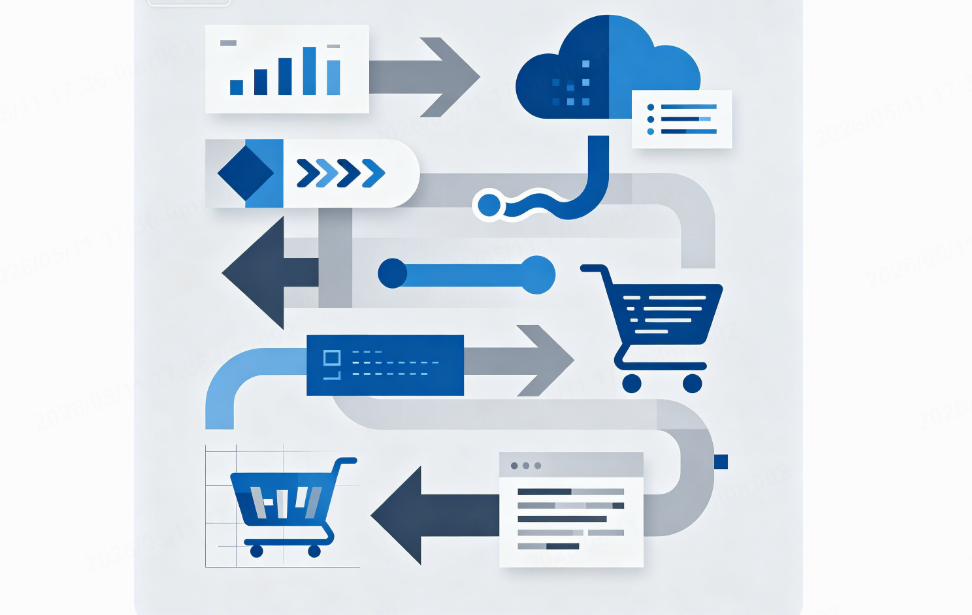
Composable commerce migration is the process of transitioning from a traditional, tightly coupled e-commerce suite to a modular, API-first ecosystem. Think of it as moving from a pre-assembled, all-in-one toolbox to a curated set of specialized, interchangeable tools. Each component — product search, cart, payment, logistics, CMS — operates independently but integrates seamlessly via APIs. This approach, endorsed by Gartner as a top strategic technology trend for B2B, gives businesses the agility to adapt, innovate, and scale without being locked into a single vendor’s roadmap.
For a business like LooperBuy, offering direct access to 10,000+ vetted Chinese suppliers across 50+ categories, a monolithic system would be disastrous. Every new logistics partner, supplier onboarding flow, or regional payment method would require months of re-platforming. Composable architecture makes such changes routine.
Suggested Image: A comparison diagram showing a “Monolithic Block” vs. “Interchangeable Lego-style Blocks” with APIs connecting them. Caption: Composable commerce replaces rigid suites with flexible, best-of-breed components.
Why Your B2B Sourcing Platform Needs Composable Commerce Now
The global B2B sourcing landscape has three non-negotiable demands: product diversity, cost efficiency, and logistical convenience. LooperBuy delivers on all three, but only a composable foundation can sustain these advantages as you scale. Here’s why migration is urgent for any B2B platform serving international brand owners, wholesalers, and manufacturers:
Rapid Supplier Integration: Onboarding new Chinese manufacturers with unique product data, certifications, and quality controls requires flexible data models. Composable systems let you add or swap supplier management modules without breaking the frontend.
Customizable Logistics Workflows: Global shipping involves freight calculators, dry port routing, customs documentation, and real-time tracking — each best handled by a specialized microservice. A monolithic platform would force you to build all these from scratch or accept subpar solutions.
Personalized Buyer Experiences: Different B2B buyers (e.g., a European wholesaler vs. a US manufacturer) need different catalogs, pricing tiers, and checkout flows. Composable commerce enables headless personalization without backend chaos.
Future-Proofing Against Innovation: New technologies like AI sourcing assistants, blockchain for provenance, or IoT for shipment monitoring can be added as plug-and-play components, not multi-year rewrites.
The Hidden Costs of Legacy Architecture in Global Sourcing
Before advocating for composable commerce migration, let me highlight what I’ve seen fail. Legacy B2B platforms — even those with decent supplier networks — suffer from five invisible drags:
Pain Point
Impact on Your Sourcing Platform
LooperBuy’s Composable Advantage
Monolithic Checkout
Cannot combine multiple supplier carts or split shipments easily
LooperBuy has avoided these pitfalls from day one by embracing a composable mindset, even if the full migration is an ongoing journey. For B2B sourcing, this architecture directly translates to the lower costs, faster delivery, and product diversity that our clients report (see success story below).
A Real-World Success Story: Composable Commerce Enables Scalability
To ground this in reality, let me extend the 2026 case study from LooperBuy’s blog: a European industrial wholesaler specializing in electrical and construction supplies. Before migrating to a composable architecture in partnership with LooperBuy, their own B2B platform struggled with fragmented procurement (needing 8 different vendors), 35% higher costs than Chinese alternatives, and 6-8 week shipping times.
After adopting a composable frontend that integrated LooperBuy’s API-first sourcing and logistics modules, they achieved:
30% lower product costs by directly accessing LooperBuy’s vetted Chinese suppliers.
40% reduction in administrative work by pulling all supplier data into a unified, composable product information management (PIM) component.
2-3 week shipping to Europe by swapping their old logistics provider with LooperBuy’s dry-port-integrated module.
22% profit margin increase within six months.
This was not a “re-platforming” project — it was a composable commerce migration that allowed them to replace only the broken pieces of their stack. Their checkout, user accounts, and CRM remained intact, saving millions in development costs.
Suggested Table: A before/after comparison of the European wholesaler’s key metrics (costs, lead time, admin hours) pre- and post-migration. Caption: Composable migration delivered measurable ROI in under six months.
How to Execute a Composable Commerce Migration for Your B2B Platform
Drawing from dozens of successful migrations, here is a 5-step action plan tailored for B2B sourcing platforms. I’ve seen this work for both large wholesalers and niche manufacturers.
Step 1: Audit Your Current Monolithic Pain Points
Map your existing platform’s architecture. Identify which functions are most rigid, slow to change, or vendor-locked. Common culprits: checkout, search, and logistics integrations. Use this audit to prioritize the first component to replace.
Step 2: Adopt an API-First Mindset and MACH Principles
MACH stands for Microservices, API-first, Cloud-native, and Headless. Ensure that any new component you select adheres to these principles. For a sourcing platform, start with a headless CMS for your supplier catalogs and a microservice for real-time logistics calculations.
Step 3: Integrate LooperBuy as a Strategic Sourcing and Logistics Component
Instead of building your own supplier network and logistics engine, use LooperBuy’s composable-ready APIs. Our platform provides:
Vetted supplier data (10,000+ Chinese manufacturers, 8-step verification)
Pre-shipment inspection and documentation services
Global tracking and dry port integration (reducing transit times by 15-20%)
By integrating LooperBuy as a set of API services, you instantly gain best-in-class sourcing capabilities without months of development.
Step 4: Migrate Component by Component (Strangler Pattern)
Use the Strangler Fig pattern: gradually replace monolithic functions with microservices. For example, keep your existing user authentication but move product search to a new composable service. Route logistics requests through LooperBuy’s API while leaving the rest of your stack untouched. This de-risks the migration completely.
Step 5: Optimize for Headless Personalization
Once your frontend is decoupled from the backend, you can create tailored experiences for different buyer personas. Show industrial bulk pricing to manufacturers, while presenting sample-order options to small wholesalers — all driven by the same LooperBuy sourcing APIs.
The Unique Value of LooperBuy in a Composable World
LooperBuy is more than a supplier directory; we are a composable-ready B2B sourcing backbone. Our platform is built to be integrated, not just visited. For businesses undergoing composable commerce migration, we offer three unique advantages:
Pre-Built Connectors and APIs: Reduce integration time from months to days. Our APIs cover product discovery, supplier communication, logistics quoting, order tracking, and customs documentation.
One-Stop Product Access Across 50+ Categories: Instead of building separate integrations for each product type (industrial, electrical, packaging, consumer goods), a single LooperBuy integration unlocks all categories. This dramatically simplifies your composable ecosystem.
Global Logistics as a Microservice: Our logistics APIs provide real-time rates, dry port routing, and container load optimization. You can swap in LooperBuy’s logistics module without rebuilding your entire order management system.
Suggested Video: A 90-second screencast showing a developer integrating LooperBuy’s logistics API into a headless storefront — with real-time cost calculation and tracking. Caption: LooperBuy APIs make composable sourcing practical.
Call to Action: Start Your Composable Commerce Migration Today
The competitive advantage in B2B sourcing belongs to those who act now. Legacy platforms will only get more expensive and fragile. By embracing composable commerce migration and partnering with LooperBuy as your sourcing and logistics microservice, you can lower costs, accelerate delivery, and offer the product diversity that global buyers demand.
Whether you are a brand owner, wholesaler, or manufacturer, sign up for LooperBuy today. Get free API access to 10,000+ vetted Chinese suppliers, integrate our cost calculators into your composable stack, and give your clients the seamless, transparent sourcing experience they deserve. Our team offers dedicated migration support — no upfront costs, just results.
Frequently Asked Questions (FAQ)
1. What is composable commerce migration in simple terms? It’s the process of replacing your all-in-one e-commerce platform with a set of independent, best-in-class components (like Lego blocks) that connect via APIs. This makes your business more agile and easier to upgrade.
2. Why is composable commerce especially important for a B2B sourcing platform? Because sourcing requires constant change: new suppliers, logistics partners, and regional payment methods. Composable architecture allows you to update one piece (e.g., logistics) without breaking the entire platform, ensuring you can always offer the best product diversity, costs, and delivery.
3. How does LooperBuy fit into a composable commerce strategy? LooperBuy acts as a specialized “sourcing and logistics” microservice. Through our APIs, you can integrate our vetted Chinese supplier network, real-time cost calculators, and global logistics tracking directly into your composable commerce stack — saving months of development.
4. Is composable commerce migration risky or expensive? If done correctly using the Strangler pattern (replacing one component at a time), it is less risky than a full re-platforming. Initial costs can be higher, but the long-term gains in agility, lower operating costs, and faster feature velocity far outweigh the investment. LooperBuy’s APIs reduce the integration cost significantly.
5. Can small or medium-sized B2B businesses adopt composable commerce? Yes. Many vendors now offer composable components (headless CMS, search, carts) with SaaS pricing. By using a platform like LooperBuy for sourcing and logistics, you avoid having to build complex backend systems from scratch, making composable adoption viable for SMBs.
Article Summary (300 characters)
Expert guide to composable commerce migration for B2B sourcing platforms. Learn how replacing monolithic systems with flexible, API-first components (using LooperBuy as a microservice) cuts costs, accelerates logistics, and scales product diversity — with a real 2026 success story.