In today’s volatile global market, procurement leaders are constantly balancing cost, quality, and supply chain resilience. As a B2B sourcing platform, LooperBuy understands that the choice between single sourcing and sole sourcing is one of the most critical decisions a business can make. While often conflated, these two strategies are fundamentally different in their application, risk profile, and impact on long-term growth.
This guide provides an expert-level analysis of these strategies, drawing on industry best practices to help you optimize your supply chain.
Table of Contents
Understanding the Core Definitions
To make informed procurement decisions, you must first distinguish between these two approaches.
What is Single Sourcing?
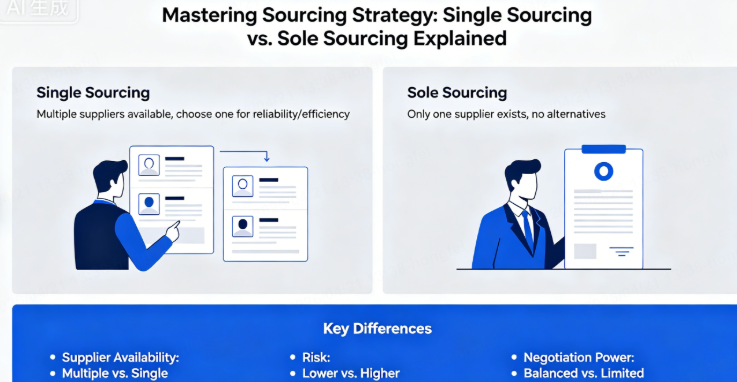
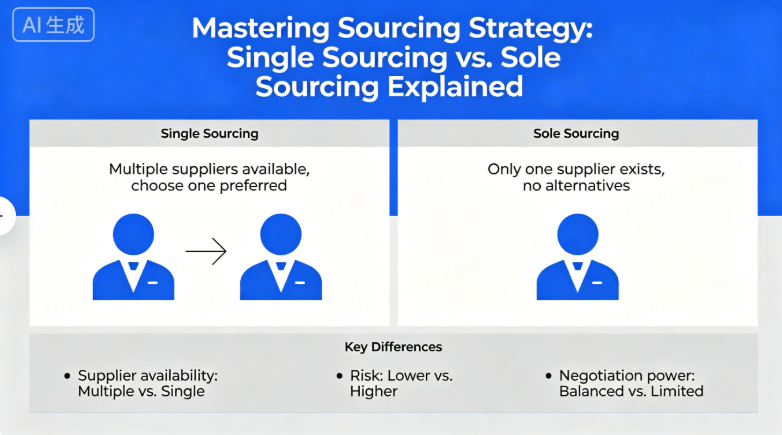
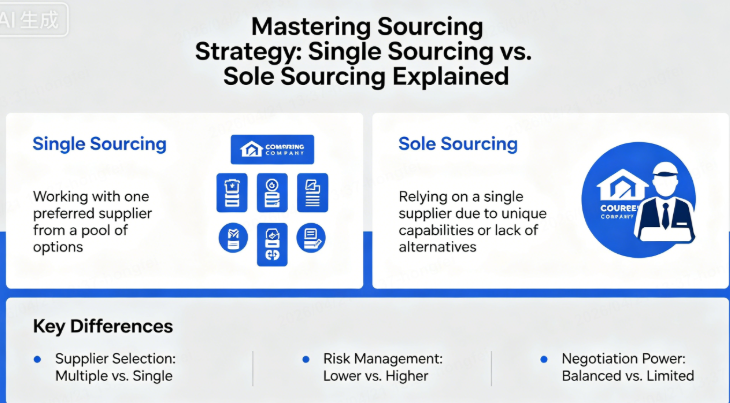
Single sourcing is a deliberate strategic choice where an organization selects one supplier for a product or service, even when multiple qualified vendors exist [7, 14, 18]. The primary motivation here is typically to foster a deep partnership, streamline logistics, and achieve economies of scale through high-volume commitments [7, 10, 18].
What is Sole Sourcing?
Sole sourcing, by contrast, occurs when only one supplier is available to meet your requirements [9, 12, 18]. This is rarely a strategic choice but rather a reality dictated by unique factors, such as:
- Patented technology or intellectual property (IP) rights [9, 12].
- Geographical or regulatory constraints [9, 12].
- Specialized manufacturing capabilities that no other vendor possesses [12].
Strategic Comparison: Single vs. Sole Sourcing
Choosing the wrong model can lead to significant supply chain disruption. Use the table below to weigh your options.
| Feature | Single Sourcing | Sole Sourcing |
|---|---|---|
| Availability of Alternatives | Multiple capable suppliers exist [7, 14, 18]. | Only one supplier exists [9, 12, 18]. |
| Driver of Strategy | Strategic partnership, volume efficiency [7, 10, 18]. | Unique technology, IP, or exclusivity [9, 12]. |
| Risk Exposure | Moderate (can switch to alternatives) [1, 7, 13]. | High (no immediate alternatives) [9, 12]. |
| Negotiation Leverage | High (you can move business to others) [14]. | Very Low (supplier holds all power) [9, 12]. |
The Hidden Risks of Single-Supplier Dependency
While both models promise efficiency, they introduce significant risks that must be managed proactively [1, 15].
- Supply Chain Vulnerability: Relying on one vendor exposes your operations to catastrophic risks from geopolitical instability, natural disasters, labor strikes, or sudden financial failure of that supplier [1, 6, 11].
- Eroding Profit Margins: Without competitive bidding, suppliers may lack the motivation to innovate or maintain competitive pricing, often leading to slow-creeping cost increases [12, 15].
- Reduced Market Agility: When your production is tied to a single vendor’s capacity, scaling up rapidly or adjusting to market shifts becomes difficult [1, 15].
- Limited Negotiation Power: Once you are “locked in,” your leverage to demand better terms, lead times, or quality standards diminishes significantly [6, 15].
5 Expert Steps to Mitigate Single Sourcing Risks
Whether you have chosen a single source for strategic reasons or are locked into a sole-source situation, you must mitigate the risks [4, 5].
- Map Your Supply Chain: You cannot manage what you cannot see. Use multi-tier mapping to identify where you have single or sole-source dependencies, even down to your suppliers’ own sub-suppliers [2, 5].
- Establish Rigorous Due Diligence: Before committing to a single source, conduct thorough audits of their financial health, quality systems, and disaster recovery plans [14].
- Implement Managerial Sign-off: Require executive approval for any design or procurement decision that necessitates a sole-source supplier. This ensures the risk is acknowledged at the highest level [5].
- Develop Contingency Plans: Never operate without a “Plan B.” Maintain safety stock, qualify a backup vendor (even if they are currently more expensive), or invest in redundant tooling [9].
- Leverage Data Analytics: Consolidate supplier performance, cost, and risk metrics into a unified dashboard. Data transforms these static relationships into dynamic, evaluated strategies [12].
The LooperBuy Advantage: Your Partner in Resilient Sourcing
At LooperBuy, we bridge the gap between global demand and Chinese manufacturing excellence. We empower brands and wholesalers to move beyond the limitations of risky, restricted sourcing models.
- Access & Flexibility: We provide direct access to a vast, vetted network of Chinese suppliers, helping you diversify your supply base and move away from dangerous single-source dependencies.
- Supply Chain Efficiency: Our platform simplifies the procurement of diverse, high-quality products, combining local manufacturer competitive pricing with efficient, global logistics [20].
- Strategic Support: We act as your extension in China, providing the transparency and market insights needed to manage risk effectively while scaling your business.
Frequently Asked Questions (FAQ)
1. Is single sourcing always a bad strategy?
No. When executed correctly with a highly reliable, high-performing partner, it can yield significant cost savings, improved quality consistency, and streamlined operations [7, 10, 18]. The danger lies in failing to prepare for contingencies [2, 5].
2. How do I know if I am “single sourcing” or “sole sourcing”?
Check the market. If you could buy the same product elsewhere but have chosen to stick with one vendor, you are single sourcing [7, 14]. If no other vendor is capable of producing that specific item (due to patents, tools, or unique skills), you are sole sourcing [9, 12, 18].
3. What is the most effective way to reduce sole-source dependency?
The best long-term solution is to design for flexibility—avoiding reliance on unique components whenever possible. In the short term, build safety stocks and actively seek to qualify alternative vendors [5, 9].
4. How can a B2B platform like LooperBuy help?
We offer a curated, global-facing platform that connects you to multiple Chinese manufacturing options, enabling you to avoid the risks of single sourcing and build a more resilient, multi-sourced supply chain.
5. How often should I re-evaluate my supplier strategy?
Continuously. Market conditions, geopolitical landscapes, and your supplier’s health change rapidly. Integrate supplier risk monitoring into your quarterly business reviews to ensure your strategy remains viable [11, 12].
References
- The Risks of Single Sourcing in Supply Chain Management
- The Dangers of Single Sourcing in Your Supply Chain – Resilinc
- Single Sourcing Risks: What Buyers Must Know – VALO Vietnam
- Risk Mitigation Strategies for Single & Sole Source Suppliers
- 5 steps to mitigate the risks of sole-source suppliers
- Supply Chain Risks of Single Sourcing – Asian Sourcing Group
- Single Sourcing: Benefits, Challenges, and Best Practices – Torg
- Supply Chain Risks and Mitigation Strategies – Purdue Business
- Exploring Sole Sourcing vs. Single Sourcing
- Pros & Cons of Single-Sourcing Healthcare Packaging – Amcor
Article Synopsis
This article explores the critical distinction between single and sole sourcing in procurement. It analyzes the strategic benefits of single sourcing versus the inherent exclusivity of sole sourcing, highlights hidden supply chain risks, and provides five actionable mitigation strategies for procurement leaders. Finally, it positions LooperBuy as a crucial partner for companies seeking to build resilient, diversified supply chains by leveraging access to global manufacturing markets.
Hot tags: B2B procurement strategy, supply chain resilience, global sourcing services, single sourcing risks, sole sourcing definition, international wholesale platform, supplier diversification, China manufacturing sourcing, strategic supply management, B2B sourcing solutions.