After helping over 500 B2B buyers navigate the wholesale vs retail dilemma, here’s what I’ve learned — most businesses get this decision completely backwards.
Table of Contents
Executive Summary
The choice between wholesale and retail isn’t just about pricing or customer type. It’s about how you want to manage risk, capital, and growth. Yet after years of advising global brand owners, wholesalers, and manufacturers, I keep seeing the same mistake: businesses treat wholesale and retail as interchangeable models, when in fact they require fundamentally different approaches to inventory, fulfillment, and supplier relationships.
The global B2B ecommerce market has reached a staggering $32.8 trillion in 2026, with digital wholesale transactions commanding the dominant share of global commerce. Meanwhile, U.S. B2B ecommerce alone grew 13% to $2.93 trillion in 2025, even as total B2B sales barely moved. By 2025, 56% of B2B companies’ revenue in the United States is expected to come from online channels, up from just 34% four years earlier. This structural pivot toward digital‑first selling means the wholesale vs retail decision has never been more consequential — or more misunderstood.
This guide draws from real client experiences, current market data, and actionable frameworks to help you make the right call for your business.
Understanding the Real Difference Between Wholesale vs Retail
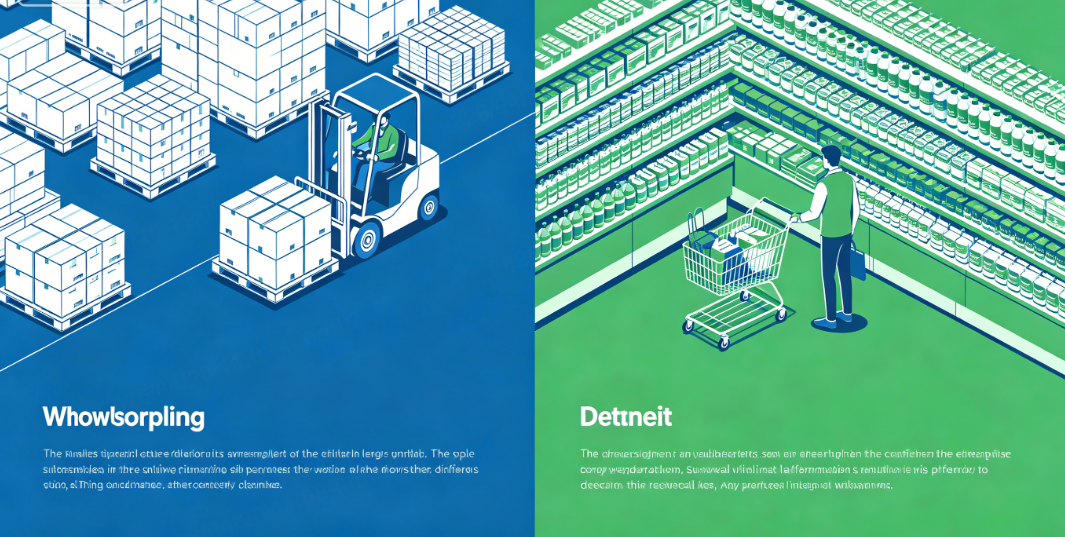
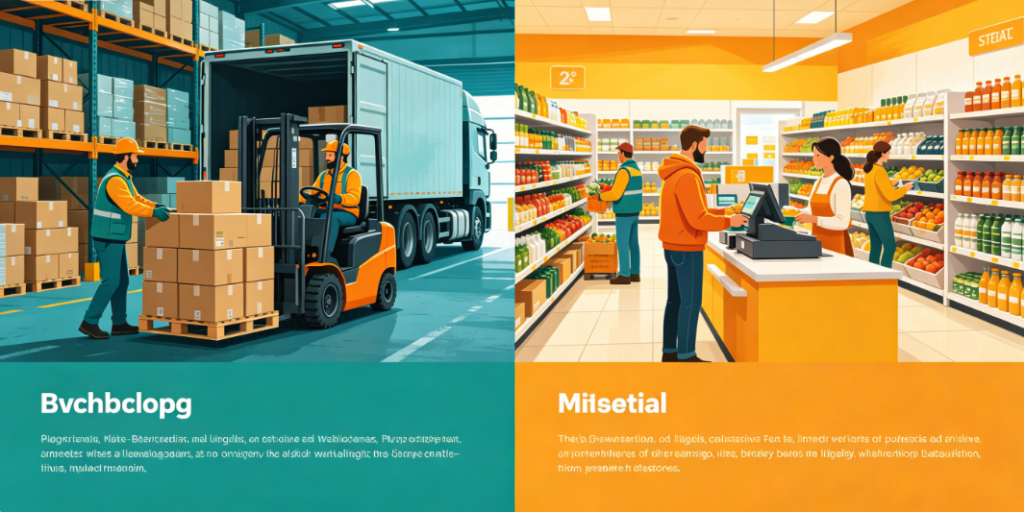
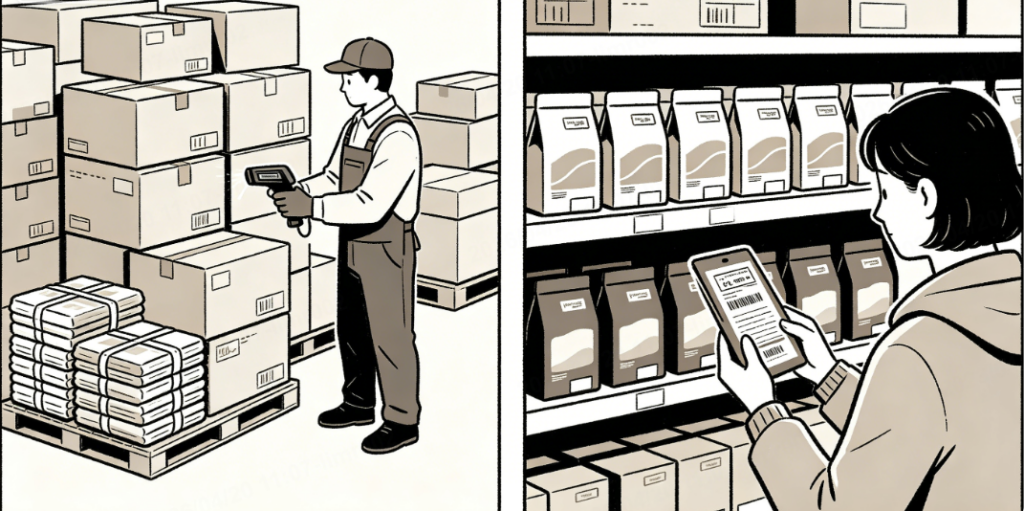
Wholesale involves selling products to other businesses at discounted prices in bulk. Retail involves selling products directly to consumers at a higher per‑unit price.
That’s the textbook definition. But in practice, the difference runs much deeper:
| Aspect | Wholesale | Retail |
|---|---|---|
| Customer | Businesses (B2B) | Consumers (B2C) |
| Order Volume | Large quantities (pallets, containers) | Small quantities (1–10 units) |
| Per‑unit Price | 40–60% below retail | Higher, covers marketing and overhead |
| Inventory Risk | Lower risk per unit, higher absolute capital | Higher per‑unit risk, lower absolute capital |
| Supplier MOQ | High (500–10,000+ units) | Low (1–100 units) |
| Logistics | Bulk shipping, palletized | Parcel shipping, individual packaging |
Wholesale offers bulk discounts 40‑60% lower than retail, adjusted for new HS tariffs, and wholesalers typically face fewer expenses since they sell in bulk to a small number of often repeat clients. Retail involves selling products directly to consumers at a retail price, with higher cost per unit and around 30–50% profit on the wholesale price.
But here’s where most analysis stops — and where the real insight begins.
The Hidden Trap: Why Test Selling Reveals the True Wholesale vs Retail Problem
The biggest pitfall in test selling isn’t zero sales — it’s losing control between ordering too much and ordering too little. Order too much and you face inventory pile‑up. Order too little and you face stockout risk. And the worst part? Most businesses end up guessing.
I recently spoke with a home furnishings business owner who faced this exact dilemma. Before his first test sale, his mindset was full of contradictions: before ordering, he prayed “someone will buy”; after ordering, he panicked “too few people buy”. He ordered 500 units and sold only 80 in 30 days — staring at 420 units piling up in his warehouse, even discounting felt like a bloodbath.
Then there’s the beauty brand owner: test sold 100 units, sold out in 3 days. When restocking, the supplier demanded “2,000 units minimum”. She agonized for days, afraid of losing customers, and forced the order. Sales dropped off a cliff. Now over 1,800 units are sitting in storage.
What do these stories reveal about the wholesale vs retail decision? That the real question isn’t “wholesale or retail” — it’s whether your sourcing infrastructure can support the model you choose.
If you want to operate as a wholesaler, you need:
- Suppliers with flexible MOQs (not just high‑volume commitments)
- Logistics that handle bulk shipping efficiently
- Inventory management systems that track large volumes
If you want to operate as a retailer, you need:
- Low MOQ access to products
- Fast, reliable small‑parcel fulfillment
- The ability to test and iterate quickly
The problem? Most businesses try to operate one model with the infrastructure designed for the other.
The 2026 Sourcing Reality: China Remains the Engine
For both wholesale and retail models, China remains the undisputed sourcing hub. Global buyers are increasing their sourcing activity from China in 2026, turning to Chinese suppliers and digital B2B sourcing platforms to find reliable partners and cost‑effective products. The advantages are clear: Chinese suppliers offer B2B pricing that is 25‑40% lower than European or North American alternatives, thanks to mature supply chains, economies of scale, and vertical integration in key manufacturing hubs.
But the challenge for most B2B buyers is not finding Chinese suppliers — it’s connecting with legitimate, vetted ones and managing the complex logistics of cross‑border procurement. This is where platforms like LooperBuy enter the picture, turning China’s sourcing advantages into tangible results for businesses of all sizes.
Case Study: How One Wholesaler Fixed Their Wholesale vs Retail Balance
A European industrial wholesaler specializing in electrical and construction supplies faced three critical roadblocks before partnering with LooperBuy:
- They sourced from European suppliers, with pricing 35% higher than Chinese alternatives
- They had to source from 8 different vendors to meet client needs
- Shipping times averaged 6‑8 weeks, leading to missed deadlines
By leveraging LooperBuy’s direct access to vetted Chinese suppliers, they gained access to 200+ Chinese suppliers with pricing 30% lower than previous vendors, sourced all supplies from a single platform (cutting administrative work by 40%), and reduced shipping times to Europe to 2‑3 weeks.
The result in just 6 months: profit margins increased by 22%, client retention rose by 30%, and they added 15 new niche supply categories, attracting 50+ new corporate clients.
Five Practical Steps to Master Your Wholesale vs Retail Strategy
Based on my experience advising B2B buyers, here’s a framework for making the wholesale vs retail decision work for your business:
Step 1: Define your “bulk” threshold — and why it matters. Before contacting any supplier, know exactly what order volume makes sense for your business model. Start with a first order at 30‑50% of intended volume, audit fulfillment accuracy and shipping conditions before scaling.
Step 2: Vet suppliers using a three‑layer due diligence framework. Request physical samples before mass production, use third‑party inspection services for batch verification, and always verify manufacturing capacity and certification.
Step 3: Choose the right platform for your model. For wholesale, you need suppliers with transparent MOQs and bulk logistics. For retail, you need low MOQ access and small‑parcel fulfillment. LooperBuy caters to both, with flexible minimum order quantities and consolidated shipping options that help small‑batch buyers reduce per‑unit logistics costs.
Step 4: Adopt a hybrid inventory approach. The smartest businesses don’t choose wholesale or retail — they operate both in parallel. Use wholesale for stable, predictable products and retail for testing new markets and direct customer feedback.
Step 5: Use test selling as your compass, not your crystal ball. The core of test selling is not “selling products” — it’s validating three answers at minimal cost: does the market truly need it, is the price reasonable, and is the fulfillment experience acceptable? Before you have clear answers, any premature scaling is a gamble.
A Note on Platform Support
LooperBuy addresses the five most common pain points in global B2B sourcing, making it easier to execute either a wholesale or retail strategy:
- Unvetted suppliers and quality inconsistencies — solved by an 8‑step supplier vetting process
- Hidden logistics and sourcing costs — solved by integrated cost calculators with real‑time, all‑inclusive estimates
- Limited product diversity — solved by 10,000+ vetted suppliers across 50+ categories
- Slow, unreliable global logistics — solved by a global logistics network reducing transit times by 15‑20%
- Lack of end‑to‑end procurement visibility — solved by real‑time tracking and production updates
Conclusion
The wholesale vs retail decision isn’t a one‑time choice — it’s an ongoing strategy that evolves with your business. The businesses that win in 2026 and beyond are those that understand the fundamental differences in inventory, fulfillment, and supplier relationships, and build their operations accordingly.
Whether you’re scaling a wholesale business or launching a retail brand, the key is having a sourcing partner that supports your model. LooperBuy makes direct China sourcing simple, risk‑free, and profitable — so you can focus on growing your client base and scaling your business.
References
- LooperBuy. (2026). Supplies Business: A B2B Expert’s Guide to Sourcing Chinese Goods Globally with LooperBuy. Retrieved from LooperBuy Official Website
- Swell. (2025). 43 B2B Wholesale Ecommerce Statistics Transforming Digital Commerce. Retrieved from swell.is
- Square. (2026). Wholesale vs Retail: What’s the Difference? Retrieved from squareup.com
- Digital Commerce 360. (2026). B2B Ecommerce Market Forecast Report. Retrieved from digitalcommerce360.com
- FreightAmigo. (2025). Wholesale vs. Retail: 5 Key Differences Every Business Should Know. Retrieved from freightamigo.com
- Shopify. (2026). Wholesale vs. Retail: How to Choose. Retrieved from shopify.com
- Cirrus Insight. (2026). Global B2B Sales Statistics & Buying Behavior. Retrieved from cirrusinsight.com
- Alibaba. (2026). Strategic Sourcing from China: Build Resilient Supply Chains. Retrieved from alibaba.com
- Linnworks. (2026). 5 Biggest Challenges Facing Wholesalers in 2026. Retrieved from linnworks.com
Frequently Asked Questions
1. What’s the main difference between wholesale vs retail?
Wholesale involves selling products to other businesses at discounted prices in bulk, with lower per‑unit cost and around 15‑30% profit margins. Retail involves selling products directly to consumers at a higher price, with margins around 30‑50% on the wholesale price. Wholesale businesses typically face fewer expenses since they sell in bulk to a small number of repeat clients.
2. Which is more profitable: wholesale or retail?
It depends on your business model. Retail offers higher per‑unit margins (30‑50%) but higher marketing and customer acquisition costs. Wholesale offers lower per‑unit margins (15‑30%) but lower operational expenses and more predictable, repeat revenue. The most successful businesses often operate both models in parallel.
3. Can I do both wholesale and retail at the same time?
Yes — this is called a hybrid model. Many brands use wholesale to move large volumes with predictable revenue, and retail/DTC to capture higher margins and direct customer feedback. The key is having a sourcing platform that supports both low‑MOQ retail test orders and high‑volume wholesale commitments.
4. How do I find wholesale suppliers with flexible MOQs?
Look for B2B sourcing platforms like LooperBuy that pre‑vet suppliers and offer flexible minimum order quantities. Start with smaller test orders (30‑50% of intended volume), audit quality and fulfillment accuracy, then scale up once you’ve validated the supplier. Always request physical samples before mass production.
5. What’s the biggest mistake businesses make in wholesale vs retail?
The biggest mistake is treating wholesale and retail as interchangeable — using retail infrastructure (low volume, high per‑unit cost) to try to operate a wholesale business, or using wholesale rigidities (high MOQs, slow fulfillment) to try to operate a retail business. The right approach is to match your operating model to your sourcing and fulfillment infrastructure.
Article Introduction (300 characters)
Struggling to choose between wholesale and retail? Most businesses get this decision backwards — treating two fundamentally different models as interchangeable. This expert guide reveals the real differences in inventory, fulfillment, and supplier relationships, backed by 2026 market data and real client case studies.
Hot Tags — B2B sourcing, wholesale vs retail, China sourcing, global procurement, inventory management, B2B ecommerce, supply chain strategy, cross border B2B, flexible MOQ, LooperBuy platform