Table of Contents
The Confusion That Costs You Money
I still remember my first year running a home decor brand. I thought I had nailed the sourcing strategy. A distributor promised me low MOQs, fast shipping, and a “one-stop shop” for everything. Six months later, I was paying a 28% markup on every unit — and I had zero visibility into where my products actually came from.
This is the vendor vs distributor dilemma that most B2B buyers face but few solve.
The truth is, most procurement decisions fail not because you picked the wrong product, but because you picked the wrong partner type for your stage of growth. In this article, I’ll walk you through what really separates a vendor from a distributor, why most B2B buyers get it wrong, and how platforms like LooperBuy are rewriting the rules of global sourcing in 2026.
The Core Difference Between Vendor vs Distributor (And Why It Matters)
Before we dive into strategies, let’s get the definitions straight — because most businesses use these terms interchangeably, and that’s where the trouble starts.
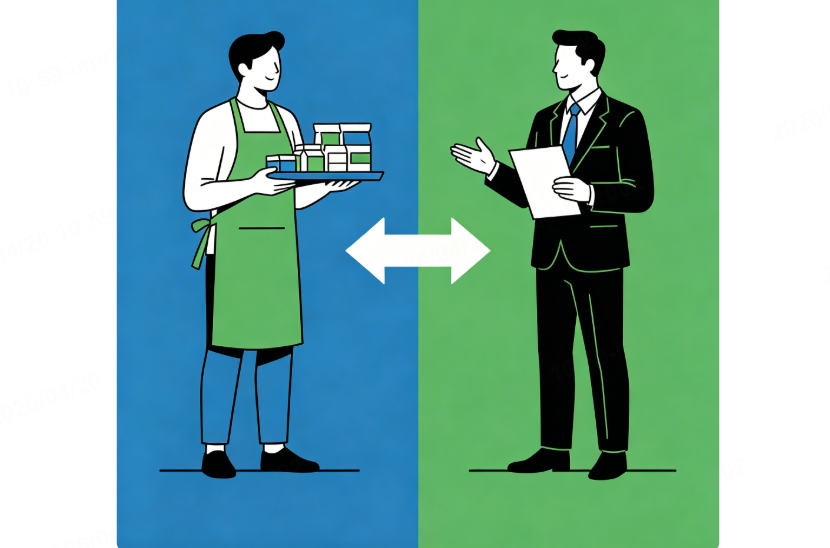
What is a vendor? A vendor is typically at the end of the supply chain, selling goods or services directly to customers — whether businesses or consumers. Think of a retail store or an online seller that stocks products from manufacturers or distributors and sells them in smaller quantities. Vendors are customer-centric and focus on pricing, marketing, and service rather than production or bulk logistics.
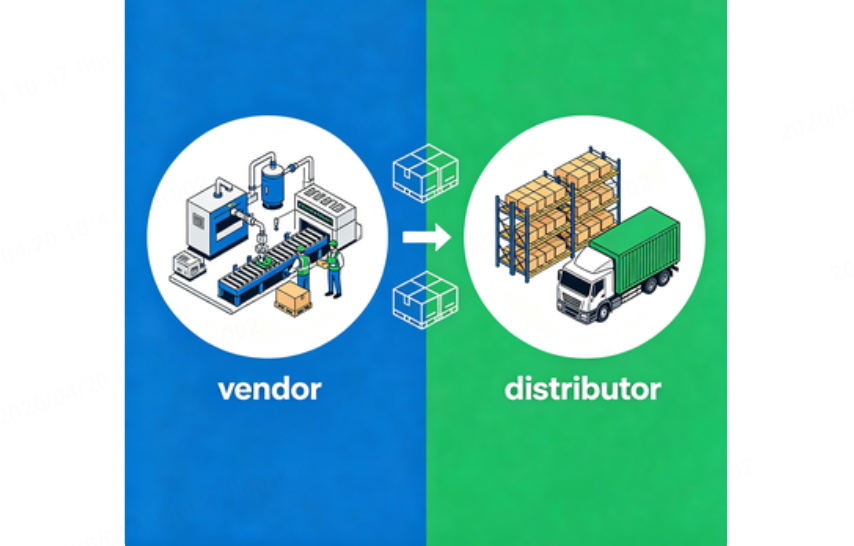
What is a distributor? A distributor operates as an intermediary between manufacturers and vendors or retailers. Distributors purchase products in bulk from manufacturers, store them in warehouses, and then sell to other businesses. They often add value through logistics, regional inventory management, and after-sales support.
The key distinction is this: distributors sell primarily to businesses, while vendors sell primarily to end customers. Another way to see it: a distributor sits upstream, closer to the factory; a vendor sits downstream, closer to the consumer.
Why does this matter? Because if you’re a brand owner or retailer trying to source products, working with the wrong type will either blow your margins or kill your agility.
Three Hidden Costs of Defaulting to a Distributor
Most new importers default to distributors because they offer low MOQs and seem “easier.” But here are three hidden costs that rarely show up on the invoice.
The Markup Trap
Distributors typically add a 15–30% markup to cover warehousing, logistics, and their own profit margin. In some product categories, going direct to a manufacturer can reduce total costs by 30–40% by eliminating middleman markups. That’s not a small difference — that’s the gap between profitability and barely breaking even.
The Quality Blind Spot
When you buy from a distributor, you lose visibility into the original manufacturer’s quality control processes. Did the factory actually run those certifications? What about raw material sourcing? Distributors aggregate from multiple factories, sometimes mixing batches. Without direct traceability, you’re trusting a middleman who may not have stepped foot on the production floor.
The Inflexibility Problem
Distributors sell what they already have in stock. Need a custom color? A different packaging size? A logo on the box? Most distributors will say no. And if you ask for product modifications based on customer feedback, you’ll likely hit a wall. Direct suppliers offer deep customization; distributors offer convenience at the cost of control.
When a Distributor Actually Makes Sense
To be fair, distributors aren’t the enemy. They serve a real purpose in the supply chain — just not for everyone.
A distributor is the right choice when:
- You need small quantities fast. Distributors keep inventory on hand. Their MOQs are typically lower than manufacturers, making them ideal for testing new markets or fulfilling urgent reorders.
- You’re sourcing across multiple unrelated categories. Need office supplies, cleaning products, and packaging materials from one place? A distributor can consolidate. Managing five different factory relationships for five different categories is a headache most small businesses don’t need.
- You have no in-house quality assurance or logistics capability. Distributors handle warehousing, shipping, and often returns. For businesses just starting out, that operational lift can be worth the markup.
The key is knowing when you’ve outgrown the distributor model — and that moment comes sooner than most realize.
Why 2026 Is the Year to Rethink Your Vendor Strategy
The global B2B sourcing landscape has shifted dramatically. According to industry data, global B2B e-commerce transaction volume is projected to exceed $26 trillion in 2025, with China’s cross-border B2B exports reaching approximately 6.9 trillion yuan — accounting for nearly 30% of the global market share.
More importantly, more than 60% of foreign trade enterprises now identify intelligent procurement as a key breakthrough point for achieving global competitiveness — a figure that exceeds those prioritizing intelligent production or R&D.
What does this mean for you? It means the old model of “find one distributor and let them handle everything” is obsolete. In 2026, buyers want direct access, price transparency, and flexible order quantities — exactly what traditional distributors struggle to provide.
This is where platforms like LooperBuy come in. LooperBuy is a one-stop B2B sourcing platform that connects global buyers directly to China’s premium product ecosystem (1688.com), offering zero markup, transparent pricing, and flexible small-batch ordering. As one user noted, “Looperbuy directly connects to China’s quality product pool 1688, helping overseas merchants purchase at factory prices, completely eliminating middleman price differences.”
A Simple Decision Framework: Vendor vs Distributor
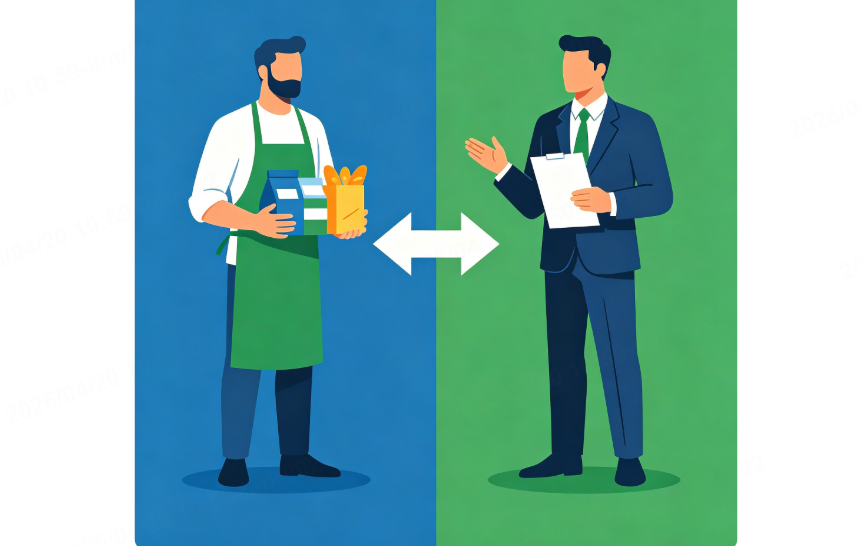
Here’s a quick framework I use with my clients when they’re stuck in the vendor vs distributor debate. Answer these three questions honestly.
Question 1: What’s your monthly order volume?
- Under 100 units → Distributor (or a platform with low-MOX support)
- 100–1,000 units → Test both, but lean toward direct vendors
- Over 1,000 units → You should be talking to manufacturers, not distributors
Question 2: Do you need customization?
- Yes (colors, logos, packaging, design changes) → Direct vendor/manufacturer
- No (standard off-the-shelf products only) → Distributor could work
Question 3: Who controls your supply chain quality?
- You have an in-house QA team → Go direct to manufacturer
- You rely on your partner for QC → Consider a distributor or a managed platform
If your answers point to direct sourcing but you’re worried about high MOQs, platforms like LooperBuy offer a bridge: factory-direct pricing without the factory-direct commitment. They support small-batch ordering (50 or 100 units) while keeping procurement costs competitive — effectively giving you the best of both worlds.
Real-World Case: From Distributor-Dependent to Direct Sourcing
Let me share a real example. A European home goods brand I consulted for was buying through a regional distributor. Their per-unit cost for a ceramic vase set was $18.50. MOQ was 200 units, which was fine — they could sell that in two months.
But when they wanted to launch a new color based on customer feedback, the distributor said no. When they asked to see the original factory’s quality audit, the distributor refused. When they requested faster replenishment on their bestseller, the distributor’s lead time was fixed at 45 days.
They switched to LooperBuy’s direct sourcing model. The same vase set, from the same factory (now verified), cost $12.80 per unit — a 31% cost reduction. MOQ dropped to 50 units for test runs. Replenishment lead time shortened to 21 days. And they finally had full visibility into their supply chain.
The lesson? Vendors give you control; distributors give you convenience. Choose based on your priorities, not on habit.
Key Takeaways: Building Your Hybrid Sourcing Strategy
No single sourcing model fits every situation. The most resilient B2B buyers in 2026 will use a hybrid approach:
- For core products with stable demand → Build direct vendor relationships (lower cost, more control)
- For test products and seasonal items → Use platforms with low-MOX support (LooperBuy, etc.) to validate before scaling
- For emergency replenishment → Keep a distributor relationship as a backup (higher cost, faster access)
This approach mirrors what Accio.com found in their analysis: suppliers deliver cost efficiency for bulk orders and deep customization but require larger commitments; distributors offer lower MOQs and localized support, though at higher per-unit costs.
The best sourcing teams don’t pick one model. They manage a portfolio of both.
References
- Godamwale — Vendor vs Supplier vs Distributor: Role in Supply Chain https://godamwale.com/vendor-vs-supplier-vs-distributor/
- Accio.com — Supplier vs Distributor: Key Differences & How to Choose the Right Partner https://www.accio.com/supplier/supplier-vs-distributor
- Tata Nexarc Blog — Vendor vs. supplier vs. distributor – How do they differ? https://blog.tatanexarc.com/logistics/vendor-vs-supplier-vs-distributor/
- Sohu / 数商云 — 2025年B2B产业平台全景趋势 https://www.sohu.com/a/919721710_122014422
- 亿邦智库 — 2026数智供应链全球化发展报告 (via ebrun.com) https://m.ebrun.com
- Custom Packaging Products — Bulk Bags Manufacturer Vs Distributor https://custom-packaging-products.com
- db Horse Stable — Direct Factory Sourcing https://dbhorsestable.com
- 连连国际 & LooperBuy — 连连国际牵手LooperBuy,解锁跨境B2B寻源新时代 https://kuajingren.com
- Scamadviser — looperbuy.com Review https://www.scamadviser.com
FAQs
Q1: Is a distributor the same as a vendor?
No. A distributor typically buys from manufacturers and sells to other businesses (B2B), while a vendor usually sells directly to end customers (B2C). However, in practice, the terms are often used loosely. The key difference lies in where they sit in the supply chain.
Q2: Should I source directly from a manufacturer or use a distributor?
It depends on your order volume, need for customization, and in-house capabilities. Direct sourcing offers lower costs and more control but requires higher MOQs and stronger quality management. Distributors offer convenience and lower MOQs at a higher per-unit cost.
Q3: How much can I save by cutting out the distributor?
Direct factory sourcing typically reduces total costs by 30–40% compared to buying through a local distributor, depending on the product category and order volume.
Q4: What is LooperBuy and how does it help with vendor vs distributor decisions?
LooperBuy is a one-stop B2B sourcing platform that connects global buyers directly to Chinese suppliers on 1688.com, offering factory-direct pricing with zero markup, low MOQs (starting from 50 units), transparent pricing, and integrated global logistics — effectively giving buyers the cost benefits of direct vendor relationships without the typical volume commitments.
Q5: Can I use both vendors and distributors in my supply chain?
Yes. A hybrid sourcing strategy is often the most resilient approach. Use direct vendors for core, high-volume products and distributors for test items, seasonal products, or emergency replenishment.
Article Summary
In B2B sourcing, the vendor vs distributor distinction can make or break your margins. This article breaks down the real differences between vendors and distributors, exposes hidden costs of defaulting to distributors, and provides a practical decision framework for 2026. With industry data on global B2B e-commerce growth and insights from LooperBuy’s direct sourcing platform, learn how to build a hybrid sourcing strategy that balances cost, control, and flexibility — whether you’re a startup testing new products or an established brand scaling globally.
Hot Tags
vendor vs distributor, B2B sourcing platform, direct sourcing China, LooperBuy review, supplier vs distributor comparison, low MOQ sourcing, cross-border procurement, factory direct pricing, B2B supply chain 2026, global sourcing strategy