Whether you are a global brand manager, a regional distributor, or a specialized retailer, understanding the nuances between outdoor pickleballs vs indoor pickleballs is critical for your supply chain success. Pickleball is currently the fastest-growing sport globally, and with this explosive growth comes a sophisticated demand for high-performance equipment engineered for specific playing environments.
As a sourcing professional, you know that the “best” product depends entirely on the end-user’s needs. This guide provides an expert breakdown, integrating technical specifications, market trends, and sourcing strategies to help you make informed procurement decisions on LooperBuy.
Table of Contents
1. Understanding the Core Differences
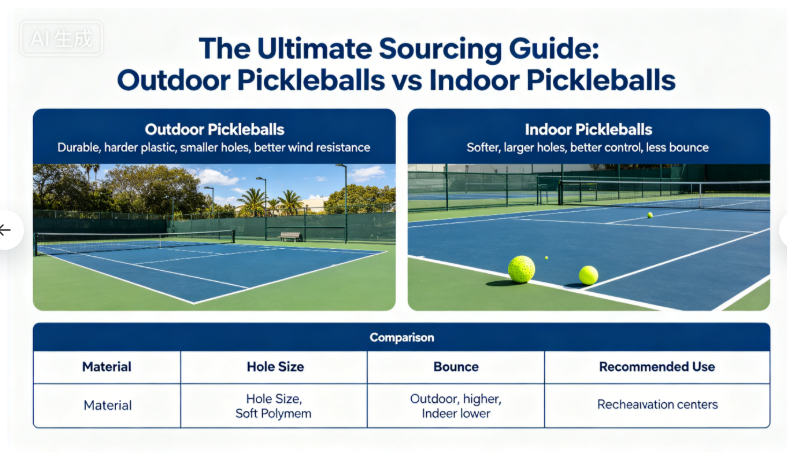
The distinction between these two types of balls is not merely aesthetic or a matter of color coding; they are engineered for fundamentally different physical environments. Misunderstanding these differences can lead to poor customer feedback and increased return rates.
| Feature | Indoor Pickleballs | Outdoor Pickleballs |
|---|---|---|
| Hole Count | Typically 26 larger holes | Typically 40 smaller holes |
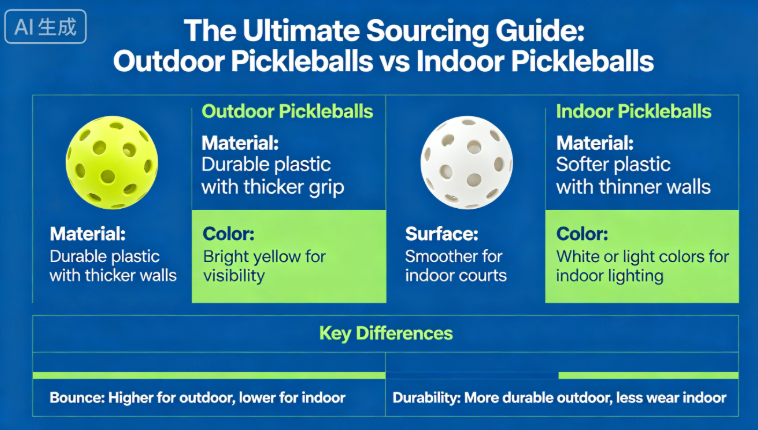
| Material | Softer, thinner plastic | Harder, high-density plastic |
| Design Intent | Controlled, quiet, smooth surfaces | Wind resistance, abrasion resistance |
| Weight | Lighter (approx. 23-25g) | Heavier (approx. 25-27g) |
| Bounce | Lower, more predictable | Higher, more responsive |
2. Why Environment Matters: The Physics of Play
2.1 Indoor Pickleballs: Precision and Control
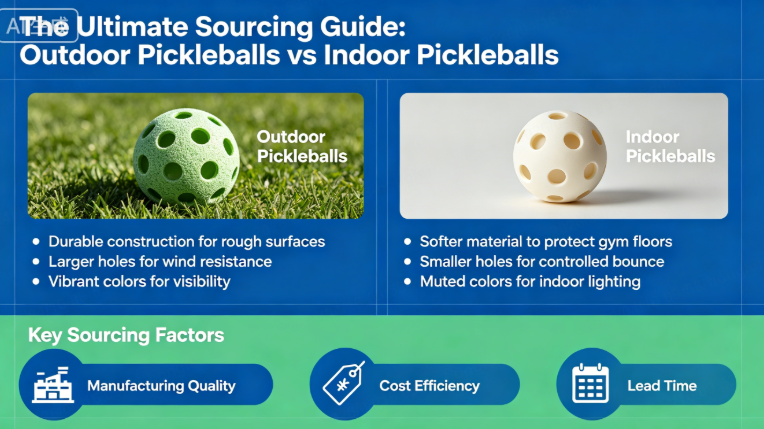
Designed for smooth, polished gym floors, indoor pickleballs prioritize consistency, noise reduction, and controlled interaction with the paddle. Because there is zero wind interference in a gymnasium, the ball does not need heavy aerodynamics to maintain its flight path. The larger hole diameter allows the ball to move through the air with less turbulence, providing a predictable trajectory on surfaces where wind is not a factor. Furthermore, the softer plastic composition is optimized to grip the floor surface, preventing the ball from sliding and ensuring it bounces to the precise height required for high-level tactical play.
2.2 Outdoor Pickleballs: Stability in Chaos
Outdoor play introduces significant variables—wind velocity, intense UV exposure, and abrasive court surfaces like asphalt or concrete. Outdoor pickleballs are engineered with a harder composite to resist cracking or deforming under the intense friction of outdoor courts. The 40-hole pattern is a marvel of engineering; it is designed to minimize wind drag, ensuring the ball maintains its intended trajectory even in gusty conditions. Additionally, these balls are subjected to extreme temperature fluctuations, meaning the material must maintain its elasticity and bounce consistency from sweltering summer days to cooler mornings.
3. Industry Insights: Analyzing the Sourcing Gap
To optimize your inventory and maximize margins, procurement professionals must look beyond the surface.
3.1 Material Science: The Shift to HDPE
Current industry data suggests a significant shift toward high-density polyethylene (HDPE) for premium outdoor balls. Sourcing agents should prioritize manufacturers who demonstrate precise injection molding capabilities. If the seam of the ball is inconsistent, the trajectory becomes erratic—a major “pain point” reported by club players. When sourcing on platforms like LooperBuy, request samples specifically tested for seam integrity and roundness consistency.
3.2 The Impact of Temperature on Performance
A frequently overlooked factor is thermal variance. In hot climates, standard plastic balls can become too soft, leading to a “dead” bounce that frustrates players. Conversely, in cold weather, balls can become brittle and shatter upon impact with a powerful overhead smash. Leading brands are now asking for “all-weather” certifications. As a buyer, ensuring your supplier provides temperature-tested performance metrics is a key way to differentiate your brand in the marketplace.
3.3 Emerging Market Trends: Sustainability
There is a growing demand from European and North American distributors for eco-friendly sport equipment. Sourcing products that utilize recycled plastics or post-industrial waste streams without compromising the USAPA (USA Pickleball) flight requirements is currently an underserved market niche. Highlighting these features in your B2B marketing can provide a massive competitive advantage.
4. Strategic Sourcing with LooperBuy
At LooperBuy, we bridge the gap between global demand and high-quality Chinese manufacturing. Our platform simplifies the procurement of both indoor and outdoor pickleballs by:
- Consolidating Suppliers: Accessing a vast network of vetted manufacturers specializing in high-precision sport-grade plastics.
- Logistical Efficiency: Providing low-cost, reliable, end-to-end global logistics to ensure your inventory arrives on time, regardless of order volume.
- Quality Assurance: Offering diverse product types, from recreational entry-level balls to tournament-certified options, to meet the specific requirements of your regional market.
5. Practical Checklist for Procurement
Before finalizing any large-scale purchase order, ensure you have verified the following:
- Certification Compliance: Does the product meet USAPA standards for size, weight, and bounce?
- Sample Stress Testing: Have you field-tested the balls on outdoor concrete to check for cracking rates?
- Color Fastness: Are the colors vibrant and UV-resistant, or will they fade and become difficult to track after a few weeks?
- Bulk Packaging Options: Can the supplier accommodate custom branding or retail-ready packaging to reduce your internal labor costs?
Conclusion
Navigating the technical differences between outdoor pickleballs vs indoor pickleballs is more than a logistical necessity; it is a vital part of delivering superior value to your customers. By sourcing the correct equipment tailored to the specific environment, you ensure long-term customer satisfaction and brand loyalty. With LooperBuy, you gain a partner dedicated to making your sourcing process faster, more cost-effective, and globally transparent.
References
- Aim7: Outdoor vs. Indoor Pickleballs Guide
- Art Pickleball: 5 Key Differences Explained
- Gear Patrol: Best Pickleball Balls
- SturdyRacquets: Ultimate 2026 Comparison Guide
- Joy of Pickleball: 19 Brands Tested
FAQ
Q1: Can I use indoor pickleballs outdoors?
A: It is strongly discouraged. Indoor balls are softer and will deform or crack quickly on abrasive outdoor surfaces. Furthermore, their design is ineffective against wind, leading to an erratic and frustrating playing experience [3, 4].
Q2: What is the most important factor when sourcing pickleballs?
A: Consistency is paramount. Regardless of type, the ball must maintain its flight path, bounce height, and structural integrity through repeated, high-velocity play to satisfy competitive standards [2, 12].
Q3: Why do outdoor balls have more holes (40 vs 26)?
A: The 40-hole pattern is specifically engineered to reduce air resistance. This aerodynamics shift helps the ball maintain its intended flight path and velocity, even in windy conditions common in outdoor environments [3, 9, 18].
Q4: Do indoor and outdoor balls weigh the same?
A: Not typically. Outdoor balls are generally heavier (25-27g) to combat wind, whereas indoor balls are lighter (23-25g) to ensure precise control on stable, indoor surfaces [3, 4, 6].
Q5: How does LooperBuy facilitate my procurement process?
A: LooperBuy connects you directly to top-tier Chinese manufacturers. We offer an extensive product variety, competitive B2B pricing, and end-to-end logistics solutions, making global sourcing accessible and efficient.
Brief: This comprehensive guide offers a deep dive into the technical and strategic differences between outdoor and indoor pickleballs. It serves as an essential resource for B2B buyers looking to optimize their supply chain through LooperBuy, focusing on material science, environmental performance, and market-driven procurement strategies.
Hot tags: Pickleball bulk supplier, wholesale pickleball equipment, B2B sports sourcing, indoor vs outdoor pickleballs, high-density polyethylene pickleballs, China manufacturing sourcing, tournament-grade pickleball wholesale, custom sports equipment procurement, bulk sports gear logistics, pickleball manufacturing standards.