In the complex ecosystem of global trade, understanding the structural nuances of your supply chain partners is not just operational—it is competitive. For brand owners, wholesalers, and manufacturers looking to optimize procurement, the debate of dealer vs. distributor is central to efficiency, margins, and market penetration [1, 2].
Whether you are scaling your production or sourcing products globally through platforms like LooperBuy, identifying the right intermediary determines how fast your goods reach the end customer and how much you retain of your profit margins [1, 12]. This article provides a deep dive into these roles, helping you navigate the complexities of modern B2B sourcing.
Table of Contents
Defining the Roles: Dealer vs. Distributor
To build an agile business model, you must first distinguish between these two critical players.
What is a Distributor?
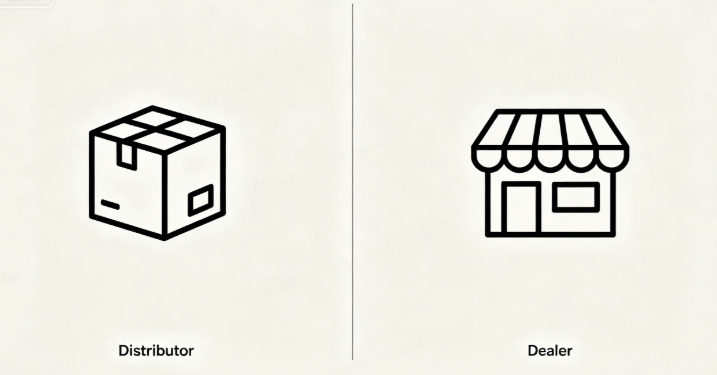
A distributor is a strategic intermediary that forms a bridge between the manufacturer and the rest of the supply chain [3, 4].
- Core Function: They purchase products in high-volume bulk directly from the manufacturer [1, 5].
- Exclusive Rights: Often, they hold exclusive or territorial rights to sell a specific brand’s products in a designated region [3, 8].
- Strategic Focus: They manage logistics, warehousing, and marketing, ensuring products are available for dealers and large retailers [1, 16].
- Industry Value: By taking on the burden of inventory management, they allow manufacturers to focus on R&D and production rather than logistics [5, 6].
What is a Dealer?
A dealer operates closer to the end consumer, acting as the final link in the chain [3, 7].
- Core Function: They purchase inventory from distributors or wholesalers to sell directly to the final user [2, 4].
- Market Reach: Their focus is local, concentrating on customer-centric fulfillment and personalized service [1, 12].
- Operational Model: They typically operate at retail prices and provide the face-to-face interaction required to finalize sales [3, 4].
- Value Proposition: Their strength lies in market intelligence, consumer feedback loops, and localized brand positioning [4, 7].
Comparative Analysis: The Structural Differences
Understanding these differences enables you to select the vendor that best aligns with your current inventory needs and growth goals [2, 6].
| Feature | Distributor | Dealer |
|---|---|---|
| Primary Source | Directly from manufacturer [1, 5] | From distributors/wholesalers [2, 4] |
| Customer Base | Dealers, retailers, or industrial buyers [1, 10] | End-consumers [3, 7] |
| Pricing Strategy | Lower (Wholesale/Bulk) [2, 4] | Higher (Retail-focused) [2, 3] |
| Inventory Volume | Extremely high (Bulk) [1, 12] | Smaller, consumer-focused batches [4, 12] |
| Market Scope | Broad/Geographic regions [3, 16] | Local/Specific niche markets [1, 2] |
Deep Dive: The Strategic Impact on Your Business
Why Distributors are the Backbone of Scale
Distributors are essentially your operational partners. If you are a brand owner looking to enter a new territory, partnering with an established distributor provides instant access to their existing network of retailers. You aren’t just selling a product; you are leveraging their logistics, warehouse space, and local sales force. This is the “Distribution Leverage”—a model where your product moves into the market at scale without you needing to build an infrastructure from scratch [1, 8].
Why Dealers are the Heart of Customer Trust
While distributors move volume, dealers move hearts. In many industries—especially high-tech, automotive, and specialized machinery—the customer needs an expert to guide them through the buying process. A dealer provides the “last mile” of education. They offer after-sales service, troubleshooting, and personal relationship building that a high-volume distributor simply cannot replicate [2, 7].
Strategic Considerations: Which One Do You Need?
The decision to partner with a dealer or a distributor should depend on your business lifecycle and operational capabilities [10, 16].
When to Choose a Distributor
- High-Volume Scaling: If you are a manufacturer needing to move massive quantities of inventory quickly [1].
- Streamlined Logistics: Distributors offer robust warehousing and supply chain support, reducing your overhead costs [1, 17].
- Long-term Market Penetration: They are essential for expanding your brand footprint across wider geographic areas [1, 3].
When to Choose a Dealer
- Direct-to-Consumer (D2C) Focus: If your product requires local support, demonstrations, or high-touch customer service [12, 17].
- Gap Filling: If you are in urgent need of stock due to unexpected demand and your primary distributor has long lead times, local dealers can provide immediate, albeit higher-priced, inventory [2].
- Specialized Niche: Dealers often have deep knowledge of specific local markets that distributors may overlook [1].
Modern Supply Chain Trends: The Digital Shift
The traditional supply chain is undergoing a rapid digital transformation. As global sourcing becomes more accessible, the lines between these roles are blurring.
The Rise of One-Stop Sourcing Platforms
Platforms like LooperBuy (a One-Stop B2B Sourcing Platform) are reshaping how brands and wholesalers procure products from China [10]. By digitizing the supply chain, these platforms provide:
- Direct-to-Factory Access: Eliminating the “multi-tier” markup system often found in traditional distribution.
- Data-Driven Procurement: Enabling brands to analyze which products are trending and source them in quantities that suit their specific market demand, rather than being forced into distributor-mandated minimums.
- Logistics Transparency: With global shipping becoming more complex, having a unified platform to manage logistics from factory floor to warehouse provides a massive competitive advantage [10].
Case Study: Navigating Global Sourcing
Consider a scenario where a mid-sized US retailer wants to import electronics. Traditionally, they might go through a domestic distributor (high cost, guaranteed availability) or try to find an overseas factory (low cost, high risk). Using a platform like LooperBuy provides the middle ground: verified manufacturers, transparent pricing, and managed logistics. This reflects the current industry trend toward “Agile Procurement”—where speed and cost-efficiency are prioritized over static, long-term exclusivity contracts [10, 16].
Expert Insight: Optimizing Your Vendor Mix
Leading industry experts suggest that the most agile businesses do not rely solely on one type of vendor. Instead, they diversify their procurement strategy. Use distributors for your core, high-turnover products to benefit from bulk pricing and stability. Concurrently, maintain relationships with specialized dealers for high-margin, niche items that require localized marketing expertise [6, 12].
Furthermore, leverage B2B digital platforms to audit your supply chain costs. Often, hidden inefficiencies exist in traditional distribution models that can be corrected by sourcing certain components directly through global platforms [10].
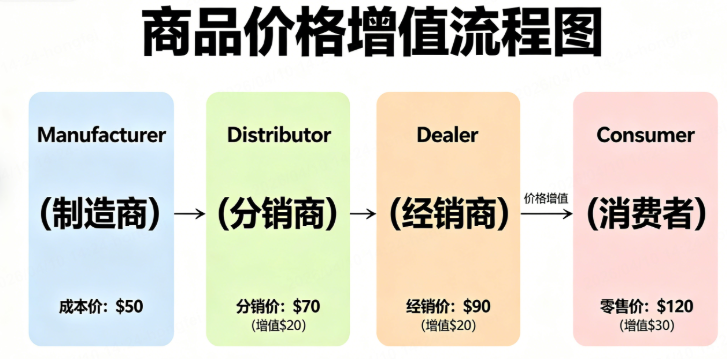
Visual Suggestion: A diagram illustrating the flow from “Manufacturer -> Distributor -> Dealer -> Consumer” would effectively demonstrate this hierarchy [12, 16].
References
- Credlix – Distributor vs. Dealer: Key Differences
- ArmPOS – Dealer vs. Distributor: Which One Is Better?
- Key Differences – Difference Between Dealer and Distributor
- Sortly – Dealer vs. Distributor: What’s the Difference?
- Vedantu – Key Differences and Functions Explained
- Finale Inventory – Understanding Vendor Types
- LinkedIn – Understanding the Roles in Supply Chain
- Method Procurement – Understanding Your Vendors
- MaxRecall – Distributor vs. Wholesaler vs. Retailer
- BlueLink ERP – Distributor vs. Wholesaler vs. Retailer
- Waredock – Retailer vs Wholesaler vs Distributor vs Reseller
- Copperberg – Should You Rely on Your Own Distribution Network or on Dealers?
Frequently Asked Questions (FAQ)
1. Can a business act as both a dealer and a distributor?
Yes, some large entities function as distributors for certain products while acting as retail dealers for others, depending on their contracts with manufacturers.
2. Which is generally cheaper: buying from a dealer or a distributor?
Distributors generally offer lower, wholesale prices due to their high-volume purchasing power, whereas dealers typically charge retail prices.
3. Does a distributor have the right to set the price for a dealer?
Often, manufacturers set the Recommended Retail Price (RRP) or Minimum Advertised Price (MAP) which both distributors and dealers must follow to maintain their authorized status.
4. Why might a manufacturer choose a dealer over a distributor?
A manufacturer might choose a dealer to gain localized, specialized access to a market where a distributor lacks the necessary personal connection or infrastructure.
5. How does LooperBuy simplify the sourcing process?
LooperBuy streamlines the supply chain by providing a direct B2B connection to Chinese manufacturers, effectively acting as an efficient, global procurement hub that reduces reliance on traditional, multi-layered distribution.
Brief Summary:
This comprehensive guide examines the critical distinctions between dealers and distributors within the B2B supply chain. By analyzing their unique roles, cost structures, and strategic functions, it empowers businesses to make informed procurement decisions. Additionally, it explores how modern digital platforms like LooperBuy optimize this process, bridging the gap between global manufacturers and brand owners for enhanced efficiency and profitability.
Hot tags: B2B sourcing, global supply chain management, wholesale procurement strategies, dealer vs distributor differences, international B2B platform, direct factory sourcing, B2B wholesale marketplace, supply chain optimization, manufacturer distribution channels, global trade logistics.